Bruins post-development camp prospect check- the Amateurs

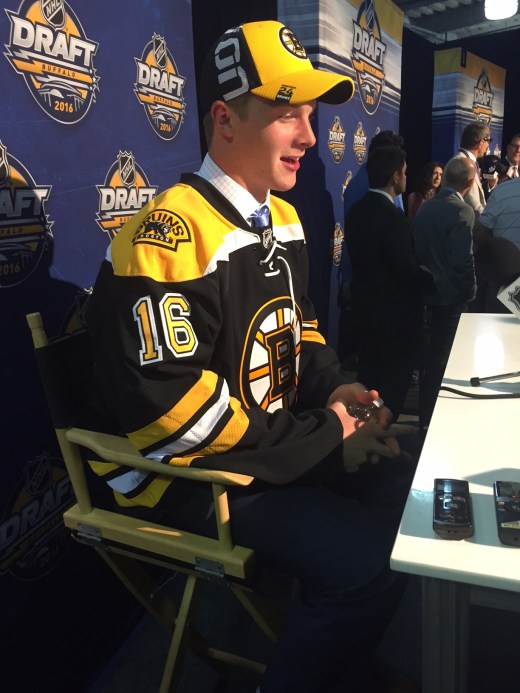
McAvoy2

We’re back with part 2 of the mid-summer look at where the prospects in the Boston Bruins organization stack up.

As previously mentioned in part 1 when we reviewed 23 of the prospects who will play in the pro hockey ranks this coming season, this is a subjective list based on multiple inputs to include (but not limited to) live viewings and film study, input from members of the Bruins organization and some sources around the NHL not with Boston, media and fan observers who attended the recent development camp in Wilmington from July 12-15.

This is just one view and take- there will no doubt be disagreement, but I would offer that even if the Bruins as an organization released their own rankings of where they think their prospects stack up from 1 to 40-something, folks would still take issue with it. We would live in a mighty boring world if everything was definitive and we agreed on everything.

So, with that in mind, here is the supplemental podcast (complete with Dirty Harry theme music from the early 1970’s) and the write-ups on the kids expected to spend the season in the amateur ranks for 2016-17.

The Amateurs (NCAA and CHL/major junior)

  1. Charlie McAvoy, RD  Plus: The 14th overall pick has the skating and sense to become a legitimate two-way presence on the blue line in the NHL one day; watch for him to take a significant step forward in his development during his sophomore season at Boston University. Minus: He’s only about 6-foot tall; lacks the kind of ideal NHL height for the position, and needs to keep honing his judgment and decisions as an aggressive offensive player who can at times get too far up the ice.
  2. Zach Senyshyn, RW Plus: A year after tallying 26 goals on the bottom line and without much special teams time, the 15th selection in 2015 scored 45 goals to lead the Soo Greyhounds; he’s a big, explosive and skilled scoring presence on the right side. Minus: The goals are great, but the 19-year-old has work to do in his 200-foot game; he has a tendency to wait for the next scoring chance or let others go and get him the puck.
  3. Jakob Forsbacka-Karlsson, RC Plus: When it comes to maturity, poise and a complete game at the center position, no prospect brings more promise than the BU sophomore; he’s already earned an ‘A’ on his sweater, and has drawn positive comparisons to Patrice Bergeron for his pure intelligence and playing style. Minus: The Stockholm native and 45th overall pick from 2015 does’t seem to have the kind of exciting and dynamic offensive upside of others in his draft class, but he’s one of those players who will likely play 10-15 years as a key cog because he can do a little bit of everything.
  4. Jeremy Lauzon, LD Plus: Underrated no more after a 50-point season (he only played in 46 games due to WJC camp and injuries); 2015 second-rounder has skill, smarts and some jam/toughness as a two-way D prospect who keeps getting better. Minus: He gets lost in the sauce a bit with all of the competition for blue line jobs in Boston; had a tough time staying healthy with a variety of injuries including a serious skate cut to the neck that could have severed a nerve and ended his career.
  5. Ryan Donato, LC (Scituate, Mass.) Plus: Coming into his own after a strong freshman season at Harvard; was one of Boston’s real standouts at the development camp, showcasing his high-end hockey sense and hands throughout. Minus: Still several years away from competing for an NHL job; needs to keep developing the physical aspect of his game and must continuing moving forward in his three-zone progress.
  6. Jake DeBrusk, LW Plus: High-end hands plus very good hockey IQ/offensive creativity make DeBrusk a legitimate scoring threat every time he has the puck on his stick; good attitude and drive- overcame a debilitating lower body injury early in the season to finish strong in the WHL playoffs and Memorial Cup tournament. Minus: His size and strength are pretty average and he might be ‘tweener right now in terms of not quite being ready physically for the pro hockey grind- could return to the WHL for his overage season.
  7. Jakub Zboril, LD Plus: Came to camp leaner and in better shape with more jump and energy than was reported a year ago; when on his game has all the tools in the toolbox to be a No. 2 or 3 two-way NHL D with some bite and nastiness on the physical side.  Minus: At times loses his focus and appears disinterested; the positive strides last week are encouraging, but Zboril still has to prove that he can maintain his intensity and consistency over a longer period of time. He has impressive big league potential if he can put it all together.
  8. Jesse Gabrielle, LW Plus: Surprise (maybe not to him and his supporters) 40-goal scorer after being picked in the fourth round a year ago plays the kind of scoring game with an edge that Boston fans love; has worked himself into excellent shape and added strength and mass since being drafted. Minus: Will have to guard against a letdown season now that WHL opponents will be keying on him this year; as a ’97-born player he has to make the Boston roster out of camp or go back for a full season with Prince George- he can’t play in the AHL on a full-time basis yet.
  9. Ryan Lindgren, LD Plus: All-around skilled and hard-nosed defender is a proven leader and player; Minnesota product has no flaws in his game and could be the captain-in-waiting of the University of Minnesota Golden Gophers if he spends enough years there. Minus: He’s only about 6-feet in height, so given his physical nature, he will face some limitations in certain matchups and could pay the price physically; there isn’t a ton of dynamic upside here.
  10. Ryan Fitzgerald, LC (North Reading, Mass.) Plus: Feisty, gritty center erupted offensively as a junior with his finest season for BC- will contend for the 2017 Hobey Baker Award. He’s got terrific hockey sense and a nonstop motor that inspires teammates and infuriates opponents. Minus: The size and skating concerns have followed him since before the long-time Massachusetts minor hockey standout was drafted at the end of the fourth round three years ago. Might need to move to wing to thrive as a pro.
  11. Anders Bjork, RW Plus: One of the top performers last week at development camp with his speed and energy, it all comes after he surprisingly let the Fighting Irish in scoring as a sophomore last season. Minus: Bjork is an interesting player to watch- he was a late fifth-round pick in 2014 and could be one who tries to leverage  path to free agency if the Bruins are unable to sign him this year.
  12. Trent Frederic, LC Plus: The polarizing pick in the 2016 draft’s first round has settled concerns down some with his fine size, athletic ability and willingness to roll up the sleeves and get to work. He’s a strong two-way player and solid citizen who might just be scratching the surface in terms of his offensive game and potential. Minus: There’s not a lot to get excited about here- Frederic has impressive physical tools but is raw and might not ever be much more than a bottom-six forward assuming he reaches the top rung of the pro hockey ladder.
  13. Wiley Sherman, LD (Greenwich, Conn.) Plus: Huge (6-7) defender is such a fluid, impressive skater for one so big and that’s always been his calling card going back to his days at the Hotchkiss School.  Minus: Scouts are divided on his long-term potential: the physical tools are on another level, but can Sherman react and process the game effectively enough to thrive in the NHL?
  14. Cameron Hughes, LC Plus: Highly skilled, creative playmaker was a late-round pick out of the Wisconsin Badgers and showed solid progression in his sophomore season with 25 points in 32 games- watch for his production to go up with new coaches who will lean on him. Minus: He’s a smallish player trapped in a light 6-foot frame that isn’t going to get all that bigger based on the body type; while talented, he can be neutralized by teams with size and mobility on the blue line.
  15. Matt Benning, RD Plus: Smart, opportunistic defender who plays bigger than his 6-foot frame and has been a standout at Northeastern over the past three seasons. Minus: Benning was not asked to attend development camp, and according to the ProJo’s Mark Divver, that could be a harbinger to his imminent departure from the organization either via trade or by pursuing similar action by Kevin Hayes, Mike Reilly and Jimmy Vesey to play out the NCAA string in 2017 and become an unrestricted free agent next summer.
  16. Cam Clarke, RD Plus: Smooth-skating intelligent rearguard can move the puck and excels with extra time and space as a PP QB; he’ll get a chance at premium playing time right off the bat at Ferris State. Minus: He’s still quite raw and observers pointed to times during the development camp when he was a little behind compared to other players. Clarke was drafted in the fifth round as a known project, and the payoff will take time if at all.
  17. Joona Koppanen, LC Plus: Big (6-5) center has the skating and smarts to make the NHL one day in more of a defensive, shutdown role; he’s seriously considering the NCAA path, which would be a good step for him.  Minus: There’s just not a whole lot there in terms of hands, offensive skill and long-term potential beyond being a serviceable bottom-liner and journeyman.
  18. Jack Becker, RC Plus: 6-foot-3 power center as some impressive finishing skills, especially in close when time and space are lacking; shows some intriguing offensive potential in flashes after a solid but unspectacular USHL season in Sioux Falls. He scored a memorable breakaway goal in the camp-ending scrimmage. Minus: University of Wisconsin-bound 2015 7th-rounder was once described as “thorny” by a scout in that he’s got a lot of developing ahead, and like Clarke- was said to struggle at times in camp last week with the pace and demands of the drills.
Trent Frederic was Boston's 2nd choice, 29th overall, in the 2016 NHL Entry Draft

Trent Frederic was Boston’s 2nd choice, 29th overall, in the 2016 NHL Entry Draft

Boston Bruins development camp updates

I’m not at development camp this week, so here are some links to stories penned by those who are in attendance.

It sounds like Danton Heinen and Ryan Donato plus Ryan Fitzgerald impressed up front during the first day’s on-ice session, while Charlie McAvoy and Jeremy Lauzon were standouts on defense. Daniel Vladar’s physical tools make him tough to beat in the net- neither Malcolm Subban nor Zane McIntyre were a part of the session after doing earlier on-ice work with Boston coaches. 2nd-rounder Ryan Lindgren was not present Tuesday due to a summer school requirement but will be in Wilmington with the prospects today and for the remainder of the four-day program.

Just to reiterate- Rob O’Gara is not at development camp because the Bruins did not require him to be there. It would have been his sixth, and apparently- he is far enough along in his progression that his guidance was to keep working out and be prepared for the start of the Boston rookie camp in September. He signed a two-year ELC with the Bruins last March, which starts this season (he finished the 2015-16 campaign on an ATO with Providence), and don’t be surprised if he makes a serious run for NHL playing time either right away or during the season. With his size, mobility, smarts and attitude- he’s an attractive option for Boston as a fill-in or in the 4/5/6 slots.

Matt Benning was not invited to the camp per Providence Journal veteran correspondent Mark Divver, and that does not bode well for his future in the Bruins organization. Whether it was due to the 2012 draft’s sixth rounder stating his intent to seek better opportunities elsewhere (in order to pursue a similar path to that of Jimmy Vesey, Benning has to play out the entire 2016-17 NCAA season and wait until August 15 before he can sign with any team he chooses, unless the Bruins trade his rights and he comes to terms with that other team) or a decision made by the B’s is not confirmed at this time, but it appears that Benning may be the first casualty of the Bruins organization’s improved talent pool at the defense position. TSP had time for Benning; he was an underrated prospect with smarts, a physical game and NHL bloodlines, but it’s entirely possible that he saw the writing on the wall and wants to seek opportunities elsewhere. It’s also possible that this was a mutual understanding.

BruinsTV has the intro piece going on the 10th Annual Boston Bruins development camp:

https://www.nhl.com/bruins/video/bruins-development-camp-day-1/t-277437088/c-44378403

Here are some links to the key Bruins development story lines and updates after Day 1:

1.Comm. Ave. Connection: McAvoy looks up to former BU teammate Grzelcyk

It did not take long for Matt Grzelcyk to notice the talent.

He had heard all about the young, gifted defenseman that was on his way to Boston University. So when Charlie McAvoy stepped onto the Agganis Arena ice last fall as a member of the Terriers, Grzelcyk was not surprised at the freshman’s immediate impact.

http://bruins.nhl.com/club/blogpost.htm?id=47188&navid=DL|BOS|home

2. Bruins prospect Lauzon survives major injury to take his shot with the team

Hockey is a physical game, and you have to expect to get knocked down once in a while.

While it’s a rough-and-tumble sport, no one wants to think about the kind of injury that Jeremy Lauzon, a second-round draft pick by the Bruins in 2015, suffered on April 15.

During the Quebec Major Junior Hockey League playoffs, the left shot defenseman felt something on the right side of his neck. At first, he thought it was just a relatively minor stick foul until he saw the ice turning red. While battling for the puck behind his net, Lauzon fell to the ice and an opponent’s skate blade lacerated his neck that could have had far graver consequences than the nasty scar that runs under his right ear.

http://www.bostonherald.com/sports/bruins/2016/07/bruins_prospect_jeremy_lauzon_survives_major_injury_to_take_his_shot_for_the

3. Boston Herald Bruins notebook: First-rounder Charlie McAvoy shapes up as a future leader

Charlie McAvoy has been lauded for the way he committed himself to his fitness once he arrived at Boston University last year.

But the Long Island product is, and will probably always be, a little plump in the face and jowls.

When it was suggested the 14th overall pick last month looked “a little fluffy,” Bruins assistant coach Jay Pandolfo did not agree.

http://www.bostonherald.com/sports/bruins/2016/07/bruins_notebook_first_rounder_charlie_mcavoy_shapes_up_as_future_leader

4. Danton Heinen hopes to solve Bruins’ problems at right wing

Danton Heinen says he’s doing “everything he can” to take that job in training camp.

The Bruins got Heinen to go pro after his sophomore year at the University of Denver. The 6-foot-1, 190-ish-pound left shot forward was a fourth-round pick in the 2014 draft [worth noting: considering that draft also included Pastrnak and that the bar wasn’t exactly set high, it’s entirely possible that Peter Chiarelli’s final draft with the Bruins was his best outside of 2010], but since his selection has used strong play at the NCAA level to cement himself as a high-end scoring prospect.

http://bigbadblog.weei.com/sports/boston/hockey/bruins/2016/07/12/danton-heinen-hopes-to-solve-bruins-problems-at-right-wing/

5. Trent Frederic, who once played shinny with David Backes in Keith Tkachuk’s basement, doesn’t care about draft status anymore

Typically, a player with (Trent) Frederic’s kind of game — he’s got “jam,” as they say — doesn’t go early in the draft, and they use the mindset that draft status doesn’t matter once you’re given an opportunity. Frederic is taking the same mentality despite his fortune of being made a surprise first-rounder.

“I just really don’t think it matters,” he said after his first development camp practice. “If you look at a seventh-round guy and a first-round guy, there’s not much difference. It all comes down to the work you put in now.”

http://bigbadblog.weei.com/sports/boston/hockey/bruins/2016/07/12/surprise-first-rounder-trent-frederic-who-once-played-shinny-with-david-backes-in-keith-tkachuks-basement-doesnt-care-about-draft-status-anymore/

6. Malcolm Subban out to grab NHL job

It was back when Malcolm Subban was first starting to speak again, his voice still raspy and ragged, that he thought he would make his plea. What better time, really? He would ask his parents, at the height of their sympathy for him, to allow him to get a car.

“That’s why I did it,” Subban said, smiling, his voice recovered. “It’s the perfect time to ask.”

They didn’t bite.

https://www.nhl.com/news/malcolm-subban-looks-to-snag-nhl-job-with-bruins/c-281161240?tid=277729154

A look at the 10th Boston Bruins development camp Pt 1: the G and D

Boston Bruins GM Don Sweeney didn’t invent the idea of bringing young prospects in during July to acclimate them to the team’s systems, culture and begin the bonding process with their peers inside the organization, but he is the father of the development camp tradition in Boston, which began in the summer of 2007.

As the team’s top player development guru at the time, Sweeney’s vision has matured in the near-decade since the B’s brought in top picks Zach Hamill (ouch) and Tommy Cross, to mix in with the other prospects, five of whom went on to have fine NHL success and were a part of the 2011 Stanley Cup championship squad- David KrejciMilan Lucic and Brad Marchand, Adam McQuaid and Tuukka Rask. Here’s an old archive of that very first prospects camp, written by John Bishop– the recap provides a fascinating glimpse into the future at a time when so much was exciting and  new, including head coach Claude Julien.

10 years later, Cross is still with the organization and Marchand is coming off of his best NHL season to date, lighting the lamp 36 times for the Bruins and lining himself up for a lucrative extension that should see him earn about $6 million on an average annual value if the team can get something done with him before he becomes an unrestricted free agent next July 1. Krejci moved into the B’s all-time top-20 scorers this past season, and enters the new campaign in striking distance of 500 career points (he sits at 472). Krejci turned 30 in late April and there are concerns that his slight frame could be breaking down after the wear and tear he’s been subjected to since breaking into the NHL on a full-time basis midway through the 2007-08 season. A fourth member of that inaugural development camp- McQuaid- is another member of the championship team and has managed to carve out a solid NHL career with the Bruins after the team acquired him from Columbus (he was a second-round choice in 2005) before the 2007 draft for a fifth-round pick. Rask, who interestingly enough was outplayed by Kevin Regan in the final inaugural camp scrimmage, went on to earn the 2014 Vezina Trophy as the NHL’s top netminder and backstopped the B’s to the 2013 Stanley Cup final series after backing up Tim Thomas in 2011. That Rask gave up 7 goals on just 29 shots while Regan stood tall at the other end should serve as a reminder to everyone not to get too fixated on what happens during camp scrimmages.

Boston is middle of the pack when it comes to developing prospects, and in looking back on it, that very first development camp was the high-water mark for the B’s organization with five successful (impactful to Boston) graduates taking part. That number goes up if you include those camp participants who went on to see NHL success elsewhere (Vladimir Sobotka) or big league action at some point in their careers, some more than others (Matt Hunwick, Byron Bitz, Matt Lashoff, Martins Karsums, Andrew Bodnarchuk, Mikko Lehtonen, Hamill, Cross). When you consider that Lashoff and Karsums (and Bitz) were dealt for future Hall of Famer Mark Recchi and the pick that brought Dennis Seidenberg and Matt Bartkowski to the Bruins, it was a pretty impressive time for the B’s organization and foreshadowed that the team was on its way up, just four years from climbing to the summit of the NHL after being mired in the cellar.

Since 2007, development camp production has been a little more spotty- Joe Colborne, Mike Hutchinson, Jordan Caron, Tyler Randell, Tyler Seguin, Ryan Spooner, Craig Cunningham, Zach Trotman, Dougie Hamilton, Alexander Khokhlachev, Kevan Miller, Torey Krug, Seth Griffith, Joe Morrow, David Pastrnak, Noel Acciari and Frank Vatrano are all past Bruins prospects and camp attendees (2008-15) who saw NHL action in the 2015-16 season. There are more if you include players like Josh Jooris (Calgary) and Matt Read (Philadelphia) to name two, both of whom attended past Bruins camps as undrafted NCAA invites.

It is not lost on myriad fans that two of the most skilled and impactful players from that list- Seguin and Hamilton- are now skating and producing for the Dallas Stars and Calgary Flames. Krug, Pastrnak and Spooner are the biggest success stories as home grown players who all saw time in at least one summer development camp. Vatrano and Acciari might not be too far behind in terms of growing into regular contributors to Boston’s fortunes.

Since 2014, when the B’s drafted Pastrnak late in the first round and then saw him earn an NHL role at the tender age of 18, the draft process has looked up for the team and there is reason to look at some of the futures with more optimism than in the past.

Much has happened in the decade since Peter Chiarelli and Sweeney brought their first iteration of prospects to Wilmington, Mass. and not all of it good. However, that’s life- a series of ups and downs. The B’s lost their way during a critical period of unproductive drafts (2007-09) and then moved out some of their top young talent for nowhere near enough in return. The jury is still out on Dougie Hamilton, who turned into three promising picks in Zach Senyshyn, Jakob Forsbacka-Karlsson and Jeremy Lauzon (the first two of the trio will not be in attendance due to health and schedule conflicts).

While development camps are helpful to assisting the youngsters in preparing for the challenges that lie ahead as they transition from the amateur to pro ranks, they are not predictors of future NHL success. That remains largely up to the players themselves to beat out those ahead of them on the depth chart, or become footnotes in camp history the way T.J. Trevelyan, Levi Nelson, Chris Collins, Dennis Reul and Brock Bradford (among others) did from 2007.

2016 Boston Bruins development camp attendees at a glance (2015-16 club in parentheses)

The goaltenders:

Stephen Dhillon (Niagara- OHL): The lone invite this year as a player not drafted by Boston or under contract (he attended Detroit’s prospects camp this week, btw), the dual citizen from the Buffalo area is big, toolsy and was at one point projected as a top-90 pick in the 2016 NHL draft. He didn’t get much playing time and is still pretty raw, but might earn an NHL contract offer this summer if he can impress in his various tryouts. If not signed by the start of the new season, he’ll go back into the 2017 NHL draft.

Zane McIntyre (Providence- AHL): This is the former University of North Dakota star’s seventh Bruins development camp since he was drafted in 2010. After winning the 2015 Mike Richter award as the NCAA’s top netminder and finishing third in Hobey Baker voting as the top college player (behind Jack Eichel and Jimmy Vesey), McIntyre had a challenging transition to pro hockey. He was thrown into the fire early when Subban suffered a training camp injury and at times, McIntyre flashed the promise of a future NHL starter. He’s coachable and driven, so he’s going back to work on fundamentals and watch for him to bounce back in his second AHL campaign. Here’s a report on his Richter Award:

Malcolm Subban (Providence-AHL): Subban did not attend a year ago, but after suffering a fractured larynx during warmups in late January, he missed the rest of the season. This is an opportunity to help him get back into playing shape so that he’s not going into September training camp to face NHL shooters about 9 months after his injury. It’s more about helping him with his confidence and timing than anything else, and will give the Boston coaches additional time to help refine his technique.

Here’s his 2012 draft video from the YouTube :

https://www.youtube.com/watch?v=sNmXo0TqukI


Daniel Vladar (Chicago- USHL): The massive (6-5) Czech butterfly goalie and third-rounder in 2015 had a strong first North American season playing Jr. A hockey while splitting the Steel’s goaltending duties nearly down the middle. He’s so big and athletic that “Darth” Vladar is tough to beat on the first shot, but he’s got work to do with his technique (sensing a trend here?). At times, he appears slow to read the play and seems to be guessing about where the shot is coming from, so this is something B’s goalie coach Bob Essensa will likely work on with him. When on his game, Vladar is like a giant octopus who swallows pucks and impresses with his size and agility. He signed a three-year ELC last spring, so it remains to be seen whether he will play pro hockey in the AHL or ECHL (or Europe) or try to work a loophole that might allow him to skirt the CHL’s ban on import goalies to play in the QMJHL. We’ll see.More draft on Vladar from USHL:

https://www.youtube.com/watch?v=sNmXo0TqukI

Vladar highlights from 2015 Bruins development camp courtesy of “Power Play with CJ”:

The defensemen:

Brandon Carlo (Tri-City- WHL/Providence- AHL): Colorado native is already a fan favorite after being drafted 37th overall in 2015 as a big (6-5), fluid-skating shutdown defenseman. As a late-born 1996 who has already signed with Boston, Carlo is eligible to play the full year in Providence of the AHL if he doesn’t make the NHL Bruins out of camp. He’s a solid bet to play for Boston at some point this season, just because of his impressive pro hockey attributes and a mature outlook. He’s very difficult to beat 1-on-1 because of his mobility and reach, and while rugged in his style, isn’t an overly nasty or intimidating player. He’s still a little on the light side given how tall he is, but John Whitesides will get him NHL-ready real soon. Whether Carlo can evolve into a legitimate two-way threat at the NHL level or he becomes a solid, minute-eating defensive mainstay is the question we most want to see answered…all in due time. Here’s a nice draft profile on him from the Tri-City Americans:

And an isolation video of Carlo from the 2015 WJC (HockeyPwns):

Cameron Clarke (Lone Star- NAHL): The NAHL’s top defenseman and Ferris State recruit racked up 50 points this season for the Brahmas. He’s got an athletic 6-foot-2 frame with room to pack on some muscle to be able to handle the more rugged play at the higher levels. Although raw, Clarke is a heady, creative defender who skates with fluidity and can make all of the requisite passes in a rapid transition attack. He’s especially effective on the power play, where he uses his deft puck skills and lateral agility to create space and set up the play. He doesn’t have an overpowering shot yet, but is smart about when to use it and will strike when the shooting lanes are there. Clarke is more dangerous as a set-up man, where he quarterbacks the play with the man advantage and also uses his mobility and reach to deny opponents from gaining the edge and attacking with speed.

Matt Grzelcyk (Boston University- NCAA): TSP just published a comprehensive Q & A on the former Terriers captain and native Townie, but to quickly recap- he’s coming off of two significant lower body injuries that hindered him in his senior season. Even with the wonky knees, he still managed to match a career-best in goals with 10 and when healthy, plays an effective transition game with an improving defensive mindset. Don’t count him out in his quest to earn NHL playing time this season, though he’s realistic in what lies ahead and is prepared to do an apprenticeship in the minors first. Here’s a BU-produced video from his freshman season:

Grzelcyk given too much time/space at the 2015 Beanpot in OT:

His draft video from USA Hockey (and you just might recognize the voice on that 1st question):

Emil Johansson (HV71- Sweden): The 2014 seventh-rounder is a mobile, two-way defender who raised eyebrows late in the season and Swedish pro league playoffs when his offense came alive (3 goals, 5 points in 6 playoff contests). He’s got pretty average size with a 6-0, 190-pound frame, but skates well and is showing off some intriguing puck skills and potential. The hockey IQ/vision/creativity is a question mark at this stage, but since being drafted, the all-around game is progressing. He will skate for Djurgårdens IF next season and if he can keep his developmental curve headed up, Johansson might prove to be a late-round get worth signing and putting into the system. If you can speak Swedish, here’s a HV71 video interview from early in 2014-15 (nice footwork in the limited look):

Jeremy Lauzon (Rouyn-Noranda- QMJHL): For TSP’s money, the 52nd overall pick in 2015 with the third of three draft choices Calgary gave up for Hamilton, was one of that draft’s more impressive values. Even with a spate of injuries throughout the season, which included a scary skate blade cut to the neck during the ‘Q’ playoffs, Lauzon put up career numbers as the Huskies’ go-to defender and bell cow in all situations. He’s big enough at 6-2, skilled enough- he was one of the final cuts on Team Canada’s WJC squad after not even being a summer camp and December invite- and he plays a solid 200-foot game as a smart positional player with some bite. Bruins fans will grow to love him, even if he may or may not project as a high-end true No. 1 defender. If he hits on that potential however, it would go a long way towards silencing the unhappiness surrounding the trade with Calgary. He’s probably at least three years away, but if his progress is any indication, Lauzon will be worth the wait.  Have posted this before, but John Moore’s early 2014-15 profile is quite good:

Ryan Lindgren (U.S. NTDP Under-18- USHL): The Team USA captain and two-way rearguard was a great get at 49th overall in Buffalo. He’s similar to Lauzon in that he has no discernible flaws in his game and has a promising offensive upside that may not have been that appreciated by NHL scouts in his draft season. Though not all that tall at a little under 6-1, Lindgren is thick through the torso and has strong lower leg drive, which allows him to generate impressive skating speed and separate opponents from the puck. He’s so smart and instinctive- he pinches at the right times and understands his limitations. Lindgren will help you a lot, but he rarely hurts you.  The University of Minnesota-bound 18-year-old has high-end character and will do a little bit of everything, including playing with an edge that has caught some opponents unawares. Had he been 6-2 or 6-3, Lindgren would have been a first-round pick, but don’t sell him short as a player who could be more than the sum of his parts as a versatile defender who minus the size and reach, has the key attributes NHL clubs covet.  Here are some Lindgren U18 highlights (bigwhite06):

Draft video courtesy of the USHL:

Charlie McAvoy (Boston University- NCAA): Boston’s top pick at 14 is generating a lot of buzz headed into camp and rightfully so. You can read more about him here, but the common thread for the youngest skater in college hockey last season is that he has both the skill and personality to be a fan favorite in the NHL if he hits on his potential. An excellent skater who likes to take the puck and run with it, McAvoy’s defensive game and awareness steadily improved over the course of the season. He still needs to work on his decision-making and not getting too aggressive, but with the B’s making a conscious effort to add speed and skill to their transition game, McAvoy immediately rises to the top of the organization’s prospect depth chart for the position, and is up there with 45-goal scorer Zach Senyshyn in terms of projected NHL impact one day. McAvoy will be the focus of development camp, and rightfully so- he’s earned that, and some NHL scouts have said that he is on the verge of a major breakout at BU in 2016-17. A pro contract with Boston might not be that far behind. Watch his selection on YouTube:

https://www.youtube.com/watch?v=5EexsIbRU3k

Wiley Sherman (Harvard University- NCAA): At about 6-7, Sherman is the tallest Bruins prospect, and he brings surprising agility and footwork for one so enormous. He’s still filling out that imposing frame and could tip the scales north of 240 pounds when all is said and done. The 2013 fifth-rounder is coming off of a solid sophomore season at Harvard, where he benefited from an expanded role with the Crimson under Ted Donato and showed off some intriguing flashes of two-way play. With his long reach and skating, he’s difficult to beat off the rush, but Sherman needs to make faster decisions in the face of a tenacious forecheck. The former Hotchkiss Bearcat was always going to be a long-term project, but you can see a payoff down the road as a lower-pairing defense-minded player who could form a nice tandem with a more skilled offensive partner. With the size you simply can’t teach, there’s enough raw material with the Connecticut native to wait for.

Jakub Zboril (Saint John- QMJHL): Boston’s top choice in 2015 has a nice opportunity to demonstrate that some of the concerns about him after taking a step backwards offensively are unwarranted. On the plus side- the 19-year-old Czech is big, skates well and plays with a physical edge that is not typical of many European teens that come over to North America. He showed more two-way promise in his draft season, but did settle into a more defensive role this year before coming out of the shell to impress with some key playoff production. The big knock TSP has on Zboril is not unique to 2015-16, however- too often, the effort and compete aren’t where they need to be. This is not a matter of trying to downplay his potential, and before pointing out his youth, the road to the NHL is paved with similar impressive talents who for whatever reason, simply did not have the requisite personal discipline and dedication to live up to where their talent got them drafted. With his skating, passing, shot and physicality, Zboril still has top-two NHL defense potential. He’s at a key personal crossroads this season: he’ll have to start showing everyone that he’s capable of more consistent execution and effort in all three zones and is willing to put in the work to round out the parts of his game that aren’t NHL-quality yet. If he can do that, there’s reason to believe that Zboril will succeed, but he was the 13th overall selection for a reason- he needs to start putting it together. As a 1997-born prospect, he cannot play in the AHL for Providence this season if he doesn’t make the NHL roster out of camp. Another John Moore profile from Zboril’s draft season:

Highlights package from the HockeyVidz:

Rob O’Gara is not in attendance- he has “graduated” and will focus on making the Boston Bruins roster in the fall after finishing a four-year NCAA career at Yale. TSP has a more in-depth profile on the Long Island native coming this week, so if you’re disappointed that he won’t be there, we’ve got you covered.

But before that- coming soon- TSP will break down all of the forwards at Bruins development camp.


Bruins add six more to organization via 2016 NHL draft

The 2016 NHL Entry Draft came and went in Buffalo, N.Y. and six new players are now a part of the Boston Bruins organization after 211 total kids were drafted on June 24-25.

This post is just a quick-hitter- plan to have a more in-depth, player by player break down of the new B’s, but this is what we call in the military a “hot wash” to give a rapid recap of what happened. You can also listen to 98.5 the Sports Hub at 10:00 a.m. Sunday to get a little more.

Here are the Boston picks by round with a few notes on each:

1-14: Charlie McAvoy, RD Boston University- The Long Island native instantly represents some of the highest NHL promise of any prospect in the Boston system. Like Jakub Zboril, he has a pretty good offensive skill set and talent level. Unlike Zboril, he stays engaged and doesn’t have the inconsistency questions. I spoke to both of McAvoy’s most recent coaches right after he was picked and what kept coming up beyond his obvious talent is just what a good teammate and solid kid he is. Don Granato, now with his brother at the University of Wisconsin, had McAvoy at the NTDP and said that we was one of the most loyal players he’s ever seen come through the program. Dave Quinn talked about a profound transformation and improvement in McAvoy’s game last season from start to finish- that’s something every scout will get on board with, end of story. I have to think that commitment and progress are two big things beyond his obvious talent that sold the Bruins on him. I verified with Keith Gretzky, Boston’s chief scout, that it was indeed close between McAvoy and Dante Fabbro, but in the end- I think McAvoy’s proximity to the team HQ allowed everyone to see him with ease and the Boston brass was a little more comfortable with the level of competition and viewings they had.

I said before the draft that the B’s needed a hit single and it looks like they may have gotten one. Central Scouting had McAvoy sixth on their list of NA skaters, and depending on who you talk to- some felt McAvoy was the best defender in the draft. Time will tell if he hits the potentially high ceiling, but he’s going to be one to watch and shouldn’t be too far away from turning pro- he’s going back to BU, but could be in Providence by April.

1-29: Trent Frederic, C U.S. NTDP- Amidst rumors that the Bruins were trying unsuccessfully to trade the 29th selection either for NHL help or a chance to move back a bit and get some extra choices in the 2nd and 3rd rounds, they stepped up to the podium shortly before 11 p.m. and made a surprise selection in landing the Missouri product and big center who was not projected to be a top-30 selection. Frederic has size and more of a defensive game than an offensive one (and that’s probably being charitable at this point), but he got high marks for his intelligence and character. In the short time I saw him after the pick, there was little doubt that Frederic brings a level of gregariousness that probably endears him to teammates and coaches alike- I get the feeling that fans will really like him in their off-ice interactions. Unfortunately, being a good dude doesn’t win you many hockey games, so there will continue to be scrutiny on this pick for some time, as Frederic is headed to Madison to play for the Wisconsin Badgers. BU coach Quinn was not shy about revealing that he was highly disappointed that his own Terriers missed out on landing Frederic.

In talking to Gretzky and assistant GM Scott Bradley after the draft, the team recognized a need to get bigger at center- all three of their NHL pivots are 6-foot or under, and Boston felt that Frederic is emerging as more of a scoring presence than his numbers and performance indicate to date. They also talked about a hand injury that hampered him for much of the season but that he’s gotten clearance on and has healed fully. We shall see, but with some higher-profile talent on the board at the end of the opening round, few are going to be excited about this pick, even if Frederic looks like one of those “high floor” kids who will play in the NHL for years.

2-49: Ryan Lindgren, LD U.S. NTDP- The Team USA captain is a player I am genuinely excited about. Along with Fabbro, he was probably one of the top-2 or 3 best defenders at the entire Under-18 tourney in April and he’s as polished, refined and solid a defenseman as any available in the draft. He was always seen as a steady, strong defensive presence- a strong positional player who will sell out his body to block shots and brings tremendous competitive drive to any situation. However, in Grand Forks- he looked like something more than that as someone who was pushing the pace, attacking aggressively on offense and showing an opportunistic side that will likely earn him a lot of confidence at the University of Minnesota. The B’s brass is excited to add this player- he has the makings of a rock on the second pairing who will eat huge minutes and has enough offensive presence to boost the team at both ends of the ice. Again- character is key and he has it. He brings an intensity and commands respect that makes it clear why he wore the ‘C’ for two years in the NTDP.

I cannot stress enough how much I like this player and the decision to take him at 49- I would have been pleased if Lindgren had been the 29th selection and to be honest- when Charles Jacobs announced “From  the U.S. National Team…” I thought he was getting ready to say Lindgren’s name on Friday night. That the B’s landed him the next day at 49 reminds me of 2010 when Boston grabbed Jared Knight at 32 and Ryan Spooner at 45. I thought it should have been the other way around then and time has validated that view.

5- 135: Joona Koppanen, C Ilves (Finland)- The natural reaction I’m sure with a lot of folks once they asked the “who?!” question when the pick went up on the big board was to start drawing lines of comparison to another recent JK from Finland- Joonas Kemppainen– and that is not a good thing. It’s unfair to the kid, because let’s face it- he is a kid and Kemppainen came to Boston with a lot of pro experience (and bad habits) and didn’t work out for a lot of reasons. Koppanen is 18 and deserves a clean slate. The similarities between the two are no doubt there- Koppanen is already 6-5 and is defensive, clampdown center who uses his size and reach to clog the middle of the ice and does honest work along the boards. Right now, there is not much in the way of an offensive dimension in his game, but he looks to be a more physically engaged player than Kemppainen was in Boston a year ago. I saw Koppanen in Grand Forks when he was with the gold medal-winning Finnish team and there isn’t a whole lot more you can say about him- he’s a north-south, shutdown center who is very good on draws and does the grunt work to grind people down, but at the end of the day isn’t going to wow you in any way. His 0 points at the tourney can attest to that, but I have time for him as a long-term fourth-line center project. This is the kind of thing you get in a shallow draft once you start getting into the fifth round and beyond.

5- 136: Cameron Clarke, D Lone Star (NAHL)- The top defender in U.S. Jr. B is already 20 and rapidly blooming as an offensive defenseman who can really get the puck up the ice and boost his team’s offensive production, especially on the power play. I saw him quite a bit in Fort Worth this year and he’s a tall (6-2) still quite lanky player from Michigan who has a connection to the Krug family through conditioning work and off the ice. Clarke skates well, but his pivots and transitions were a little slushy- he’s working on it and it will be interesting to see if he improves on that, because he has an impressive wiggle at the blue line and is an extremely smart, adept player once he gets into the offensive zone. Ferris State is getting a good one and this pick gets a hat tip because Clarke looks like one of those later values who is a little rough around the edges, but is worth the investment on. Other teams were onto him and he would not have been there in the sixth round. If I had to guess, I’m thinking that Ryan Nadeau and Keith ‘Sully’ Sullivan probably had a major hand in getting down to see him in the hockey backwater that is North Texas and credit to the B’s for grabbing a player with upside and who is closer to helping them than any 18-YO taken at that spot would be. Excellent pick (acquired from Minnesota last year when Boston traded out of the 6th round).

6- 165: Oskar Steen, F Farjestad (Sweden)- Okay- I’ll admit it. I don’t really get this pick. On the plus side- Steen is a versatile, smart, industrious forward- he’s kind of like a swiss army knife in that he can do a lot of different things for you. I saw some flashes from him at Grand Forks and he’s put up some points in Sweden along the way and in other tournaments. But here’s the thing- he’s 5-9. The B’s had multiple shots early on at other 5-9-ish forwards who all had a world of skill more than Steen does and they passed. I’m just not sure where the kid fits in the long term and how much of a projection he’ll have in the NHL as a winger who is small but neither dynamic nor explosive. I like his energy and vision, and was told that P.J. Axelsson is a big fan, so there’s that. And we have to remember that Steen is a sixth-round selection in a shallow draft, so his chances of going all the way are pretty low. Having said that, off the top of my head, I do believe that Axelsson himself was the 177th pick in 1995, so it isn’t completely out of the realm of possibility.

Quick thoughts: The McAvoy, Lindgren and Clarke picks all get A/B+ grades from me- they’re exactly the kinds of defenders the B’s can use and give the organization some solid options in the youth movement when you add some of their other recent picks and prospects into the mix. Some might not see McAvoy as a high-ender, but I think he’s in that kind of discussion, based on talks with several NHL scouts, who told me that they felt he would have blitzed the OHL this year and probably would have ended up as a top-10 pick if he had gone there.

The forwards don’t bring much in the way of offensive skill that gets you excited, and to Boston’s credit- they’re not trying to sell them as such. Gretzky said that the organization identified an issue with their size and toughness to play against at the center position and added two big pivots who could address that. It’s not likely both play, but you never know and Frederic, while not a popular pick at 29, could evolve into something more than he’s shown to date. We’re not going to definitively decide on that today, no matter how much of a reach you think he was, or whether you like what you see and want to put faith into Boston’s optimistic outlook. We just don’t know. Koppanen and Steen are depth additions who will likely make their countries’ World Jr. teams at some point in the next 1-2 years and we’ll see how they do.

Kyle Woodlief of Red Line Report was not all that charitable, saying that “The Bruins have had five first-round picks in the last two years and they haven’t made as much hay as they should have.”

Again, we shall see, but I can’t disagree with that view.

Contrast the second round, and the outlook is different: Brandon Carlo, Jakob Forsbacka-Karlsson, Jeremy Lauzon and Ryan Lindgren– those guys all look like players who will see NHL time. If not, they might bring enough interest to leverage some trade returns that help the club. And those are just from the second rounds from the past two seasons.

Overall- it’s hard to imagine Boston fans being overly excited about the 2016 draft, but they added a few soid players with one possible homerun in McAvoy. Sometimes it’s tough to swallow when the sexy names don’t come off the board where everyone thinks they should, but assembling winning teams doesn’t always simply amount to stockpiling the best talent- the team has to take players who represent the right fit and help them address key areas. I don’t know that guys like Frederic, Koppanen or Steen do that, but unless they have crystal ball- neither does anyone else.

Bruins prospects in their draft years 2013-15

Back with part two of the look at Bruins prospects and how they were projected in their draft seasons by Red Line Report.

In case you missed it, I did this exercise with the 2015-16 NHL Bruins roster here...and part 1- the 2010-12 NHL drafts and B’s prospects and free agents in those draft years are covered here.

And…we’re off:

2013

Ryan Fitzgerald, C Drafted: 120 (4th round- Boston)

Red Line ranking: 52                    Key comment: “Not big but we like the high hockey IQ and bloodlines.”

Observations: RLR rated him high in 2013, and that might have reflected his standing in the first half of the season with the USPHL’s Valley Jr. Warriors, as he had a downward trend heading into the draft. The nephew of Bruins assistant amateur scouting director Scott Fitzgerald is a gritty, feisty if undersized pivot for Boston College, who is coming off his finest NCAA year as a junior. In similar fashion to Seth Griffith, Fitzgerald’s major knocks are a lack of size and dynamic speed for his stature, but he has terrific hockey sense and a nonstop motor. You have to like his bloodlines- dad Tom Fitzgerald played more than 1,000 games and is Ray Shero’s assistant GM with the New Jersey Devils. Ryan grew up around the game and knows what it takes to be a pro. The Fitzgeralds are hockey royalty in New England, so it looks like the 2013 fourth-rounder will go back to BC for his senior year and then sign in spring 2017 when his eligibility is exhausted.


Linus Arnesson, D Drafted: 59  (2nd round- Boston)

Red Line ranking: 75                       Key comment: “As B.B. King would say- ‘the thrill is gone.'”

Observations: A late 1994-born player, Arnesson likely would have been taken in the late first/early second in 2012, but another year of viewing moved him down in the rankings over a lack of offensive potential. With his size and skating, Arnesson at one time looked like a potential top-2 NHL defenseman who might have some power play chops at the highest level, but as scouts got a longer look at him in an extra 2012-13 campaign, it became more evident that the steady Swede was more of a “safe” and unspectacular positional defensive defenseman than one who joins the rush and has the hands and head to be a presence on the score sheet. The good news for the Bruins is that they didn’t draft Arnesson in the late first round, so getting him at the end of the second was decent value for them. He showed promise at the end of 2014-15, when he came over to finish the season in Providence, but this past year- his first full AHL campaign was a bit of a bust as he battled nagging injuries and rollercoaster play. That’s not to say he doesn’t have a future in the Bruins organization, and as a guy who plays a vanilla game, he could earn a recall at some point if the team needs a solid defensive presence. Having said that, he looks like something the B’s already have in abundance: a 4/5/6 player who provides okay depth but best case would be an unheralded second pairing D who puts up at best 15-20 points a season but works well with a more offense-minded partner. The old adage on defense in hockey says that if a player is doing his job well, you don’t notice him. That appears to be the case with Arnesson, but the Bruins were hoping for more than that when they took him with their top choice three years ago (after giving up their first-rounder to Dallas for Jaromir Jagr).


Peter Cehlarik, LW Drafted: 89  (3rd round- Boston)

Red Line ranking: 111                         Key comment: “Tall & lanky with great hands but feet betray him.”

Observations: This late riser ended up generating some draft buzz and is still an intriguing if oft-forgotten man when it comes to prospect discussions. The Slovak, who has spent the past three seasons playing in Sweden, is a top-six NHL forward dark horse kind of prospect, but he’s also one of those guys who is tough to peg because if he doesn’t make it as a scorer, it’s hard to envision him playing a heavy and responsible enough game to succeed on the third or fourth lines in Boston. His initial first steps are a bit clunky, though with a long, efficient stride, he can work well in open space with good straight line speed. Cehlarik improved his skating from when he was first drafted, but it will never be a strength. He has a quick release that allows him to score goals off the rush- an-instride drive that sometimes handcuffs goalies. He’ll also take the puck in close and shows some pretty fine dangle in getting net minders to open up and commit. Don Sweeney once described the puck coming off his stick as a “slingshot”to me, so there’s that.


Wiley Sherman, D   Drafted: 150  (5th round- Boston)

Red Line ranking: 125                 Key comment: “Getting around him is like circumnavigating the globe.”

Observations: Drafted as an identified project, Sherman is similar to O’Gara in that he has a lot of developing to do. The Greenwich, Conn. native is more of a gentle giant at 6-foot-6, but with his wingspan and long reach, along with pretty agile footwork for one so big, he’s tough to beat 1-on-1. He’s not a physical force but is more of a smart positional defender who angles opponents away from his net and sacrifices his body to block shots rather than look for open-ice kill shots and hammering players along the boards. When Sherman has time and space, he’s capable of moving the puck out of his own end, but when the game closes in on him quickly, his processing time lengthens and he can be forced into turning it over. Drafted out of Hotchkiss School, he took an extra year of prep before getting to Harvard, so he’s still pretty raw and will likely take the full two years remaining on his NCAA eligibility before the B’s will assess whether to bring him into the organizational fold.


Anton Blidh, LW      Drafted: 180  (6th round- Boston)

Red Line ranking: Not ranked

Observations: One RLR European staffer summed up Blidh succinctly in Newark after the pick was made: “Gritty rugged guy, but no skills.” I’ll admit- have not really seen much to this player in the three years since he was drafted, even when he had a nice 2015 World Jr. tourney for Team Sweden. He’s gritty and rugged, but plays a very simple, straight-line game. It’s a nice fit for what the Bruins like, but Blidh is a dime-a-dozen kind of guy and it stands to reason given where they selected him. He’s not someone who is going to suddenly wake up and start lighting it up, but the team could do a lot worse than Blidh on the fourth line or in a pinch. In other words- as long as you take him for what he is, there’s no reason to get excited.


2014

Ryan Donato, C                        Drafted: 56  (2nd round- Boston)

Red Line ranking: 65               Key comment: “Great bloodlines and hockey sense with soft hands.”

Observations: The B’s grabbed the son of one of their hometown favorites and the pick looks solid two years later. Coming out of his freshman year at Harvard under dad, Ted, the younger Donato also earned a Bronze medal at the 2016 WJC with Team USA. He’s always been a heady, creative playmaking center who is bigger than his dad but doesn’t have the blazing wheels. With the Crimson, Donato showed signs of being on track to be a dominant NCAA scorer in the next couple of years. The B’s can afford to be patient with him and they will- there is no reason to rush him to the big show.


Danton Heinen, LW/RW           Drafted: 116 (4th round- Boston)

Red Line ranking: Not ranked

Observations: Nobody (outside of the NHL clubs on him) hit on Heinen…not one scouting service had him even ranked, and RLR was no exception. Two years later, Heinen scored nearly 100 points, making an immediate impact as a freshman and then following it up as a sophomore, leading the Pioneers in scoring after a slow start. He signed with Boston in April, giving up his last two years of NCAA eligibility to turn pro. Heinen made positive waves in his first AHL contest with Providence, registering a multi-point effort. He came down to earth a bit in the playoffs, but the British Columbia native looks like an intriguing playmaking wing, who uses his superior vision and creativity to control the flow and tempo in the offensive zone. He looks like a keeper. As for the questions surrounding Heinen and whether he can make the Boston roster right away, it probably wouldn’t kill folks to exert a little more patience and let him at least start in Providence to see how he adjusts to the pro challenges. He’s a talented forward with an intriguing ceiling if he continues his development, but let’s see how Heinen looks at his first pro training camp before penciling him into the Boston opening night lineup.


Anders Bjork,  RW      Drafted: 146 (5th round- Boston)

Red Line ranking: 178               Key comment: “Has the skating and the work ethic to make it as a checker.”

Observations: This late-round value pick is coming off a very good sophomore campaign at Notre Dame. He’s quick out of the starting blocks, accelerating quickly and demonstrating a nice short-area burst, which makes him highly effective on the fore check. He’s an energetic player and relentless in puck pursuit, but with the Fighting Irish this season, Bjork showed surprisingly consistent offensive flair, leading the club in scoring. He’ll need to keep putting up the points to project as something more than an ideal third-line forward, so expect him to come down to earth a bit next season, but he certainly looks like a nice value pick in the fifth round for the B’s because of his well-rounded game and smarts.


Emil Johansson, D      Drafted: 206 (7th round- Boston)

Red Line ranking: Not ranked

Observations: A lack of hockey sense had him off of RLR’s list, but Johansson had a strong finish to the 2015-16 season that might earn him more of a hard look going forward. He’s got a bit of a doughy build and has been knocked for his conditioning in the past. Johansson is a capable skater who moves well laterally, and handles the puck with confidence. When it comes to vision and hockey IQ, we’re not all that sure if he’s got what it takes between the ears to play at the NHL level, but admittedly- he’s made a case to at least be in the conversation. It appears he is leaving his HV71 club for MoDo, so we’ll see what comes next in his development.


Colby Cave, C         Drafted: Undrafted (Free Agent- Boston 2015)

Red Line ranking: 85                  Key comment: “Complete centre is versatile- can excel in any role.”

Observations: Ranked in both 2013 and 2014 RLR draft guides, he’s an industrious two-way center that impressed in Swift Current with 2015 first-rounder Jake DeBrusk before getting signed by Boston before the team made his teammate one of three top-15 picks in Sunrise. He skates well and like Bjork shows some real energy and tenacity when pressuring the opposing puck carrier coming out of the zone. He didn’t put up big numbers in Providence, but had his moments and looks like he could challenge for lower line duty in Boston if he keeps progressing.


2015

Jakub Zboril, D         Drafted: 13 (1st round- Boston)

Red Line ranking: 26                  Key comment: “Intense, and a physical specimen with a cannon shot.”

Observations: The Bruins missed out on an impressive top tier of defenders in the top-10, instead settling for arguably the next best player in Zboril, at least in terms of talent. Ability-wise, there is no doubt the Czech product could be a top-3 defenseman in the NHL one day, but the consistency and effort levels were at times lacking in his draft season. He took a step back statistically this past year, struggling at the beginning of the season before settling into a more defense-oriented role for Danny Flynn’s Saint John Sea Dogs. Zboril plays with a physical edge and when on his game, he’s as good as anyone, but the wavering intensity and at times nonchalance has led to questions about his commitment. We’ll see if he can mature and figure it out, but there’s a reason he wasn’t a top-10 pick a year ago, and Zboril didn’t help himself a great deal last season. This time around, a bounce-back campaign would be nice, but because he’s a 1997-born player, he either has to make the Boston roster out of camp or go back to the QMJHL. That has led to speculation that he might take his game to Europe in 2016-17.


Jake DeBrusk, LW        Drafted: 14 (1st round- Boston)

Red Line ranking: 25                  Key comment: “42 goals and NHL bloodlines will attract attention.”

Observations: The son of former NHL enforcer Lou DeBrusk, the Red Deer Rebels forward finished strong with an excellent WHL playoffs and Memorial Cup tournament after a tough year offensively. Dogged by a significant lower-body injury early on, DeBrusk was then traded by Swift Current to the Memorial Cup host city club in late December, where he appeared to be getting his production on track before getting moved around various lines and scoring at a little over a point-per-game clip. It was a step down after scoring 42 goals a year ago, but DeBrusk is still a smart winger with impressive offensive hockey sense, and he showed some opportunistic offense with the spotlight on him in the Memorial Cup last month. As a late 1996-born player, the Bruins have options: he is signed and can spend the next season in Providence, or they can return DeBrusk to the WHL for his overage season. He’s a good kid who has been unfairly maligned because of where he was drafted and the fact that most public scouting lists had him in the 20’s, but he went about 10 spots earlier. Still- 42 goals is 42 goals- watch for DeBrusk to elevate his stock because he’s got the skill, smarts and dedication to be more than the sum of his parts. He’s got to get stronger, which could factor into a decision to send him back to junior, and his skating isn’t subpar, but he could stand to add some quickness in his first few steps. He compensates at this level by reading the play so well and bursting to pucks in open ice, but that will be tougher to do in the pro ranks with the reduced time and space.


Zach Senyshyn, RW        Drafted: 15 (1st round- Boston)

Red Line ranking: 46                  Key comment: “Love his combination of size, skating and edginess.”

Observations: The first big surprise off the draft board in 2015 sparked an immediate wave of negativity from many who had never even seen him play. At 6-2, he can really skate, rapidly exploding to top speed in just a few long strides, and often times blowing by defenders on the outside and taking pucks straight to the net. He went from 26 to 45 goals from his draft season, but there is still significant room for improvement in Senyshyn’s game, and folks should not see failure if he is returned to junior before the next season. Though an impressive physical specimen, Senyshyn still needs to develop a more complete game and avoid the tendency for younger scoring forwards to hang out and wait for their next offensive chance. The payoff on this player could be big so long as people are patient, because he has the natural NHL tools to be a top-six forward one day, but some guys take longer than others, and the B’s can afford to wait a little. Like Zboril, Senyshyn can’t play full-time in the AHL next season if he doesn’t make the Boston roster out of camp.


Brandon Carlo, D                     Drafted: 37 (2nd round- Boston)

Red Line ranking: 41                   Key comment: “Huge with improving puck/skating skating skills. Big upside.”

Observations: The gigantic Colorado product is already a fan favorite and he has all the makings of a dominant shutdown defender who can at some point help get the Boston blue line group pointed in the right direction. Like DeBrusk, Carlo can play for Providence next season, but it might all be moot, as this huge, mobile defender might just break camp and enter the season on Boston’s roster. Not to put a lot of pressure on the Tri-City Americans rearguard, but he’s talented enough to play right away. The big question is whether the Bruins will opt to let him play a bigger role in the AHL before making a decision. Either way, we’re pretty much looking at a player who looks like as solid a bet as any to play in the NHL. The question we’re left with is what kind of impact Carlo will have: on the positive side- he can really skate for a 6-5 player, with speed and agility, and he can fire off cannon drives from the point. Alas, not real sure of the vision and natural hockey sense, but his game is good enough to reach the NHL, even if he tops out as a solid 3-4 shutdown guy at that level.


Jakob Forsbacka-Karlsson, C             Drafted: 45 (2nd round- Boston)

Red Line ranking: 70                   Key comment: “Strong two-way pivot but a bit mechanical.”

Observations: Swedish product is coming off a superb freshman season at Boston University. A lot of observers have drawn comparisons to Patrice Bergeron, which sets the bar pretty darn high for the player known as “JFK” but he sets himself apart with his refined game, smarts and overall poise. Forsbacka-Karlsson showed a natural flair for winning draws and despite not having high-end speed, shows a nice changeup of gears through the neutral zone and often pulled players out of position with a series of deceptive movements and head fakes. With soft hands and a natural knack for threading the needle, the sky is the limit for this kid, who left home in Sweden to adjust to North America in the USHL for two years before joining the Terriers. In hindsight, RLR had him a little low for what he’s shown in the early going.


Jeremy Lauzon, D                          Drafted: 52 (2nd round- Boston)

Red Line ranking: 59                   Key comment: “Vastly underrated blue liner can hit, skate and score.”

Observations: This Red Line favorite went right around where he was projected by our Quebec guys, who saw him surge nicely in the second half. In 2015-16, he took his game up a notch, establishing offensive highs in assists and points, despite fighting through injuries that forced him out of the lineup and hampered his progress in the second half. He managed to return from a horrific skate cut to the neck during the second round of the QMJHL playoffs. His Rouyn-Noranda Huskies won the league championship, and he was able to get back to action in the Memorial Cup tournament, dropping the championship game to the London Knights. Lauzon skates well enough, though he’s still addressing his transitory skating mechanics- the pivots and turns can be a little slushy at times. He has a big shot, deft passing touch and will hit and fight to defend teammates when necessary. He could be the best of the three defensemen drafted by Boston in 2015.


Daniel Vladar, G                           Drafted: 75 (3rd round- Boston)

Red Line ranking: 67                   Key comment: “Poor technique, but he’s 6-5 and a human gumby.”

Observations: When it comes to high ceilings for goaltenders, Vladar was among the leaders in the class of 2015.  He played well for the USHL’s Chicago Steel, splitting the starts and posting respectable numbers, but the Czech native is still raw and years away from staking a claim for NHL time in the crease. Interestingly enough, the Bruins signed Vladar to an ELC, making him ineligible to return to the USHL, and it looks like Vladar could play in the ECHL or AHL next season. Don’t rule out a spot in the CHL despite the ban on European net minders if Vladar’s agents can successfully argue a loophole that establishes North American residency for him over the last 12 months. I guess we will see.


Jesse Gabrielle, LW                        Drafted: 105   (4th round- Boston)

Red Line ranking: 132                   Key comment: “Naturally abrasive cuss plays like a burr up under the saddle.”

Observations: At one time thought of as a potential second-rounder, Gabrielle slid to the fourth round, where his favorite team snapped him up.  One year later, he exploded for 40 goals after being dealt from the Regina Pats to the Prince George Cougars last August. Gabrielle is about 5-11, but is a thick and sturdy 205 pounds- he plays like a little wrecking ball, driving through traffic and getting pucks to the net the old fashioned way. He’s also very tough to play against as he dishes out big hits, is nasty along the walls and will go after anyone who crosses him. Gabrielle is an exciting prospect as someone who had modest expectations this season and blew them up. The key for him will be to keep progressing now that he’ll have opponents keying on him and will likely be playing back in the WHL this season as a 1997-born player. Unfortunately, the AHL is not an option for him until 2017-18


Cameron Hughes, C                        Drafted: 165   (6th round- Boston)

Red Line ranking: 71                  Key comment: “So underrated, underscouted he may not get drafted.”

Observations: Well, the draft snub didn’t happen- the B’s grabbed him in the middle of the sixth round- but if you put a lot of stock in the Red Line rankings, then the team got a heck of a value with the Alberta native there. A highly creative and skilled playmaking pivot, Hughes impressed RLR staffers going back to the 2013-14 season when he was a standout in the AJHL with the Spruce Grove Saints. Unfortunately, Hughes had the double whammy in his draft year of playing on a poor Wisconsin Badgers team, coupled with being physically under-developed in going up against the bigger, stronger, older NCAA competition. Hughes had a better offensive season as a sophomore and showed some flashes of NHL-caliber ability (he could work his way up to second-line center one day, as crazy as that might sound today), but the consistent production wasn’t there for him. Under a new coach and perhaps being a year older and a better surrounding cast, watch Hughes to open up some eyes this coming year.


Jack Becker, C/W                                         Drafted: 195 (7th round- Boston)

Red Line ranking: 222

Observations: The Mahtomedi HS-drafted player and University of Wisconsin recruit had a pretty average USHL season with the Sioux Falls Stampede, scoring eight goals and 22 points in 58 games. He’s got a big frame and has some intriguing skill, but is a long shot to ever do anything of substance in the NHL. We’ll have to take the long view and see how he looks in the NCAA, but all signs point to a slow transition that will take a few years and we might not even have a realistic view on his development path until 2018 at the earliest.



TSP founder on TSN 1260 (EDM) to talk Memorial Cup and 2016 Draft

TSN 1260 radio (Edmonton) host and friend Allan Mitchell aka “Lowetide” had yours truly on today to talk about the Memorial Cup.

We covered 2016 draft eligibles from the London Knights powerhouse Matt Tkachuk, Jesse Puljujarvi and Olli Juolevi, then segued over to B’s prospects Jake DeBrusk and Jeremy Lauzon, before going back to the draft. Covered the bases on: USA NTDP d-men Adam Fox and Ryan Lindgren, plus a little on Trent Frederic, Will Lockwood and then closed out on UConn freshman Tage Thompson. Also was asked about Oilers prospect and Bay Stater (North Easton, Mass.) D John Marino (who just won a Clark Cup with the USHL’s Tri-City Storm and is Harvard-bound), and answered. Boom.

Here’s the audio…I come on at about the 8:15 mark. Thanks as always to Al and his producer Lieutenant Eric for having me on.

https://soundcloud.com/lowdownwithlowetide/hour-2-52516-feat-kirk-luedeke-dave-jamieson

PODCAST: Lauzon & DeBrusk Memorial Cup update and 2016 NHL Draft observations

It’s a nice Sunday afternoon…USA fell to Russia for the bronze medal (but Frankie Vatrano netted both USA goals in a 7-2 loss, so there’s that) and Canada captured goal with a rousing win over Finland, denying the Finns the international hockey sweep of World Jr., Under-18 and Men’s World championship in 2016. But, as Meatloaf used to say- “Two outta three ain’t bad!”

I did an audio podcast on the Memorial Cup, which has two Bruins prospects competing for Jr. hockey’s ultimate prize.

In it, I discuss Jeremy Lauzon’s triumphant return to action with the Quebec League champ Rouyn-Noranda Huskies after taking a skate to the neck during the QMJHL playoffs. I also talk about Jake DeBrusk and go on a bit of a rant defending him to the critics. I’m probably doing a little Bill “Thou Doth Protest Too Much” Shakespeare here, but some things just need to be said. With Boston’s goal-scoring woes, it’s surprising the level of criticism he gets from the team’s own fans, many of whom haven’t seen him much outside the occasional highlight. Well, with the Memorial Cup games on NHL Network, you can get an idea. Right, wrong or indifferent- just calling it like I see it.

I touched on how dominant the London Knights have been, even making a Hrkac Circus reference. One thing I didn’t mention in the context of Tyler Parsons’ play this year (he’s a 2016 NHL draft eligible btw) is that even if you get the puck and transition it the other way, without icing it, you have to face him. Fighting Sioux opponents had to go up against none other than Eddie Belfour in net during that magical championship season.

If you manage to make it through my self-indulgence with DeBrusk, I do a Jakob Chychrun-Dante Fabbro analysis of their performance as a D pairing at the World Under-18 tourney last month. Windsor Spitfires star D Mikhail Sergachev also gets a mention, and I share one example of his sublime skill set and hockey IQ for your listening pleasure. I also talk about 2017 draft eligible Eeli Tolvanen (and yes- he played for Sioux City of the USHL this year).

With the bulk of my draft work done for Red Line Report and New England Hockey Journal, I can now devote more time to the blog. Thanks for hanging in there…

Here’s the 30-minute audio file:

B’s CHL prospects final regular season stats

The Canadian Hockey League (major junior) 2015-16 regular season officially ended yesterday and playoffs are up next for all but one of the six B’s futures from the 2015 NHL draft in major junior.

Defenseman Brandon Carlo and his Tri-City Americans failed to qualify for the WHL postseason, so the 37th overall selection will likely be headed to Providence of the AHL this week. Theoretically, the B’s could bring him to Boston, but given the surplus of defensemen with the big club at present, it’s hard to see the team waiving a player they’ve kept up with the team all year to make room for a junior player. The B’s will more likely exercise the amateur tryout option for Carlo to finish out the final regular season games of the year in Providence, but he won’t be eligible for the AHL playoffs.

Here’s a quick rundown of Carlo and the rest of the Boston prospects in major junior and how they did during the regular schedule as they prepare for the second season. They are ranked in order of their scoring production, and I’ve also provided the points differentials from the previous year on the basic categories, so you can see what specific categories showed improvement. I plan to do more of an advanced statistical breakdown at the end of the playoffs.

But for now, here’s where the major junior players rack and stack after another CHL season is in the books:

Jesse Gabrielle, LW Prince George Cougars (WHL)

2015-16 regular season stats:

GP  72   Goals  40   Assists  35   Points   75  Penalty Minutes  101      +/-   4

Previous season differentials:

GP +6  Goals+17   Assists +14   Points +31  Penalty Minutes -11  +/-  +12

Season in review: The 2015 fourth-round pick played for his third WHL club since the beginning of 2014-15 led all Bruins prospects at the amateur level with 75 points. At one point in the season, Gabrielle was leading the WHL in goals scored, but he cooled down the stretch, finishing tied with teammate Chase Witala for tops on the Cougars and 12th in the league (Dryden Hunt finished with 58 to lead the WHL). He finished with just two goals in his last 9 games (four points) and went without a strike in the final six games of the regular season. His best month was a 9-goal, 18-point December in 13 games, and he stayed hot in the months of January and February, tallying 15 goals and 31 points in 26 games.

Outlook: Gabrielle was a revelation this season, rebounding his stock after a disappointing fall in the draft. In a world where people just love player comparisons, the name you hear most often associated with him is Brad Marchand, but the more I watch film on Gabrielle, the less I see another version of Marchand. Yes, Marchand is the player he aspires to be like, but Gabrielle is bigger, stronger and has a nasty element to his game whereby he fights his own battles and comes out on top more often than not. He’s not big enough to go up against the true heavyweights, but he’s going to surprise some people in the NHL when he gets his dander up. Hockey Fights gives you some insight on that here:

Gabrielle reminds me more of a wing version of Mike Richards (in his prime) than anything- good speed but not blazing wheels, not all that tall but stout and able to do his most damage in high traffic areas where he can get that wicked shot off quickly.

As a 1997-born player Gabrielle cannot play in the AHL next season with Providence. If he does not make the Boston roster out of training camp in October, he must go back to junior (though he could play pro hockey in Europe- there is nothing preventing that in the transfer agreement between the CHL and NHL). Given the other players in Boston’s system who are further along in their pro/developmental timelines, it would be a tall order for Gabrielle to establish himself in the NHL next season, but it’s not an impossibility despite the low odds of it happening. We’ll see how he looks in September. Beyiond that, Gabrielle is a leading candidate to make Canada’s 2017 World Jr. Championship squad along with Zach Senyshyn and Jeremy Lauzon.

Here’s a closer look at him from early November courtesy of Shaw TV (Northern BC):

Zach Senyshyn, RW Sault Ste. Marie Greyhounds (OHL)

2015-16 regular season stats:

GP  66   Goals  45   Assists  20   Points   65  Penalty Minutes  20      +/-   5

Previous season differentials:

GP 0  Goals+19   Assists +1   Points +20  Penalty Minutes +3  +/-  -25

Season in review: Senyshyn passed the eye test in impressive fashion in his second full year in the OHL after scoring 26 goals as a rookie in a limited role. After spending much of the year on the Greyhounds’ top line, he moved to the second unit late in the year and it didn’t hamper his production despite playing with less-talented/experienced linemates. Senyshyn is one of the best skaters in the OHL, and that’s saying something as he would often explode past defenders in the open ice on the way to the net. His 45 goals finished seventh (he equaled Aaron Berisha and Dylan Sadowy but played more games than they did) in the OHL behind league leader Christian Dvorak (52). The assist totals compared to what he posted a year ago, but is a reflection of several factors: his role as a finisher who was asked to score goals rather than set them up, and an average supporting cast for starters. His goal and assist totals put him 31st in league scoring behind OHL leader (and Sharks prospect) Kevin Labanc (127 points). He played a far more prominent role in the Soo this year, playing in the top-six and seeing extensive time on special teams.

Outlook: 45 goals in any league is an impressive showing, and Senyshyn has effectively silenced many of the doubts surrounding his 15th overall selection last June. The outstanding seasons from Kyle Connor (who will probably win the Hobey Baker this year- the second consecutive season a freshman has won NCAA hockey’s top award) and Mathew Barzal haven’t ended the debate by any stretch, as critics have now turned their attention to Jake DeBrusk. This is the kind of pointless, unproductive silliness that we saw directed at Senyshyn last summer, so at this stage, we can only look at the significant improvement across the board by the 15th overall selection and chart his continued progress. Senyshyn is not a finished product- he still needs to address consistency and continue to refine his awareness and effort in all zones as he continues to develop. Like Gabrielle, he is a ’97, so he cannot play in Providence next year in a full-time capacity.

Sportsnet ran this brief draft feature on him almost a year ago:

Jake DeBrusk, LW Swift Current Broncos-Red Deer Rebels (WHL)

2015-16 regular season stats:

GP  61   Goals  21   Assists  44   Points   65  Penalty Minutes  47      +/-   10

Previous season differentials:

GP -11  Goals -21   Assists +5   Points -16  Penalty Minutes +7        +/-  +19

Season in review: Purely on the face of it, DeBrusk had a tough 2015-16 campaign. He scored just half as many goals as his 42 from a season ago, dealt with a debilitating lower body injury that cost him several weeks of the season, and was traded to Red Deer just before the new year. In looking at the film, there’s an obvious explanation for the dip in production- once he was traded away from Swift Current, he was relegated to a secondary scoring role behind the older Adam Helewka, who was acquired at the same time and made the most of his opportunities under Brent Sutter, scoring 26 goals in 34 games when compared to DeBrusk’s 12 (in 37). DeBrusk raised his assist totals to a career best this season, but there is no denying that the dip in overall production creates questions that a strong playoff showing and eventual Memorial Cup opportunity (Red Deer is the host city this year) can alleviate. DeBrusk isn’t flashy or dynamic, which makes him an easy target of critics whereas if he zipped around the ice in noticeable fashion, he might get more benefit of the doubt. Although he lacks high-end skating and a “wow” factor, DeBrusk has fine hands and exceptional offensive hockey sense and creativity. He improved his two-way game this season and playing for Sutter will benefit him going forward.

Outlook: A good kid with a solid attitude, DeBrusk attracted the Bruins with his finishing skills, maturity and willingness to work. He’s had a series of disappointments since being drafted- from a mediocre Team Canada World Jr. evaluation camp in August, to the embarrassment of failing the B’s conditioning run (along with Senyshyn and Zboril) at his first real NHL training camp, the rough start to his WHL season and surgery, to being completely left off the roster of Canada’s final training camp roster in December. All of those things feed into negativity surrounding DeBrusk, but too much is being made of it. He got off to a blistering offensive start with the Rebels in early January but cooled off and had to deal with line shuffling as he adjusted to a new system and different requirements. Whether he can rebound from the setbacks and finish strong is one of the more compelling Bruins-related story lines as Spring arrives. No one should be writing DeBrusk off this early in his timeline, but by the same token, it’s not unfair to question where he’s headed in his development after the fall off in goals and the general disappointment surrounding his post-draft season.

A late 1996-born player like Carlo, DeBrusk is signed and will likely spend the 2016-17 season in the AHL with Providence. Given a better than average chance that Frank Vatrano will earn a promotion to Boston next fall, DeBrusk provides another solid option to slot in on the left side for the Baby B’s and could  open some eyes with his natural scoring instincts, especially if he gets a chance to play with a skilled playmaker like Austin Czarnik.

Here’s the segment from when he was drafted which has the interview with his dad, former NHL enforcer Louie DeBrusk:

https://www.youtube.com/watch?v=VMVvh8IHLzM

Jeremy Lauzon, D Rouyn-Noranda Huskies (QMJHL)

2015-16 regular season stats:

GP  46   Goals  10   Assists  40   Points   50  Penalty Minutes  80      +/-   40

Previous season differentials:

GP -14  Goals -5   Assists +19   Points +14  Penalty Minutes  -8        +/-  +28

Season in review: A tremendous start to the year was highlighted in late December by Lauzon being sent to Team Canada WJC camp after roster invite Jake Walman suffered an injury and was unable to go. Lauzon did not look out of place and was one of the final cuts to the roster, impressing observers with his poise and two-way game. Unfortunately, he also suffered a lower body injury that became one of the nagging variety, shelving him for much of January and hampering play well into February. All told- he missed 22 games, but still finished as his team’s leading scorer on defense (fifth overall). He typically played around 20 minutes per game and was a key contributor in all situations for the Quebec League-leading Huskies (54-9-3-2).

Outlook: It has been said before but bears repeating here: of the three defensemen the B’s drafted in 2015, Lauzon is the most complete and could go on to have the most pro success going forward. He’s not as offensively skilled as Jakub Zboril (though he nearly tripled Zboril’s production this season), nor does he have the natural size to be as dominant a shutdown force as Carlo seems to project as. However, Lauzon has no real flaws in his game as a player who can skate and move the puck effectively, but also plays with strong awareness and has a gritty ruggedness to him that will earn him points with the Boston coaches. Whether Lauzon has the chops to live up to some encouraging potential as a top-3 NHL defender one day or grades out more as a solid, safe 4-6 remains to be seen, but given his ability and attitude, he should play in some capacity if injuries don’t hold him back.

Brandon Carlo, D Tri-City Americans (WHL)

2015-16 regular season stats:

GP  52   Goals  5   Assists  22   Points   27  Penalty Minutes  94      +/-   8

Previous season differentials:

GP -9  Goals +1   Assists +1   Points +2  Penalty Minutes  +4        +/-  +23

Season in review: From a personal perspective, it was another standard but solid statistical year of output for the right-shooting Coloradan. He scored one more goal and added one more helper in nine fewer games played from a season ago. He lost contests to minor injuries and a two-week stint with the USA World Jr squad for the second straight year, capturing a bronze medal in Finland. The 6-5 defender is an impressive physical specimen with a massive reach and wingspan, which makes him extremely difficult to beat 1-on-1. He’s not overly physical or aggressive, but uses his big frame to staple opponents to the walls and move traffic from the front of his netminder. Unfortunately for Carlo, collective success with the Americans was fleeting this season, as his squad failed to qualify for the WHL postseason.

Outlook: As mentioned earlier, watch for Carlo to join the Providence Bruins this week and possibly even suit up for games this coming weekend, as he gets a head start on his professional career. He’s currently projected to play full-time in the AHL next season, and has an outside chance at earning an NHL job in the process, but fans should temper their expectations going into training camp next fall. While it wouldn’t be unheard of for him to make the jump to the highest level at age 19 (he turns 20 in late November), his chances are tied to whatever offseason moves the Bruins are likely to make at the defense position. He’s got the kind of size you can’t teach and rock solid temperament, but there’s no need to rush Carlo into the mix. If he earns it, so be it- but starting the season in Providence next October will not be an indictment of his potential, but rather- an opportunity for him to play a key developmental role in the AHL after three full years of major junior hockey.

Jakub Zboril, D Saint John Sea Dogs (QMJHL)

2015-16 regular season stats:

GP  50   Goals  6   Assists  14   Points   20  Penalty Minutes  57      +/-   10

Previous season differentials:

GP +6   Goals -7   Assists -6    Points -13   Penalty Minutes  -16        +/-  +8

Season in review: Where to start? After playing well in the B’s rookie tourney and not looking out of place at training camp, he struggled at both ends of the ice upon his return to Saint John. He missed games to nagging injuries, a two-week WJC hiatus with the Czech Republic squad and even a game misconduct-related suspension. The offense did not seem to come as naturally for him in his second Quebec League season as it did in the first and he took a backseat to fellow 2015 first-rounder Thomas Chabot (drafted five spots later by Ottawa). Chabot emerged as the clear-cut top defender on the Sea Dogs, though his offensive production did not jump appreciably from what it had been in his draft year. On the positive side, Zboril continued to play a punishing physical brand of defense, which makes him a natural fit for the more rugged North American style. His on-the-edge (borderline dirty) physical tactics earned him the ire of opponents, but marked him as a difficult player to go up against. Like DeBrusk, the step back in offensive production was disappointing, but Zboril is a work in progress.

Outlook: The coming 2016-17 campaign will be a telling one for Zboril in terms of how he raises his stock going forward. Playing for the Maritime Division’s top regular season club, he gets a chance to reverse his fortunes this spring in the QMJHL playoffs but it would not come as a total surprise if perhaps Zboril received a junior change of address in the offseason. Meanwhile, he’s got enough in the way of hockey skills and vision to elevate his scoring and if he can focus on being a more consistent presence on the Sea Dogs blue line, the team could go far this spring. Their first test comes against Patrice Bergeron’s old club, the Acadie-Bathurst (or just Bathurst) Titan in the opening round of the President’s Cup playoffs.

Like Senyshyn, Lauzon and Gabrielle, Zboril is not eligible for full-time duty in the AHL next year, so it is possible to see him opt for a year of pro hockey in Europe versus playing a third season in the QMJHL. In any case- it is hard to envision any scenario that has him making the Bruins next year out of camp, but stranger things have happened. You don’t want to be overly negative at this stage of the game for someone who is still quite young and plenty of room for growth and improvement, but bigger things were expected of him this season.

Here’s his draft day selection video, so you know the potential is there for Zboril to be the guy the Bruins believed they were getting last June:

https://www.youtube.com/watch?v=TJ6NOhmC2z8


B’s prospects deep dive 3: Grzelcyk, O’Gara, Lauzon & Arnesson

We’re back with four more B’s prospects- a defense-focused edition that looks at a pair of NCAA players, a major junior D and one unheralded Providence performer who is all but the forgotten man in Boston’s system.

Speaking of unheralded- the next post will take a look at BC junior Ryan Fitzgerald’s progress, plus Ryan Donato, Anders Bjork and Seth Griffith. This blog will continue to be forward thinking…(get it?)

Matt Grzelcyk, D

The Boston University senior has overcome injuries this season to post another fine offensive season from the blue line. He’s already matched his single season-best 10 goals from a year ago, but in 17 fewer games.

Grzelcyk had off-season knee surgery in May, which caused him to miss the beginning of the 2015-16 NCAA season with the Terriers. Unfortunately, after just a few contests back and an immediate contribution on the offensive ledger, he injured his other knee and was lost for several more weeks. However, he came back with a flourish early in the new calendar year and promptly scored his first career NCAA hat trick in the process.

Although he stands about 5-foot-10, Grzelcyk has huge heart and a high-end hockey IQ. He’s an outstanding 4-way compass skater with instant burst, rapid acceleration/top straight-line speed and the ability to move laterally and change direction quickly with smooth pivots and transitions. The 22-year-old Townie pushes the pace by using that pure speed and quickness to lead the rush and has improved his shot significantly from where he was when the B’s drafted him in the third round four years ago.

The two-year captain is more of a skater/puck-mover/distributor in the offensive end than he is a pure trigger man and finisher, but he has the vision and creativity to set the table and finish off plays as one who isn’t afraid to go into the high danger areas and expose himself to a big hit to get pucks to the net. After scoring six total goals in his first two years (57 games- lower minutes/60 than he played as a junior and senior) in the NCAA, Grzelcyk has potted a nifty 20 and counting in the last two seasons (65 games) with a little more to go before he closes out his college career.

Like Torey Krug, Grzelcyk will be forced to prove that he can develop into an NHL defenseman but he’s so dynamic in terms of his skating and ability to get back on pucks quickly in retrieval and then advance the play back up the ice. I avoid player comparisons in general, so I don’t want people to get the idea that Grzelcyk = Krug…they’re two pretty different players once you get past the physical similarities. Grzelcyk will probably beat the Boston veteran (sounds weird typing that, but Krug’s three full NHL seasons and 225 career games affords him that distinction) in a foot race, but Krug’s got a bigger shot and (this year aside) is more of a scoring threat when he uncorks his drives from the blue line and out near the circles. He’s snakebit, but Krug didn’t score 26 goals in his first two NHL campaigns by accident. Both D are good at carrying the puck out of their own end and getting it up the ice with the quick first pass to beat the forechecking pressure or rushing it themselves through the neutral zone and negate any attempt to trap them into surrendering possession. Those are key attributes for the modern NHL rearguard.

Unfortunately, because of Grzelcyk’s size, coaches have to use him in favorable matchups and as Claude Julien has often mentioned when discussing Krug over the past several seasons, the smaller defender has to outwit and play a savvy positional game. Mitigating physical 1-on-1 matchups is the key to not getting overpowered when covering down in your own end, so the more Grzelcyk can help the B’s move the puck out of their own end and maintain possession in the offensive zone, the lest actual defending he’ll have to do.

Factor in the natural leadership and character and he’s the right kind of person and player to bring along and one day put into the NHL lineup. But first things first- he’s trying to get his Terriers back to the national championship after falling short in 2015.

Current assessment: The Bruins are no doubt looking forward to getting this player into their pro system when his college season ends in the next month or so. They took him much earlier than he was projected to go in 2012 and he’s steadily progressed in his development in the Hockey East. He has had two major surgeries, however- his 2013-14 campaign ended early due to shoulder surgery and then he had the aforementioned knee procedure about a year ago. That’s something for the B’s to keep an eye on, but it should not stand in the way of them signing Grzelcyk. Given his dream of playing for Boston and his connection to the team with his father’s position on the TD Garden bull gang, it is difficult to envision a scenario where he would attempt to not sign and become a free agent on August 1. He’ll likely need time in the AHL first but could gradually work into a role in Boston within the next season or two.

Rob O’Gara, D

Brandon Carlo has gotten a lot of attention as a top prospect in the Bruins organization for his size, skating and shutdown potential, but O’Gara is a few years older and plays a more refined game with a similar style and physical package.

O’Gara, who like Grzelcyk, is finishing up his NCAA hockey career after four strong years. The Yale Bulldog was named the ECAC’s best defensive defenseman last season after also putting up career offensive numbers as a junior. The production is down this year, but the Long Island native who turns 23 in July is not the kind of player who should be judged by statistics and offensive output. His three goals and 11 points in 27 games this season are well off his six goal & 21-point effort from a year ago (33 games), but more par for the course in terms of how he’s performed at Yale since arriving for the 2012-13 campaign.

Size and skating are the two main pillars for O’Gara: at 6-foot-4 and about 220 pounds, he’s big and strong, yet mobile enough to thrive in the modern professional hockey circuit. Ever since the B’s drafted him out of Milton Academy at the end of the 2011 draft’s fifth round, O’Gara has impressed with his fluid footwork and smooth, powerful skating stride. Even at his first Bruins development camp (he turned 18 the day he reported to Wilmington), he stood out with his poise and ability to move well and defend his own net. He was an extremely raw young player when drafted, but in the nearly five years since, has developed into one of the more poised and dependable shutdown defenders in the entire NCAA.

O’Gara leads his peers with a quiet tenacity manifested in the near-universal respect he garners from teammates, coaches and scouts. He’s not a rah-rah, in-your-face, fiery leader, but sets the right example and inspires others to follow him through consistency and his natural humility. In his first year of prep school with the Milton Mustangs, he often times had to cover for his higher-risk D partner Pat McNally, but did so with the skill and poise of a polished and seasoned player at that level. Since leading the Mustangs to a prep championship in 2011 (Milton lost the 2016 NEPSIHA/Elite 8 title yesterday to the Gunnery), O’Gara was a member of Yale’s first (and only) NCAA title-winning squad in 2013, his freshman season. He has a proven track record of being part of a winning formula, which is one of the things that attracted the Bruins to him in the first place.

Even as a shutdown prospect, O’Gara is an underrated passer and puck mover. He moves confidently up the ice with his head up, looking to hit forwards in stride to force defenses back on their heels. When the play is coming at him, he keeps the puck in front of him and uses his smarts to angle the carrier away from his net and out to more oblique angles to cut down on quality scoring chances. He’s not an overly physical defender but will make contact and use his natural strength to win board battles. He uses his long reach to make effective poke checks in the open ice. Like any young ‘D’ he has to guard sometimes against running around and trying to do too much, but when O’Gara keeps things safe and simple, he’s difficult to beat 1-on-1.

Current assessment: Like Grzelcyk, O’Gara has been carefully cultivated and developed in the Bruins organization, so the expectation here is that he will sign once he plays his last game for Yale. Whether that means he makes the jump to pro hockey right away or finishes out his semester in New Haven as Cornell’s Brian Ferlin did in the spring of 2014 after signing his entry-level contract with the B’s remains to be seen, however. He’s been patient in terms of his development and a long but steadily upwards developmental curve, and the team has exhibited the same kind of patience as well. It’s probably too much to expect him to jump right to Boston straight out of college, but stranger things have happened. If he goes to Providence to finish out the regular season, he’ll likely benefit from the chance to get his feet wet and experience the faster pace and higher skill level of the AHL before he begins his first full pro season in 2016-17. Regardless, O’Gara appears on track for bigger and better things, and consistently is underrated and overlooked when in fact the organization is solidly and firmly in his corner as a solution player going forward.

Jeremy Lauzon, D

The third of three defensemen drafted out of ten selections in 2015 might provide the best payoff of the trio in pro hockey when all is said and done.

Though not a truly exceptional player in any key area or specific hockey skill, Lauzon nevertheless is above average and more than capable at just about everything. He’s got good (Lauzon is about 6-1, 195 pounds) if not great (6-4, 220+ pounds or more is what is considered ideal in the modern NHL for D) size, and skates well though doesn’t provide dynamic speed and quickness. He’s a deft passer and effective goal scorer from the blue line, and has the ruggedness and smarts to neutralize opposition rushes and prevent players from getting to the front of his net.

Lauzon is putting up the best offensive numbers of his major junior career with the Rouyn-Noranda Huskies in his third season with them. He’s off his goals pace from a year ago (eight vs the 15 he netted in 2015) but with 44 points in 41 contests, Lauzon has already exceeded his 36 points set last season. He’s had to deal with some nagging lower body injuries that have limited his effectiveness in the new year after injuring himself after returning from Team Canada’s World Jr. Championship training camp in December. As one of the final cuts, Lauzon opened a lot of eyes around the CHL this year after being the 52nd overall selection by Boston last June.

Lauzon is a smart player who often does the little things in terms of maintaining his gaps, keeping the proper stick positioning and forcing opponents into committing early. He likes to go for hits in the open ice and will take every opportunity to finish his checks along the boards and remind guys in the other sweaters that he’s there. Though not a feared fighter, he’s willing to drop the gloves to defend teammates and plays a naturally rugged and aggressive defensive style that will translate well in Boston.

Current assessment: Lauzon has work to do in terms of refinements and tweaks to his overall body of work, and unfortunately, as a 1997-born player, won’t be able to jump to the AHL next season. The good news for Lauzon is that after his camp showing in December, he’s just about a sure bet to skate for Team Canada at the 2017 WJC (along with fellow B’s prospects Zach Senyshyn and Jesse Gabrielle I would add) assuming he stays healthy and continues to progress. He’s currently tracking as a potential top-3 NHL defender one day, but will need time to develop in junior. Depending on how Boston’s blue line situation looks in 2017, we’ll have a good read on how much AHL time he might require before he’s ready to stake a serious claim to regular NHL work.

Linus Arnesson, D

Like O’Gara anyone looking at the 2013 second-round selection’s offensive numbers is likely going to think that the smart and poised Swedish defensive defenseman is headed for Bustville.

That’s not the case, though some of us were admittedly thinking that he might develop into more of a two-way threat when Boston drafted him.

The 60th overall pick that year is a lean 6-foot-1 who moves around the ice efficiently with a long, mechanically-sound stride and is known for his consistent and effective two-zone ability. The product of the Djurgardens club isn’t going to wow you on any particular night, as he tends to play a pretty vanilla style. He keeps his stick in passing lanes, makes quick decisions and essentially keeps it simple without taking needless risks. No one is going to mistake him as the next Erik Karlsson, but he’s a more impactful than his four assists in 43 games might attest.

Because Arnesson is a smart and engaged player, he’s picked up fairly quickly on Providence (and Boston’s) zone-oriented scheme after playing more of a man-to-man defense in Europe. It hasn’t been a perfectly smooth transition to date, but when you go back and watch the film, there aren’t many glaring mistakes or issues jumping out at you either. Think about it- how many times do you hear or read about Arnesson and his play in Providence this season? I would submit to you- not very often. And if ever the old adage that says you don’t notice a good defenseman if he’s doing his job properly holds true with anyone, it’s the case with Arnesson.

Current assessment: Because he’s not exciting, dynamic or carries a first-round draft pedigree, it’s easy to overlook or forget about Arnesson. Whether he can carve out a niche for himself in Boston as a solid, steady middle-pairing D who may get you about 10-15 points per season tops but who can likely be paired with a smaller, but more offensively-inclined (read: risk-taking) partner or just never does enough to stick in the Boston organization is something we’ll all have to find out. When Dennis Seidenberg was helping the Bruins win a Stanley Cup and get to the final series of second championship, a lot of people could see his utility. Arnesson is obviously not the same player that Seidenberg is, but he brings the kind of safe, but limited ceiling that every good club needs.


Lauzon helps send Russia down in defeat in CHL Subway Series

Jeremy Lauzon attracted some attention with a goal and two-assist performance in the final game of the  annual CHL Subway Series showcase. In the second of two QMJHL vs Russia contests, the first of which was won by the Russians, the Quebec League stormed back for a decisive victory, giving the CHL a 5-1 edge in games for 2015.

Here are some highlights featuring Lauzon’s point shot, which stood up as the winner.

http://canadarussia.chl.ca/video/index/id/3e427cd42a04b4aaf96540a7c65b9b48

Lauzon also does a post-game interview. His English isn’t the greatest, but give him marks for trying, at least. He’s getting some good practice before he gets to Boston, and I think he’ll make the big club at some point in the next 3-4 years, maybe sooner.

http://canadarussia.chl.ca/video/index/id/5ce5cb1d089ea257d63615bbda72a64b

I’ve been watching Lauzon quite a bit this season and I like that he plays a lot of minutes and in all situations for Rouyn-Noranda. He’s the lead sled dog on that Huskies club, and he uses his skating, vision and smarts to advance the puck smartly and distribute well in the offensive zone. He’s getting a good chunk of his assists this year by getting pucks in on net from the point; his teammates are deflecting those shots or putting in rebounds. Lauzon’s goal scoring is down from a year ago when he led all Quebec league draft eligible d-men with 15 (he just scored his fourth of the season Friday night), but he’s getting ready to blow by his career-best for points in a fraction of the games. You can check out his most updated stats here at HockeyDB.

My chief publisher boss and our Quebec scout at Red Line Report loved Lauzon for the 2015 NHL draft, rating him 59th on the RLR independent rankings. In hindsight, we should have had him higher- he looks like a stud. It’s going to be hard for him to make Team Canada’s Under-20 World Jr. Team next month, but he’s making a case to get a look and stranger things have happened.

The name of the game in modern hockey is having defensemen who can skate, pass, score and defend across the board. While Lauzon is not an elite talent, he has no discernible weaknesses anywhere. The NHL has quite a few of these solid citizens who do everything well and are key contributors. Those who know me well understand that I don’t like to make NHL comparisons, but I will make an exception in Lauzon’s case just to give an idea of the *type* of impact/style he *might* bring to Boston one day if he makes it- think NY Rangers captain Ryan McDonagh. Two-way threat who will make hits and block shots, but who also has the skills to boost the production from the blue line.