Bruins extend Marchand to team-friendly deal; drop 1st preseason game in SO

Brad_Marchand

Brad Marchand looks to be a Bruin for life after re-signing for eight more years effective in 2017 (Photo courtesy of Alison M. Foley)

Monday was an exciting day for the Boston Bruins and their fans, as news of the long-awaited Brad Marchand extension popped in the morning to the tune of eight years and $49 million, with an average annual cap hit/value of $6.125 million. That comes in under projections, many of which had the former 2006 third-rounder exceeding $7M per season.

The term is perhaps the only sticking point; the new contract expires when Marchand is 37, and is a bit risky- but the reality is that the B’s not only have locked in their top goal scorer (37 goals) with their top player, Patrice Bergeron (who wears No. 37) in the prime years of his career, all spent in Boston since breaking in as a full-time NHLer in the 2010-11 season.

This is a big win for GM Don Sweeney, John Ferguson Jr. and the Bruins- after Marchand’s outstanding showing at the World Cup of Hockey in the past couple of weeks, there was buzz that his chemistry with Sidney Crosby might see the Pittsburgh Penguins come calling, but the reality is- the Bruins and Marchand had been working on this extension for weeks. It was something the B’s knew needed to get done and Sweeney set about doing it, breaking up each year with a blend of salary and signing bonuses. The signing bonus ($24M of the $49M total compensation package over the life of the contract) is interesting because it is guaranteed during a work stoppage where the standard base salary is not. It also allowed the team to break up Marchand’s compensation structure in that he is getting front-loaded pay to the tune of $8M per season in the first couple of years, and then it goes down to $7M, $6M and $5M at various points per before closing out at $4M at the end. Those numbers combine to lower the cap hit to a manageable AAV.

Bottom line: the B’s have both Marchand and Bergeron ($6.825 AAV), their top two forwards, under long-term contracts for just a combined $13M. When you compare that to other top duos around the league- mainly Chicago’s Jonathan Toews-Patrick Kane combo of $10.5M AAVs for $21M total per annum- it’s pretty solid work by Boston’s front office.

Marchand has proven he’s a huge piece of this team’s fortunes, and he’s also grown up considerably after putting himself in difficult situations on and off the ice in his junior career and earlier in his Boston years. Last year, he was the MVP (in our view here) and with goal scoring at a premium, he’s shown that he’s absolutely worth the commitment. Boston needs to get more production (and health) out of David Krejci ($7.25M AAV), but Marchand and Bergeron represent some impressive savings that Sweeney can leverage elsewhere on the roster.

Marchand could no doubt have gotten more on the open market if he had held out, but the pride of Hammonds Plains, Nova Scotia has found a home in Boston and wanted to stay. He’s certainly not getting paid peanuts, but he earned this deal and he’s taken the kind of contract that will help his team be competitive, rather than force the B’s to break the bank.

Fans have every reason to be excited.

***

The first preseason game is in the books, and the B’s kids dropped a shootout contest to the Columbus Blue Jackets after Danton Heinen deflected a Brandon Carlo point shot home to tie the game 2-2 early in the 3rd period.

It’s probably apropos that these two combined on the tying goal because they’re the ones who are thought to have the best chance of making the Bruins out of camp of the new crew of rookies. Carlo is huge, mobile and played a poised and effective game last night that drew post-contest raves from Boston assistant and former Providence Bruins bench boss Butch Cassidy. Heinen is just so smart and you can see his hockey sense on display with the way he works the walls and the front of the net. He had a memorable assist against the New Jersey Devils rookies on a Jake DeBrusk goal by going in for the puck then backing out for the return pass and feeding it over to DeBrusk for the one-timer. That vision, anticipation and soft passing touch are why we’ve been pumping Heinen’s tires here at TSP and could very well land him an NHL job right away given Frank Vatrano’s recent foot surgery (which happened yesterday, btw- start the three-month recovery clock now).

Carlo is so big and smooth- he’s not going to come in and dominate as a major two-way threat, but he’s showing that he could earn a role with the big club right away and help to stabilize the right side, unless the coaches feel that top minutes in Providence takes priority. He’ll have the rest of the preseason to determine that decision, but so far so good.

Jimmy Hayes scored Boston’s other goal off a nice pass from DeBrusk- he’s been impressive at the rookie camp as well and is probably ticketed for Providence (but don’t be surprised to see him in Boston at some point).

Anton Khudobin started the game and gave up two goals in two periods, while Zane McIntyre played the third and 3-on-3 overtime periods before giving up Sam Gagner’s shootout goal to end it. He looked poised and effective, which is a needed shot for his confidence going into the new season.

Heinen


2016-17 Boston Bruins preview series: the Defense

Chara4

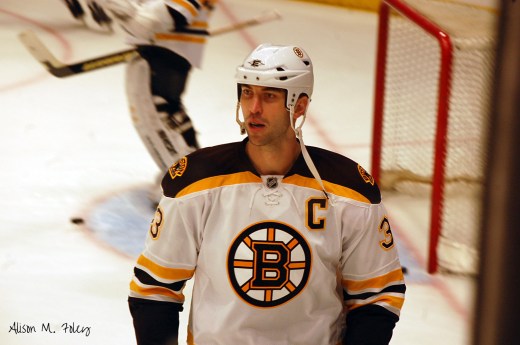
Zdeno Chara returns for his eleventh season as the captain of the Boston Bruins (photo courtesy of Alison M. Foley)

Closing out the post and podcast series on the Boston Bruins outlook for 2016-17.

I won’t be redundant here in hopes that instead of reading the post, you’ll carve out time to listen to the 55-minute podcast breaking down the defensemen. As I say up front in the pod- I’m not saving the best for last, and hope is not a method here- they’ve not gotten appreciably better since the catastrophic finish to the 2o15-16 campaign.

Even the most optimistic of fans would be hard-pressed to express confidence in the collective Boston blue line, but it is a hard-working bunch and if they don’t get the B’s back to the postseason, it won’t be for a lack of trying.

Listen to the podcast here:

Rob O'GaraBruins


Check out the rest of the series posts and podcasts here:


Centers

Right Wings

Left Wings

Goaltenders

Download the pods on your podcast app/client: https://scoutingpost.com/feed/

What D? The elephant in the room for the Bruins

Zdeno Chara returns for his eleventh season as the captain of the Boston Bruins (photo courtesy of Alison M. Foley)

Zdeno Chara returns for his eleventh season as the captain of the Boston Bruins (photo courtesy of Alison M. Foley)

It’s been a slow August, but I had an exchange on Twitter today that inspired a new post- the first since the Jimmy Vesey recap last weekend. There will be more content in store as we get closer to the new season and of course the 2016 World Cup of Hockey.

With Vesey now officially with the Rangers, Bruins Nation turns its lonely eyes to Don Sweeney, looking at the proverbial elephant in the room- the lack of a clear and meaningful upgrade on the Boston blue line since the end of last season. Re-signing John-Michael Liles was fine on its face, but remember- he was a part of the April implosion that saw the B’s crater after sitting as high as second place in the conference a week and change after the trade that brought Liles to Boston. Also extended- Kevan “Killer” Miller, Colin “Chiller” Miller and Joe (Don’t call me “Blow”) Morrow...what do they all have in common? That’s right- they were all a part of the epic spring collapse for the second year in a row, but 2016 was worse because the B’s seemed to be well-positioned for playoffs at least before coming completely undone.

Not to put too fine a point on it, but the coda- an embarrassingly bad home loss against the nothing-to-play-for except to be spoiler to a division rival Ottawa Senators was a final humiliating kick in the crotch to a season that had far more peaks than valleys, but will ultimately be remembered for the inglorious ending.

So, here we are- a few days before September and unless we missed something- the only new blood the Bruins brought into the organization over the summer via free agency at the defense position is AHL journeyman Alex Grant. Nothing agains the former 1st overall midget pick in the 2005 QMJHL draft- he’s had a cup of coffee in the NHL and even scored some goals- but doesn’t this look a lot like Matt Irwin from a year ago?

We’re still waiting for a serious move to address a defense that was overmatched at best when skating against the top NHL offenses a season ago. This is not a slam on the current Boston defensive core- we think the world of Torey Krug, for example- he deserves to be surrounded by better talent. Zdeno Chara is at the end of a Hall of Fame career, but he’s still a serviceable defender…so long as no one expects his old near-30 minutes in any situation. Gone is Dennis Seidenberg, who, despite his huge heart, just couldn’t be effective on his surgically-reconstructed bottom trunk. Ability-wise, Seids is addition by subtraction, but his experience and veteran leadership will be missed, so you can make the case that this defense is actually worse than it was a year ago. This group needs help and one top-three NHL defenseman acquired via trade would do wonder to take some of that pressure off.

Help is coming in the form of a youth movement that shows a ton of promise. Brandon Carlo and Rob O’Gara could be skating for the NHL club at some point this season (they’re both slated for the AHL at a minimum, maybe more depending on how camp/preseason goes for them) and with their size and mobility, there’s a lot to like about their NHL potential. However, no one should be expecting either player to come in as a rookie and stabilize the Boston blue line. Charlie McAvoy is the cat’s meow after being picked 14th overall and having a sharp B’s development camp in July and even better showing at USA World Junior camp in Plymouth, Mich. earlier this month. But, he’s an NCAA player, so unless he bolts from BU, he won’t help the B’s this season until spring at a minimum when his sophomore year at Boston University is in the books. Jakub Zboril, the team’s top pick from a year ago, is in better shape and rehabbing an image that took a hit from a lackluster start last season- he’s talented enough to be a top-three one day, but how badly does he want it? And don’t forget Matt Grzelcyk, Jeremy Lauzon and Ryan Lindgren– all impressive defenders who bring a little something different to the table. Let’s face it, though- even with the optimism, these players aren’t going to give the 2016-17 Boston Bruins what they really need. Hey- if someone within the organization steps up and delivers, more power to ’em, but this is why folks are getting antsy.

It’s legit.

So, based on some things I was told by sources in the Bruins organization and around the NHL, here’s a quick look at some options, or, irons in the fire, that the second year Boston GM and his management group might be looking at. On paper, this defense is simply not much to write home about given how things went a year ago, and while Sweeney has talked about the challenge of finding the right players at the right price, we’re a few days from September and while you don’t want to use words like alarming to describe the situation, what else are we left with. Albert Einstein once defined insanity as doing the same thing over and over again and expecting a different result. You could apply that to the Boston defense and someone would have a hard time arguing against it.

Preamble over, let’s look at some options- by no means all of them, but something to get the juices flowing, at least:

Kevin Shattenkirk, Blues: The Bruins thought they had a deal for the former BU standout back in February in a deal that would have netted a return for Loui Eriksson, but according to a source close to St. Louis, those talks fell apart over the Blues’ desire to move another bad contract to Boston. Sweeney balked and no deal. Now, same source tells TSP that trade talks are heating up for Shattenkirk again, but not necessarily between Blues GM Doug Armstrong and the Bruins. It sure sounds like the NY Rangers would be a club sniffing around Shattenkirk, especially given his Empire State roots.

Armstrong’s in a tough spot and he knows it- the Blues came close to reaching the Stanley Cup finals for the first time since Bobby Orr took the pass from Derek Sanderson, beat Glenn Hall and hurtled through the air, frozen forever in time (46 years ago), but the San Jose Sharks ruined their (and Boston’s 2016 late 1st-round draft) party. Shattenkirk will be a free agent next summer and he’ll command big bucks even though his value as a two-way defender and power play contributor seems all but assured of declining. Assuming the Blues don’t try to re-sign him, trading Shattenkirk now means Armstrong gets more of a return, but he weakens his talented veteran team. The longer they hold onto him, the more he becomes a “rental” and the acquisition price becomes less than what it could be. Decisions, decisions.

The good: Shattenkirk would instantly upgrade the Boston defense and a top-3 of Chara, Shattenkirk and Krug isn’t a top NHL group, but it’s respectable. He’s very good in transition and paired with an effective shutdown guy (Adam McQuaid?), the shortcomings exposed by San Jose in the Western Conference final series last spring wouldn’t be as profound.

The bad: Let’s be honest- Shattenkirk is a fine player, but he’s on a cap-friendly deal right now, and he won’t be 12 months from now. If you acquire this guy, you either do so for one year and accept that he’ll be gone next July 1 or you have to commit upwards of $7 million a season (ballpark) to extend him. Is he worth it? Remember- you’re going to pay a handsome price to get him from St. Louis, and then you have to commit the cap allocation (and real dollars) to keep him in Boston.

The skinny: Last February, this made sense for the Bruins. Now? Not so much. If Sweeney is going to pay a premium, look for someone younger and more cost controlled. Recommendation: Pass on Shattenkirk and let someone else overpay for him not only in terms of assets surrendered, but in his next deal, which will be a doozy. The B’s already signed David Backes to a controversial big-ticket contract- remember Einstein.

Jacob Trouba, Jets: We’re hearing from several sources around the league that tension and friction is growing more intense between the 2012 NHL draft darling and Winnipeg management. Where he once looked like a franchise player-in-waiting, he’s taken steps backwards after a very promising rookie year, but wants big bucks and more playing time. The Jets committed to Dustin Byfuglien on that, so it sure looks like Trouba’s days are numbered in the ‘Peg, but GM Kevin Cheveldayoff is under no timetable to resolve the issue…if there even is one. On the positive side- Trouba has all the tools of a top-2 NHL rearguard, even if he hasn’t shown it. The risky aspect is that he’s really in no position to be dictating terms, and yet here he is, apparently. That will make NHL suitors wary for third and fourth contract-type maneuvers, assuming he gets there.

The good: Trouba would give the Bruins a young D they could sign to a “show-me” contract (if he just wanted out of Winnipeg) with a delayed payday, much like they did with Krug. He’d instantly move into the top of the rotation and be given every opportunity to prove he can be a bell cow D and earn that massive deal he seeks. The B’s would benefit from his skill and young legs to take some pressure off of Chara and Krug.

The bad: Trouba is risky right now and pro scouts might be a tad squeamish about laying it on the line for him. Is he just human and his play affected by the environment with the Jets? Or is he more of a dud than a stud? Any trade for him is going to cost a lot- he’s only 22 and was a top-10 pick, so Cheveldayoff can drive up the bidding and come away with a nice package/return- you’ll have to overpay for Trouba to get him, and there’s no guarantee he’ll be the player you’re praying he will. If he doesn’t, that’s what costs people their jobs.

The skinny: Go East, young man! Forget the rumors about an offer sheet for Trouba, but if Sweeney could wrangle a deal, Trouba just might be the droid the B’s are looking for. This risk is worthwhile, and when you stack Trouba up against the Bruins defenders player-for-player, he’s better than most, and with the promising defense prospects coming up (at least one or two not named McAvoy would have to go back to Winnipeg, no doubt) within the organization, he’ll get help at some point. But the Bruins need a defenseman now…what good is putting Patrice Bergeron, Brad Marchand, Backes, Chara and company through another season like the last two if you don’t find a way to improve your team and give them a chance to build on two very frustrating finishes.

Cam Fowler, Ducks: I talked about him being an option via trade for the B’s in early July here, so I don’t have a great deal to add other than to say, it’s more of the same with Shattenkirk- Fowler improves the Boston defense and makes them more competitive. Hampus Lindholm to the Bruins via trade is probably a pipe dream- if Bob Murray is going to move a blue liner, we can’t see it being him- Fowler is a more obvious choice. But hey- if that happens- that’d be huge (but again- pipe dream).

Just in case you’re disinclined (too lazy?) to click on the link I provided above, here are some nuggets from that Fowler post from July 2:

Fowler’s your “bridge”- he makes $4M and has 2 years left to UFA status, meaning he gives the Bruins two seasons before they have to make a decision and brings them two years closer to seeing one of their recent top-60 D selections evolve further to see where they might be as NHL players. The issue with Fowler is that he shoots left, whereas the B’s need to shore up their right-shooting talent. So, in essence- if the B’s are able to go out and get Fowler, they then probably need to add another right-shot D for depth and hope that Colin Miller takes a big step next season for them.

The good: Fowler makes the Bruins better. How much? That’s up to you, dear reader, to decide.

The bad: If you pay attention to advanced stats and analytics, Fowler’s valuable on the power play but more of a 3rd-pairing guy at even strength, and the B’s have plenty of those. He’s also going to cost a lot to acquire at age 24. Teams with good D-men are in a seller’s market, which the B’s are unfortunately (for them and their fans) on the wrong side of.

The skinny: Fowler is worth pursuing- there’s real ability there, and he might prove to be a good fit to help stabilize the defense until one (and) more of the young guns are able to develop into NHL regulars on the Boston blue line.

Kris Russell, Unrestricted: In the free agent game of musical chairs, the music has stopped and Russell is looking for a seat. It’s surprising really, even with the concerns about how the analytics translated to his overall game and potential going forward. He’s 29 and has nearly 600 NHL games under his belt. The former Medicine Hat Tigers standout and Columbus 3rd-rounder can really move the puck and pass, but his turnovers and decisions (not to mention the fact he’s undersized) get him into trouble. Granted- how is it that we’re almost to September and he still hasn’t found a landing spot? In a word- money. His agents shot far too high, so he’ll have to take a lot less and the lower the cap hit, the more reasonable a guy like Russell will be.

The good: Russell can move and aid in the transition game. He’s a veteran and he’d represent an improvement on paper to the Boston roster, but that assumes his play doesn’t fall off a cliff- a major factor perhaps in why no team was eager to sign on for the big bucks he was looking for on July 1.

The bad: The analytics are not kind…and we need to be honest with ourselves- the Bruins and their fans aren’t either. A player like Russell will be so heavily scrutinized that he’s more likely to wilt in a bigger role with Boston than he would in more of a complementary spot with a better, even contending club.

The skinny: Signing Russell to a prime market deal on July 1 was the major red flag, but now that we’re reaching the end of the offseason, there are worse things the Bruins could do than sign him to a 1- or 2-year team-friendly deal. Having said that- he’s not a great fit as a left-shot D with similar attributes to Krug- do the B’s need two similar players? Probably not- balance is the key and Krug is the much better overall player- it’s not close. Pass- let some other club roll the dice.

Okay- there it is. Not all the bases covered, but if we get to the start of training camp after the World Cup of Hockey and nothing has been addressed with the Boston defense, then you’re going to see and hear the criticisms ramp up. This 16-17 Bruins roster is a game bunch, but they don’t have the talent on the whole to compensate for the lack of skill on the back end, and throwing up the hands and claiming an upgrade is too hard to pull off won’t cut it with the natives.

Help coming in the form of Brandon Carlo? Might be too much, too soon (Kirk Luedeke photo)

Help coming in the form of Brandon Carlo? Might be too much, too soon (Kirk Luedeke photo)


Report: Keith Gretzky to Oilers as assistant GM

Multiple reports on Twitter to include the esteemed Bob McKenzie have Bruins amateur scouting chief Keith Gretzky heading west to join former B’s GM Peter Chiarelli as part of the Edmonton Oilers braintrust. I chatted with a Boston team source who didn’t confirm it, but indicated it was a done deal, so all we do now is wait for the official announcement.

Gretzky, who joined the B’s scouting staff during the 2011-12 season after being let go from his previous post as chief scout for the Arizona Coyotes. Gretzky was promoted to the head scout position in Boston in August 2013, replacing Wayne Smith.

The move is not all that surprising, as Chiarelli brought the younger brother of Wayne Gretzky to Boston as a scout and then elevated him to head up the team’s drafting efforts after two seasons in a crossover capacity.

In the three drafts since, more optimism accompanied Boston’s efforts. Gretzky and Co. hit immediately on David Pastrnak, who slipped to 25th overall. However, every other player from that 2014 draft class looks promising as well: Ryan Donato enters his sophomore season at Harvard and is primed for bigger things in Cambridge. Danton Heinen has done nothing but impress after being an unknown plucked out of the BCHL in his second year of NHL draft eligibility, posting two prolific scoring years as Denver University. Heinen could win a job in Boston right away given his skill level and versatility. Anders Bjork was a fifth-round find and gem, who led the Notre Dame Fighting Irish in scoring as a sophomore, and even seventh-rounder Emil Johansson shows promise for being a late pick.

Gretzky’s 2015 draft could pay big dividends for Boston as well, even if some of the choices in the first round were not popular ones at the time. With 10 picks thanks to the Dougie Hamilton and Milan Lucic trades, the B’s have a bevy of prospects with a trio of second-rounders who have generated buzz in their own right. Time will tell whether not picking one or two of forwards Kyle Connor, Colin White and Mathew Barzal will hurt Boston in the long term, but Boston’s first six choices all seem to be developing, with 37th overall pick Brandon Carlo having the best chance to play in the NHL this season. Zach Senyshyn and Jakob Forsbacka-Karlsson show real promise at key forward positions (RW, C) and the B’s appear to have some potential in huge but lithe goalie Daniel Vladar (3rd round) and agitating winger Jesse Gabrielle. The B’s can’t employ all 10 of their draft picks from 2015, but they’re going to hit on a few at least.

This past June, Gretzky and his scouts went with Charlie McAvoy over Dante Fabbro– both will play at BU this season, but don’t be surprised to see McAvoy headed to the pro ranks sooner rather than later. Early returns on his Team USA development camp in Plymouth, MI this week are good and Ryan Lindgren (taken 49th) overall has really stood out. “He nearly killed a kid,” with a hard but clean open-ice hit, according to a text I got from an NHL scout on Saturday. The same individual also singled McAvoy out as the “best player on the ice.”

Gretzky caught some heat for the Trent Frederic pick and some of his subsequent comments where he admitted that the B’s don’t see the 29th overall selection as a top-six forward. He probably didn’t articulate that as well as he could have, but if we learned nothing from the Senyshyn pick the year before, it’s probably best to see how Frederic does going forward before casting judgment.

If Gretzky’s work with Boston was promising, then his track record in Arizona is more of a mixed bag. The Coyotes didn’t hit on a great deal of picks the team made on his watch, but the point I would offer up is that not every scouting staff in the league is the same. Just like the teams themselves- some clubs are more talented than others, and there’s always a multitude of factors that go into drafting. Even so, some in the business point to Gretzky’s tenure in Arizona, and with the jury still out on his Boston body of work, you just have to take it from there.

Boston could promote from within- Scott Fitzgerald is the club’s assistant director of amateur scouting and has recovered from a serious car accident in 2013 that nearly cost him his life. Dean Malkoc has also impressed as one of the club’s workhorse scouts who goes all over from his Western Canada base of operations to look for talent. Ryan Nadeau has done tremendous work in the NCAA ranks and elsewhere. B’s GM Don Sweeney could also bring in an experienced chief scout from the outside. It will be interesting to see.

All that is left to do is congratulate Gretzky for the promotion and move up. It hurts Boston, as he appears to have done fine work for the club in his five seasons here. He’ll join an Edmonton organization flush with major talent after winning the Connor McDavid sweeps a year ago and then falling into Jesse Puljujarvi at fourth overall in Buffalo. Old friend Lucic is in town, and we’ll see what Gretzky can do to help develop the talent in the system and identify new players down the road.

In the meantime, changes in Boston continue to shape the front office and Sweeney has another key hire ahead.


Boston Bruins post-development camp prospect check- the Pros

Heinen

The purpose of this two-post series is to make a quick snapshot of where one analyst sees the Boston Bruins’ professional prospect depth chart stacking up after the 2016 NHL Entry Draft and this past week’s development camp. We’ll start with he professional players who are expected to be in Providence or in the North American and European pro ranks this season. On Monday, we’ll hit the amateur (NCAA and junior players).

Caveat up front- I did not personally attend development cam this year, so am basing my assessment on feedback from members of the Bruins organization, media and fans who were there in person to see the players. I have seen every prospect on the list, either on film or live, so the bulk of this assessment comes not from four days of on-ice drills and a 3-on-3 scrimmage, but from a season and in several cases, multiple years worth of evaluation. Note- I am only covering players aged 25 or under, so that takes Tommy Cross out of the mix on this list for those who might be wondering. Noel Acciari  and Chris Casto just make the cut as December 1991-born players.

Here we go, and I’ve done an audio file to supplement the limited write-ups below, so for all you Bruins hockey junkies, there’s more content in this post than ever…tell your friends!

The Pros (AHL, ECHL or Europe)

  1. Frank Vatrano, LW (East Longmeadow, Mass.) Plus: Put up mind-boggling numbers with 36 goals (55 points) in as many AHL games, while adding another eight goals in 39 NHL games with the big Bruins. The undrafted free agent turned himself into a sleek scoring machine as a rookie pro and is primed for a bigger Boston role this year. Minus: Without ideal NHL height, Frank the Tank will have to maintain a high-energy pace and work in all three zones to maximize his potential.
  2. Danton Heinen, RW Plus: After two high-end scoring years as a collegian, he put up a pair of assists in his second AHL game last spring; with his genius-level hockey IQ and slick hands, the 2014 fourth-rounder could earn an NHL job right away. Minus: He’s about 6-foot and not even 200 pounds, so he’s going to have his hands full with the increased speed and physicality of the pro game.
  3. Brandon Carlo, RD Plus: Like Heinen, Carlo’s on a positive trajectory at making the Bruins right away- he’s 6-5 and can really skate and move, already a beast in his own end, something Boston lacked down the stretch a year ago. Minus: Not all that instinctive in the offensive end; could stand to play a lot of minutes in more of a top role and on the power play to try and tease more offensive production and build confidence.
  4. Rob O’Gara, LD Plus: At 6-4 and north of 220 pounds, this premier shutdown/defensive mind can also skate extremely well for one so big- his speed and footwork has always been advanced, and the rest of his game has come along quite well in the five years since he was drafted in the fifth round. Minus: More of a “safe” prospect than one you would assign talk of high “upside” or “ceiling” to, O’Gara isn’t quite the physical specimen Carlo is (they’re close), but he may be a more complete defender when all is said and done.
  5. Colin Miller, RD Plus: “Chiller” has top-shelf skating, passing, shooting skills; showed off some offensive flair in his first NHL campaign, putting up a respectable 16 points in 42 games despite not having an overabundance of ice time/becoming a spare part in the season’s second half. Minus: The former LA Kings farmhand has a lot of work to do on the defensive side in terms of processing/making better decisions and improving his three-zone play.
  6. Austin Czarnik, C Plus: Dazzling offensive center impressed in his first rookie pro year with 50+ points to back up his tremendous speed, lightning-quick hands and ubermensch-worthy vision/hockey sense. Minus: At barely 5-8 (and that’s probably being charitable) the former Miami RedHawks captain wasn’t drafted, and will have to overcome size concerns at a position the Bruins are pretty deep at.
  7. Malcolm Subban, G Plus: The progress has been slower than expected, but there is no doubt that he’s one of the more dazzling athletic talents at the position and when healthy, has shown some major league promise. Minus: The fractured larynx was a significant setback, and if it hasn’t been one thing for Subban, it’s been another (    outplaying him in 2014-15)- this is the year that he proves his worth to Boston and justifies his selection in the 2012 first-round once and for all.
  8. Noel Acciari, C (Johnston, R.I.) Plus: Ace two-way center earned his way to Boston for a 19-game stint at the end of the year after being an undrafted free agent less than a year earlier; a good skater, superb faceoff man and intelligent, charismatic 24-year-old who plays the game hard, but clean- he’s got a lot in common with Patrice Bergeron, without the scoring. Minus: With just one NHL assist- there isn’t a whole lot of scoring in the well for the one-time captain of Providence College’s 2015 championship squad; as he turns 25 in Dec., there probably isn’t a whole lot of development left- he’s a solid, if unspectacular grinding bottom-line pivot.
  9. Matt Grzelcyk, LD (Charlestown, Mass.) Plus: When it comes to speed, sense, and spirit/heart- they aren’t built much better than the Townie, whose veins probably bleed black and gold; the former BU captain is an ultra-slick puck-moving defender who can push the pace and get the puck out of his own end with ease. Minus: At about 5-foot-10, Grzelcyk is going to have his hands full forcing his way into Boston’s top-six D rotation and might have to benefit from some luck and minors time to get there.
  10. Peter Cehlarik, RW Plus: Big-bodied Slovak plays the off-wing and signed with Boston after spending four years playing pro hockey in Sweden; he’s got a nice 6-foot-2 frame plus some offensive chops as a late third-round pick in 2013. Minus: He’s just an okay skater- he’s gotten better and can move pretty well in a straight line, but his first few steps and acceleration are clunky; he’s not great at the quick stops/starts/direction change and it will be interesting to see how he adapts to the smaller North American ice surface.
  11. Zane McIntyre, G Plus: When it comes to drive and character, they don’t come much better than the native of Thief River Falls, Minn. who once earned top goalie honors in that state- named for former Bruins great Frank Brimsek; whenever tested, the 2010 sixth-rounder has always responded with dramatic improvement and maturity beyond his years. Minus: It was a tough transition to pro hockey for the NCAA’s best goalie; he’s got technique issues to work through and will have to fend off fellow pro Daniel Vladar for internal crease competition.
  12. Seth Griffith, RW Plus: Despite the odds working against a smallish forward without dynamic wheels, the 2012 fifth-rounder has seen NHL action in each of the past two seasons; he’s a highly creative scoring mind with the superb puck skills to set up plays or finish them off. Minus: We so want to have Griffith higher on the list, but what is he at the NHL level? Scorer? Checking forward? We probably know the answer to the second question, so he’ll have to make it in the top-two lines- good luck.
  13. Daniel Vladar, G Plus: Huge (6-5), athletic and learning- he put up pretty nice numbers with the Chicago Steel of the USHL in his first North American season; very tough to beat on the first shot and improving his technique. Minus: After the B’s signed him to a 3-year ELC in the spring, where is the still quite raw Czech native going to play next year? ECHL? AHL? Europe? Clock is now ticking on his timeline.
  14. Linus Arnesson, D Plus: A bit of a forgotten man and 2013 second-rounder didn’t forget how to play- he’s got good size, can skate, make a clean first pass and is a smart, savvy defensive player even if he’s very much on the vanilla side of the red line. Minus: Nagging injuries kept Arnesson from getting out of second gear, and questions about his vision and ability to process the game well in the offensive aspects mean that at best, he’s probably a 4/5 at the NHL level assuming he ever gets there.
  15. Brian Ferlin, RW Plus: Looking for someone who can play the right side effectively and has enough size to drive through traffic and skill to make things happen around the net? Ferlin’s your guy. Minus: After a promising rookie pro season in 2014-15 that saw him see seven NHL games near the end, a concussion forced him out of most of this year- he’s got a lot of work ahead to put himself back to the fore.
  16. Sean Kuraly, C Plus: With his pro-style body (6-2, 210) and wide skating base, the Ohioan gets around the ice pretty well and has shown the potential to be a solid if unspectacular bottom-six option, either at center or more likely on the wing somewhere. Minus: There’s just not a whole lot to get excited about when it comes to Kuraly’s hands and creativity- when forced to carry more of an offensive load for Miami U. as a senior, he flamed out.
  17. Anton Blidh, LW Plus: You gotta love this energetic, abrasive little cuss of a Swedish forward who plays bigger than his size and stands out with his pure hustle and physical style. Minus: Unless you’re fine with him on Boston’s fourth line (which is A-OK) there’s simply not enough pure talent/ability in our view for much of an impact at the NHL level.
  18. Colby Cave, C Plus: Fine skater with a fine two-way hockey IQ and the raw leadership skills that will be an asset in any room. Minus: We just don’t see much in terms of high-level skill, so he’ll have to win a spot on the bottom lines while swimming in a pretty deep pool.
  19. Chris Casto, RD Plus: With his thick build and pretty quick feet to go with a bomb of a shot, Casto is a bit like Arnesson in that he’s not suited to ride around near the top of Boston’s prospect lists; he just spent three years in Providence after signing as an undrafted free agent out of Minnesota-Duluth and was qualified, so that speaks to the fact that the B’s saw something in him worth keeping around. Minus: Every team needs solid, safe, unspectacular players to feed their minor league farm teams and Casto might be that guy- unless the B’s get into a real pickle with injuries this season, it’s hard to envision him being seriously in the mix as a regular.
  20. Colton Hargrove, LW Plus: Put up surprising numbers in his first full AHL campaign; big, gritty power winger is heavy on the puck and finds ways to get dirty goals- one tough nut. Minus: There’s a lot of competition for bottom-six jobs and Hargrove  needs to improve his foot speed and maintain his focus/drive. He’s getting there.
  21. Emil Johansson, LD Plus: Another Swede in the Boston system- he impressed at development camp after a real strong finish to the Swedish pro season with HV71; he skates well and moves the puck with gusto- something the B’s desperately need. Minus: Excelling at drills against amateurs when you’re playing pro hockey overseas is one thing, being able to process, read and react in the NHL is another- still not sold on the 2014 seventh-rounder’s ultimate big league potential.
  22. Justin Hickman, F Plus: Coming off shoulder surgery, it was a frustrating year for the Seattle Thunderbirds captain and power forward who was slow out of the gate and never recovered. Minus: Undrafted free agent just another physical forward in a sea of them, but could rebound and improve his stock with better health and more confidence after playing through a challenging rookie season.
  23. Oskar Steen, F Plus: Energetic and gritty; excellent skater who has a low center of gravity and powers through would-be checkers while taking pucks tot he net. Minus: He probably deserves a better fate than to be at the bottom of the list, but someone has to bring up the rear- reports said he showed quite nicely in drills at development camp but was not as noticeable in the scrimmage/replicated game situations. A 5-9 forward has to be better at that.

A look at the 10th Boston Bruins development camp Pt 1: the G and D

Boston Bruins GM Don Sweeney didn’t invent the idea of bringing young prospects in during July to acclimate them to the team’s systems, culture and begin the bonding process with their peers inside the organization, but he is the father of the development camp tradition in Boston, which began in the summer of 2007.

As the team’s top player development guru at the time, Sweeney’s vision has matured in the near-decade since the B’s brought in top picks Zach Hamill (ouch) and Tommy Cross, to mix in with the other prospects, five of whom went on to have fine NHL success and were a part of the 2011 Stanley Cup championship squad- David KrejciMilan Lucic and Brad Marchand, Adam McQuaid and Tuukka Rask. Here’s an old archive of that very first prospects camp, written by John Bishop– the recap provides a fascinating glimpse into the future at a time when so much was exciting and  new, including head coach Claude Julien.

10 years later, Cross is still with the organization and Marchand is coming off of his best NHL season to date, lighting the lamp 36 times for the Bruins and lining himself up for a lucrative extension that should see him earn about $6 million on an average annual value if the team can get something done with him before he becomes an unrestricted free agent next July 1. Krejci moved into the B’s all-time top-20 scorers this past season, and enters the new campaign in striking distance of 500 career points (he sits at 472). Krejci turned 30 in late April and there are concerns that his slight frame could be breaking down after the wear and tear he’s been subjected to since breaking into the NHL on a full-time basis midway through the 2007-08 season. A fourth member of that inaugural development camp- McQuaid- is another member of the championship team and has managed to carve out a solid NHL career with the Bruins after the team acquired him from Columbus (he was a second-round choice in 2005) before the 2007 draft for a fifth-round pick. Rask, who interestingly enough was outplayed by Kevin Regan in the final inaugural camp scrimmage, went on to earn the 2014 Vezina Trophy as the NHL’s top netminder and backstopped the B’s to the 2013 Stanley Cup final series after backing up Tim Thomas in 2011. That Rask gave up 7 goals on just 29 shots while Regan stood tall at the other end should serve as a reminder to everyone not to get too fixated on what happens during camp scrimmages.

Boston is middle of the pack when it comes to developing prospects, and in looking back on it, that very first development camp was the high-water mark for the B’s organization with five successful (impactful to Boston) graduates taking part. That number goes up if you include those camp participants who went on to see NHL success elsewhere (Vladimir Sobotka) or big league action at some point in their careers, some more than others (Matt Hunwick, Byron Bitz, Matt Lashoff, Martins Karsums, Andrew Bodnarchuk, Mikko Lehtonen, Hamill, Cross). When you consider that Lashoff and Karsums (and Bitz) were dealt for future Hall of Famer Mark Recchi and the pick that brought Dennis Seidenberg and Matt Bartkowski to the Bruins, it was a pretty impressive time for the B’s organization and foreshadowed that the team was on its way up, just four years from climbing to the summit of the NHL after being mired in the cellar.

Since 2007, development camp production has been a little more spotty- Joe Colborne, Mike Hutchinson, Jordan Caron, Tyler Randell, Tyler Seguin, Ryan Spooner, Craig Cunningham, Zach Trotman, Dougie Hamilton, Alexander Khokhlachev, Kevan Miller, Torey Krug, Seth Griffith, Joe Morrow, David Pastrnak, Noel Acciari and Frank Vatrano are all past Bruins prospects and camp attendees (2008-15) who saw NHL action in the 2015-16 season. There are more if you include players like Josh Jooris (Calgary) and Matt Read (Philadelphia) to name two, both of whom attended past Bruins camps as undrafted NCAA invites.

It is not lost on myriad fans that two of the most skilled and impactful players from that list- Seguin and Hamilton- are now skating and producing for the Dallas Stars and Calgary Flames. Krug, Pastrnak and Spooner are the biggest success stories as home grown players who all saw time in at least one summer development camp. Vatrano and Acciari might not be too far behind in terms of growing into regular contributors to Boston’s fortunes.

Since 2014, when the B’s drafted Pastrnak late in the first round and then saw him earn an NHL role at the tender age of 18, the draft process has looked up for the team and there is reason to look at some of the futures with more optimism than in the past.

Much has happened in the decade since Peter Chiarelli and Sweeney brought their first iteration of prospects to Wilmington, Mass. and not all of it good. However, that’s life- a series of ups and downs. The B’s lost their way during a critical period of unproductive drafts (2007-09) and then moved out some of their top young talent for nowhere near enough in return. The jury is still out on Dougie Hamilton, who turned into three promising picks in Zach Senyshyn, Jakob Forsbacka-Karlsson and Jeremy Lauzon (the first two of the trio will not be in attendance due to health and schedule conflicts).

While development camps are helpful to assisting the youngsters in preparing for the challenges that lie ahead as they transition from the amateur to pro ranks, they are not predictors of future NHL success. That remains largely up to the players themselves to beat out those ahead of them on the depth chart, or become footnotes in camp history the way T.J. Trevelyan, Levi Nelson, Chris Collins, Dennis Reul and Brock Bradford (among others) did from 2007.

2016 Boston Bruins development camp attendees at a glance (2015-16 club in parentheses)

The goaltenders:

Stephen Dhillon (Niagara- OHL): The lone invite this year as a player not drafted by Boston or under contract (he attended Detroit’s prospects camp this week, btw), the dual citizen from the Buffalo area is big, toolsy and was at one point projected as a top-90 pick in the 2016 NHL draft. He didn’t get much playing time and is still pretty raw, but might earn an NHL contract offer this summer if he can impress in his various tryouts. If not signed by the start of the new season, he’ll go back into the 2017 NHL draft.

Zane McIntyre (Providence- AHL): This is the former University of North Dakota star’s seventh Bruins development camp since he was drafted in 2010. After winning the 2015 Mike Richter award as the NCAA’s top netminder and finishing third in Hobey Baker voting as the top college player (behind Jack Eichel and Jimmy Vesey), McIntyre had a challenging transition to pro hockey. He was thrown into the fire early when Subban suffered a training camp injury and at times, McIntyre flashed the promise of a future NHL starter. He’s coachable and driven, so he’s going back to work on fundamentals and watch for him to bounce back in his second AHL campaign. Here’s a report on his Richter Award:

Malcolm Subban (Providence-AHL): Subban did not attend a year ago, but after suffering a fractured larynx during warmups in late January, he missed the rest of the season. This is an opportunity to help him get back into playing shape so that he’s not going into September training camp to face NHL shooters about 9 months after his injury. It’s more about helping him with his confidence and timing than anything else, and will give the Boston coaches additional time to help refine his technique.

Here’s his 2012 draft video from the YouTube :

https://www.youtube.com/watch?v=sNmXo0TqukI


Daniel Vladar (Chicago- USHL): The massive (6-5) Czech butterfly goalie and third-rounder in 2015 had a strong first North American season playing Jr. A hockey while splitting the Steel’s goaltending duties nearly down the middle. He’s so big and athletic that “Darth” Vladar is tough to beat on the first shot, but he’s got work to do with his technique (sensing a trend here?). At times, he appears slow to read the play and seems to be guessing about where the shot is coming from, so this is something B’s goalie coach Bob Essensa will likely work on with him. When on his game, Vladar is like a giant octopus who swallows pucks and impresses with his size and agility. He signed a three-year ELC last spring, so it remains to be seen whether he will play pro hockey in the AHL or ECHL (or Europe) or try to work a loophole that might allow him to skirt the CHL’s ban on import goalies to play in the QMJHL. We’ll see.More draft on Vladar from USHL:

https://www.youtube.com/watch?v=sNmXo0TqukI

Vladar highlights from 2015 Bruins development camp courtesy of “Power Play with CJ”:

The defensemen:

Brandon Carlo (Tri-City- WHL/Providence- AHL): Colorado native is already a fan favorite after being drafted 37th overall in 2015 as a big (6-5), fluid-skating shutdown defenseman. As a late-born 1996 who has already signed with Boston, Carlo is eligible to play the full year in Providence of the AHL if he doesn’t make the NHL Bruins out of camp. He’s a solid bet to play for Boston at some point this season, just because of his impressive pro hockey attributes and a mature outlook. He’s very difficult to beat 1-on-1 because of his mobility and reach, and while rugged in his style, isn’t an overly nasty or intimidating player. He’s still a little on the light side given how tall he is, but John Whitesides will get him NHL-ready real soon. Whether Carlo can evolve into a legitimate two-way threat at the NHL level or he becomes a solid, minute-eating defensive mainstay is the question we most want to see answered…all in due time. Here’s a nice draft profile on him from the Tri-City Americans:

And an isolation video of Carlo from the 2015 WJC (HockeyPwns):

Cameron Clarke (Lone Star- NAHL): The NAHL’s top defenseman and Ferris State recruit racked up 50 points this season for the Brahmas. He’s got an athletic 6-foot-2 frame with room to pack on some muscle to be able to handle the more rugged play at the higher levels. Although raw, Clarke is a heady, creative defender who skates with fluidity and can make all of the requisite passes in a rapid transition attack. He’s especially effective on the power play, where he uses his deft puck skills and lateral agility to create space and set up the play. He doesn’t have an overpowering shot yet, but is smart about when to use it and will strike when the shooting lanes are there. Clarke is more dangerous as a set-up man, where he quarterbacks the play with the man advantage and also uses his mobility and reach to deny opponents from gaining the edge and attacking with speed.

Matt Grzelcyk (Boston University- NCAA): TSP just published a comprehensive Q & A on the former Terriers captain and native Townie, but to quickly recap- he’s coming off of two significant lower body injuries that hindered him in his senior season. Even with the wonky knees, he still managed to match a career-best in goals with 10 and when healthy, plays an effective transition game with an improving defensive mindset. Don’t count him out in his quest to earn NHL playing time this season, though he’s realistic in what lies ahead and is prepared to do an apprenticeship in the minors first. Here’s a BU-produced video from his freshman season:

Grzelcyk given too much time/space at the 2015 Beanpot in OT:

His draft video from USA Hockey (and you just might recognize the voice on that 1st question):

Emil Johansson (HV71- Sweden): The 2014 seventh-rounder is a mobile, two-way defender who raised eyebrows late in the season and Swedish pro league playoffs when his offense came alive (3 goals, 5 points in 6 playoff contests). He’s got pretty average size with a 6-0, 190-pound frame, but skates well and is showing off some intriguing puck skills and potential. The hockey IQ/vision/creativity is a question mark at this stage, but since being drafted, the all-around game is progressing. He will skate for Djurgårdens IF next season and if he can keep his developmental curve headed up, Johansson might prove to be a late-round get worth signing and putting into the system. If you can speak Swedish, here’s a HV71 video interview from early in 2014-15 (nice footwork in the limited look):

Jeremy Lauzon (Rouyn-Noranda- QMJHL): For TSP’s money, the 52nd overall pick in 2015 with the third of three draft choices Calgary gave up for Hamilton, was one of that draft’s more impressive values. Even with a spate of injuries throughout the season, which included a scary skate blade cut to the neck during the ‘Q’ playoffs, Lauzon put up career numbers as the Huskies’ go-to defender and bell cow in all situations. He’s big enough at 6-2, skilled enough- he was one of the final cuts on Team Canada’s WJC squad after not even being a summer camp and December invite- and he plays a solid 200-foot game as a smart positional player with some bite. Bruins fans will grow to love him, even if he may or may not project as a high-end true No. 1 defender. If he hits on that potential however, it would go a long way towards silencing the unhappiness surrounding the trade with Calgary. He’s probably at least three years away, but if his progress is any indication, Lauzon will be worth the wait.  Have posted this before, but John Moore’s early 2014-15 profile is quite good:

Ryan Lindgren (U.S. NTDP Under-18- USHL): The Team USA captain and two-way rearguard was a great get at 49th overall in Buffalo. He’s similar to Lauzon in that he has no discernible flaws in his game and has a promising offensive upside that may not have been that appreciated by NHL scouts in his draft season. Though not all that tall at a little under 6-1, Lindgren is thick through the torso and has strong lower leg drive, which allows him to generate impressive skating speed and separate opponents from the puck. He’s so smart and instinctive- he pinches at the right times and understands his limitations. Lindgren will help you a lot, but he rarely hurts you.  The University of Minnesota-bound 18-year-old has high-end character and will do a little bit of everything, including playing with an edge that has caught some opponents unawares. Had he been 6-2 or 6-3, Lindgren would have been a first-round pick, but don’t sell him short as a player who could be more than the sum of his parts as a versatile defender who minus the size and reach, has the key attributes NHL clubs covet.  Here are some Lindgren U18 highlights (bigwhite06):

Draft video courtesy of the USHL:

Charlie McAvoy (Boston University- NCAA): Boston’s top pick at 14 is generating a lot of buzz headed into camp and rightfully so. You can read more about him here, but the common thread for the youngest skater in college hockey last season is that he has both the skill and personality to be a fan favorite in the NHL if he hits on his potential. An excellent skater who likes to take the puck and run with it, McAvoy’s defensive game and awareness steadily improved over the course of the season. He still needs to work on his decision-making and not getting too aggressive, but with the B’s making a conscious effort to add speed and skill to their transition game, McAvoy immediately rises to the top of the organization’s prospect depth chart for the position, and is up there with 45-goal scorer Zach Senyshyn in terms of projected NHL impact one day. McAvoy will be the focus of development camp, and rightfully so- he’s earned that, and some NHL scouts have said that he is on the verge of a major breakout at BU in 2016-17. A pro contract with Boston might not be that far behind. Watch his selection on YouTube:

https://www.youtube.com/watch?v=5EexsIbRU3k

Wiley Sherman (Harvard University- NCAA): At about 6-7, Sherman is the tallest Bruins prospect, and he brings surprising agility and footwork for one so enormous. He’s still filling out that imposing frame and could tip the scales north of 240 pounds when all is said and done. The 2013 fifth-rounder is coming off of a solid sophomore season at Harvard, where he benefited from an expanded role with the Crimson under Ted Donato and showed off some intriguing flashes of two-way play. With his long reach and skating, he’s difficult to beat off the rush, but Sherman needs to make faster decisions in the face of a tenacious forecheck. The former Hotchkiss Bearcat was always going to be a long-term project, but you can see a payoff down the road as a lower-pairing defense-minded player who could form a nice tandem with a more skilled offensive partner. With the size you simply can’t teach, there’s enough raw material with the Connecticut native to wait for.

Jakub Zboril (Saint John- QMJHL): Boston’s top choice in 2015 has a nice opportunity to demonstrate that some of the concerns about him after taking a step backwards offensively are unwarranted. On the plus side- the 19-year-old Czech is big, skates well and plays with a physical edge that is not typical of many European teens that come over to North America. He showed more two-way promise in his draft season, but did settle into a more defensive role this year before coming out of the shell to impress with some key playoff production. The big knock TSP has on Zboril is not unique to 2015-16, however- too often, the effort and compete aren’t where they need to be. This is not a matter of trying to downplay his potential, and before pointing out his youth, the road to the NHL is paved with similar impressive talents who for whatever reason, simply did not have the requisite personal discipline and dedication to live up to where their talent got them drafted. With his skating, passing, shot and physicality, Zboril still has top-two NHL defense potential. He’s at a key personal crossroads this season: he’ll have to start showing everyone that he’s capable of more consistent execution and effort in all three zones and is willing to put in the work to round out the parts of his game that aren’t NHL-quality yet. If he can do that, there’s reason to believe that Zboril will succeed, but he was the 13th overall selection for a reason- he needs to start putting it together. As a 1997-born prospect, he cannot play in the AHL for Providence this season if he doesn’t make the NHL roster out of camp. Another John Moore profile from Zboril’s draft season:

Highlights package from the HockeyVidz:

Rob O’Gara is not in attendance- he has “graduated” and will focus on making the Boston Bruins roster in the fall after finishing a four-year NCAA career at Yale. TSP has a more in-depth profile on the Long Island native coming this week, so if you’re disappointed that he won’t be there, we’ve got you covered.

But before that- coming soon- TSP will break down all of the forwards at Bruins development camp.


Bruins add six more to organization via 2016 NHL draft

The 2016 NHL Entry Draft came and went in Buffalo, N.Y. and six new players are now a part of the Boston Bruins organization after 211 total kids were drafted on June 24-25.

This post is just a quick-hitter- plan to have a more in-depth, player by player break down of the new B’s, but this is what we call in the military a “hot wash” to give a rapid recap of what happened. You can also listen to 98.5 the Sports Hub at 10:00 a.m. Sunday to get a little more.

Here are the Boston picks by round with a few notes on each:

1-14: Charlie McAvoy, RD Boston University- The Long Island native instantly represents some of the highest NHL promise of any prospect in the Boston system. Like Jakub Zboril, he has a pretty good offensive skill set and talent level. Unlike Zboril, he stays engaged and doesn’t have the inconsistency questions. I spoke to both of McAvoy’s most recent coaches right after he was picked and what kept coming up beyond his obvious talent is just what a good teammate and solid kid he is. Don Granato, now with his brother at the University of Wisconsin, had McAvoy at the NTDP and said that we was one of the most loyal players he’s ever seen come through the program. Dave Quinn talked about a profound transformation and improvement in McAvoy’s game last season from start to finish- that’s something every scout will get on board with, end of story. I have to think that commitment and progress are two big things beyond his obvious talent that sold the Bruins on him. I verified with Keith Gretzky, Boston’s chief scout, that it was indeed close between McAvoy and Dante Fabbro, but in the end- I think McAvoy’s proximity to the team HQ allowed everyone to see him with ease and the Boston brass was a little more comfortable with the level of competition and viewings they had.

I said before the draft that the B’s needed a hit single and it looks like they may have gotten one. Central Scouting had McAvoy sixth on their list of NA skaters, and depending on who you talk to- some felt McAvoy was the best defender in the draft. Time will tell if he hits the potentially high ceiling, but he’s going to be one to watch and shouldn’t be too far away from turning pro- he’s going back to BU, but could be in Providence by April.

1-29: Trent Frederic, C U.S. NTDP- Amidst rumors that the Bruins were trying unsuccessfully to trade the 29th selection either for NHL help or a chance to move back a bit and get some extra choices in the 2nd and 3rd rounds, they stepped up to the podium shortly before 11 p.m. and made a surprise selection in landing the Missouri product and big center who was not projected to be a top-30 selection. Frederic has size and more of a defensive game than an offensive one (and that’s probably being charitable at this point), but he got high marks for his intelligence and character. In the short time I saw him after the pick, there was little doubt that Frederic brings a level of gregariousness that probably endears him to teammates and coaches alike- I get the feeling that fans will really like him in their off-ice interactions. Unfortunately, being a good dude doesn’t win you many hockey games, so there will continue to be scrutiny on this pick for some time, as Frederic is headed to Madison to play for the Wisconsin Badgers. BU coach Quinn was not shy about revealing that he was highly disappointed that his own Terriers missed out on landing Frederic.

In talking to Gretzky and assistant GM Scott Bradley after the draft, the team recognized a need to get bigger at center- all three of their NHL pivots are 6-foot or under, and Boston felt that Frederic is emerging as more of a scoring presence than his numbers and performance indicate to date. They also talked about a hand injury that hampered him for much of the season but that he’s gotten clearance on and has healed fully. We shall see, but with some higher-profile talent on the board at the end of the opening round, few are going to be excited about this pick, even if Frederic looks like one of those “high floor” kids who will play in the NHL for years.

2-49: Ryan Lindgren, LD U.S. NTDP- The Team USA captain is a player I am genuinely excited about. Along with Fabbro, he was probably one of the top-2 or 3 best defenders at the entire Under-18 tourney in April and he’s as polished, refined and solid a defenseman as any available in the draft. He was always seen as a steady, strong defensive presence- a strong positional player who will sell out his body to block shots and brings tremendous competitive drive to any situation. However, in Grand Forks- he looked like something more than that as someone who was pushing the pace, attacking aggressively on offense and showing an opportunistic side that will likely earn him a lot of confidence at the University of Minnesota. The B’s brass is excited to add this player- he has the makings of a rock on the second pairing who will eat huge minutes and has enough offensive presence to boost the team at both ends of the ice. Again- character is key and he has it. He brings an intensity and commands respect that makes it clear why he wore the ‘C’ for two years in the NTDP.

I cannot stress enough how much I like this player and the decision to take him at 49- I would have been pleased if Lindgren had been the 29th selection and to be honest- when Charles Jacobs announced “From  the U.S. National Team…” I thought he was getting ready to say Lindgren’s name on Friday night. That the B’s landed him the next day at 49 reminds me of 2010 when Boston grabbed Jared Knight at 32 and Ryan Spooner at 45. I thought it should have been the other way around then and time has validated that view.

5- 135: Joona Koppanen, C Ilves (Finland)- The natural reaction I’m sure with a lot of folks once they asked the “who?!” question when the pick went up on the big board was to start drawing lines of comparison to another recent JK from Finland- Joonas Kemppainen– and that is not a good thing. It’s unfair to the kid, because let’s face it- he is a kid and Kemppainen came to Boston with a lot of pro experience (and bad habits) and didn’t work out for a lot of reasons. Koppanen is 18 and deserves a clean slate. The similarities between the two are no doubt there- Koppanen is already 6-5 and is defensive, clampdown center who uses his size and reach to clog the middle of the ice and does honest work along the boards. Right now, there is not much in the way of an offensive dimension in his game, but he looks to be a more physically engaged player than Kemppainen was in Boston a year ago. I saw Koppanen in Grand Forks when he was with the gold medal-winning Finnish team and there isn’t a whole lot more you can say about him- he’s a north-south, shutdown center who is very good on draws and does the grunt work to grind people down, but at the end of the day isn’t going to wow you in any way. His 0 points at the tourney can attest to that, but I have time for him as a long-term fourth-line center project. This is the kind of thing you get in a shallow draft once you start getting into the fifth round and beyond.

5- 136: Cameron Clarke, D Lone Star (NAHL)- The top defender in U.S. Jr. B is already 20 and rapidly blooming as an offensive defenseman who can really get the puck up the ice and boost his team’s offensive production, especially on the power play. I saw him quite a bit in Fort Worth this year and he’s a tall (6-2) still quite lanky player from Michigan who has a connection to the Krug family through conditioning work and off the ice. Clarke skates well, but his pivots and transitions were a little slushy- he’s working on it and it will be interesting to see if he improves on that, because he has an impressive wiggle at the blue line and is an extremely smart, adept player once he gets into the offensive zone. Ferris State is getting a good one and this pick gets a hat tip because Clarke looks like one of those later values who is a little rough around the edges, but is worth the investment on. Other teams were onto him and he would not have been there in the sixth round. If I had to guess, I’m thinking that Ryan Nadeau and Keith ‘Sully’ Sullivan probably had a major hand in getting down to see him in the hockey backwater that is North Texas and credit to the B’s for grabbing a player with upside and who is closer to helping them than any 18-YO taken at that spot would be. Excellent pick (acquired from Minnesota last year when Boston traded out of the 6th round).

6- 165: Oskar Steen, F Farjestad (Sweden)- Okay- I’ll admit it. I don’t really get this pick. On the plus side- Steen is a versatile, smart, industrious forward- he’s kind of like a swiss army knife in that he can do a lot of different things for you. I saw some flashes from him at Grand Forks and he’s put up some points in Sweden along the way and in other tournaments. But here’s the thing- he’s 5-9. The B’s had multiple shots early on at other 5-9-ish forwards who all had a world of skill more than Steen does and they passed. I’m just not sure where the kid fits in the long term and how much of a projection he’ll have in the NHL as a winger who is small but neither dynamic nor explosive. I like his energy and vision, and was told that P.J. Axelsson is a big fan, so there’s that. And we have to remember that Steen is a sixth-round selection in a shallow draft, so his chances of going all the way are pretty low. Having said that, off the top of my head, I do believe that Axelsson himself was the 177th pick in 1995, so it isn’t completely out of the realm of possibility.

Quick thoughts: The McAvoy, Lindgren and Clarke picks all get A/B+ grades from me- they’re exactly the kinds of defenders the B’s can use and give the organization some solid options in the youth movement when you add some of their other recent picks and prospects into the mix. Some might not see McAvoy as a high-ender, but I think he’s in that kind of discussion, based on talks with several NHL scouts, who told me that they felt he would have blitzed the OHL this year and probably would have ended up as a top-10 pick if he had gone there.

The forwards don’t bring much in the way of offensive skill that gets you excited, and to Boston’s credit- they’re not trying to sell them as such. Gretzky said that the organization identified an issue with their size and toughness to play against at the center position and added two big pivots who could address that. It’s not likely both play, but you never know and Frederic, while not a popular pick at 29, could evolve into something more than he’s shown to date. We’re not going to definitively decide on that today, no matter how much of a reach you think he was, or whether you like what you see and want to put faith into Boston’s optimistic outlook. We just don’t know. Koppanen and Steen are depth additions who will likely make their countries’ World Jr. teams at some point in the next 1-2 years and we’ll see how they do.

Kyle Woodlief of Red Line Report was not all that charitable, saying that “The Bruins have had five first-round picks in the last two years and they haven’t made as much hay as they should have.”

Again, we shall see, but I can’t disagree with that view.

Contrast the second round, and the outlook is different: Brandon Carlo, Jakob Forsbacka-Karlsson, Jeremy Lauzon and Ryan Lindgren– those guys all look like players who will see NHL time. If not, they might bring enough interest to leverage some trade returns that help the club. And those are just from the second rounds from the past two seasons.

Overall- it’s hard to imagine Boston fans being overly excited about the 2016 draft, but they added a few soid players with one possible homerun in McAvoy. Sometimes it’s tough to swallow when the sexy names don’t come off the board where everyone thinks they should, but assembling winning teams doesn’t always simply amount to stockpiling the best talent- the team has to take players who represent the right fit and help them address key areas. I don’t know that guys like Frederic, Koppanen or Steen do that, but unless they have crystal ball- neither does anyone else.

TSP founder on Days of Y’Orr podcast- B’s prospects, 2016 draft

Greg Ezell and Bree Mellen hosted the Days of Y’Orr “Optional Skate” show- that award-winning Boston Bruins blog’s  flagship podcast.

We were on for about an hour and focused on myriad topics- a recap of Boston’s 1st 4 picks last June: Jakub Zboril, Jake DeBrusk, Zach Senyshyn and Brandon Carlo. Against my better judgment, we also went down the road of Alex Khokhlachev…I just call it like I see it with Koko, and try to be as fair in my assessment as possible. We also talked goalies- Zane McIntyre, Malcolm Subban and Daniel Vladar.

When we transitioned to the 2016 draft- talked Dante Fabbro and Charlie McAvoy, plus Kieffer Bellows and a few others like Markus Niemelainen. Erie Otters 50-goal man and mighty mite Alex DeBrincat also gets some love because he’s just a pure shooter with killer instinct despite being only 5-7, and I close out with some capology talk and why the Winnipeg Jets are going to be making some real noise in the next few years.

Besides, any time I can make a Warrant “Cherry Pie” reference, it’s a good day on radio- give us that No. 1 single, Bruins!

Thanks again to the DOY gang for having me on!

https://soundcloud.com/daysofyorr/the-optional-skate-ep-4-the-2016-nhl-entry-draft-w-kirk-luedeke

Bruins prospects in their draft years 2013-15

Back with part two of the look at Bruins prospects and how they were projected in their draft seasons by Red Line Report.

In case you missed it, I did this exercise with the 2015-16 NHL Bruins roster here...and part 1- the 2010-12 NHL drafts and B’s prospects and free agents in those draft years are covered here.

And…we’re off:

2013

Ryan Fitzgerald, C Drafted: 120 (4th round- Boston)

Red Line ranking: 52                    Key comment: “Not big but we like the high hockey IQ and bloodlines.”

Observations: RLR rated him high in 2013, and that might have reflected his standing in the first half of the season with the USPHL’s Valley Jr. Warriors, as he had a downward trend heading into the draft. The nephew of Bruins assistant amateur scouting director Scott Fitzgerald is a gritty, feisty if undersized pivot for Boston College, who is coming off his finest NCAA year as a junior. In similar fashion to Seth Griffith, Fitzgerald’s major knocks are a lack of size and dynamic speed for his stature, but he has terrific hockey sense and a nonstop motor. You have to like his bloodlines- dad Tom Fitzgerald played more than 1,000 games and is Ray Shero’s assistant GM with the New Jersey Devils. Ryan grew up around the game and knows what it takes to be a pro. The Fitzgeralds are hockey royalty in New England, so it looks like the 2013 fourth-rounder will go back to BC for his senior year and then sign in spring 2017 when his eligibility is exhausted.


Linus Arnesson, D Drafted: 59  (2nd round- Boston)

Red Line ranking: 75                       Key comment: “As B.B. King would say- ‘the thrill is gone.'”

Observations: A late 1994-born player, Arnesson likely would have been taken in the late first/early second in 2012, but another year of viewing moved him down in the rankings over a lack of offensive potential. With his size and skating, Arnesson at one time looked like a potential top-2 NHL defenseman who might have some power play chops at the highest level, but as scouts got a longer look at him in an extra 2012-13 campaign, it became more evident that the steady Swede was more of a “safe” and unspectacular positional defensive defenseman than one who joins the rush and has the hands and head to be a presence on the score sheet. The good news for the Bruins is that they didn’t draft Arnesson in the late first round, so getting him at the end of the second was decent value for them. He showed promise at the end of 2014-15, when he came over to finish the season in Providence, but this past year- his first full AHL campaign was a bit of a bust as he battled nagging injuries and rollercoaster play. That’s not to say he doesn’t have a future in the Bruins organization, and as a guy who plays a vanilla game, he could earn a recall at some point if the team needs a solid defensive presence. Having said that, he looks like something the B’s already have in abundance: a 4/5/6 player who provides okay depth but best case would be an unheralded second pairing D who puts up at best 15-20 points a season but works well with a more offense-minded partner. The old adage on defense in hockey says that if a player is doing his job well, you don’t notice him. That appears to be the case with Arnesson, but the Bruins were hoping for more than that when they took him with their top choice three years ago (after giving up their first-rounder to Dallas for Jaromir Jagr).


Peter Cehlarik, LW Drafted: 89  (3rd round- Boston)

Red Line ranking: 111                         Key comment: “Tall & lanky with great hands but feet betray him.”

Observations: This late riser ended up generating some draft buzz and is still an intriguing if oft-forgotten man when it comes to prospect discussions. The Slovak, who has spent the past three seasons playing in Sweden, is a top-six NHL forward dark horse kind of prospect, but he’s also one of those guys who is tough to peg because if he doesn’t make it as a scorer, it’s hard to envision him playing a heavy and responsible enough game to succeed on the third or fourth lines in Boston. His initial first steps are a bit clunky, though with a long, efficient stride, he can work well in open space with good straight line speed. Cehlarik improved his skating from when he was first drafted, but it will never be a strength. He has a quick release that allows him to score goals off the rush- an-instride drive that sometimes handcuffs goalies. He’ll also take the puck in close and shows some pretty fine dangle in getting net minders to open up and commit. Don Sweeney once described the puck coming off his stick as a “slingshot”to me, so there’s that.


Wiley Sherman, D   Drafted: 150  (5th round- Boston)

Red Line ranking: 125                 Key comment: “Getting around him is like circumnavigating the globe.”

Observations: Drafted as an identified project, Sherman is similar to O’Gara in that he has a lot of developing to do. The Greenwich, Conn. native is more of a gentle giant at 6-foot-6, but with his wingspan and long reach, along with pretty agile footwork for one so big, he’s tough to beat 1-on-1. He’s not a physical force but is more of a smart positional defender who angles opponents away from his net and sacrifices his body to block shots rather than look for open-ice kill shots and hammering players along the boards. When Sherman has time and space, he’s capable of moving the puck out of his own end, but when the game closes in on him quickly, his processing time lengthens and he can be forced into turning it over. Drafted out of Hotchkiss School, he took an extra year of prep before getting to Harvard, so he’s still pretty raw and will likely take the full two years remaining on his NCAA eligibility before the B’s will assess whether to bring him into the organizational fold.


Anton Blidh, LW      Drafted: 180  (6th round- Boston)

Red Line ranking: Not ranked

Observations: One RLR European staffer summed up Blidh succinctly in Newark after the pick was made: “Gritty rugged guy, but no skills.” I’ll admit- have not really seen much to this player in the three years since he was drafted, even when he had a nice 2015 World Jr. tourney for Team Sweden. He’s gritty and rugged, but plays a very simple, straight-line game. It’s a nice fit for what the Bruins like, but Blidh is a dime-a-dozen kind of guy and it stands to reason given where they selected him. He’s not someone who is going to suddenly wake up and start lighting it up, but the team could do a lot worse than Blidh on the fourth line or in a pinch. In other words- as long as you take him for what he is, there’s no reason to get excited.


2014

Ryan Donato, C                        Drafted: 56  (2nd round- Boston)

Red Line ranking: 65               Key comment: “Great bloodlines and hockey sense with soft hands.”

Observations: The B’s grabbed the son of one of their hometown favorites and the pick looks solid two years later. Coming out of his freshman year at Harvard under dad, Ted, the younger Donato also earned a Bronze medal at the 2016 WJC with Team USA. He’s always been a heady, creative playmaking center who is bigger than his dad but doesn’t have the blazing wheels. With the Crimson, Donato showed signs of being on track to be a dominant NCAA scorer in the next couple of years. The B’s can afford to be patient with him and they will- there is no reason to rush him to the big show.


Danton Heinen, LW/RW           Drafted: 116 (4th round- Boston)

Red Line ranking: Not ranked

Observations: Nobody (outside of the NHL clubs on him) hit on Heinen…not one scouting service had him even ranked, and RLR was no exception. Two years later, Heinen scored nearly 100 points, making an immediate impact as a freshman and then following it up as a sophomore, leading the Pioneers in scoring after a slow start. He signed with Boston in April, giving up his last two years of NCAA eligibility to turn pro. Heinen made positive waves in his first AHL contest with Providence, registering a multi-point effort. He came down to earth a bit in the playoffs, but the British Columbia native looks like an intriguing playmaking wing, who uses his superior vision and creativity to control the flow and tempo in the offensive zone. He looks like a keeper. As for the questions surrounding Heinen and whether he can make the Boston roster right away, it probably wouldn’t kill folks to exert a little more patience and let him at least start in Providence to see how he adjusts to the pro challenges. He’s a talented forward with an intriguing ceiling if he continues his development, but let’s see how Heinen looks at his first pro training camp before penciling him into the Boston opening night lineup.


Anders Bjork,  RW      Drafted: 146 (5th round- Boston)

Red Line ranking: 178               Key comment: “Has the skating and the work ethic to make it as a checker.”

Observations: This late-round value pick is coming off a very good sophomore campaign at Notre Dame. He’s quick out of the starting blocks, accelerating quickly and demonstrating a nice short-area burst, which makes him highly effective on the fore check. He’s an energetic player and relentless in puck pursuit, but with the Fighting Irish this season, Bjork showed surprisingly consistent offensive flair, leading the club in scoring. He’ll need to keep putting up the points to project as something more than an ideal third-line forward, so expect him to come down to earth a bit next season, but he certainly looks like a nice value pick in the fifth round for the B’s because of his well-rounded game and smarts.


Emil Johansson, D      Drafted: 206 (7th round- Boston)

Red Line ranking: Not ranked

Observations: A lack of hockey sense had him off of RLR’s list, but Johansson had a strong finish to the 2015-16 season that might earn him more of a hard look going forward. He’s got a bit of a doughy build and has been knocked for his conditioning in the past. Johansson is a capable skater who moves well laterally, and handles the puck with confidence. When it comes to vision and hockey IQ, we’re not all that sure if he’s got what it takes between the ears to play at the NHL level, but admittedly- he’s made a case to at least be in the conversation. It appears he is leaving his HV71 club for MoDo, so we’ll see what comes next in his development.


Colby Cave, C         Drafted: Undrafted (Free Agent- Boston 2015)

Red Line ranking: 85                  Key comment: “Complete centre is versatile- can excel in any role.”

Observations: Ranked in both 2013 and 2014 RLR draft guides, he’s an industrious two-way center that impressed in Swift Current with 2015 first-rounder Jake DeBrusk before getting signed by Boston before the team made his teammate one of three top-15 picks in Sunrise. He skates well and like Bjork shows some real energy and tenacity when pressuring the opposing puck carrier coming out of the zone. He didn’t put up big numbers in Providence, but had his moments and looks like he could challenge for lower line duty in Boston if he keeps progressing.


2015

Jakub Zboril, D         Drafted: 13 (1st round- Boston)

Red Line ranking: 26                  Key comment: “Intense, and a physical specimen with a cannon shot.”

Observations: The Bruins missed out on an impressive top tier of defenders in the top-10, instead settling for arguably the next best player in Zboril, at least in terms of talent. Ability-wise, there is no doubt the Czech product could be a top-3 defenseman in the NHL one day, but the consistency and effort levels were at times lacking in his draft season. He took a step back statistically this past year, struggling at the beginning of the season before settling into a more defense-oriented role for Danny Flynn’s Saint John Sea Dogs. Zboril plays with a physical edge and when on his game, he’s as good as anyone, but the wavering intensity and at times nonchalance has led to questions about his commitment. We’ll see if he can mature and figure it out, but there’s a reason he wasn’t a top-10 pick a year ago, and Zboril didn’t help himself a great deal last season. This time around, a bounce-back campaign would be nice, but because he’s a 1997-born player, he either has to make the Boston roster out of camp or go back to the QMJHL. That has led to speculation that he might take his game to Europe in 2016-17.


Jake DeBrusk, LW        Drafted: 14 (1st round- Boston)

Red Line ranking: 25                  Key comment: “42 goals and NHL bloodlines will attract attention.”

Observations: The son of former NHL enforcer Lou DeBrusk, the Red Deer Rebels forward finished strong with an excellent WHL playoffs and Memorial Cup tournament after a tough year offensively. Dogged by a significant lower-body injury early on, DeBrusk was then traded by Swift Current to the Memorial Cup host city club in late December, where he appeared to be getting his production on track before getting moved around various lines and scoring at a little over a point-per-game clip. It was a step down after scoring 42 goals a year ago, but DeBrusk is still a smart winger with impressive offensive hockey sense, and he showed some opportunistic offense with the spotlight on him in the Memorial Cup last month. As a late 1996-born player, the Bruins have options: he is signed and can spend the next season in Providence, or they can return DeBrusk to the WHL for his overage season. He’s a good kid who has been unfairly maligned because of where he was drafted and the fact that most public scouting lists had him in the 20’s, but he went about 10 spots earlier. Still- 42 goals is 42 goals- watch for DeBrusk to elevate his stock because he’s got the skill, smarts and dedication to be more than the sum of his parts. He’s got to get stronger, which could factor into a decision to send him back to junior, and his skating isn’t subpar, but he could stand to add some quickness in his first few steps. He compensates at this level by reading the play so well and bursting to pucks in open ice, but that will be tougher to do in the pro ranks with the reduced time and space.


Zach Senyshyn, RW        Drafted: 15 (1st round- Boston)

Red Line ranking: 46                  Key comment: “Love his combination of size, skating and edginess.”

Observations: The first big surprise off the draft board in 2015 sparked an immediate wave of negativity from many who had never even seen him play. At 6-2, he can really skate, rapidly exploding to top speed in just a few long strides, and often times blowing by defenders on the outside and taking pucks straight to the net. He went from 26 to 45 goals from his draft season, but there is still significant room for improvement in Senyshyn’s game, and folks should not see failure if he is returned to junior before the next season. Though an impressive physical specimen, Senyshyn still needs to develop a more complete game and avoid the tendency for younger scoring forwards to hang out and wait for their next offensive chance. The payoff on this player could be big so long as people are patient, because he has the natural NHL tools to be a top-six forward one day, but some guys take longer than others, and the B’s can afford to wait a little. Like Zboril, Senyshyn can’t play full-time in the AHL next season if he doesn’t make the Boston roster out of camp.


Brandon Carlo, D                     Drafted: 37 (2nd round- Boston)

Red Line ranking: 41                   Key comment: “Huge with improving puck/skating skating skills. Big upside.”

Observations: The gigantic Colorado product is already a fan favorite and he has all the makings of a dominant shutdown defender who can at some point help get the Boston blue line group pointed in the right direction. Like DeBrusk, Carlo can play for Providence next season, but it might all be moot, as this huge, mobile defender might just break camp and enter the season on Boston’s roster. Not to put a lot of pressure on the Tri-City Americans rearguard, but he’s talented enough to play right away. The big question is whether the Bruins will opt to let him play a bigger role in the AHL before making a decision. Either way, we’re pretty much looking at a player who looks like as solid a bet as any to play in the NHL. The question we’re left with is what kind of impact Carlo will have: on the positive side- he can really skate for a 6-5 player, with speed and agility, and he can fire off cannon drives from the point. Alas, not real sure of the vision and natural hockey sense, but his game is good enough to reach the NHL, even if he tops out as a solid 3-4 shutdown guy at that level.


Jakob Forsbacka-Karlsson, C             Drafted: 45 (2nd round- Boston)

Red Line ranking: 70                   Key comment: “Strong two-way pivot but a bit mechanical.”

Observations: Swedish product is coming off a superb freshman season at Boston University. A lot of observers have drawn comparisons to Patrice Bergeron, which sets the bar pretty darn high for the player known as “JFK” but he sets himself apart with his refined game, smarts and overall poise. Forsbacka-Karlsson showed a natural flair for winning draws and despite not having high-end speed, shows a nice changeup of gears through the neutral zone and often pulled players out of position with a series of deceptive movements and head fakes. With soft hands and a natural knack for threading the needle, the sky is the limit for this kid, who left home in Sweden to adjust to North America in the USHL for two years before joining the Terriers. In hindsight, RLR had him a little low for what he’s shown in the early going.


Jeremy Lauzon, D                          Drafted: 52 (2nd round- Boston)

Red Line ranking: 59                   Key comment: “Vastly underrated blue liner can hit, skate and score.”

Observations: This Red Line favorite went right around where he was projected by our Quebec guys, who saw him surge nicely in the second half. In 2015-16, he took his game up a notch, establishing offensive highs in assists and points, despite fighting through injuries that forced him out of the lineup and hampered his progress in the second half. He managed to return from a horrific skate cut to the neck during the second round of the QMJHL playoffs. His Rouyn-Noranda Huskies won the league championship, and he was able to get back to action in the Memorial Cup tournament, dropping the championship game to the London Knights. Lauzon skates well enough, though he’s still addressing his transitory skating mechanics- the pivots and turns can be a little slushy at times. He has a big shot, deft passing touch and will hit and fight to defend teammates when necessary. He could be the best of the three defensemen drafted by Boston in 2015.


Daniel Vladar, G                           Drafted: 75 (3rd round- Boston)

Red Line ranking: 67                   Key comment: “Poor technique, but he’s 6-5 and a human gumby.”

Observations: When it comes to high ceilings for goaltenders, Vladar was among the leaders in the class of 2015.  He played well for the USHL’s Chicago Steel, splitting the starts and posting respectable numbers, but the Czech native is still raw and years away from staking a claim for NHL time in the crease. Interestingly enough, the Bruins signed Vladar to an ELC, making him ineligible to return to the USHL, and it looks like Vladar could play in the ECHL or AHL next season. Don’t rule out a spot in the CHL despite the ban on European net minders if Vladar’s agents can successfully argue a loophole that establishes North American residency for him over the last 12 months. I guess we will see.


Jesse Gabrielle, LW                        Drafted: 105   (4th round- Boston)

Red Line ranking: 132                   Key comment: “Naturally abrasive cuss plays like a burr up under the saddle.”

Observations: At one time thought of as a potential second-rounder, Gabrielle slid to the fourth round, where his favorite team snapped him up.  One year later, he exploded for 40 goals after being dealt from the Regina Pats to the Prince George Cougars last August. Gabrielle is about 5-11, but is a thick and sturdy 205 pounds- he plays like a little wrecking ball, driving through traffic and getting pucks to the net the old fashioned way. He’s also very tough to play against as he dishes out big hits, is nasty along the walls and will go after anyone who crosses him. Gabrielle is an exciting prospect as someone who had modest expectations this season and blew them up. The key for him will be to keep progressing now that he’ll have opponents keying on him and will likely be playing back in the WHL this season as a 1997-born player. Unfortunately, the AHL is not an option for him until 2017-18


Cameron Hughes, C                        Drafted: 165   (6th round- Boston)

Red Line ranking: 71                  Key comment: “So underrated, underscouted he may not get drafted.”

Observations: Well, the draft snub didn’t happen- the B’s grabbed him in the middle of the sixth round- but if you put a lot of stock in the Red Line rankings, then the team got a heck of a value with the Alberta native there. A highly creative and skilled playmaking pivot, Hughes impressed RLR staffers going back to the 2013-14 season when he was a standout in the AJHL with the Spruce Grove Saints. Unfortunately, Hughes had the double whammy in his draft year of playing on a poor Wisconsin Badgers team, coupled with being physically under-developed in going up against the bigger, stronger, older NCAA competition. Hughes had a better offensive season as a sophomore and showed some flashes of NHL-caliber ability (he could work his way up to second-line center one day, as crazy as that might sound today), but the consistent production wasn’t there for him. Under a new coach and perhaps being a year older and a better surrounding cast, watch Hughes to open up some eyes this coming year.


Jack Becker, C/W                                         Drafted: 195 (7th round- Boston)

Red Line ranking: 222

Observations: The Mahtomedi HS-drafted player and University of Wisconsin recruit had a pretty average USHL season with the Sioux Falls Stampede, scoring eight goals and 22 points in 58 games. He’s got a big frame and has some intriguing skill, but is a long shot to ever do anything of substance in the NHL. We’ll have to take the long view and see how he looks in the NCAA, but all signs point to a slow transition that will take a few years and we might not even have a realistic view on his development path until 2018 at the earliest.


B’s CHL prospects final regular season stats

The Canadian Hockey League (major junior) 2015-16 regular season officially ended yesterday and playoffs are up next for all but one of the six B’s futures from the 2015 NHL draft in major junior.

Defenseman Brandon Carlo and his Tri-City Americans failed to qualify for the WHL postseason, so the 37th overall selection will likely be headed to Providence of the AHL this week. Theoretically, the B’s could bring him to Boston, but given the surplus of defensemen with the big club at present, it’s hard to see the team waiving a player they’ve kept up with the team all year to make room for a junior player. The B’s will more likely exercise the amateur tryout option for Carlo to finish out the final regular season games of the year in Providence, but he won’t be eligible for the AHL playoffs.

Here’s a quick rundown of Carlo and the rest of the Boston prospects in major junior and how they did during the regular schedule as they prepare for the second season. They are ranked in order of their scoring production, and I’ve also provided the points differentials from the previous year on the basic categories, so you can see what specific categories showed improvement. I plan to do more of an advanced statistical breakdown at the end of the playoffs.

But for now, here’s where the major junior players rack and stack after another CHL season is in the books:

Jesse Gabrielle, LW Prince George Cougars (WHL)

2015-16 regular season stats:

GP  72   Goals  40   Assists  35   Points   75  Penalty Minutes  101      +/-   4

Previous season differentials:

GP +6  Goals+17   Assists +14   Points +31  Penalty Minutes -11  +/-  +12

Season in review: The 2015 fourth-round pick played for his third WHL club since the beginning of 2014-15 led all Bruins prospects at the amateur level with 75 points. At one point in the season, Gabrielle was leading the WHL in goals scored, but he cooled down the stretch, finishing tied with teammate Chase Witala for tops on the Cougars and 12th in the league (Dryden Hunt finished with 58 to lead the WHL). He finished with just two goals in his last 9 games (four points) and went without a strike in the final six games of the regular season. His best month was a 9-goal, 18-point December in 13 games, and he stayed hot in the months of January and February, tallying 15 goals and 31 points in 26 games.

Outlook: Gabrielle was a revelation this season, rebounding his stock after a disappointing fall in the draft. In a world where people just love player comparisons, the name you hear most often associated with him is Brad Marchand, but the more I watch film on Gabrielle, the less I see another version of Marchand. Yes, Marchand is the player he aspires to be like, but Gabrielle is bigger, stronger and has a nasty element to his game whereby he fights his own battles and comes out on top more often than not. He’s not big enough to go up against the true heavyweights, but he’s going to surprise some people in the NHL when he gets his dander up. Hockey Fights gives you some insight on that here:

Gabrielle reminds me more of a wing version of Mike Richards (in his prime) than anything- good speed but not blazing wheels, not all that tall but stout and able to do his most damage in high traffic areas where he can get that wicked shot off quickly.

As a 1997-born player Gabrielle cannot play in the AHL next season with Providence. If he does not make the Boston roster out of training camp in October, he must go back to junior (though he could play pro hockey in Europe- there is nothing preventing that in the transfer agreement between the CHL and NHL). Given the other players in Boston’s system who are further along in their pro/developmental timelines, it would be a tall order for Gabrielle to establish himself in the NHL next season, but it’s not an impossibility despite the low odds of it happening. We’ll see how he looks in September. Beyiond that, Gabrielle is a leading candidate to make Canada’s 2017 World Jr. Championship squad along with Zach Senyshyn and Jeremy Lauzon.

Here’s a closer look at him from early November courtesy of Shaw TV (Northern BC):

Zach Senyshyn, RW Sault Ste. Marie Greyhounds (OHL)

2015-16 regular season stats:

GP  66   Goals  45   Assists  20   Points   65  Penalty Minutes  20      +/-   5

Previous season differentials:

GP 0  Goals+19   Assists +1   Points +20  Penalty Minutes +3  +/-  -25

Season in review: Senyshyn passed the eye test in impressive fashion in his second full year in the OHL after scoring 26 goals as a rookie in a limited role. After spending much of the year on the Greyhounds’ top line, he moved to the second unit late in the year and it didn’t hamper his production despite playing with less-talented/experienced linemates. Senyshyn is one of the best skaters in the OHL, and that’s saying something as he would often explode past defenders in the open ice on the way to the net. His 45 goals finished seventh (he equaled Aaron Berisha and Dylan Sadowy but played more games than they did) in the OHL behind league leader Christian Dvorak (52). The assist totals compared to what he posted a year ago, but is a reflection of several factors: his role as a finisher who was asked to score goals rather than set them up, and an average supporting cast for starters. His goal and assist totals put him 31st in league scoring behind OHL leader (and Sharks prospect) Kevin Labanc (127 points). He played a far more prominent role in the Soo this year, playing in the top-six and seeing extensive time on special teams.

Outlook: 45 goals in any league is an impressive showing, and Senyshyn has effectively silenced many of the doubts surrounding his 15th overall selection last June. The outstanding seasons from Kyle Connor (who will probably win the Hobey Baker this year- the second consecutive season a freshman has won NCAA hockey’s top award) and Mathew Barzal haven’t ended the debate by any stretch, as critics have now turned their attention to Jake DeBrusk. This is the kind of pointless, unproductive silliness that we saw directed at Senyshyn last summer, so at this stage, we can only look at the significant improvement across the board by the 15th overall selection and chart his continued progress. Senyshyn is not a finished product- he still needs to address consistency and continue to refine his awareness and effort in all zones as he continues to develop. Like Gabrielle, he is a ’97, so he cannot play in Providence next year in a full-time capacity.

Sportsnet ran this brief draft feature on him almost a year ago:

Jake DeBrusk, LW Swift Current Broncos-Red Deer Rebels (WHL)

2015-16 regular season stats:

GP  61   Goals  21   Assists  44   Points   65  Penalty Minutes  47      +/-   10

Previous season differentials:

GP -11  Goals -21   Assists +5   Points -16  Penalty Minutes +7        +/-  +19

Season in review: Purely on the face of it, DeBrusk had a tough 2015-16 campaign. He scored just half as many goals as his 42 from a season ago, dealt with a debilitating lower body injury that cost him several weeks of the season, and was traded to Red Deer just before the new year. In looking at the film, there’s an obvious explanation for the dip in production- once he was traded away from Swift Current, he was relegated to a secondary scoring role behind the older Adam Helewka, who was acquired at the same time and made the most of his opportunities under Brent Sutter, scoring 26 goals in 34 games when compared to DeBrusk’s 12 (in 37). DeBrusk raised his assist totals to a career best this season, but there is no denying that the dip in overall production creates questions that a strong playoff showing and eventual Memorial Cup opportunity (Red Deer is the host city this year) can alleviate. DeBrusk isn’t flashy or dynamic, which makes him an easy target of critics whereas if he zipped around the ice in noticeable fashion, he might get more benefit of the doubt. Although he lacks high-end skating and a “wow” factor, DeBrusk has fine hands and exceptional offensive hockey sense and creativity. He improved his two-way game this season and playing for Sutter will benefit him going forward.

Outlook: A good kid with a solid attitude, DeBrusk attracted the Bruins with his finishing skills, maturity and willingness to work. He’s had a series of disappointments since being drafted- from a mediocre Team Canada World Jr. evaluation camp in August, to the embarrassment of failing the B’s conditioning run (along with Senyshyn and Zboril) at his first real NHL training camp, the rough start to his WHL season and surgery, to being completely left off the roster of Canada’s final training camp roster in December. All of those things feed into negativity surrounding DeBrusk, but too much is being made of it. He got off to a blistering offensive start with the Rebels in early January but cooled off and had to deal with line shuffling as he adjusted to a new system and different requirements. Whether he can rebound from the setbacks and finish strong is one of the more compelling Bruins-related story lines as Spring arrives. No one should be writing DeBrusk off this early in his timeline, but by the same token, it’s not unfair to question where he’s headed in his development after the fall off in goals and the general disappointment surrounding his post-draft season.

A late 1996-born player like Carlo, DeBrusk is signed and will likely spend the 2016-17 season in the AHL with Providence. Given a better than average chance that Frank Vatrano will earn a promotion to Boston next fall, DeBrusk provides another solid option to slot in on the left side for the Baby B’s and could  open some eyes with his natural scoring instincts, especially if he gets a chance to play with a skilled playmaker like Austin Czarnik.

Here’s the segment from when he was drafted which has the interview with his dad, former NHL enforcer Louie DeBrusk:

https://www.youtube.com/watch?v=VMVvh8IHLzM

Jeremy Lauzon, D Rouyn-Noranda Huskies (QMJHL)

2015-16 regular season stats:

GP  46   Goals  10   Assists  40   Points   50  Penalty Minutes  80      +/-   40

Previous season differentials:

GP -14  Goals -5   Assists +19   Points +14  Penalty Minutes  -8        +/-  +28

Season in review: A tremendous start to the year was highlighted in late December by Lauzon being sent to Team Canada WJC camp after roster invite Jake Walman suffered an injury and was unable to go. Lauzon did not look out of place and was one of the final cuts to the roster, impressing observers with his poise and two-way game. Unfortunately, he also suffered a lower body injury that became one of the nagging variety, shelving him for much of January and hampering play well into February. All told- he missed 22 games, but still finished as his team’s leading scorer on defense (fifth overall). He typically played around 20 minutes per game and was a key contributor in all situations for the Quebec League-leading Huskies (54-9-3-2).

Outlook: It has been said before but bears repeating here: of the three defensemen the B’s drafted in 2015, Lauzon is the most complete and could go on to have the most pro success going forward. He’s not as offensively skilled as Jakub Zboril (though he nearly tripled Zboril’s production this season), nor does he have the natural size to be as dominant a shutdown force as Carlo seems to project as. However, Lauzon has no real flaws in his game as a player who can skate and move the puck effectively, but also plays with strong awareness and has a gritty ruggedness to him that will earn him points with the Boston coaches. Whether Lauzon has the chops to live up to some encouraging potential as a top-3 NHL defender one day or grades out more as a solid, safe 4-6 remains to be seen, but given his ability and attitude, he should play in some capacity if injuries don’t hold him back.

Brandon Carlo, D Tri-City Americans (WHL)

2015-16 regular season stats:

GP  52   Goals  5   Assists  22   Points   27  Penalty Minutes  94      +/-   8

Previous season differentials:

GP -9  Goals +1   Assists +1   Points +2  Penalty Minutes  +4        +/-  +23

Season in review: From a personal perspective, it was another standard but solid statistical year of output for the right-shooting Coloradan. He scored one more goal and added one more helper in nine fewer games played from a season ago. He lost contests to minor injuries and a two-week stint with the USA World Jr squad for the second straight year, capturing a bronze medal in Finland. The 6-5 defender is an impressive physical specimen with a massive reach and wingspan, which makes him extremely difficult to beat 1-on-1. He’s not overly physical or aggressive, but uses his big frame to staple opponents to the walls and move traffic from the front of his netminder. Unfortunately for Carlo, collective success with the Americans was fleeting this season, as his squad failed to qualify for the WHL postseason.

Outlook: As mentioned earlier, watch for Carlo to join the Providence Bruins this week and possibly even suit up for games this coming weekend, as he gets a head start on his professional career. He’s currently projected to play full-time in the AHL next season, and has an outside chance at earning an NHL job in the process, but fans should temper their expectations going into training camp next fall. While it wouldn’t be unheard of for him to make the jump to the highest level at age 19 (he turns 20 in late November), his chances are tied to whatever offseason moves the Bruins are likely to make at the defense position. He’s got the kind of size you can’t teach and rock solid temperament, but there’s no need to rush Carlo into the mix. If he earns it, so be it- but starting the season in Providence next October will not be an indictment of his potential, but rather- an opportunity for him to play a key developmental role in the AHL after three full years of major junior hockey.

Jakub Zboril, D Saint John Sea Dogs (QMJHL)

2015-16 regular season stats:

GP  50   Goals  6   Assists  14   Points   20  Penalty Minutes  57      +/-   10

Previous season differentials:

GP +6   Goals -7   Assists -6    Points -13   Penalty Minutes  -16        +/-  +8

Season in review: Where to start? After playing well in the B’s rookie tourney and not looking out of place at training camp, he struggled at both ends of the ice upon his return to Saint John. He missed games to nagging injuries, a two-week WJC hiatus with the Czech Republic squad and even a game misconduct-related suspension. The offense did not seem to come as naturally for him in his second Quebec League season as it did in the first and he took a backseat to fellow 2015 first-rounder Thomas Chabot (drafted five spots later by Ottawa). Chabot emerged as the clear-cut top defender on the Sea Dogs, though his offensive production did not jump appreciably from what it had been in his draft year. On the positive side, Zboril continued to play a punishing physical brand of defense, which makes him a natural fit for the more rugged North American style. His on-the-edge (borderline dirty) physical tactics earned him the ire of opponents, but marked him as a difficult player to go up against. Like DeBrusk, the step back in offensive production was disappointing, but Zboril is a work in progress.

Outlook: The coming 2016-17 campaign will be a telling one for Zboril in terms of how he raises his stock going forward. Playing for the Maritime Division’s top regular season club, he gets a chance to reverse his fortunes this spring in the QMJHL playoffs but it would not come as a total surprise if perhaps Zboril received a junior change of address in the offseason. Meanwhile, he’s got enough in the way of hockey skills and vision to elevate his scoring and if he can focus on being a more consistent presence on the Sea Dogs blue line, the team could go far this spring. Their first test comes against Patrice Bergeron’s old club, the Acadie-Bathurst (or just Bathurst) Titan in the opening round of the President’s Cup playoffs.

Like Senyshyn, Lauzon and Gabrielle, Zboril is not eligible for full-time duty in the AHL next year, so it is possible to see him opt for a year of pro hockey in Europe versus playing a third season in the QMJHL. In any case- it is hard to envision any scenario that has him making the Bruins next year out of camp, but stranger things have happened. You don’t want to be overly negative at this stage of the game for someone who is still quite young and plenty of room for growth and improvement, but bigger things were expected of him this season.

Here’s his draft day selection video, so you know the potential is there for Zboril to be the guy the Bruins believed they were getting last June:

https://www.youtube.com/watch?v=TJ6NOhmC2z8