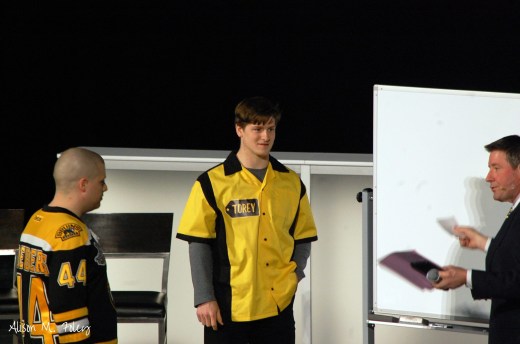
The 3 Amigos ride again…TSP founder Kirk Luedeke, and Ontario pals Dominic Tiano (OHL Writers) and Reed Duthie (Hamilton Bulldogs play-by-play) have teamed up for a pre-season podcast after a long summer and we brought some big guns to the podcast- Boston Bruins defenseman Torey Krug.
My initial reaction after seeing some of the criticism of the Bruins signing Krug to a four-year extension in late June- shortly before the start of free agency- was to do this…
Lady Lyanna Mormont reacts to those who took issue with the Torey Krug extension.
Enough with the teaser, though- Krug joins us at the front of the podcast to talk about the extension, being a smaller defenseman in the NHL, his outlook on leadership, and many other topics including an outlook on the B’s defense.
Once he departs, Dom Reed and yours truly talk a little Zach Senyshyn, OHL 2017 NHL draft hopefuls and of course- the World Cup of Hockey.
Apologies for the quality of the audio- this is a low-budget, low-tech operation, but at least we’re not charging you to listen.
Enjoy the podcast and thanks as always for the support!
As alluded here the other day, the B’s made good on the rumor that they were looking to add a veteran forward, announcing Tuesday that former Harvard standout Dominic Moore signed a one-year pact that will pay him $1M in 2016-17. He reportedly gets a bonus of $100,000 if he plays north of 42 games, so that deal adds to his announced base salary of $900k. TSP didn’t list him in our option players rundown, but we thought about it- Moore is just one of those players that in hindsight is the kind of guy that appeals to the Bruins and what they like to do.
On the bright side- Moore is an experienced center who is one of the better faceoff men in the league, even if his offense is a far cry from what it used to be (and with a career-high of 41 points- Moore was always known as a bottom-six, defensive forward). He’s a good guy and leader who will be a trusted veteran for the coaches and someone to mentor a few of the younger players.
On the down side, Moore is 36 and if no other moves are made to the roster, represents more of the same old, same old (pun intended) where the progression of younger players on the Boston roster is blocked by a low-upside but established NHL old salt. While you can make the argument that rookie Noel Acciari lacks the kind of higher-end potential to argue against Moore taking his spot on Boston’s 4th line, there are other players who represent an upgrade in skill at the position who now are effectively relegated to Providence (Austin Czarnik comes to mind) with the arrival of Moore in Boston.
It would probably be a bad assumption to say that the arrival of Moore and a possible trade of forward assets to acquire help at the defense position are mutually exclusive, but according to the Boston Herald’s Steve Conroy (via Twitter), B’s GM Don Sweeney said yesterday that “he’ll continue to look for D help but nothing imminent. Believes current group can improve & youngsters can challenge.”
Moore has gone through a lot in his 765 NHL games, including the loss of his wife (and former Harvard soccer star), Katie, to cancer. If you can’t get behind his potential to help the Bruins, even the most clinically detached of fans can recognize that the guy has overcome a lot to get to where he is in his pro hockey career, and sometimes- those intangibles are worth more than meets the eye. HNIC and NHL video on him here (you might want a tissue handy):
ESPN E:60 feature on Moore and leaving the NHL for a year to be with his wife:
Don’t believe everything you read, and there are worse players to bring in than Moore. He provides some experienced depth, but if you were a fan who didn’t appreciate the additions of Simon Gagne and Max Talbot to the Boston roster in recent seasons, then there’s likely nothing else that can be said here that will alter your feelings on Moore right now.
But regardless of how you feel about the move from a hockey perspective, it shouldn’t be difficult to get behind the man. Somewhere, Katie Moore is pulling on a Bruins jersey and getting ready to cheer him on for one more season.
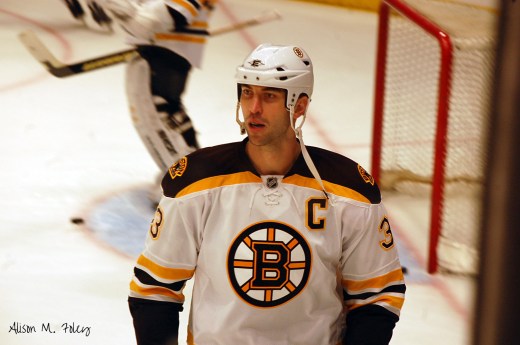
Zdeno Chara returns for his eleventh season as the captain of the Boston Bruins (photo courtesy of Alison M. Foley)
It’s been a slow August, but I had an exchange on Twitter today that inspired a new post- the first since the Jimmy Vesey recap last weekend. There will be more content in store as we get closer to the new season and of course the 2016 World Cup of Hockey.
With Vesey now officially with the Rangers, Bruins Nation turns its lonely eyes to Don Sweeney, looking at the proverbial elephant in the room- the lack of a clear and meaningful upgrade on the Boston blue line since the end of last season. Re-signing John-Michael Liles was fine on its face, but remember- he was a part of the April implosion that saw the B’s crater after sitting as high as second place in the conference a week and change after the trade that brought Liles to Boston. Also extended- Kevan “Killer” Miller, Colin “Chiller” Miller and Joe (Don’t call me “Blow”) Morrow...what do they all have in common? That’s right- they were all a part of the epic spring collapse for the second year in a row, but 2016 was worse because the B’s seemed to be well-positioned for playoffs at least before coming completely undone.
Not to put too fine a point on it, but the coda- an embarrassingly bad home loss against the nothing-to-play-for except to be spoiler to a division rival Ottawa Senators was a final humiliating kick in the crotch to a season that had far more peaks than valleys, but will ultimately be remembered for the inglorious ending.
So, here we are- a few days before September and unless we missed something- the only new blood the Bruins brought into the organization over the summer via free agency at the defense position is AHL journeyman Alex Grant. Nothing agains the former 1st overall midget pick in the 2005 QMJHL draft- he’s had a cup of coffee in the NHL and even scored some goals- but doesn’t this look a lot like Matt Irwin from a year ago?
We’re still waiting for a serious move to address a defense that was overmatched at best when skating against the top NHL offenses a season ago. This is not a slam on the current Boston defensive core- we think the world of Torey Krug, for example- he deserves to be surrounded by better talent. Zdeno Chara is at the end of a Hall of Fame career, but he’s still a serviceable defender…so long as no one expects his old near-30 minutes in any situation. Gone is Dennis Seidenberg, who, despite his huge heart, just couldn’t be effective on his surgically-reconstructed bottom trunk. Ability-wise, Seids is addition by subtraction, but his experience and veteran leadership will be missed, so you can make the case that this defense is actually worse than it was a year ago. This group needs help and one top-three NHL defenseman acquired via trade would do wonder to take some of that pressure off.
Help is coming in the form of a youth movement that shows a ton of promise. Brandon Carlo and Rob O’Gara could be skating for the NHL club at some point this season (they’re both slated for the AHL at a minimum, maybe more depending on how camp/preseason goes for them) and with their size and mobility, there’s a lot to like about their NHL potential. However, no one should be expecting either player to come in as a rookie and stabilize the Boston blue line. Charlie McAvoy is the cat’s meow after being picked 14th overall and having a sharp B’s development camp in July and even better showing at USA World Junior camp in Plymouth, Mich. earlier this month. But, he’s an NCAA player, so unless he bolts from BU, he won’t help the B’s this season until spring at a minimum when his sophomore year at Boston University is in the books. Jakub Zboril, the team’s top pick from a year ago, is in better shape and rehabbing an image that took a hit from a lackluster start last season- he’s talented enough to be a top-three one day, but how badly does he want it? And don’t forget Matt Grzelcyk, Jeremy Lauzon and Ryan Lindgren– all impressive defenders who bring a little something different to the table. Let’s face it, though- even with the optimism, these players aren’t going to give the 2016-17 Boston Bruins what they really need. Hey- if someone within the organization steps up and delivers, more power to ’em, but this is why folks are getting antsy.
It’s legit.
So, based on some things I was told by sources in the Bruins organization and around the NHL, here’s a quick look at some options, or, irons in the fire, that the second year Boston GM and his management group might be looking at. On paper, this defense is simply not much to write home about given how things went a year ago, and while Sweeney has talked about the challenge of finding the right players at the right price, we’re a few days from September and while you don’t want to use words like alarming to describe the situation, what else are we left with. Albert Einstein once defined insanity as doing the same thing over and over again and expecting a different result. You could apply that to the Boston defense and someone would have a hard time arguing against it.
Preamble over, let’s look at some options- by no means all of them, but something to get the juices flowing, at least:
Kevin Shattenkirk, Blues: The Bruins thought they had a deal for the former BU standout back in February in a deal that would have netted a return for Loui Eriksson, but according to a source close to St. Louis, those talks fell apart over the Blues’ desire to move another bad contract to Boston. Sweeney balked and no deal. Now, same source tells TSP that trade talks are heating up for Shattenkirk again, but not necessarily between Blues GM Doug Armstrong and the Bruins. It sure sounds like the NY Rangers would be a club sniffing around Shattenkirk, especially given his Empire State roots.
Armstrong’s in a tough spot and he knows it- the Blues came close to reaching the Stanley Cup finals for the first time since Bobby Orr took the pass from Derek Sanderson, beat Glenn Hall and hurtled through the air, frozen forever in time (46 years ago), but the San Jose Sharks ruined their (and Boston’s 2016 late 1st-round draft) party. Shattenkirk will be a free agent next summer and he’ll command big bucks even though his value as a two-way defender and power play contributor seems all but assured of declining. Assuming the Blues don’t try to re-sign him, trading Shattenkirk now means Armstrong gets more of a return, but he weakens his talented veteran team. The longer they hold onto him, the more he becomes a “rental” and the acquisition price becomes less than what it could be. Decisions, decisions.
The good: Shattenkirk would instantly upgrade the Boston defense and a top-3 of Chara, Shattenkirk and Krug isn’t a top NHL group, but it’s respectable. He’s very good in transition and paired with an effective shutdown guy (Adam McQuaid?), the shortcomings exposed by San Jose in the Western Conference final series last spring wouldn’t be as profound.
The bad: Let’s be honest- Shattenkirk is a fine player, but he’s on a cap-friendly deal right now, and he won’t be 12 months from now. If you acquire this guy, you either do so for one year and accept that he’ll be gone next July 1 or you have to commit upwards of $7 million a season (ballpark) to extend him. Is he worth it? Remember- you’re going to pay a handsome price to get him from St. Louis, and then you have to commit the cap allocation (and real dollars) to keep him in Boston.
The skinny: Last February, this made sense for the Bruins. Now? Not so much. If Sweeney is going to pay a premium, look for someone younger and more cost controlled. Recommendation: Pass on Shattenkirk and let someone else overpay for him not only in terms of assets surrendered, but in his next deal, which will be a doozy. The B’s already signed David Backes to a controversial big-ticket contract- remember Einstein.
Jacob Trouba, Jets: We’re hearing from several sources around the league that tension and friction is growing more intense between the 2012 NHL draft darling and Winnipeg management. Where he once looked like a franchise player-in-waiting, he’s taken steps backwards after a very promising rookie year, but wants big bucks and more playing time. The Jets committed to Dustin Byfuglien on that, so it sure looks like Trouba’s days are numbered in the ‘Peg, but GM Kevin Cheveldayoff is under no timetable to resolve the issue…if there even is one. On the positive side- Trouba has all the tools of a top-2 NHL rearguard, even if he hasn’t shown it. The risky aspect is that he’s really in no position to be dictating terms, and yet here he is, apparently. That will make NHL suitors wary for third and fourth contract-type maneuvers, assuming he gets there.
The good: Trouba would give the Bruins a young D they could sign to a “show-me” contract (if he just wanted out of Winnipeg) with a delayed payday, much like they did with Krug. He’d instantly move into the top of the rotation and be given every opportunity to prove he can be a bell cow D and earn that massive deal he seeks. The B’s would benefit from his skill and young legs to take some pressure off of Chara and Krug.
The bad: Trouba is risky right now and pro scouts might be a tad squeamish about laying it on the line for him. Is he just human and his play affected by the environment with the Jets? Or is he more of a dud than a stud? Any trade for him is going to cost a lot- he’s only 22 and was a top-10 pick, so Cheveldayoff can drive up the bidding and come away with a nice package/return- you’ll have to overpay for Trouba to get him, and there’s no guarantee he’ll be the player you’re praying he will. If he doesn’t, that’s what costs people their jobs.
The skinny: Go East, young man! Forget the rumors about an offer sheet for Trouba, but if Sweeney could wrangle a deal, Trouba just might be the droid the B’s are looking for. This risk is worthwhile, and when you stack Trouba up against the Bruins defenders player-for-player, he’s better than most, and with the promising defense prospects coming up (at least one or two not named McAvoy would have to go back to Winnipeg, no doubt) within the organization, he’ll get help at some point. But the Bruins need a defenseman now…what good is putting Patrice Bergeron, Brad Marchand, Backes, Chara and company through another season like the last two if you don’t find a way to improve your team and give them a chance to build on two very frustrating finishes.
Cam Fowler, Ducks:I talked about him being an option via trade for the B’s in early July here, so I don’t have a great deal to add other than to say, it’s more of the same with Shattenkirk- Fowler improves the Boston defense and makes them more competitive. Hampus Lindholm to the Bruins via trade is probably a pipe dream- if Bob Murray is going to move a blue liner, we can’t see it being him- Fowler is a more obvious choice. But hey- if that happens- that’d be huge (but again- pipe dream).
Just in case you’re disinclined (too lazy?) to click on the link I provided above, here are some nuggets from that Fowler post from July 2:
Fowler’s your “bridge”- he makes $4M and has 2 years left to UFA status, meaning he gives the Bruins two seasons before they have to make a decision and brings them two years closer to seeing one of their recent top-60 D selections evolve further to see where they might be as NHL players. The issue with Fowler is that he shoots left, whereas the B’s need to shore up their right-shooting talent. So, in essence- if the B’s are able to go out and get Fowler, they then probably need to add another right-shot D for depth and hope that Colin Miller takes a big step next season for them.
The good: Fowler makes the Bruins better. How much? That’s up to you, dear reader, to decide.
The bad: If you pay attention to advanced stats and analytics, Fowler’s valuable on the power play but more of a 3rd-pairing guy at even strength, and the B’s have plenty of those. He’s also going to cost a lot to acquire at age 24. Teams with good D-men are in a seller’s market, which the B’s are unfortunately (for them and their fans) on the wrong side of.
The skinny: Fowler is worth pursuing- there’s real ability there, and he might prove to be a good fit to help stabilize the defense until one (and) more of the young guns are able to develop into NHL regulars on the Boston blue line.
Kris Russell, Unrestricted: In the free agent game of musical chairs, the music has stopped and Russell is looking for a seat. It’s surprising really, even with the concerns about how the analytics translated to his overall game and potential going forward. He’s 29 and has nearly 600 NHL games under his belt. The former Medicine Hat Tigers standout and Columbus 3rd-rounder can really move the puck and pass, but his turnovers and decisions (not to mention the fact he’s undersized) get him into trouble. Granted- how is it that we’re almost to September and he still hasn’t found a landing spot? In a word- money. His agents shot far too high, so he’ll have to take a lot less and the lower the cap hit, the more reasonable a guy like Russell will be.
The good: Russell can move and aid in the transition game. He’s a veteran and he’d represent an improvement on paper to the Boston roster, but that assumes his play doesn’t fall off a cliff- a major factor perhaps in why no team was eager to sign on for the big bucks he was looking for on July 1.
The bad: The analytics are not kind…and we need to be honest with ourselves- the Bruins and their fans aren’t either. A player like Russell will be so heavily scrutinized that he’s more likely to wilt in a bigger role with Boston than he would in more of a complementary spot with a better, even contending club.
The skinny: Signing Russell to a prime market deal on July 1 was the major red flag, but now that we’re reaching the end of the offseason, there are worse things the Bruins could do than sign him to a 1- or 2-year team-friendly deal. Having said that- he’s not a great fit as a left-shot D with similar attributes to Krug- do the B’s need two similar players? Probably not- balance is the key and Krug is the much better overall player- it’s not close. Pass- let some other club roll the dice.
Okay- there it is. Not all the bases covered, but if we get to the start of training camp after the World Cup of Hockey and nothing has been addressed with the Boston defense, then you’re going to see and hear the criticisms ramp up. This 16-17 Bruins roster is a game bunch, but they don’t have the talent on the whole to compensate for the lack of skill on the back end, and throwing up the hands and claiming an upgrade is too hard to pull off won’t cut it with the natives.
Help coming in the form of Brandon Carlo? Might be too much, too soon (Kirk Luedeke photo)
The Jimmy Vesey saga ended Friday when word leaked out via Bob McKenzie that the North Reading native and Harvard graduate after winning the 2016 Hobey Baker Award, agreed to terms with the New York Rangers.
The decision, made some four-and-a-half months after Vesey declined to sign with the Nashville Predators, who owned his rights after drafting him 66th overall in 2012, was met with disappointment and disgust in some Boston circles, but shouldn’t be all that surprising given some of the warning signs that pointed to the 23-year-old leaning away from choosing his hometown Bruins as one of seven teams he formally met with this week.
Like Kevin Hayes two years ago, the B’s were in the running, but the player decided to play close to home but not with the Boston organization. Not surprisingly, Hayes himself, the younger of two hockey brothers who both played at Boston College, was instrumental in helping to convince Vesey to choose Broadway over Causeway.
For those familiar with this blog and typist, you know that I have had a personal connection with the Vesey family for more than five years, but throughout the process, I purposefully stayed away from trying to leverage that connection for information. In many respects, not really knowing which way Vesey was definitively leaning was refreshing, as it allowed for a shared experience with the vast majority of fans and non-insiders. When the word came down that it was the Rangers, I was hearing it for the first time, and I was also wrong- my own guess was that he would go with the New Jersey Devils because of a personal connection to Tom Fitzgerald, the Devils’ assistant GM. Shows you how much I know…
There are a lot of different views out there on the subject, so these notes are based on my own personal knowledge and insights gained from several conversations over the weekend with NHL insiders who have knowledge of the Vesey situation. This is why I didn’t rush to post something on it Friday or Saturday, as I wanted to get my ducks in a row first. But truth in lending: take my observations with a grain of salt. There is a personal element to it so I am not completely free of bias in all of this, nor do I pass myself off as completely objective here. I am writing an opinion piece, so you have the choice to agree or disagree with any or all of the points made.
My gut feeling is that the Bruins lost their real shot at Vesey five years ago, when they drafted Norwegian goalie Lars Volden in the sixth round. In doing that, they snubbed the Belmont Hill star who had been told by someone in the organization that they liked him and were going to take him. That’s the tragedy in all of this from Boston’s perspective- they *knew* in 2011 that he had some big time potential and recognized it, but at the draft table in St. Paul, they went with someone else and it cost them what could have been a huge success story for their scouting staff. This kind of stuff happens all the time, but when you look at the attention Vesey has received (much of it earned), it’s something the B’s have been kicking themselves over. There is no doubt that had Boston drafted Vesey, he would not have pursued free agency in the manner he did and none of this would have been necessary. That snub motivated Vesey to destroy the EJHL in 2011-12, smashing all major offensive league records, but even then- the B’s could have spent a first-round choice on him over Malcolm Subban, especially since they didn’t have a second-rounder and knew deep down he wouldn’t be there in the late third. In effect, the B’s chose two goaltenders over Vesey- one is a complete washout and the other has yet to deliver on significant promise. It goes to show that scouting future NHL players is more of an art than a science, and projecting stars between the pipes is even more difficult. The B’s didn’t do what they allegedly said they would, and you have to know that Vesey didn’t forget it. When you add in all of the other factors that went into his decision, it’s not surprising. Boston did it to themselves- they had two legitimate shots at really showing Vesey that they wanted him, but didn’t take them. That left the Bruins in the position to ask for him to choose them this week, and all he did was return the favor.
Give Rangers GM Jeff Gorton and his staff credit- they put together a compelling pitch, leveraging New York’s natural draw as a big market destination and myriad celebrities and sports figures associated with the Big Apple to put the finishing touches on a successful pitch. It’s easy to hate the Rangers as a natural extension of the Red Sox-Yankees rivalry, and given Gorton’s history with the B’s, you know he enjoyed sticking it to Boston on this one, just as was the case with Hayes two years ago. Former Hobey Baker winner and Stanley Cup champion Chris Drury captained the Rangers and is the team,’s developmental guru- he had a major hand in convincing Vesey to sign on in Broadway, and don’t underestimate the lure that someone with Drury’s cachet brings to the process. In the end, there can only be one destination for a player’s services, and everything counts (not necessarily in large amounts as Depeche Mode once sang). While Vesey had close friends like Matt Grzelcyk, Ryan Fitzgerald and Harvard teammate Ryan Donato in the Boston organization, none of them have ever played a professional game with the B’s. Kevin Hayes, on the other hand, is the only close friend of Vesey’s in the NHL- he was able to identify with the signing process, but even more important- Hayes could tell Vesey firsthand what he was in for if he signed with New York. The other NHL teams in the running all brought out some of their biggest stars to try and sway Vesey, but none of them had the powerful personal connection Hayes does…that was big. Game, set and match. Remember- Boston is in some good company- the NHL’s modern dynasty Chicago Blackhawks and defending Stanley Cup champion Pittsburgh Penguins were also told “thanks but no thanks” by Vesey. The Rangers might seem like an odd choice to some, but for him, the team was the best fit. Now, time will tell how well he plays there and if he regrets that choice in the long run.
In talking to one key insider, it was pointed out that Vesey has a large family and everyone is in the Boston area. It’s not just about Vesey taking heat during the inevitable times when he might not play as well as he’s capable of or like the human he is, goes into a slump. You have to take into account the effect that the media and fan negativity will have on Vesey’s immediate and extended families. It’s easy to dismiss that when you’re sitting behind a keyboard and have no concept of what it’s like to have your every move scrutinized and thinking about the possibility of rude, socially-stunted strangers accosting you in public to demand to know why your son, brother, nephew or cousin isn’t living up to the lofty expectations the modern information age created. It might sound like a cop out, and I’m sure there is an element of people that will scoff at the notion no matter what. That’s fine- I’m not trying to reach them, but the more fair-minded of those in hockey fandom will get it. “We know everyone,” came a quote via text yesterday. “And in the offseason (Jimmy) can come home and get away from it.” If he had signed in Boston, there would be no escape from the scrutiny of his profession. By going to the Rangers, he can go home to Boston in the summer months and decompress rather than stay in what could be a crucible of discontent if the B’s fortunes don’t improve. That’s a lot to put on someone’s shoulders, even if there is a case to be made that by embracing the challenge, Vesey truly could have made himself into a legitimate Boston star. It was probably not meant to be, and that’s okay.
It’s unfortunate that there is an element of sour grapes already taking hold and a segment of fans rejected by Vesey are already bringing out the sharp knives. It’s predictable. And lame. Look, the biggest mistake us “mortals” make is in assuming that because we would kill for a chance to play professional hockey for our favorite teams, everyone else should think the way we do. Observations 1 and 3 have already laid out why Boston was not the obvious choice for him, and to be honest- the B’s should be glad they were even in the final running. A more petulant, immature person would have stuck it to them and made a public spectacle of that rejection. Vesey is not that guy, and I think he showed the team respect by giving them a chance. Some might say he “used” them, but I would argue he leveraged every team in the running to determine his final landing spot.That might be what a Harvard degree teaches you, but that’s just me. It would be nice if people could show the same kind of maturity by respecting the decision and not seeking to point fingers or play the blame game. It might be human nature to lash out when things don’t go your way, but take a step back and evaluate your life and priorities. If you spent more time than you should have getting yourself worked up over the idea of Vesey skating in Boston and now feel hurt or betrayed after he chose the Rangers, then there are probably some important things in your life that you are neglecting. To put it another way (Ben Stiller style): It’s just a game, Focker.
What was distasteful to everyone was the amount of attention the whole thing got for as long as it did, and the comparisons to Kevin Durant are valid. This is something Vesey will have to deal with and the best way to put it behind him is to simply go out and prove himself at the NHL level. At the same time, he probably invoked the old Shakespeare “Methinks thou doth protest too much,” when he commented about not enjoying the spotlight. A couple of points- I know Jimmy and believe him on that score: he’s not an attention-seeker. His handlers have more to do with that than anything, but as the player, he’s got to own that this became something that got out of hand. Second- there’s little doubt that deep down, he enjoyed being able to dictate the terms to NHL teams. Remember- all 30 clubs snubbed him in 2011 and 2012. Any one of them could have drafted him before Nashville in the 3rd round in his second year of eligibility. He went from being a kid who was hurt and disappointed at being skipped in his first year (who wouldn’t be?) to someone just about everyone would have gladly taken on their team. It’s human nature to enjoy an element of revenge when the tables are turned. I don’t blame him. Finally, the timing stunk- there just isn’t any hockey news to be had in mid-August and that fed the beast of the media circus surrounding Vesey, especially since he’s the reigning Hobey Baker recipient. Many of us might find the kind of hype surrounding him ridiculous, but this is the world we live in. Had Jonathan Drouin been able to leave Tampa Bay at midseason and become a free agent open to bidders, we likely would have seen the same exact thing. And those Canadian CHL-centric folks who wagged their fingers and tut-tutted at Vesey leveraging his right in the CBA would probably have made the same allowances for a player like Drouin that they seemed unwilling to extend for Vesey. That’s life, but again- you know who you are. Take a step back and be honest with yourself- every team seeks an edge, and Vesey is a good risk to take. We might not like the attention he got, but if it wasn’t him, it would likely be someone else. Besides, it made for an interesting story to follow at least. I’m just glad it’s over and we can now focus on the next big things: the World Cup of Hockey and the start of the new NHL season.
The onus is now on Vesey to go out and prove himself at the NHL level. There will be many out there rooting for him to fail, but he’s done a nice job of silencing the critics so far. Playing for the Rangers will be business as usual for him, and if the past is any indication, he’ll likely build more fans and supporters than detractors.
***
So, where do the Bruins go from here?
They accepted risk in waiting to see what happened with Vesey because by bringing him into the fold, they would have built a bigger war chest with which to make a trade for much-needed defensive help.
That ship has now sailed for Don Sweeney, so he needs to reset and figure out how he can address a very mediocre defensive group (and that’s being charitable at this point). He’s talked about the difficulty of finding the right players in a constricted market where skilled two-way defensemen are at a premium, but as the GM, the fans aren’t interested in that kind of reasoning. They expect action, and so it will be interesting to see what he and the team does between now and the start of rookie camp in about 30 days or before opening night in October.
The Bruins have some impressive young defenders coming down the pipeline via recent drafts, but those kids aren’t realistic options to help the 2016-17 NHL roster, so something has to give. Sweeney needs to find a way to close some deals and get some wins under his belt. Here’s guessing that he might re-open the lines of communication with St. Louis or Anaheim to look at Kevin Shattenkirk or Cam Fowler. 29-year-old free agent Kris Russell has not yet been signed (boy, is THAT ever telling!) and at this point, you have to think that someone will land him, especially if the right money makes his shortcomings easier to swallow. But how much of an upgrade is he on a team like the Bruins? Again, it will come down to contract term and AAV, but that he’s still sitting out and available in mid-August is interesting.
Yes, it would have been easier for Sweeney and staff to make a deal with Vesey on board to free up other assets to be moved, but Boston also has to play the longer game with Brad Marchand headed to unrestricted free agency in July 2017 if the B’s don’t extend him. And let’s face it- they can’t afford *not* to extend him unless they work an unreal trade that the majority of fans can get behind. To lose Marchand in the wake of so many other grievances fans have about the team is as unpleasant an outcome as you can find right now.
The major priority is to improve the defense. You can’t “fix” this group, but Sweeney can build a more sturdier unit than what we saw last season with one move. When you look at the promise of players like Charlie McAvoy and perhaps Brandon Carlo or Rob O’Gara plus others in the next 1-3 years, the defense will improve. However, the status quo in 2016-17 is simply not going to work. Sweeney has to find a way to identify and acquire a bridge player or two.
It won’t be easy, but if it were, then anyone off the street could manage an NHL team to a Stanley Cup championship.
Next in the undrafted free agents series covering the Boston Bruins is California-bred, Massachusetts and Vermont-developed defensive defenseman Kevan Miller. He caught Boston’s eye during a late-season ATO with the Providence Bruins in 2011, and then got an invite to the team’s rookie camp and main training camp that fall. I still remember traveling to Nassau Coliseum and seeing him get involved in a major donnybrook to start the second of the two-game series between the B’s and Islanders rooks. Miller earned an NHL contract a few weeks later, and by the midway point of 2013-14, was playing in the NHL full-time.
He’s a classic American story of hard work and overcoming hurdles, and yet Miller may be one of the more criticized players on the Boston roster, despite an impressive body of work in the realm of analytics that we’ll attempt to shine some light on later on.
This is his story.
Hard as a Rock: Kevan Miller
When it comes to Kevan Miller, few players are more polarizing to a respective fanbase than he is to supporters of the Boston Bruins. Here’s a video courtesy of friend “Dafoomie”:
The soon-to-be 29-year-old defenseman should be one of those feel good stories in hockey- a California born-and-raised defenseman who went East in high school, rose to the University of Vermont captaincy, and after being ignored in the NHL draft, willed his way into the Boston lineup less than three years after turning pro. Instead, he’s become a convenient scapegoat- a player who is an easy target for frustrations because he was asked to play a bigger role than the one to which he is best suited.
Miller was a few months away from his first birthday when the Los Angeles Kings made “the trade” to bring Wayne Gretzky to Tinseltown in August, 1988. Raised in Santa Clarita, Miller represents the first generation of players who were born when Gretzky arrived and went on to reach the highest levels of professional hockey thanks in large part to the hockey boom the Great One inspired in Southern California. Miller wasn’t the first Golden Stater to make the big time, nor is he the most successful, but all things considered, the guy who the Bruins took a chance on back in 2011, and who recently earned a four-year NHL extension is much better than he gets credit for.
I realize this won’t be a popular opinion to some, who will rightly cite some of Miller’s bungled plays leading directly to goals as proof positive that he should be exiled forever to the lower rungs of the professional hockey ladder, never to take another shift for the Bruins. Of course, the flip side of that is- show me any NHL defenseman who plays enough minutes at this level, and you’ll see some poor plays that lead to bad goals. Like the dead people in the Sixth Sense, once folks lock onto a favorite target- they’ll see what they want to see, so if Miller is a bum, it’s easy to single him out for abuse.
The purpose of this post is not to argue that Miller is a potential All-Star, nor is it to feed into the idea that he’s a drag on the rest of his team and was not worthy of the $2.5M AAV and four-year investment the B’s made in him.
As is usually the case, the truth is somewhere in the middle.
Miller is a fairly vanilla defender: he’s an average skater without much in the way of quick acceleration, but who is rugged and plays with an edge. His offensive numbers are better than one would expect for a shutdown style ‘D’ without high-end skills. He’s a natural leader and former prep (Berkshire School) and college captain who is a respected teammate and put in tremendous work to reach the NHL.
It’s a thoughtful, analytics-driven look at the most effective defensemen in the NHL from last season, and while advanced stats don’t tell the whole story, Miller’s numbers when compared to those of Zdeno Chara and Colin Miller, the other two teammates the author used for the study (boy, I sure would’ve liked to see him use Torey Krug here), are pretty favorable. If anything- it directly contradicts the idea propagated around the Internet that Miller is “horrible” or “can’t defend.”
Here’s the HERO (Horizontal Evaluative Rankings Optic) chart comparing Miller to that of trade deadline darling Kris Russell, done courtesy of the most excellent hockey analytics source and blog Own The Puck by MimicoHero http://ownthepuck.blogspot.com:
The numbers don’t lie. When it comes to things that matter on defense such as shot suppression and possession, Miller clearly has the advantage over Russell and it isn’t close. Again- advanced stats aren’t the be-all, end-all when it comes to debating the merits of an NHL player, but Miller is nothing if a serviceable defender who actually looks like a solid bargain at $10M/2.5M per through age 32.
Now, some of the friction points working against Miller could lie in the following observations:
Both of Miller and Adam McQuaid on the 2016-17 Bruins roster is problematic. They’re both right shots and bring similar attributes in terms of style and substance. McQuaid is bigger and not as adept offensively, but both are nasty and because of the physical toll their rugged style takes on their bodies, they’ve missed significant time to injuries in each of the past several NHL campaigns. Neither guy is a classic top-4 player (though if you look at the advanced metrics Miller is closer to that between the two), and when you add up their cap numbers, it’s far too much green to invest in a pair of guys like that. To say that Miller is incapable of making a positive impact is wrong. To argue that having both of Miller and McQuaid on the Boston roster puts the team at a disadvantage is a far more effective way of looking at it. One or the other…Miller or McQuaid. Something should give before the season starts because the pair effectively blocks a younger player from establishing himself at the NHL level, and if either one is on Claude Julien’s top pairing (and even middle pair is an issue), then this is not a playoff-caliber defense.
The tail end of observation No. 1 leads to a second significant challenge with Miller and that is simply- the B’s put him in a position to fail last season. At times, he was expected to carry the mail in a top-three role with expanded minutes and special teams, and naturally- his limitations were exposed. Miller is effective closer to the bottom of an NHL rotation, and he’s capable of being a solid matchup play and at even strength, when he doesn’t have his hands full as much with opponents who can make good use of added time and space. He’s not as big as Hal Gill was, but Miller is a better all-around player and defender. Unfortunately, like Gill later on in his Boston career- Miller has become an easy target with fans who just want to blame someone when a goal is scored against, never mind that the opposition’s top scorer was able to exploit a 1-on-1 matchup with the game but limited Miller.
Let’s face it- sometimes, it’s all about draft pedigree. Fans want to get behind sexy draft picks and big names- they tend to be much more skeptical of and harder on guys like Miller who come in as unknowns and outplay the “big guns.” Go back to the Reddit link I posted and look at some of Dougie Hamilton’s numbers in those categories. He’s better than Miller in a couple, egregiously worse in others. In the end, Kevan Miller’s 84.5 average (lower is better) across the various evaluated categories is better than Hamilton’s 98.2. One guy was drafted 9th overall in 2011, the other one had to make it on an invitation, fight his way onto the team and has managed to stick. Again- you can’t just hang your hat on the analytics, and no one in their right mind would trade Miller for Hamilton even-steven (no, not even Don Sweeney, guys- but nice try). The difference is- one player is making half of what the other guy makes, and maybe that $2.5AAV isn’t so terrible after all. (One more time- *not* saying Miller is better than Hamilton- put the straw man down) It’s all in how you use him, folks. That’s a legitimate debate to have, but you can’t do it in a vacuum- context matters.
Image courtesy of Greg Ezell/PezDOY
Okay- we had some fun with the image, but it’s tongue-in-cheek from this blog space. The reality is- TSP has time for Miller. He’s an honest, hard-nosed player who will give you every ounce of what he has. Unfortunately, in a results-oriented business, that alone isn’t going to lead his Bruins team to success, so the onus is on the GM to upgrade the talent around Miller so that he can be a capable and serviceable piece.
And therein lies the rub- I don’t think fans inherently dislike Miller at all. In fact, he was pretty popular when he first showed up and was hitting, fighting and playing solid D at a near veteran minimum cap hit. Alas- he lacks the high-end talent to be a firm top-4 NHL D, even if the analytics indicate he has a chance at it. Realistically- the more he plays, the more people will see him get burned, but by the same token, he suppresses a lot of chances he simply doesn’t get credit for because human nature means that those with an axe to grind will dwell on the mistakes.
Ultimately- Miller has been a nice find by the Boston scouting staff. He’s scrapped for every opportunity, but he’s a smart, driven guy- derailed a bit by shoulder injuries and the ruggedness of his style of play. On the downside- Miller and McQuaid are two fine soldiers, but the team can’t really afford to keep both. It’s the tough part of the business, but you figure the B’s signed the former before he could hit unrestricted free agency for a reason.
We’ll have to see what Sweeney and Co’s vision is for the defense and where Miller fits in, but he deserves a more even shake than the one he’s gotten. In the right role, he’s a lot like what these guys are singing:
TSP is back with the second installment in a series that looks closely at undrafted free agents that have helped to offset some of the lack of production the Boston Bruins got from drafting, especially from the window of 2007-09.
Whether talking about the team not getting great mileage out of NHL Entry Draft decisions or the loss of productivity incurred from trades of the top choices in 2010 and 2011, the success with several undrafted free agents is encouraging. In the 2015-16 drafts, the B’s have had nine first- and second-round selections, so the club is bound to see some impactful contributions from that particular group soon. In the meantime, players such as Torey Krug, Kevan Miller, Frank Vatrano and Noel Acciari all saw NHL action in 2015-16. A few more young but intriguing undrafted talents such as Austin Czarnik, Colby Cave, Justin Hickman and Chris Casto are all slated to have bigger roles in the AHL with Providence this season, with one or more even seeing NHL time at some point.
This does not explain away Boston’s checkered past at the draft table, but it does point to an effective capability to identify and develop talent through a secondary market. If the team can start hitting on its higher profile draft picks, the B’s have a chance to turn things in a more positive direction.
Last year, one player in particular was not expected to have much of an impact in Boston, and yet dazzled AHL audiences while showing NHL opponents he belonged. When all is said and done, this plucky young winger from Western Massachusetts could be on the verge of becoming a fan favorite and regular contributor in the NHL going forward.
Frank Vatrano played one game with UMass in 2013-14 before switching to No. 13 in 2014-15
The Springfield Rifle: Frank Vatrano
The call never came.
In all reality, Frank Vatrano probably wasn’t expecting to hear his name called in primetime. So when U.S. National Team Development Program players and teammates Jacob Trouba, Brady Skjei, and Stefan Matteau all came off the board in the first 30 selections at the 2012 NHL Entry Draft in Pittsburgh, it was another validation for the strength of the Team USA hockey program and the many sacrifices they all made for two years in Ann Arbor. What hockey player doesn’t dream of being picked in the first round of the NHL draft, though? It would be natural to allow for that sliver of disappointment to creep in.
The call didn’t come in the second or third rounds either. Sure, Vatrano had heard the whispers around the scouting grapevine about the amount of weight he was carrying around on his smallish 5-foot-10 frame, but he’d been a dynamic scorer coming up through the ranks in New England as a scoring ace in the Empire League. The NHL’s Central Scouting Service rated him as the 88th North American skater for 2012, so chances were solid that someone would take him.
Nicolas Kerdiles, Patrick Sieloff…Matt Grzelcyk. Grizzy to the Bruins in the third round- there was his fellow Mass ‘dawg- living the dream. How amazing would it be to get drafted by the B’s and yet, there’s his fellow Team USA brother wearing the spoked-B jersey and draft day ball cap…sweet.
Thomas DiPauli, Connor Carrick, Collin Olson…three more guys from Ann Arbor in the middle rounds and the plus-sized lady is warming up her pipes.
When Riley Barber was selected 167th overall by Washington in the sixth round, no one yet knew it- but that was all she wrote for the 2011-12 U.S. NTDP Under-18 squad: 211 total choices, 10 of them from the gold medal-winning USA team.
The call never came. 30 teams making 211 picks, and not one of them had time for Gregory and Clara Vatrano’s kid (one of four boys) from East Longmeadow.
And of course he was happy for his mates, how could he not be?But even with that, a spark ignited a fire that day. A small one, to be sure- a flickering, sputtering little conflagration- but a fire nonetheless.
Soon, he would be at Boston College and soon, he would have the chance to prove to those 30 NHL clubs that they made a mistake in not drafting him. Vatrano made it to Chestnut Hill later that summer, but his NCAA dream was put on hold when an issue with his SAT score ruled him academically ineligible and as a result- on the outside looking in once again. Whatever his dreams and goals at BC might have been, they were gone in as quick as the instant it took him to fire a puck into the back of the net off the rush.
Instead of skating for the Eagles in 2012-13, Vatrano was putting pucks in the net for the EJHL’s Boston Jr. Bruins while trying to resolve his NCAA status. Looking back on it, being in limbo had to be the hardest thing for the bubbly, fun kid who loved the game and grew up rooting for all Boston teams, but the Big Bruins most of all. He was 17 and somewhere in the sea of thousands when the B’s paraded through the Boston streets on Duckboats, hoisting the Stanley Cup as last NHL team standing in 2011.
He would decide to transfer to UMass in nearby Amherst at the end of the season, and the 2013 NHL draft came and went once more with the Vatrano name nowhere to be found. And just when he thought he might be playing college hockey soon, the NCAA took their time in reviewing his case before ruling him ineligible for the 2013-14 regular season. Once again- Vatrano would have to wait.
But that fire that had started on the day of the 2012 NHL draft, though deprived of oxygen and fuel to feed it, continued to smolder and burn.
Vatrano persevered and even played his first NCAA game in March 2014 (a losing effort in a play-in after the regular schedule ended), but used the practice time and work with the Minutemen staff to prepare himself for the 2014-15 season. Even though the 2014 NHL draft was his final year of eligibility, Vatrano was already looking ahead to redemption and the chance to play a full season in college after missing out on so much.
“I just tried to keep a positive mindset. I worked on getting better and faster. I did a lot of weight training and worked on the defensive part of the game. I knew that I needed that in the Hockey East,” Vatrano told SBN college hockey correspondent Jeff Cox in early 2015.
2014-15 represented a major turning point for Vatrano. After a sluggish start, his offensive game took off, and he rose to the top of the Minutemen scoring chart, firing home 18 goals in 36 games. His 28 points were good for second on the team, which took a little bit of the edge off of another disappointing collective year. But the hockey…oh, to be playing again and to be going up and down the ice with the puck on his stick. Vatrano returned to doing what he knew best- scoring goals. And, as it turned out, his prowess did not go unnoticed.
That blaze within re-ignited a sense of purpose that had perhaps been dampened by the setbacks, but never extinguished.
When the hometown Bruins came calling in March of 2015, Vatrano gave up two remaining years of NCAA eligibility to make his childhood dream come true. They didn’t draft him, but the B’s wanted him, and that was good enough.
Vatrano played five AHL games with Providence and scored his first professional goal in the process. But, as he packed up for the summer and prepared for his first real test, his employers had one key piece of guidance for him: drop the weight.
So, several months later and 15 pounds lighter, Vatrano, who swore off his parents’ pizza and subs at the family business Antonio’s, arrived in Wilmington on a mission.
That spark on a day when the NHL had given him his first taste of the cold, results-oriented side of the professional sports business, was now a raging inferno. A quicker, faster, hungrier Vatrano jumped out immediately at rookie camp and then carried that over in Buffalo, when he and fellow undrafted forward Austin Czarnik forced everyone to sit up and take note while competing in a rookie tourney.
Vatrano wasn’t done and followed it up with 10 goals in his first 10 AHL games to start the season, including a 4-goal effort. That blazing start earned him his first NHL call-up and wouldn’t you know it- his big league debut came against none other than the hated Montreal Canadiens on the road at the Bell Center.
His dad and uncle (by marriage) had their own adventure of a road trip to get there in time, but they made it and saw him tally his first NHL goal, albeit in a losing effort. He kept right on scoring in the AHL and again in Boston later in the year, and then earned a spot on Team USA’s World Championship team, adding three more scalps and eight points in 10 games while representing his country in hockey again after winning the 2012 U18 tourney.
Frank Vatrano…the Springfield Rifle. A new nickname was born for a rising young star, never mind the fact he’s from East Longmeadow- close enough.
The kid who had so loved hockey and always reveled in finding the back of the net has done it in the NHL. Now, the trick, as most NHL veterans would tell you, is in staying there.
Vatrano’s eye-popping numbers- 36 goals and 55 points in 36 AHL games- are tempered by the slightly less dazzling eight NHL goals in 39 games with Boston. Vatrano also managed to throw an NHL hat trick into that mix. In the process, he impressed Claude Julien with his natural hustle and willingness to embrace the defensive aspects of the B’s system, even if it didn’t come as a natural fit.
And as for his Team USA buddy, Grzelcyk? He’s now in the fold with an NHL contract in hand, but ironically enough- after being drafted by Boston and playing a full four years at Boston University, he’s still looking to get into his first NHL game. If ever there was a real-life hockey metaphor about the tortoise and the hare parable, this is it.
So, what’s next for Vatrano? Can he somehow earn his way into a top-six role on the left side of Boston’s forward lineup? Can he make it inside the top-nine? Will that fire that burns inside of of him continue to drive him to newer heights?
“Scoring goals is one thing and he’s always been able to do that,” one NHL scout told the Scouting Post recently when asked about Vatrano. “But the thing that made me take notice about him last year beyond the obvious weight loss, was how much energy and desire he played with. If he can sustain that, it’s not hard to see how he might turn out to be a pretty nifty two-way threat for Boston for some time. I don’t think many of us saw that coming.”
Vatrano’s far from a finished product, but when you look at how far he’s come in such a short amount of time, you can almost see the flames through the twinkle of his eyes whenever he scores another goal or smiles as he talks about the work he put in to achieve his ultimate goal.
It only took a spark to get that bonfire going, but the personal discipline, singular focus and desire helped it along. The kid never gave up, and four years later, it doesn’t even matter that Vatrano wasn’t anyone’s draft choice. At 22, he seems to be scratching the surface of his potential, and the B’s are set to benefit.
Where once he was driven just to get to a point in time where he could be called an NHL player, the Springfield Rifle now has his sights set on becoming so much more.
Torey Krug, David Krejci and Tommy Cross at training camp. Photo by Alison Foley
One can argue that a lack of draft pedigree and the retention of those top-10 picks that the Boston Bruins scored with in 2010 and 2011 is a significant factor in the team’s recent two-year, non-playoff slide.
The flip side to that argument is that the B’s have been able to remain competitive in the Atlantic Division, and aside from last spring’s implosion in the last 25 days, a big reason for that are the contributions of several undrafted free agents to the club’s fortunes.
All three of Torey Krug, Frank Vatrano and Noel Acciari were completely passed over in NHL draft. The trio went on to play NCAA hockey and eventually signed with Boston, all of them seeing NHL action pretty soon afterwards. In Krug’s case, he’s become one of the team’s most reliable two-way defenders, recently inking a four-year extension. Vatrano and Acciari could both take big steps this year as key contributors while providing different roles in Boston. A fourth free agent, Austin Czarnik, is coming off a very good rookie pro season in the AHL last year and could push for NHL playing time as well, as could journeyman defender Chris Casto (signed in 2013) and former Swift Current (WHL) captain Colby Cave is in the mix down in Providence as well.
Some will say that the lack of former first-round picks puts the Bruins at a disadvantage, but when you consider that Brett Connolly (now with Washington) was the highest-drafted player on the roster from a year ago, draft position isn’t as important as the consistency and production. Without the early draft positions of teams that bottom-out in the standings, the B’s are going to have to keep making hay by finding players wherever they can, and players like Krug and Vatrano are showing that you don’t have to be a top selection to make an impact.
This post, one of several that will go into detail on each undrafted free agent on the Boston roster, looks at Krug, who has been the team’s biggest success since joining the club in the spring of 2012.
He’s proven his mettle: Torey Krug
One of the things the 25-year-old defenseman and veteran of 241 NHL games usually brings up when you talk to him about how he beat the odds without the natural size or a draft pedigree to reach hockey’s highest level is the fact that he grew up with three brothers who all helped immeasurably to toughen him up. The word the Krugs all like to use is “mettle,” and since breaking into the NHL, Boston’s No. 47 has proven his mettle time and time again.
But, in order to begin to understand what makes him tick and drives him, you have to go back well before his time with the Bruins.
A supremely gifted athlete, Kyle and Cheryl Krug’s third of four sons often had to contend with older brothers Adam and Matt, who didn’t cut their diminutive but fiery younger sibling any slack despite a significant age gap between them. With eight and six years respectively on Torey, they were much more physically advanced, which meant they usually prevailed in physical contests. Note the use of the word usually in lieu of always, and young Torey learned at a tender age how to use guile and cleverness to gain an advantage wherever he could (remember that- it becomes important later on). Youngest brother Zak (who didn’t play hockey, instead choosing volleyball as a NCAA student athlete), Torey says, is the most competitive of all of them. The Krug brothers brought out the best in each other, and those intra-family rivalries helped to build a foundation that paved the way for the third Krug son’s NHL success in the wake of his older brothers’ college and pro hockey example.
The former Michigan State captain (named to that position as a 19-year-old sophomore- a rarity that speaks to his character and ability to inspire) has always been driven by his love of family, passion for hockey and the slights and doubts that have dogged him since he was a standout minor player, buzzing around the ice and making players much bigger than he was look quite small by comparison.
His dad, who played at Eastern Michigan and is a well-known coach in and around Detroit, helped build a suit of armor around his son as Torey progressed up the elite hockey ladder there, teaching him the hard lessons that went well beyond the systems their teams executed. There were times when other kids and parents whispered that Torey got preferential treatment as the coach’s son, but the reality is that Krug was pushed harder than anyone else, and he earned that ice time the old fashioned way. When you consider that folks still talk about Kyle Krug cutting some kid named Mike Modano from one of his teams back in the day, it isn’t hard to realize that Coach Krug drove his son harder than anyone else, but he did it to bring the best out of him. Mission accomplished.
Yet, even as Krug excelled in the sport as a teen, college programs kept their distance. Unfortunately for him, the size bias he faced as a high schooler wouldn’t end there. Ultimately, Krug has taken relish in proving the doubters wrong time after time since then, but it was a bitter pill for him to swallow when he would see inferior players his age being recruited and locked up to scholarships while he received tepid D1 NCAA interest at best.
However, as he began to look ahead to his final year of high school for the 2008-09 season, there was one team that came calling. Krug’s willingness to take some risk by leaving home at 17 to play in the much more rugged USHL- a junior league dominated by older, bigger, stronger players provided him with an opportunity to not only win a championship, but put Krug on a path that would bring him to Boston and the NHL just three short years later.
The Indiana Ice convinced him to leave his family in Detroit for Indianapolis. It was a major sacrifice to give up a comfortable situation and play at a much higher level than he was used to, but he went, because if you haven’t figured it out by now- Krug has never backed down from any challenge. And wouldn’t you know it- a young coach named Jeff Blashill, who would one day rise to take a position behind the bench of Krug’s beloved Detroit Red Wings, saw the young defender’s potential and gave him the ice time and trust with which to flourish. Although it wasn’t enough to get him drafted into the NHL that June, Krug’s 10 goals and 47 points in 59 games (very impressive numbers for a 17-year-old rookie defenseman in that league) secured him a place with the Michigan State Spartans, where he would go on to have three fine seasons in East Lansing (and where he got engaged to the love of his life, wife Melanie).
The Bruins could have drafted him, but didn’t. Heck all 29 other teams are in the same boat, and while the bidding was fierce for him in 2012 after a 12-goal, 34 point (38 games) junior season, Krug remembered the interest Boston had showed in him early on. Give Boston assistant amateur scouting director Scott Fitzgerald an assist- he and others in the organization too the time and cultivated a relationship with Krug before he decided to leave school. Even though the B’s courted disaster by not investing a draft pick to secure his rights when they should have, they still got their guy.
Give Krug an apple as well- he could have chosen from several NHL destinations that might have afforded him a shorter path to the big show given the B’s were just one year removed from winning a Stanley Cup and still had a solid veteran defense in place, but personal principles matter to Torey Krug. Why? Because that’s how Kyle and Cheryl Krug raised him, and he learned the game and personal discipline from his dad, but also courage, selflessness and commitment from his mom. He chose Boston because those are the values he learned from following Adam and Matt around observing their sacrifices and work to play hockey at the pro level. He didn’t just grab the money and quickest path to the NHL because he recognized his youngest brother’s personal courage at walking away from the family’s focus on hockey to blaze his own successful trail in a different sport. The biggest difference between those other teams and Boston is that back when Krug was trying to establish himself at Michigan St., the B’s were the ones who took the time to say they believed in him. Those other guys? Johnny-come-latelies, walking through the door of the party after the main event already happened.
Before you confidently declare that athletes will only act in their self interests, take a moment and remember what Torey Krug did.
Four years and a lockout that wiped out half of the 2012-13 campaign later, Krug led all Boston defensemen in scoring last season with 44 points. Though he scored just four goals, he also played much of the year with one arm, having offseason shoulder surgery that is expected to make him right again. He’s at a disadvantage when it comes to size, but Claude Julien has talked repeatedly about how smart Krug is and how he uses his natural wits to outthink opponents and make the right defensive plays. Some out there might declare that he can’t play defense, but the film study and analytics don’t lie. Every NHL defenseman, no matter how accomplished, gets beaten for a goal on occasion, but Krug is far more effective with and without the puck on his stick in his own end than some give him credit for. Just like he did with his brothers, Krug often outsmarts the opposition and thinks the game at such a high level that he can more than compensate for what he gives away physically to a bigger, stronger forward in most situations.
That intelligence and the white-hot fire that burns within Krug’s heart are what define him as an NHL defenseman. They are what convinced the Bruins that he was absolutely worth burning a year off his ELC to secure, and going forward- is the kind of player who you can expect will do all in his power to get the B’s back on track. The team barely missed the playoffs in April and he was playing on just one arm. Think of what a fully healthy and established Krug might help the team accomplish.
That’s the Krug family mettle taking over again, and if you don’t believe it- just ask them to show you their tattoos. Mettle is much more than a word to them, and they’ve got the ink to prove it.
Torey Krug played at Michigan State from 2009-12 before signing with Boston after his junior season.
Before the Scouting Post gets hot on transcribing the interview with Boston Bruins defenseman Matt Grzelcyk, this is a good time to say a few words about veteran center Chris Kelly, who yesterday signed a 1-year deal with the Ottawa Senators for $900k.
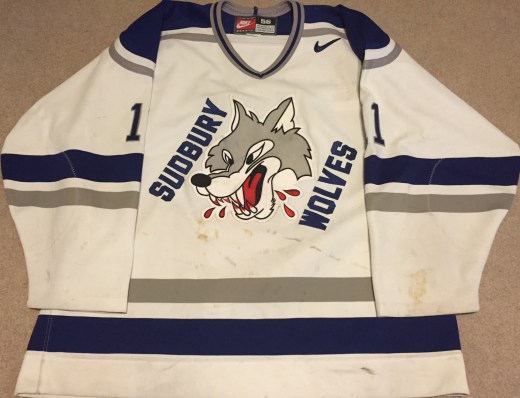
Kelly returns to the only other NHL team he has known, the one that drafted him 94th overall in 1999 out of the London Knights (Kelly finished his OHL career with the Sudbury Wolves- see below) and gave him his shot at the big time coming out of the 2004-05 lockout.
B’s GM Peter Chiarelli brought Kelly into Boston several weeks before the 2011 trade deadline, giving up a second-round pick (which turned into Shane Prince) to acquire the two-way forward who had first gotten to know Chiarelli when he was Ottawa’s assistant GM prior to landing in Boston in 2006.
Kelly didn’t do a great deal to stand out immediately after coming to Boston. He did close out the 2010-11 regular season scoring with a last-second goal in Newark against the New Jersey Devils in a loss, but he demonstrated his worth in Game 3 of the opening round of the playoffs against Montreal. With his team in an 0-2 hole facing crisis after dropping both home games to the hated Canadiens, Kelly stepped up and was a hero, helping his team claw its way back into the series and on path for the eventual Stanley Cup championship.
Like the Red Sox in 2004 with a comeback for the ages against the NY Yankees, the Bruins’ first championship in decades was greatly sweetened by the fact that they slew the Habs en route to the title. Kelly was a major part of that, earning “the Cage” as a nickname when he suffered a facial injury that required full face protection and a waffle-grid cage.
Oh, yeah…did I mention he was fearless? He stuck up for his teammates as evidenced with his “small altercation” against Chicago’s Andrew Shaw:
Kelly followed up a championship spring (he had previously helped his Senators to the 2007 SCF before losing to the Anaheim Ducks) with a career-best 20-goal season in a contract year, turning that success into a controversial 4-year, $12-million extension, that was nearly universally panned at the time as an overpayment. In hindsight, it was (he scored just 21 total goals over the next four seasons vs. the one 20-goal campaign in 2011-12), but Kelly was always the consummate professional and loyal soldier. He commanded respect in the room, and while that doesn’t earn nearly as much respect as is warranted sometimes, the Bruins are losing a trusted agent and veteran with his departure.
Niklas Kronwall: “Was that necessary?”
Given the way things ended for Kelly- a fractured femur just 11 games into the 2015-16 campaign that cost him the entire balance of his final year in Boston, it’s a shame not to be able to see him make his comeback in the Black and Gold. At the same time- the injury did provide a tangible end to his time in Boston, even if it was not a more fitting coda to his 288 games in a Boston uniform (43 goals, 101 points). Yeah, the numbers are nothing to write home about, and yes- he didn’t provide the team with enough bang for the buck to warrant the commitment, but Kelly deserved a better fate than how it all finished against Dallas on November 3, 2015.
Kelly is in the twilight of a career that saw him work his way up to the NHL via the UHL’s Muskegon Fury- one of just a handful of players to establish themselves as big league regulars after starting out near the bottom rung of the professional hockey ladder. Full disclosure: it took me some time to warm up to the value of Kelly, but after being around him and seeing him do enough of the little things, it wasn’t heard to figure out what the Senators and Bruins both obviously saw and see in him.
It is an unfortunate by-product of the modern salary cap era that capable, versatile, and upstanding guys like Chris Kelly almost immediately get raked over the coals over the contract, but this is the way things go in today’s NHL. In the eyes of some, it made no sense to bring Kelly back even on a short-money and term deal like the one the Sens gave him. And yes, it’s true that Kelly didn’t justify the 2012 extension in terms of production, but for those young players he helped to mentor during his previous four years with the team, that payoff will last well beyond the presidential term and $12 million he banked as a member of the Boston Bruins.
I fully realize to some that is a small comfort, but for those players who know what Kelly did for them and the fans out there who appreciate the importance of leaders and team builders who ultimately get little praise or respect if they’re not dazzling onlookers with their skill or filling the net, they know that “Kells” will be missed.
Dom, Reed and I are back with our 3rd podcast together, recapping the 1st week of NHL free agency with a decided Boston bent, covering David Backes, Anton Khudobin, Riley Nash, Tim Schaller and Alex Grant to name a few. Dom will tell you why he thinks Khudobin for two years, beyond the solid addition of a proven backup, has key implications for Malcolm Subban not getting snapped up in the expansion draft.
We also issue a Danger, Will Robinson! alert to fans of the Edmonton Oilers as we look at the impacts of recent signing and additions to that club’s cap picture and we see some eerie parallels to how it all came unraveled in Boston.
We also discuss (about 55 minutes in) the Bruins and Don Sweeney’s still pending move to upgrade the NHL talent on defense- that kind of a move to shore up the club’s right-shooting depth chart has been curiously lacking. Dom mentions an interesting name with Ontario connections and Reed has had plenty of looks and shares his thoughts on why this particular player (an RFA) might be a stealth target of the Bruins via trade.
All in all, it’s a little over 90 minutes of hockey talk, unvarnished and calling it like we see it. Ole!
Opening with this…(not just because it’s great- thanks to those on Twitter who turned me onto it a few months back when I asked about their favorite cover songs of all time- but because this is kind of how I am gauging that Bruins fans feel about the efforts to shore up the defense since the offseason began way back in April.)
The 2010 1st-rounder (12th overall) from Michigan via the OHL’s Memorial Cup-winning Windsor Spitfires was rumored to be of interest by the Bruins on draft weekend. If true, can’t imagine that interest has waned. If the B’s can figure out how to make salaries match up, they certainly have some prime young assets in the system that might make Ducks GM Bob Murray budge. Would a playoff-tested SC champion like Adam McQuaid make sense for Anaheim as a starting point, with pot sweetened with another player and/or prospect? From a sheer talent-for-talent standpoint, McQuaid-Fowler doesn’t happen, but the GM is trying to win a Cup and Boston’s third-pairing baggage smasher has been there and done that. Don’t underestimate the value GMs place on veteran winners like that, even if a 1-for-1 swap won’t happen.
Fowler’s your “bridge”- he makes $4M and has 2 years left to UFA status, meaning he gives the Bruins two seasons before they have to make a decision and brings them two years closer to seeing one of their recent top-60 D selections evolve further to see where they might be as NHL players. The issue with Fowler is that he shoots left, whereas the B’s need to shore up their right-shooting talent. So, in essence- if the B’s are able to go out and get Fowler, they then probably need to add another right-shot D for depth and hope that Colin Miller takes a big step next season for them.
Fowler is a slick offense-minded guy who boosts the power play, but isn’t the heavy-on-the-puck defensive presence that the Bruins prize, either. His Corsi numbers put him closer to a 3rd-pairing guy than a top-4 that the B’s prize, but on a defense by committee approach, Fowler isn’t the worst idea. That could be a sticking point in terms of how much pursuit Boston is willing to engage in here. Ideally, Hampus Lindholm would be the prize from Anaheim, but let’s get real- not happening. If it does come to pass, then short of a catastrophic scenario of a return going to the Ducks, I’d say the Boston GM will have earned the “Sweenius” nickname.
As for other options…James Wisniewski shoots right and is still out there as of July 2, but after signing a big bucks deal with Columbus in 2011, he had one impressive 51-point campaign in 2013-14, sandwiched by a lot of mediocrity and injuries. Can’t imagine the Bruins are willing to invest a great deal on him, but with his buy-out, who knows? He might be champing at the bit to get a short-term deal done and prove his worth. The Wiz presents a major injury risk, but he could add an element of boom potential as well.
You’d think that if fellow 2010 draft pick Brandon Gormley was of interest, the B’s would have added him already. For another downright disappointment, former Ducks prospect and uber-collegian Justin Schultz helped the Penguins win a Stanley Cup and then was not QO’d. Go figure. And to think- I was once mocked for daring to suggest that the Bruins got the best free agent D in Torey Krug in 2012 when they signed him out of Michigan State. Take that, Twitter!
The Bruins have had bad luck with Russians and this guy is another left-shooter, but if I’m Don Sweeney, I pick up the phone and dial Brian McLellan to see if the Capitals are willing to talk trade for Dmitri Orlov. Just saying- the advanced stats crowd will tell you that he’s undervalued, and you don’t hear much about him coming out of D.C. these days.
The very excellent cap resource General Fanager has a list of available free agents here:
General Fanager has picked up the torch where Cap Geek blazed a bold trail. In truth- I miss my old Hockey’s Future buddy and CG founder Matthew Wuest– you touched so many, my friend. Godspeed to you and those who loved you the most. RIP, Matt.
But, let’s get back to the topic at hand: If Fowler is indeed dealt, add him to the growing list of top-30 picks from that pretty solid draft class that has been traded. 15 of the 30 are no longer with the teams that drafted them before age 25, and Fowler would push the needle north of 50 percent. That’s unheard of, even if ultimately trivial to the matter at hand.




 scoutingpost