Boston Bruins 2015-16 season preview: Goaltenders

1. In retrospect: It was a season of discontent in Boston as the Bruins watched Pittsburgh smoke the hapless Buffalo Sabres on the final night of the 2014-15 regular season to take the eighth and final playoff spot in the Eastern Conference and relegate the B’s to the late spring sidelines for the first time since 2007.

Goaltending played a part in Boston’s early trip to the links. Tuukka Rask and Niklas Svedberg played their part in the unsuccessful season to be sure, but you can make the case that if not for Rask’s Vezina-caliber talent on many nights, Boston’s fall from the top-eight in the East would have been even more precipitous than it was. Draft watchers will tell you that it might not have been such a bad thing for that to happen, but for a team with higher expectations going in, Rask was often the most consistent glue that gave the fans hope that a better team was hiding behind the curtain of up-and-down play.

Unfortunately, Svedberg did not inspire enough confidence from head coach Claude Julien to earn more starts that might have given Rask more of an opportunity to re-charge and re-focus later in the year when every point was at a premium. Boston’s drop from having the third-best offense in 2013-14 to 22nd last year, not to mention the gaping hole Johnny Boychuk’s pre-opening night departure to Long Island certainly put a significant amount of pressure on the men between the pipes, and we can argue all day about Svedberg’s viability as an NHL backup and that his overall numbers (7-5-1, 2.33 GAA, .918 save percentage) should have been worthy of more than 18 total appearances. The plain truth is, however- Julien did not put him into games with much regularity because he didn’t believe in him. It’s the classic saw- don’t tell me how good someone is- show me. And I get it- the statistics paint a better picture of Svedberg than he showed with his playing time and overall performance. But, in the end, Julien had ample opportunity to put Svedberg in and passed, instead going with Rask to the point that the body language seemed to indicate that Boston’s starter was frustrated with not getting more of a break (I would add, too, that Julien could have thrown Jeremy Smith into an NHL game later in the year but opted not to do that, either). The fact that no other NHL team was eager to line up for the Swede’s services after Boston informed him of their decision not to re-sign him tells you that the B’s coach is not the only one who wasn’t willing to invest in Svedberg, now playing in the KHL this year.

So, that brings us to the dawn of a new NHL season in Boston.
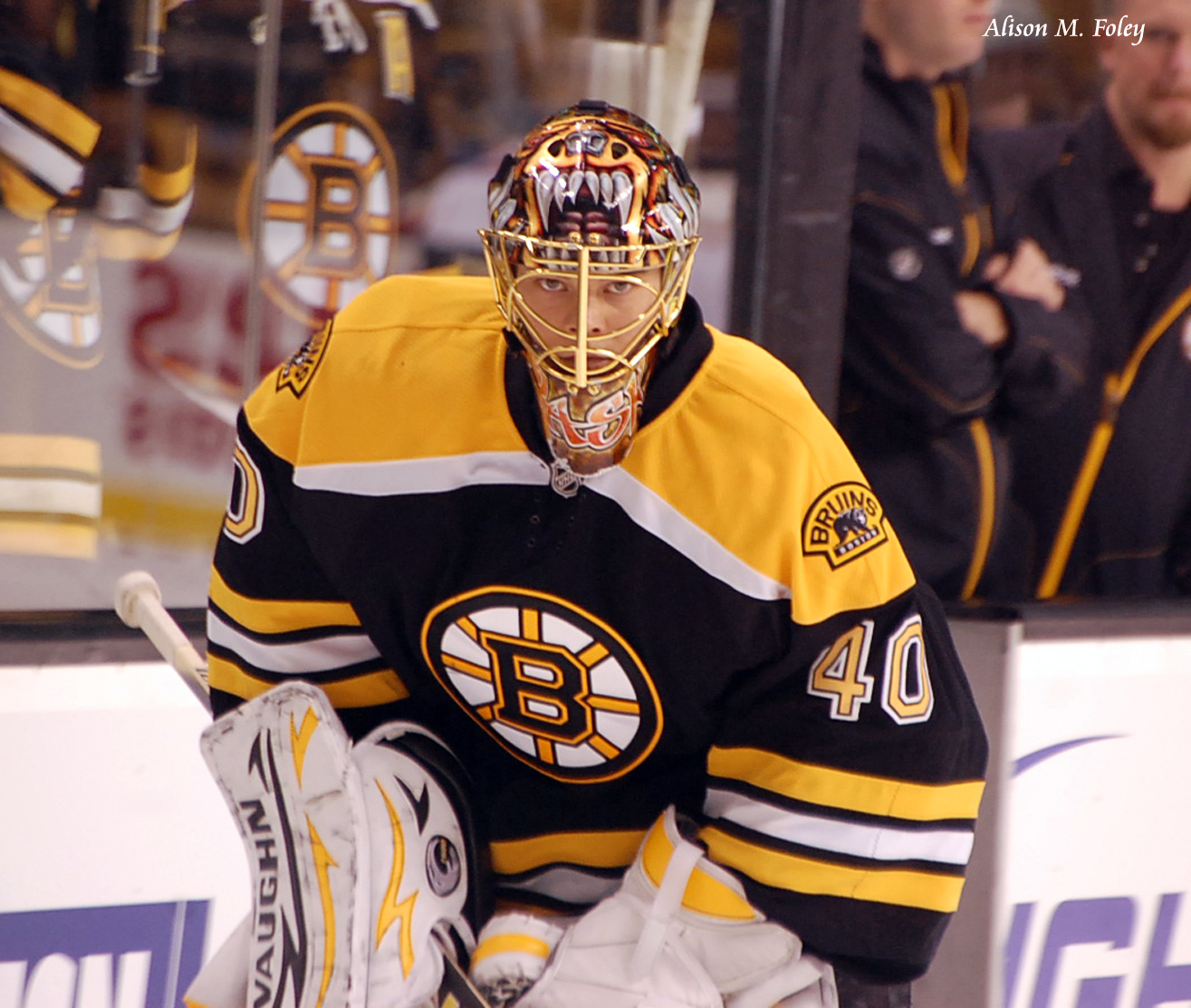
Tuukka Rask (Photo courtesy of Alison M. Foley)

Tuukka Rask (Photo courtesy of Alison M. Foley)

2. The view from here: Not much has changed in the state of Massachusetts since the team packed up their stuff and headed home after game 82. Rask is still the top man in net, entering the third of his eight-year, $56 million pact signed after the team’s run to the Stanley Cup final series in 2013. At 28, he is firmly in his prime and has a 2014 Vezina Trophy to go with his reputation as one of the NHL’s top workhorse netminders. Like Henrik Lundqvist, a Stanley Cup ring (as starter) still eludes him- he came oh-so-close against Chicago, but the Bruins have taken steps backwards since that first post-lockout postseason.

Rask played a career-best 70 games in 2015, and in the modern NHL, these athletes are physically capable of playing all 82 games, just as former Bruin Eddie Johnston was the last goalie in team history to play every minute of the Boston season (70 games, 4200 minutes in 1963-64), but physics and reality can be two different things. Rask numbers were down compared to his previous and personal best 2013-14 campaign, but plenty of NHL clubs would embrace a guy who posted 34 wins and a .922 save percentage despite having an offense in the bottom third and a defense that often played not to lose in front of him.

The questions that seed ongoing debates, however, is just because they *can* do it- *should* NHL teams entrust huge swathes of the regular season to just one player, then expect them to thrive in another potential of a maximum 28 games in the playoffs? What is the mental and emotional toll of playing so many games under the pressure-packed conditions that NHL goaltenders exist under? Some guys can handle and even thrive in that (see Brodeur, Martin) environment. Others, not as much. And- how effective the team in front of them is also factors into the equation as well.

Earlier this month, Rask told the Boston Globe this when asked about his 70 games last season and if it was too much:

http://www.bostonglobe.com/sports/2015/08/10/tuukka-rask-not-worried-about-his-workload-bruins-defense/FbOUF1PxG0QzHgvlAzkkTO/story.html

“No, not really. I don’t think you can put a number on it, but a lot of things depend on how tight the games are, how many games you play in a row, stuff like that.’’

“Last year happened to be 70. If it’s going to be like that, it’s going to be like that again. We’ll play it by ear.”

To those who would wave their hands dismissively over the concern about the number of games he’ll play in 2015-16, my response is- OF COURSE HE’S GOING TO SAY THAT! These players are professional athletes and competitors/type-A personalities! Furthermore, they also have a stake in not making public statements that would allow opponents to leverage that to an advantage against their own team. You can’t have it both ways, guys- you can’t question what players say when you don’t like what it is they are being quoted on, but then point to other things they say on the record with absolute certainty when it validates your own point of view. In other words, I would actually be critical of Rask had he come out and said “Yeah- I think 60 games is about my regular season limit and the team had better play great in front of me or the GM’s gonna have some work to do,” because you simply don’t admit weakness- even if that might constitute the proverbial elephant in the room. Rask played it exactly right, but whether he truly feels that way or not is something only he can answer and it won’t be in the Globe or anywhere else.

Rask gets criticized in some circles for not having won the big games for the B’s, but that is far too simplistic an argument to make and smacks of an agenda aimed at his cap hit. His $7 million AAV is a major bone of contention for fans who think the team can spend that money better elsewhere. The problem with that thinking is- just who, exactly, is going to replace Rask? It’s absurd to argue at this point in time (August 2015) that any one of Malcolm Subban, Zane McIntyre or Smith are up to the challenge of matching Rask’s production and trust. Which brings us back to the current situation: Tuukka Rask is Boston’s main man in net and still very much in the upper tier of NHL goalies at this stage of his career. Should any of the prospects emerge with the promise to stop pucks a the NHL level, Boston GM Don Sweeney will at least have some options to go back and evaluate Rask’s long-term viability with the team, but in all reality- trading an All-Star in his prime without anything less than a guaranteed return (not bloody likely) would be a fool’s errand.

The onus is on Julien and his staff to better balance Rask’s workload if they think that is the issue, but 10 shootout losses (the Bruins were actually 9-4 in OT during 4-on-4 play- a bright spot for them) a year ago says that what ails this team goes well beyond simply giving more starts to the backup.

3. Who’s No. 2?: As Yogi Berra said- it’s deja vu all over again. Boston is about to enter the season with a collective 31 minutes worth of NHL experience at the backup position split between Subban, McIntyre and Smith.

Subban survived a scoreless first 20 minutes against St. Louis in his NHL debut last year by facing only a handful of shots only to see things come unraveled in an 11-minute horror show in the second, resulting in Rask coming back in for relief. You can’t put that all on Subban, and a lot of ink has been spilled arguing that he would have been in a better position making his first start against the Edmonton Oilers a few nights earlier. Either way- Subban has the talent if not the pro experience to play in the NHL. The biggest issue with that is we’re talking about a soon-to-be 22-year-old who has yet to enjoy a run as starter at the AHL level. His statistical performances in the last two years with Providence are fine- indicative of being a first-round selection, but the one crack in the armor happens to be the number of games played. Last year, Subban was expected to take the No. 1 role and run with it, but it was the AHL journeyman Smith who ultimately earned Bruce Cassidy’s trust when the games mattered most.

Smith is back on the cheap with another 1-year contract. He played 39 games for Providence last season posting a highly impressive .933 save percentage. I actually saw him live in one of his worst performances (neither he nor Jeff Zatkoff had a good night in net) and although he gave up several softies in the first 40 minutes that had the Dunk Center crowd gasping in frustration, he slammed the door home in the final 10 minutes, making multiple scintillating saves before Alex Khokhlachev won the game in the final 180 seconds. Sometimes, we have to remember that way back in 2007, Smith was a top-60 NHL draft selection, so it’s not like he’s a nobody. At age 25, he looked like someone who was never going to reach the NHL, but one year later, my guess is- he’ll see time in Boston if nothing else changes. What he does with that time, however, is anyone’s guess.

Having said all of that- aren’t the B’s doing exactly what they did a year ago with Svedberg, who had started just one NHL game?

If I have to choose today the best option between the three goalies not named Rask currently under contract, Smith makes the most sense to be the team’s backup on opening night. But, I also believe the team is risking more of the same in terms of a heavy workload for Rask and very little in the way of a safety net should he get injured at all. For those reasons, I cannot imagine them going into the new season without someone like Jonas Gustvasson or Ray Emery or even Viktor Fasth on an NHL deal to build a little risk mitigation into the equation. If you just threw up a little in your mouth at that last sentence- I hear you. But this team has too much invested in the roster to simply throw caution to the wind and trust the youngsters at this point.

Subban is the most talented of the signed backup candidates, but sitting him on the bench for extended periods in lieu of forcing him to hone his technique and build up experience by establishing himself as a No. 1 at the AHL level would be a mistake. Ditto McIntyre, who doesn’t even have a pro body of work to reference. Does anyone really think that it benefits him to sit and watch most nights when Rask is taking the net and then expecting him to thrive when he goes in every fourth or fifth game? Just because he has the mental toughness and character to possibly do it doesn’t mean that he should. Finally- Smith has to be put on waivers to go down. What if…when the Bruins decided hypothetically to go with one of the kids to start the year, another team lost a goalie to injury and claims Smith away from Boston? It’s happened to Boston before and the results weren’t pretty. If you can remember the 2000-01 season when the B’s were forced to run with Andrew Raycroft and Kay Whitmore (all because Buffalo claimed the immortal Peter Skudra on waivers) in tandem, you get a gold star. That team, too, barely missed the playoffs and would have had a different fate had Byron Dafoe and John Grahame been available the whole year.

Malcolm Subban (Photo courtesy of Alison M. Foley)

Malcolm Subban (Photo courtesy of Alison M. Foley)

4. Looking to the future: Between Subban and McIntyre, the B’s have two promising young prospects. But that’s what they are right now…prospects. This team, as currently constructed, is hard-pressed to make the playoffs let alone contend, so there is little upside to forcing either player into the 2015-16 lineup unless injuries or their own play at the lower level gives the team no choice.

McIntyre will play in the NHL one day. He’s got the right mix of talent and heart. But that day is not today, in my view. There’s a lot he can learn in the AHL, and while he undoubtedly would love to make the Bruins out of camp, he’s better served seeing some time at the pro level outside of the NHL pressure cooker. For now. But just because I think he should apprentice in the AHL first does not mean he won’t go all the way. I believe he’s got “it”- all things in good time.

I like the Daniel Vladar pick in the third round this past June, but I don’t love it. He’s the epitome of what NHL clubs are trending to: massive (6-5), athletic/toolsy guys in net that give shooters very little to hit other than their oversized bodies and long limbs. The problem with Vladar right now is that technique-wise he’s a hot mess…he’s inconsistent with his stance and positioning, lets in more than a few goals that go through him- hit a portion of his body/equipment but still squeak by (coaches hate that, btw), gets real scrambly at times with his play and I’m not sure about the mental toughness yet. He’s as raw as they come, but make no mistake- he’s got the things you can’t teach, so why not? He was a solid value where the Bruins took him, so no issues on that front. Like McIntyre in 2010, he’s a long way off from being NHL ready. Vladar is playing in the USHL this year and will either go the NCAA route or probably play in one of the major junior leagues next season.

So in getting back to Subban and especially McIntyre, people love to talk about the shiny new toy, but the Bruins have an obligation to cultivate and protect their assets, too. Rushing goaltenders into primetime before they are ready, no matter how much they’ve accomplished in junior or the NCAA, rarely bears fruit. There’s a time and place for it, and even Rask, who spent two full seasons in the AHL and this despite the fact that he was playing a near AHL-equivalent level in the Finnish pro league for two more years before he crossed the Atlantic, didn’t jump right in, and he had to work with Tim Thomas and spend a good deal of time sitting on the bench before he became the team’s true No. 1. That’s how it should work in most cases, and when fans apply that “fast food” mentality to goalies (Gotta have it hot and right now!), it’s not really the way the world works.

Zane McIntyre and Bruins goalie coach Bob Essensa (Photo courtesy of Alison M. Foley)

Zane McIntyre and Bruins goalie coach Bob Essensa (Photo courtesy of Alison M. Foley)

5. The verdict: Some 2,500 words later we’re back to a basic truism: you cannot win a hockey game if you don’t score any goals.

Rask will give the Bruins a chance to win every night. Unfortunately, for those who fear the team being not good enough to make the playoffs let alone contend for a Stanley Cup but being too good to finish in the basement where the Connor McDavid types (how long before we see another one like him?) fall into their laps, Rask brings little solace. He’s kind of like an in-his-prime Sean Burke, whose at times brilliance on some very mediocre Hartford Whalers teams in the early-to-mid 90’s is one of the forgotten story lines of that era. Those Whalers teams couldn’t make the playoffs, but they were on the close-but-no-cigar side of the spectrum so aside from Chris Pronger in 1993 (Burke’s worst year in the Insurance Capital), they could not build through the draft (trading their 1st rounders from 1995-97 to Boston for Glen Wesley didn’t exactly help either).

Watch for the makeup of Boston’s goalie group to change before camp opens up- the team will sign someone on the cheap with NHL experience to provide competition and see how things shake out. If Smith is lights out, then maybe he earns the job, but as it stands right now, there are far more questions than answers with the No. 2.

The Bruins have a winner in net, but without a quality supporting cast up front, and a capable backup the coach trusts to give the workhorse some meaningful rest throughout the marathon of a hockey season,we’ll see history repeating itself in Boston this year. Unless something changes- even when on top of his game, Rask is not enough to make the B’s more than they are: a middle-of-the-pack, bubble club to make the 2016 playoffs.

(Thanks to Ali Foley for permission to use her photos in this post)

Summer cooler interview series 2: Torey Krug pt. 1

The summer cooler interview series rolls on and Boston Bruins defenseman Torey Krug took time out on a Tuesday night to chat about a lot of different topics as the 2015-16 NHL season draws closer.

The former Michigan State Spartans captain signed with the Bruins as a free agent in the spring of 2012 and took the 2013 playoffs by storm when he found his way into the Boston lineup agains the New York Rangers in the second round, then never relinquished his spot in the NHL lineup.

He enters the new season on a mission to capture a top-4 spot in Boston’s rotation where he will have to play upwards of 20 minutes per night in an expanded role, but if anyone has paid attention to the way Krug has proven his critics wrong over the years, he’ll not only pull it off, but surprise a lot of people along the way.

Torey Krug, David Krejci and Tommy Cross at training camp. Photo by Alison Foley

Torey Krug, David Krejci and Tommy Cross at training camp. Photo by Alison M. Foley

Here is the transcript from my complete and unedited interview with Torey. Because it’s so long, I’m going to break it up into several posts, so I won’t lose people in the length. His answers are typical of what folks who have covered the Bruins and Krug know to be the case with him- he provides detailed, thoughtful answers to the questions you pose to him.

So, without further ado- here’s part 1 of the Torey Krug interview, where he talks about his off-season, his mindset after missing the NHL playoffs for the first time in his career, how the trades of his close friend Milan Lucic and fellow defenseman Dougie Hamilton have affected him, and how he expects to compete for…and earn…a spot in the top-4 come October.

***

Scouting Post: We’re in August and before we know it- it’ll be time for Boston Bruins training camp and the veterans to report, so can you bring the fans up to speed on what you’ve been up to since the 2014-15 NHL season ended?

Torey Krug: Yeah- I’ve been gearing up for this season and it’s a slow process with how much time we’ve had this offseason- it’s a little bit more time than we’re used to after missing the playoffs last year. That obviously strikes up a hunger for me to get back on the ice surface and play with my teammates, but when the season ended I was able to continue playing for Team USA in the World Championships (held in Austria).

That was a great experience for me not only being on the ice playing against other teams’ top lines- the likes of Alex Ovechkin and others- but off the ice it was a great experience- my first time ever to Europe. Being a part of USA Hockey was an important experience for me because I had never represented my country and I was able to take a little vacation with my wife after that tournament wound down and it was overall just a great experience.

I took a little bit of time off after that tournament to enjoy myself, relax and recharge those competitive batteries because you’ve been in the competitive world for so long. Then, the training starts and there’s multiple phases throughout the summer where you make sure you start gearing up so that you make sure you don’t peak at training camp. I think that’s a common misconception- a lot of guys want to peak at training camp to make sure they give a good impression but the way I have been taught to train is to make sure I peak when the time is right later in the season. So, it’s just been a solid progression: lifting weights, starting to skate three, four times a week now in August, and I’ll make my way to Michigan State next week for a training camp that they invite all the alumni back for and put together, so it’s been a very long summer and I’m looking forward to getting back on the ice with my Bruins teammates.

SP: Let’s go back- because you made the team in earnest during the 2013 playoff run and it was a memorable debut for you. Then, your first full season in the NHL was a President’s Trophy campaign- disappointing outcome in the second round of the playoffs that year, but this is the first time as a pro where you didn’t make the playoffs. What was your mindset as you did the exit interviews to pack up and head home for the summer and what will be important for the Bruins as a team to get off on a better footing this year?

TK: To be honest, it’s extremely disappointing. The group that we had- we obviously lost a few key pieces from our President’s Trophy-winning campaign, but when you really look at it the core group of guys- we still have them to day even though we subtracted Dougie (Hamilton) or Looch (Milan Lucic)- we still have that core group here, so it’s really disappointing to miss the playoffs last year.

What it does do is it builds your appreciation for how hard it is to not only get into the playoffs but to win the Stanley Cup. I was very blessed and fortunate to play in the Stanley Cup finals my first run and you can take it for granted how hard it is to get there and how hard it is to compete in the playoffs, so I think no one wants to say at the time it happens, but it might be a good thing that this team- the core group of guys- goes through this together because it’s an emotional experience and you realize that you can’t take things for granted and you have to really work for what you earn.

I think heading into the offseason it was to mentally prepare yourself for what’s to come. You watch the playoff games and you realize how hard it is- how you have to earn every single inch of ice that you get out there- how hard it is to score goals…it’s a learning experience. Everything you do you try to learn from, so even if there’s bad situations like missing the playoffs and Peter Chiarelli gets fired and people are getting traded, guys are getting moved- you’re always learning and I think that’s an important thing for this group and I know we’re not taking it for granted anymore.

SP: You’re not a rookie anymore and are no stranger to trades and changes with your team in Boston, but the trades for Hamilton and Lucic happened within the span of a few hours, so can you take the fans through where you were at the time and how that played out? What were your initial reactions and where are you now that it’s sunk in that you have new teammates that you’re getting ready to play with for the first time?

TK: Well, it surprised me. I think anytime you hear teammates’ names in the media, you realize it’s a possibility that guys are going to get moved and nothing really sinks in until they are actually traded.

I was sitting in my living room watching draft day unfold and watching (Don Sweeney) do his thing and Milan Lucic is one of my best friends- I talk to him every single day and there’s literally not a day that goes by that we don’t reach out to each other and chat so it was a tough one. My wife and I spent every holiday at their house and a lot of Sunday football days at his house…it’s tough to see friends go. But that’s the nature of the business and I know that’s something that a lot of people say, and it’s tough for fans to understand how big of a change it is for these people and their families to pick up their kids. Milan and his wife have roots (in Boston) and have been here for eight years. It’s tough. At the same  time, it’s exciting for him to be able to go to a new situation. Being on the other side of that, it’s disappointing to watch your friends go, but it’s an opportunity for new people to come in; you get to meet new people, new teammates…you get to gain a new experience that way.

With Dougie leaving it opens up a hole for me within the team and obviously other players as well- there’s a lot of ice time that needs to be made up with his absence. With guys leaving and guys coming and going and everything else there’s a lot to take in, and it’s hard sometimes for the everyday fan to see that.

SP: That’s a great segue because I was going to ask you about the recent Boston Globe article kind of laying out what might be next for you in terms of your role on the Boston Bruins. As you said it- Dougie Hamilton is gone and there’s a spot in the top-4- you wouldn’t be who you are if you weren’t eyeing that. Can you talk about what it means to have that kind of a role in the NHL and based on your past teams where you played a lot of minutes for other clubs, what you bring to the table for the Boston Bruins?

TK: I can tell you that defensemen that play a lot of minutes are very well respected and highly appreciated on teams. With Johnny Boychuk moving and the valuable minutes he played and the valuable role on our team that he played and then you see that when he’s gone how it works out and you really appreciate the job that these guys do.

So, for me- as a hockey player that’s trying to move up and improve his role, you realize what a big deal it is. Dougie leaving…a friend is leaving the team…but I just see it as an opportunity and I hope that the other defensemen that are with the organization, whether they’re fighting to make the team or they’re trying to improve their role on the team- I hope everybody’s getting excited about that. It creates better competition within the group and it’s only going to make myself better so I hope guys’ eyes light up like mine do when I see that opportunity, and I’m really looking forward to going out and earning it.

I don’t think anything is given to anybody on our team. The guys that are coming in like myself trying to improve their roles in the organization, we earn those. So for me it’s about going out and earning this opportunity and making sure nobody takes it away from me. All of this comes as Sweens and Claude (Julien) are going to make those  decisions and I’m going to do everything I can make sure they are making a decision that best fits.

***

We’ll be back later this evening with the second part of the interview, as Krug will expand on how he’s had to earn it at every stop along the way before Boston, he’ll answer the critics who don’t think he has it in him to be a top-4 NHL defenseman, talks more about teammate and defense partner Adam McQuaid, the  2016 Winter Classic at Gillette Stadium and the influence his family has had on his success.

(H/T and thanks to Alison Foley for providing the above image and  some others from her collection to this blog)

Scouting Post Dispatches- Twitter mailbag #1

I want to thank everyone who submitted questions to me for the first edition of the electronic mailbag of questions. If you want to participate in this effort that we’ll do every two weeks or so, shoot your question to my Twitter account @kluedeke29 or use the comment feature on the blog itself to make your query.

1. Who is leading in the race for backup goalie and how short will their leash be?- Tyler @tylerbingham123

As a former beer league goalie, I’ll give this one a shot.

The current backup situation invites a lot of risk in my view. On paper, Jeremy Smith makes a lot of sense because of his low cap hit and the fact that the Bruins can afford to let him sit for long periods while Tuukka Rask makes a lot of starts. Smith was the most dependable option in net last year in the AHL, but that’s also the issue with him- he has no NHL experience, which essentially puts them right back to square 1 where they were a year ago when they gambled on a similarly inexperienced Niklas Svedberg to be the No. 2.

Some might point to the idea that Svedberg was a serviceable player who was poorly used, but the bottom line is that Claude Julien had very little confidence in him. There are compelling statistical arguments that Svedberg wasn’t utilized properly, but be that as it may- a good backup goaltender enjoys the trust of the coach and team to spell the starter in a lot of different situations. That Julien seemed almost perversely unwilling to use Svedberg when it appeared Rask needed a break the most is beside the point if you believe that going to the well with Rask repeatedly cost the Bruins a playoff spot in 2015. Part of what helped the Bruins earn the President’s Trophy the season before had to do with backup Chad Johnson and Julien’s willingness to give him starts and ease the starter’s burden. Johnson can’t be a starter in this league, but he was an effective backup in his one season with the B’s.

The question becomes- will Smith find himself in a similar predicament to Svedberg? Can the Bruins afford to have a repeat of last spring, when Rask went on a hockey-like death march of consecutive starts without rest because the head coach was not willing to put the backup in? This is the same kind of scenario the Bruins are inviting with Smith and Malcolm Subban or Zane McIntyre as well- all three are capable options on paper, but none are established NHL players- with Subban alone of the trio even having seen a minute of big league action.

On Subban- I just feel he’s better off playing his way into a more prominent role in the AHL with Providence while McIntyre apprentices behind him. Heck- McIntyre might even wrest more starts away from him like Smith did a year ago, but as fine a goalie as Zane looks like coming out of college as the NCAA’s top goalie last season, he’s still in his very first pro year. Expecting him to just go right to the NHL and then have to sit behind Rask most nights is not a realistic option in my view.

So- I think Smith makes the most sense as B’s backup as of July 31, but I still think the team will look to add someone with more of an NHL body of work, either as a bargain bin signing or training camp invite with the option to sign before the season if the coaches feel good about him. Who that is at this point is anyone’s guess- I thought Jason LaBarbera would be someone to fit the bill, but the best of the free agents are gone, so the team might just feel like going with Smith or one of the other kids depending on things go at camp and preseason is the best option. We’ll see, but I’m a believer that younger guys like Subban and McIntyre are best served by playing and not spending the bulk of their time opening and closing the door to the bench for their NHL teammates. We’ll see.

2. If Koko pushes Spooner out of 3C job, what happens with the two of them? Leave Spooner there and try Koko on wing? Jbench @jacobbench

The short answer to this question is that I don’t see Alexander Khokhlachev beating Ryan Spooner out of the 3C job anytime soon.

At this point, Spooner has done a lot to earn Claude Julien’s trust as someone who has grown up a lot over the years he’s been in the organization and finally started putting the offense together when the team needed it the most. Koko needs to prove he can do the basic things the team expects of him, so until that happens, it does no real good to fret over what to do. I will say that Koko is probably better suited to transition to wing and be effective there, and if he’s going to break camp and enter the 2015-16 on the NHL roster, that’s probably his best chance to do it unless Spooner gets hurt or plays so poorly against a lights-out showing from Koko.

That’s not impossible, but  it is a tall order. I think Koko fell victim to the hype machine that often occurs in the internet age- he simply wasn’t ready to compete for NHL time at 18, but that didn’t stop overzealous fans and analysts like myself from being dazzled by his offensive talent and overlooking the glaring defensive deficiencies in his game. He’s come a long way since 2011, but the team tried to trade him in the past and you can’t overlook that. If he is as valuable to the Bruins as he is on Twitter to a select group of folks- he would not have been in play. It’s the old adage that says if they traded you once- they’ll do it again. It would be great for Koko to establish himself as a Bruin, but as far as trade-worthy commodities go, he’s one of the few pieces that could fetch something of value right now.

3. Where do you see Mark Jankowski projecting to in an NHL lineup? Thoughts on John Gilmour as well please Nigel @red_monster

Jankowski still has top-six  NHL forward potential in my mind, and he was really starting to come on when Providence College needed him to. With an earlier-than-projected draft position comes high expectations, so I believe realistically, if he makes it in Calgary it will be more of a third-line center role. When you look at who is ahead of him on the depth chart, third line duty with the Flames would be a win for him and the team.  I do like that there is still room for growth and development with him, even if he’s fallen short of some of the lofty goals envisioned of him three years ago with his pure points and production, which has admittedly not been what everyone was hoping for. He’ll have to continue to get stronger and play heavier if he’s going to make it in Calgary, though.

Gilmour has the makings of a serviceable pro who is going to have to put in the work at the lower levels. He has good all around ability, but because he has less-than-ideal size for the position, he’ll have his work cut out for him. I personally think Gilmour is a journeyman big leaguer/solid AHL player at best, but I love it when players prove prognosticators wrong. He’s a winner, and if he uses that as a springboard to bigger things, more power to him.

What Bruins dman is most likely to slot alongside Chara? Greg Babbitt @babbitt_greg

Barring a change, I could see the team trying big Zach Trotman there to see if it can work. He lacks experience, but showed big league ability in flashes last season and if he keeps things simple, his mobility and long reach would make for a solid defensive partner. He’s a right shot and while not a physical, snarly kind of player, with more experience and the benefit of skating next to one of the game’s all-time greats much like young Kyle McLaren did with Ray Bourque two decades ago, Trotman might be a quiet but effective internal solution to that which has vexed the Bruins since Johnny Boychuk was sent to Long Island…kind of like what happened in 2009 when Johnny Rocket came to town and established himself as an NHL defenseman when some had all but written him off.

If the Bruins want to infuse more offense with Chara, then Colin Miller also makes sense there. He doesn’t have a lick of NHL experience, but he skates extremely well, would add another right-shot, howitzer cannon from the point, and seems to be a player who would thrive next to Boston’s captain, especially on the power play. He’s not as big as Trotman, and his hockey sense is a bit of a question mark right now, but Miller could be the one who takes that top pairing job if not on opening night, but perhaps as the season progresses.

Assuming Miller plays for the Bruins this season (I believe he will) the Barry Pederson for Cam Neely trade will continue for Boston into a third decade as the Glen Wesley-Sergei Samsonov-Milan Lucic branch continues to bear fruit.

4. I’d like to see Hamilton/Saad stick with their teams for longer. But do scouts think the current model is bad for development?- brimcq @mcqbri

It’s not something I’ve discussed with scouts or management types to be honest, but it makes for an intriguing topic.

Ever since the league instituted cost certainty- the salary cap- in 2005, we’ve seen the game’s economic landscape evolve over several trend lines. For a while, it was long-term frontloaded deals that allowed for teams to bury or move them at short money later on. Now, it’s the dissipation of second or bridge contracts for key performers coming out of entry-level contracts or ELCs in favor of significant dollars- those used to be reserved for top tier talents, but I think we’re seeing a paradigm shift with players like Dougie Hamilton and Brandon Saad whose cap-crunched teams are either forced to move them or the player is able to leverage the lack of cap flexibility for a change of address. This drives the talk of the NHL’s middle class getting squeezed, which is becoming more and more prevalent as clubs will have bigger ticket contracts and then have to rely on cheaper ELCs or bargain basement deals with little room for the middle ground/solid veteran types who typically clock in at around $3-4M a the current (and rising) market rate.

Hockey is a business- it always has been. But the days where owners and teams held the cards are long gone, so I think that teams and players/their representatives will continue to evolve with each emerging economic trend. I don’t blame Hamilton for seeking a situation he thought would be better for him, and in Saad’s case, they made a decision that they could not afford him at the going rate- that was a tough business decision that more and more teams will have to make if things continue. But, both situations have jolted teams and fans alike into the realization that you can’t simply assume restricted free agents will remain all that restricted for long depending on a team’s salary structure and how much they have invested in the veterans.

At some point- you wonder if the ever-rising salaries and the kabuki dances teams go through to stay cap compliant will kill the golden goose and force a seismic sea change, but it hasn’t happened yet.

5. With the Bruins prospect pool now overflowing who would be consider the 5 untouchables in the organization.- Mike O’Connor @mike77ca

The Bruins have quantity in their system for sure. The quality of the prospects is very much up for debate, however so it will be interesting to see how the 10 picks from 2015 plus the others from previous years perform and develop in the new season.

I don’t know that when it comes to prospects there is ever truly an “untouchable” because if another team is willing to pay a king’s ransom for an unproven player, I believe a savvy GM will often times make that deal. Of course- that position is becoming tougher to defend for the precise reasons I explained above as economics and the importance of landing impact players on 3-year (max) ELCs becomes ever more critical for teams who want to win the Stanley Cup. It’s hard to imagine the Edmonton Oilers or Buffalo Sabres parting with either one of Connor McDavid or Jack Eichel for any offer given that reasoning, but I do believe that GMs have to at least listen and think hard about a team that comes in with high-end NHL players to offer, not the proverbial two dimes and a nickel for a shiny quarter kind of trade. In the end, the money and cap play much bigger roles than ever before.

The Bruins don’t have a McDavid or Eichel so to speak, so their situation is different. I’ll take a stab at it and offer these three players up in an effort to answer your question:

1. Danton Heinen, LW Denver U.- I have it from several sources that the one name teams asked about repeatedly at last winter’s deadline was the 2014 fourth-rounder who finished as the NCAA’s third leading freshman scorer. He may not have ideal size or speed, but his hands and hockey sense are top-shelf. As a late bloomer, Heinen has the look and feel of a classic diamond-in-the-rough who is going to one day play very well for the Bruins, so unless a team wants to give up the moon and stars for him, don’t expect him to go anywhere. His upside will also likely drive the team to court him to come out of school earlier because ELC term and CBA loopholes will force them to act.

2. Zane McIntyre, G Providence- The B’s are all-in on this kid, and he showed loyalty to them by not exploiting free agency to get the biggest money or a better opportunity to start elsewhere. Now, folks will say there is no room for sentiment in pro sports and they’re right, but I just feel like that Bruins are sold on the soon-to-be 23-year-old’s potential, character and all-around ability. They want him to be a part of the organization, so unless a team comes in to blow their doors off with an offer, he’s as close to untouchable as you will get. Besides, unproven non-NHL goalies don’t tend to fetch enough of a return from teams to make dealing him at this point worth the effort.

3. Jakub Zboril, D Saint John- He’s the top pick, he’s signed and the Bruins think he is going to be a future top-2 defender for them. Both Don Sweeney and Scott Bradley used the word “elite” to describe his ability, so you can be sure the B’s had him higher on their list than the 13th spot where they took him. They’re not going to turn around and flip him without seeing if all that potential they’re banking on starts to pay off for them. You can almost throw Zach Senyshyn into this same category as well- they have a lot riding on him and want to prove that he was worth the risk they took by grabbing him in the top-15. It’s hard to imagine a team coming in to offer the Bruins a top-6 NHL forward for a raw prospect like Senyshyn, so they’ll sit back and see if their gut instincts about him are proven correct.

That does it for this first edition- thanks to everyone that submitted questions and I hope we can do this again in a couple of weeks. You can follow me on Twitter at @kluedeke29

Koko at crossroads

Alexander Khokhlachev has presented the Boston Bruins with a key decision point.

Whether the skilled Russian forward known more popularly as “Koko” establishes himself as a long-term option for the team or moves elsewhere is a situation that will likely resolve itself at some point this season. In the meantime, for a club that struggled mightily to score goals in the non-playoff 2014-15 NHL campaign, the 40th overall selection in the 2011 NHL Entry Draft certainly provides GM Don Sweeney and head coach Claude Julien with a viable option on offense if the rest of his game is deemed sufficient enough to play in Julien’s system.

Koko is an NHL talent who many would argue should already have established himself in the big show by now. Whether you calk that up to a lack of opportunity (valid point) because of entrenched veterans on the NHL roster, or buy into what his coaches talked about as recently as last January by saying that the dangerous if one-dimensional Muscovite needs to round out his game, Koko is a player who needs to make his mark this season.

“It’s not there to be a regular in the NHL right now to be perfectly honest,” Koko’s AHL coach, Bruce Cassidy, told me in early 2015. “I’ve told him that, Claude’s told him that; he needs to address that and he’s working on it, and it’s not easy. It’s not easy when you’re an offensively gifted (forward). You want the puck and you want to get going and it’s just changing some of those habits, and that takes time.”

Four full years after the B’s went out of character to grab the OHL product with the Windsor Spitfires earlier than they had drafted a Russian native since whiffing on defenseman Yury Alexandrov with the 37th overall pick in 2006, the clock may be ticking on Koko, but as Ryan Spooner demonstrated last season, he’s far from done.

You might recall that after making the Bruins roster out of training camp last October after a productive training camp that also drew its share of criticism from Julien over defensive concerns, Spooner saw very little ice time before being demoted to Providence after just five scoreless games with minimal minutes on ice. Throughout the course of the year, other forwards were summoned to Boston from the AHL, but Spooner remained in the Rhode Island capital. Through it all- while battling injuries that shelved him for weeks around Christmas with trade rumors swirling around him, Spooner didn’t sulk and insisted he wanted to make things work in Boston if the team would give him another chance.

That change came late in the regular season, when veteran center David Krejci suffered another in a series of physical setbacks that essentially made it a lost year for him. Spooner came up and made the most of it, scoring his 1st NHL goal in memorable fashion- a sudden death strike against New Jersey when every point was at a premium for Boston. He went on to finish out the year in the NHL, scoring a respectable 8 goals and 18 points in 24 games with the Bruins. In just a matter of weeks, Spooner went from a player many (present company included) thought was fait accompli to be wearing another uniform after the NHL trade deadline, to the productive, dependable center he had been projected as when he was first drafted in 2010. Now, Spooner isn’t ever going to win a Selke Trophy, but he’s addressed his overall game enough to earn Julien’s trust, and to make it on this team, that’s critical.

Koko and Spooner aren’t the same player. Spooner is faster- he pushes the offensive pace and is at his best when attacking defenses and putting them on their heels with his speed or operating from the half wall with the man advantage where he is a maestro in puck distribution. Koko is more of a shifty waterbug, compensating for a lack of dynamic wheels with high-end puck skills and a killer instinct around the net. I’ve seen him go long stretches of not accomplishing much, only to break a game open on consecutive shifts. The promise is there, and Koko’s exuberance and energy are a credit to what Boston saw in him when they called his name. Cassidy understands better than most that his young charge can break a game open in an instant. If Koko is ready to do the little things his coaches all say he was working diligently to address, then he’ll be in his corner come October to make that  big jump.

Sweeney, too, has recognized a shift in Koko’s perspective in the years he has developed within the B’s system.

“With Koko it’s a matter of addressing the little things,” Sweeney said in December of last year. “He generally played above the puck, but he’s now making a concerted effort to work below the puck and in the defensive zone to make sure he’s supporting the play when it comes back and is ready to then transition to offense.”

So, wither Koko? He has his work cut out for him at center with an expected healthy Krejci, Patrice Bergeron, Spooner and possibly Finnish free agent Joonas Kemppainen ahead of him in the pecking order because of the latter’s experience and better fit on the bottom line. Unlike Spooner, who simply could not make things work when moving to wing, Koko might be able to pull that off in Boston. He may not have any points in his 4 career NHL games, but he did fire home the winning shootout goal in a game against Columbus last year, so given an opportunity to play consistently in Boston, his 1st NHL point isn’t long in coming.

The question is- can Koko break through and finally establish himself right out of the gate for the first time in his pro career. That’s something we can’t answer in late July and history is not on his side- the Bruins have tried to trade him before and if not for Jarome Iginla’s decision in 2013 to pass on Boston for the Steel City, Koko likely would have played more NHL games- with the Calgary Flames- than he has with the Bruins.

But- the kid’s got game. And he is a kid- he won’t turn 22 until right before training camp. Sometimes the best moves are the ones you don’t make, and the Iginla deal falling through might have been the Hockey Gods telling the Bruins not to give up on a player whose best attribute is something sorely missing from a year ago.

If Koko comes to camp crisp, then there is no reason to think that he won’t get his shot to make it in Boston.