What D? The elephant in the room for the Bruins

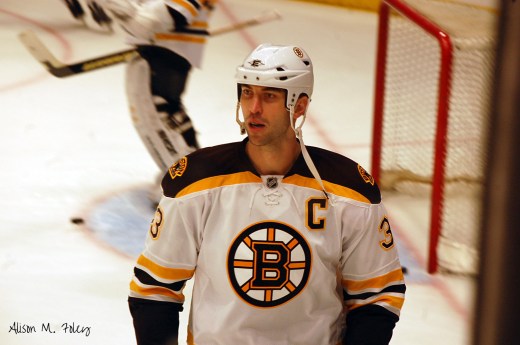
Zdeno Chara returns for his eleventh season as the captain of the Boston Bruins (photo courtesy of Alison M. Foley)

Zdeno Chara returns for his eleventh season as the captain of the Boston Bruins (photo courtesy of Alison M. Foley)

It’s been a slow August, but I had an exchange on Twitter today that inspired a new post- the first since the Jimmy Vesey recap last weekend. There will be more content in store as we get closer to the new season and of course the 2016 World Cup of Hockey.

With Vesey now officially with the Rangers, Bruins Nation turns its lonely eyes to Don Sweeney, looking at the proverbial elephant in the room- the lack of a clear and meaningful upgrade on the Boston blue line since the end of last season. Re-signing John-Michael Liles was fine on its face, but remember- he was a part of the April implosion that saw the B’s crater after sitting as high as second place in the conference a week and change after the trade that brought Liles to Boston. Also extended- Kevan “Killer” Miller, Colin “Chiller” Miller and Joe (Don’t call me “Blow”) Morrow...what do they all have in common? That’s right- they were all a part of the epic spring collapse for the second year in a row, but 2016 was worse because the B’s seemed to be well-positioned for playoffs at least before coming completely undone.

Not to put too fine a point on it, but the coda- an embarrassingly bad home loss against the nothing-to-play-for except to be spoiler to a division rival Ottawa Senators was a final humiliating kick in the crotch to a season that had far more peaks than valleys, but will ultimately be remembered for the inglorious ending.

So, here we are- a few days before September and unless we missed something- the only new blood the Bruins brought into the organization over the summer via free agency at the defense position is AHL journeyman Alex Grant. Nothing agains the former 1st overall midget pick in the 2005 QMJHL draft- he’s had a cup of coffee in the NHL and even scored some goals- but doesn’t this look a lot like Matt Irwin from a year ago?

We’re still waiting for a serious move to address a defense that was overmatched at best when skating against the top NHL offenses a season ago. This is not a slam on the current Boston defensive core- we think the world of Torey Krug, for example- he deserves to be surrounded by better talent. Zdeno Chara is at the end of a Hall of Fame career, but he’s still a serviceable defender…so long as no one expects his old near-30 minutes in any situation. Gone is Dennis Seidenberg, who, despite his huge heart, just couldn’t be effective on his surgically-reconstructed bottom trunk. Ability-wise, Seids is addition by subtraction, but his experience and veteran leadership will be missed, so you can make the case that this defense is actually worse than it was a year ago. This group needs help and one top-three NHL defenseman acquired via trade would do wonder to take some of that pressure off.

Help is coming in the form of a youth movement that shows a ton of promise. Brandon Carlo and Rob O’Gara could be skating for the NHL club at some point this season (they’re both slated for the AHL at a minimum, maybe more depending on how camp/preseason goes for them) and with their size and mobility, there’s a lot to like about their NHL potential. However, no one should be expecting either player to come in as a rookie and stabilize the Boston blue line. Charlie McAvoy is the cat’s meow after being picked 14th overall and having a sharp B’s development camp in July and even better showing at USA World Junior camp in Plymouth, Mich. earlier this month. But, he’s an NCAA player, so unless he bolts from BU, he won’t help the B’s this season until spring at a minimum when his sophomore year at Boston University is in the books. Jakub Zboril, the team’s top pick from a year ago, is in better shape and rehabbing an image that took a hit from a lackluster start last season- he’s talented enough to be a top-three one day, but how badly does he want it? And don’t forget Matt Grzelcyk, Jeremy Lauzon and Ryan Lindgren– all impressive defenders who bring a little something different to the table. Let’s face it, though- even with the optimism, these players aren’t going to give the 2016-17 Boston Bruins what they really need. Hey- if someone within the organization steps up and delivers, more power to ’em, but this is why folks are getting antsy.

It’s legit.

So, based on some things I was told by sources in the Bruins organization and around the NHL, here’s a quick look at some options, or, irons in the fire, that the second year Boston GM and his management group might be looking at. On paper, this defense is simply not much to write home about given how things went a year ago, and while Sweeney has talked about the challenge of finding the right players at the right price, we’re a few days from September and while you don’t want to use words like alarming to describe the situation, what else are we left with. Albert Einstein once defined insanity as doing the same thing over and over again and expecting a different result. You could apply that to the Boston defense and someone would have a hard time arguing against it.

Preamble over, let’s look at some options- by no means all of them, but something to get the juices flowing, at least:

Kevin Shattenkirk, Blues: The Bruins thought they had a deal for the former BU standout back in February in a deal that would have netted a return for Loui Eriksson, but according to a source close to St. Louis, those talks fell apart over the Blues’ desire to move another bad contract to Boston. Sweeney balked and no deal. Now, same source tells TSP that trade talks are heating up for Shattenkirk again, but not necessarily between Blues GM Doug Armstrong and the Bruins. It sure sounds like the NY Rangers would be a club sniffing around Shattenkirk, especially given his Empire State roots.

Armstrong’s in a tough spot and he knows it- the Blues came close to reaching the Stanley Cup finals for the first time since Bobby Orr took the pass from Derek Sanderson, beat Glenn Hall and hurtled through the air, frozen forever in time (46 years ago), but the San Jose Sharks ruined their (and Boston’s 2016 late 1st-round draft) party. Shattenkirk will be a free agent next summer and he’ll command big bucks even though his value as a two-way defender and power play contributor seems all but assured of declining. Assuming the Blues don’t try to re-sign him, trading Shattenkirk now means Armstrong gets more of a return, but he weakens his talented veteran team. The longer they hold onto him, the more he becomes a “rental” and the acquisition price becomes less than what it could be. Decisions, decisions.

The good: Shattenkirk would instantly upgrade the Boston defense and a top-3 of Chara, Shattenkirk and Krug isn’t a top NHL group, but it’s respectable. He’s very good in transition and paired with an effective shutdown guy (Adam McQuaid?), the shortcomings exposed by San Jose in the Western Conference final series last spring wouldn’t be as profound.

The bad: Let’s be honest- Shattenkirk is a fine player, but he’s on a cap-friendly deal right now, and he won’t be 12 months from now. If you acquire this guy, you either do so for one year and accept that he’ll be gone next July 1 or you have to commit upwards of $7 million a season (ballpark) to extend him. Is he worth it? Remember- you’re going to pay a handsome price to get him from St. Louis, and then you have to commit the cap allocation (and real dollars) to keep him in Boston.

The skinny: Last February, this made sense for the Bruins. Now? Not so much. If Sweeney is going to pay a premium, look for someone younger and more cost controlled. Recommendation: Pass on Shattenkirk and let someone else overpay for him not only in terms of assets surrendered, but in his next deal, which will be a doozy. The B’s already signed David Backes to a controversial big-ticket contract- remember Einstein.

Jacob Trouba, Jets: We’re hearing from several sources around the league that tension and friction is growing more intense between the 2012 NHL draft darling and Winnipeg management. Where he once looked like a franchise player-in-waiting, he’s taken steps backwards after a very promising rookie year, but wants big bucks and more playing time. The Jets committed to Dustin Byfuglien on that, so it sure looks like Trouba’s days are numbered in the ‘Peg, but GM Kevin Cheveldayoff is under no timetable to resolve the issue…if there even is one. On the positive side- Trouba has all the tools of a top-2 NHL rearguard, even if he hasn’t shown it. The risky aspect is that he’s really in no position to be dictating terms, and yet here he is, apparently. That will make NHL suitors wary for third and fourth contract-type maneuvers, assuming he gets there.

The good: Trouba would give the Bruins a young D they could sign to a “show-me” contract (if he just wanted out of Winnipeg) with a delayed payday, much like they did with Krug. He’d instantly move into the top of the rotation and be given every opportunity to prove he can be a bell cow D and earn that massive deal he seeks. The B’s would benefit from his skill and young legs to take some pressure off of Chara and Krug.

The bad: Trouba is risky right now and pro scouts might be a tad squeamish about laying it on the line for him. Is he just human and his play affected by the environment with the Jets? Or is he more of a dud than a stud? Any trade for him is going to cost a lot- he’s only 22 and was a top-10 pick, so Cheveldayoff can drive up the bidding and come away with a nice package/return- you’ll have to overpay for Trouba to get him, and there’s no guarantee he’ll be the player you’re praying he will. If he doesn’t, that’s what costs people their jobs.

The skinny: Go East, young man! Forget the rumors about an offer sheet for Trouba, but if Sweeney could wrangle a deal, Trouba just might be the droid the B’s are looking for. This risk is worthwhile, and when you stack Trouba up against the Bruins defenders player-for-player, he’s better than most, and with the promising defense prospects coming up (at least one or two not named McAvoy would have to go back to Winnipeg, no doubt) within the organization, he’ll get help at some point. But the Bruins need a defenseman now…what good is putting Patrice Bergeron, Brad Marchand, Backes, Chara and company through another season like the last two if you don’t find a way to improve your team and give them a chance to build on two very frustrating finishes.

Cam Fowler, Ducks: I talked about him being an option via trade for the B’s in early July here, so I don’t have a great deal to add other than to say, it’s more of the same with Shattenkirk- Fowler improves the Boston defense and makes them more competitive. Hampus Lindholm to the Bruins via trade is probably a pipe dream- if Bob Murray is going to move a blue liner, we can’t see it being him- Fowler is a more obvious choice. But hey- if that happens- that’d be huge (but again- pipe dream).

Just in case you’re disinclined (too lazy?) to click on the link I provided above, here are some nuggets from that Fowler post from July 2:

Fowler’s your “bridge”- he makes $4M and has 2 years left to UFA status, meaning he gives the Bruins two seasons before they have to make a decision and brings them two years closer to seeing one of their recent top-60 D selections evolve further to see where they might be as NHL players. The issue with Fowler is that he shoots left, whereas the B’s need to shore up their right-shooting talent. So, in essence- if the B’s are able to go out and get Fowler, they then probably need to add another right-shot D for depth and hope that Colin Miller takes a big step next season for them.

The good: Fowler makes the Bruins better. How much? That’s up to you, dear reader, to decide.

The bad: If you pay attention to advanced stats and analytics, Fowler’s valuable on the power play but more of a 3rd-pairing guy at even strength, and the B’s have plenty of those. He’s also going to cost a lot to acquire at age 24. Teams with good D-men are in a seller’s market, which the B’s are unfortunately (for them and their fans) on the wrong side of.

The skinny: Fowler is worth pursuing- there’s real ability there, and he might prove to be a good fit to help stabilize the defense until one (and) more of the young guns are able to develop into NHL regulars on the Boston blue line.

Kris Russell, Unrestricted: In the free agent game of musical chairs, the music has stopped and Russell is looking for a seat. It’s surprising really, even with the concerns about how the analytics translated to his overall game and potential going forward. He’s 29 and has nearly 600 NHL games under his belt. The former Medicine Hat Tigers standout and Columbus 3rd-rounder can really move the puck and pass, but his turnovers and decisions (not to mention the fact he’s undersized) get him into trouble. Granted- how is it that we’re almost to September and he still hasn’t found a landing spot? In a word- money. His agents shot far too high, so he’ll have to take a lot less and the lower the cap hit, the more reasonable a guy like Russell will be.

The good: Russell can move and aid in the transition game. He’s a veteran and he’d represent an improvement on paper to the Boston roster, but that assumes his play doesn’t fall off a cliff- a major factor perhaps in why no team was eager to sign on for the big bucks he was looking for on July 1.

The bad: The analytics are not kind…and we need to be honest with ourselves- the Bruins and their fans aren’t either. A player like Russell will be so heavily scrutinized that he’s more likely to wilt in a bigger role with Boston than he would in more of a complementary spot with a better, even contending club.

The skinny: Signing Russell to a prime market deal on July 1 was the major red flag, but now that we’re reaching the end of the offseason, there are worse things the Bruins could do than sign him to a 1- or 2-year team-friendly deal. Having said that- he’s not a great fit as a left-shot D with similar attributes to Krug- do the B’s need two similar players? Probably not- balance is the key and Krug is the much better overall player- it’s not close. Pass- let some other club roll the dice.

Okay- there it is. Not all the bases covered, but if we get to the start of training camp after the World Cup of Hockey and nothing has been addressed with the Boston defense, then you’re going to see and hear the criticisms ramp up. This 16-17 Bruins roster is a game bunch, but they don’t have the talent on the whole to compensate for the lack of skill on the back end, and throwing up the hands and claiming an upgrade is too hard to pull off won’t cut it with the natives.

Help coming in the form of Brandon Carlo? Might be too much, too soon (Kirk Luedeke photo)
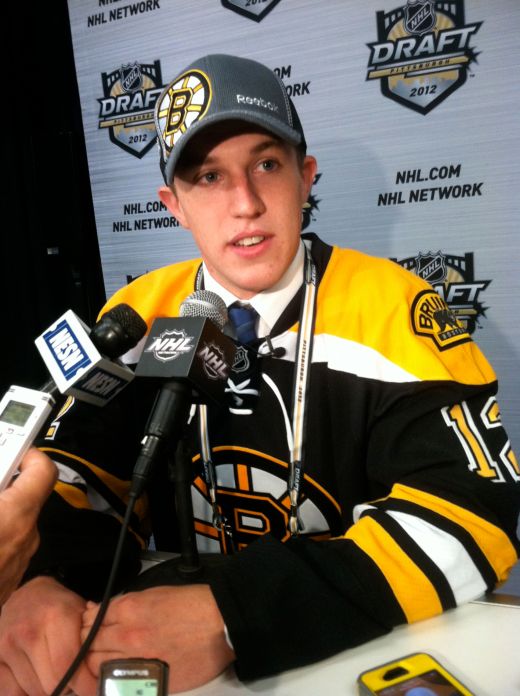
Help coming in the form of Brandon Carlo? Might be too much, too soon (Kirk Luedeke photo)


2016 Summer Cooler interview series: Matt Grzelcyk


Grizzy draft

Matt Grzelcyk was Boston’s third-round selection at the 2012 NHL Entry Draft.(Kirk Luedeke photo)

The Summer Cooler interview series is back!

A year ago, we kicked it off with Boston Bruins players Ryan Spooner and Torey Krug, plus Calgary Flames prospect Jon Gillies.

This time, and with Boston Bruins development camp around the corner, we’re proud to bring you an in-depth profile and interview on defenseman Matt Grzelcyk.

A third-round pick in 2012 (along with boyhood teammate and close chum Jimmy Vesey– but more on him later on) the former two-year Boston University captain is a Townie- born and raised in Charlestown, Mass. who grew up dreaming of playing for the Black and Gold. Now, with his NCAA career in the rearview mirror, Grzelcyk has his first real opportunity to make that dream come true, as he prepares for his first NHL main training camp in September.

His father, John, is a long-time member of the Boston Garden (okay- TD Garden) bull gang, and young Grzelcyk was born during the last full 80-game season of the old Boston Garden. Yes, the final hockey campaign for the old barn was 1994-95, when Grzelcyk turned 1, but a lockout shortened that season to just 48 games. “Grizzy” grew up in the shadow of the FleetCenter (now TD Garden) and played his minor hockey close to home, including his time as a standout prep schooler at Belmont Hill School in Belmont, before joining Team USA at age 16.

The scouting report on Grzelcyk is pretty straight forward- what he lacks in ideal NHL size and physical strength, he more than compensates for in speed, hockey IQ and a champion’s heart and desire. He’s a left-shot defenseman who can push the pace and excels in space, where he uses his 4-way compass skating to move the puck out of danger and speed up the transition game. He’s improved his shot from when he was with the U.S. National Team Development Program in Ann Arbor, Mich. from 2010-12, having scored  20 goals (and 61 points) in his last two years in the NCAA with the Terriers (68 games) versus just six markers in his freshman and sophomore years combined. Like other undersized defenders, he can be physically overpowered at times in his own end and has to rely on positional smarts and savvy, along with an active stick and ability to read the developing play.

Although Grzelcyk resembles current Bruins defenseman Torey Krug in that they are both under 6-feet and were captains of their respective college teams, it would be a mistake to think that the rookie pro is a carbon copy of the established veteran who just inked a deserved four-year extension worth $5.25 million per year. The two might share some similar traits, but they bring different styles to the ice. With his talent and drive, don’t bet against Grzelcyk one day establishing himself in the NHL as a top-4 D, but he may require developmental time in the minors and have to work his way up the big club’s depth chart accordingly. For now, he’s focusing on making sure he’s physically and mentally prepared for the challenge after being hindered by several knee injuries in the past 14 months.

Matt was kind enough to talk pucks with the Scouting Post this week after one of his daily off-ice workouts, as he prepares for the beginning of B’s prospects camp next week.

Here’s the Q & A:

the Scouting Post: Matt, up front- congratulations on finishing your career at BU. Looking back on the four years, what are some of the things you are most proud of in terms of accomplishments and personal growth?

Matt Grzelcyk: Thank you. I think being at BU at four years was definitely an up and down journey at times, and my class especially can attest that we went through a lot of adversity but I felt that it made us grow up a ton more. It certainly seems that with the incoming class this year- BU is on track to get right back to being the powerhouse that a lot of people are used to seeing. I’m really proud to have been a part of that, and to have started that journey back up after sophomore year.

TSP: You’re getting ready to officially join Boston’s system- outside of going to the annual (summer) development camps. Talk about the biggest changes you’ve experienced from your first development camp in 2012 and you’re getting ready to hit your fifth camp. What perspectives can you share in terms of what it was like when you started out and what are some of the things that you’ve learned that have helped you in your development over the past four seasons after being drafted by Boston?

MG: I think especially my first year I was a little more wide-eyed going in. I wasn’t really sure how development camps worked or anything like that- I think it was about a week after I’d just been drafted, which was kind of a whirlwind experience in itself. I think that after the first three years, I’ve been able to settle down. This year especially, I’m excited to go there because I haven’t been really in the loop of things for two years getting caught up on some injuries (editor’s note- knee surgery in May 2015 prevented Grzelcyk from being a full participant last summer), but it’s definitely exciting to be get back out there, especially with the great young talent the team has coming in.

TSP: Is this something where your role as one of the more veteran and experienced prospects on the development camp roster lends itself to more of a hands-on role for you?

MG: Yeah, so I think over the years, I’ve been able to step into more of a leadership role, especially with being able to wear the ‘C’ at BU for two years. That definitely helped me grow up a little bit more and take more responsibility for not only my play on the ice, but how I handle myself off the ice. It was a great experience being able to be a leader at BU and hopefully this year, I can help out some of the younger guys like my (Terriers defense) partner, Charlie McAvoy, who’s coming into his first camp. If he or anyone else needs any advice or anything else along the way, I’m happy to help.

TSP: You talked to me about McAvoy in my post-draft feature on him, but for those who might have missed that, can you share a little more about what he brings to the table?

MG: I’d say first and foremost- Charlie’s a heck of a kid. He’s really a complete player. On the ice- he’s a lot of fun to play with and he can certainly add a lot to the offense with his skill set. He’s got a real broad frame to him too, so he’s real tough to get off the puck. He skates the puck extremely well, which feeds right into where the Bruins want to go- they want to play more of a transition game and Charlie can certainly provide that. I think he was the youngest skater in college hockey last year- I don’t know that you could have drawn up a better season than the one he had- he really was awesome.

TSP: I had an opportunity to speak with Terriers head coach (David) Quinn right after the McAvoy selection, and the words he used were “magnetic personality” to describe Charlie as a player that everyone just seemed drawn to and was a guy the other players wanted to be around. Coach Don Granato (U.S. NTDP) also talked about what a loyal player he is in that he does whatever the coaches ask but he also was a guy that the teammates just gravitate to. Did you get the same sense about him not only as his on-ice partner but the captain of the team as well?

MG: Absolutely. He’s about as likable as a kid as you can have on your team. He’s always got a smile on his face; he’s always positive going into the rink. But, the other thing I like about him is that as soon as he steps on the ice, he means business and he’s got that game face on, especially this year, when I noticed he had some more physicality to his game. He’s really competitive, even in practice- he practices as hard as anyone I’ve been around, so I’m sure the Bruins definitely like to hear that and they’ll see it from him at development camp.

TSP: Let’s talk about Matt Grzelcyk– for people who maybe aren’t familiar with your background, can you talk about growing up in Charlestown and what it means to have the kind of connection to the team you always have, and what it was like for you in Pittsburgh to be in the Consol Energy Center when the Bruins called your name with the 85th overall selection?

MG: It’s a unique experience growing up in Boston and getting drafted by the Bruins. It’s something that I couldn’t even imagine happening along the way. Obviously, playing at the national team and being on some pretty stacked teams on defense- playing time was pretty hard to come by especially at the end of the (2011-12) season and at the U18 Worlds, but I just tried to get better as much as I could, and being a part of that team was huge. Going into Pittsburgh, obviously the rankings were what they were and everything but being so low was kind of discouraging and I didn’t want to be one of those guys that showed up at the draft and didn’t get picked, so I was kind of unsure. I don’t know if my parents got a tip or something but they were pretty adamant about me going down, at least to watch and support my teammates getting picked, so to have my name called in the third round was a shock, but growing up as a kid in Boston, I couldn’t have drawn it up any better.

My whole U18 year had a lot of (NHL)teams come in and interview guys and I’d kind of had the feeling that I might be on a lot of teams’ lists, so I kind of had an indication that I was at least on some peoples’ radars, which was encouraging to hear. But going into the draft- you try not to ask too many questions about where you think you might get drafted or anything like that. I didn’t want to create that expectation in my mind, but I certainly wasn’t even contemplating going in the top-three rounds, so that was definitely a shock. I’m definitely  not complaining about it!

TSP: How much of a relief was it for you to get that entry-level contract with the Bruins done and signed last spring and what is your honest feeling as you sit on the verge of your first main veteran camp and the chance to skate with and get to know guys that you’ve watched from a distance in the past, but now have the opportunity to work and compete with and against?

MG: I think right now I’m just anxious more than anything. It’s certainly been a long time coming; it seems like a long time ago that the draft happened and I’ve had a few hiccups along the way, but I’m really just anxious and excited to get things going. It’s been a long journey but to get the contract done and out of the way was huge. Obviously, it’s a dream come true that it happened, but it’s really just the first step in the process. I’m just going to continue to work as hard as I possibly can this summer to make sure that heading into camp I’m ready to go. It’s so nice to be training here at BU with the new (Brighton) facility right down the street so there’s certainly a lot of motivation coming into camp and the kind of opportunity that lies ahead with the Bruins defense so I’m really just looking forward to it.

TSP: Can you talk about the summer pro league in Foxboro you’ve been a part of and what the chance to play with guys like Jack Eichel and Jimmy Vesey and so many others in the NHL, minor pro and NCAA ranks does for your development and how beneficial it is for you to get a chance to skate in the offseason like that?

MG: I think it’s awesome, honestly- there aren’t many leagues in the summer months around like it, so to have all those guys come each and every summer to skate there is a great there is such a good experience. There are a number of great players- you can work on skills all you want, but it’s nice to sometimes get a break from that and come in and compete against guys who know what it takes and can let you show your skills off and learn from one another. I think a lot of the guys- they don’t just take it easy- it’s a great workout and a lot of conditioning and it’s nice to tune up those guys and have  a few special players like Jack and Jimmy and others to just soak it up and watch them- see the tendencies that they have and it’s nice to be able to apply that to your game.

TSP: Without getting into speculation about his NHL destination, can you talk about Jimmy Vesey as a person and a player? I think it’s worth mentioning the relationship  you have with him and with Brendan Collier as well as the closest of friends who came up through minor hockey together and have been around each other as teammates and opponents. There aren’t many who know Vesey on and off the ice as well as you do. Jimmy might be a North Reading guy, but his dad’s a Townie- I think a lot is lost in translation by those who aren’t from the Boston area and might not realize just how close those bonds are between you. (Editor’s note- “Big Jim” Vesey was Grzelcyk’s first organized minor hockey coach, a team he played on with Jimmy and Collier)

MG: Yeah- Jimmy’s a great player, obviously. He won the Hobey Baker last year, which was great, and I think the season before that was just as spectacular if not better. He’s certainly grown up a lot at Harvard and I’ve played with him since we were six years old, so I know how good he’s been- he’s really been the best player in our age group for a long time and he’s as competitive a teammate as I’ve ever had, and he’s a great friend off the ice. He’s got a great skill set to him, it’s obviously well-documented: I think just the way he approaches the game is a little different than anyone else- they way he’s so aggressive attacking the net and he has unbelievable skills with high-end vision and hockey IQ. I’m sure having his dad (former Merrimack College legend and NHL forward Jim Vesey)  along the way has helped him- I know it certainly helped me as a teammate and player growing up.

TSP: You’re a student of the game, so you’ve followed the NHL over the years- what were your first impressions when you got the news on July 1st that Loui Eriksson was moving on, but the Bruins had signed St. Louis Blues captain and one of the most notable USA players in David Backes?

MG: I think it’s awesome- just as a fan of the game and watching the NHL each and every year I think he certainly gets your attention with his 200-foot play. He’s clearly as competitive a guy as there is in the NHL. Like you mentioned, I think he’s kind of paved the way for USA Hockey along the way through his years of coming up. I don’t know him personally, but I’m definitely a huge fan of the way he plays the game and I’m sure a lot of the guys on the (Bruins) team are excited to have him on board and I know the Bruins are definitely excited to sign a guy like him because he brings a lot of passion to the game, so I think he’ll be a fan favorite here early on.

TSP: Going back to the Bruins defense- you know there will be stiff competition- there are a lot of veterans there. What is your outlook and what do you think is a healthy mindset for you going in knowing that you will be competing for an NHL job in terms of making the best impression to earn a job with the big club sooner rather than later?

MG: I think number one especially coming after the season I had with the injury bug, is that I’ve had a little time in the summer to kind of take it upon myself to come to camp in the best possible shape I can to be able to compete with those guys. A few of them (Krug among them) have come into the (BU) gym and I’ve seen firsthand just how hard they work. It’s a nice reminder and thing to have in the back of my head for what it takes to get to that level. I think going into camp I just- I’ve always been raised to be a really competitive guy-a lot of defensemen are vying for jobs and I’m trying to give it the best shot I can. I’m trying to put myself in the best situation I can physically, and I think mentally- just knowing that the Bruins are really seeking more transition to their game and it’s definitely a strong suit of mine, so to be able to add to the offense…not necessarily with goals and assists but by just making it easier on the forwards by making a really great first pass out of the zone is just something that I’ve learned is extremely important especially from Coach Quinn here at BU.

I think keeping that in mind and staying with that competitive side. I’m obviously a smaller player and there are tons of really big guys in the NHL, but if I can go in there as physically ready as I can be, and I’ve also improved my defensive game as a whole since I’ve gotten to BU so, just take those lessons in and give it my 100 percent effort.

***

Thanks to Matt for taking the time and there will be more where that came from as the summer goes on. Watch for future posts, podcasts and other things here at the Scouting Post as we work through the offseason and start looking ahead to the 2016-17 hockey season. As always, thanks for reading (and listening)!

Matt Grzelcyk 2012-13 BU Away Front


3 Amigos Podcast: the Free Agency edition

The 3 Amigos ride again!

Dom, Reed and I are back with our 3rd podcast together, recapping the 1st week of NHL free agency with a decided Boston bent, covering David Backes, Anton Khudobin, Riley Nash, Tim Schaller and Alex Grant to name a few. Dom will tell you why he thinks Khudobin for two years, beyond the solid addition of a proven backup, has key implications for Malcolm Subban not getting snapped up in the expansion draft.

We also issue a Danger, Will Robinson! alert to fans of the Edmonton Oilers as we look at the impacts of recent signing and additions to that club’s cap picture and we see some eerie parallels to how it all came unraveled in Boston.

We also discuss (about 55 minutes in) the Bruins and Don Sweeney’s still pending move to upgrade the NHL talent on defense- that kind of a move to shore up the club’s right-shooting depth chart has been curiously lacking. Dom mentions an interesting name with Ontario connections and Reed has had plenty of looks and shares his thoughts on why this particular player (an RFA) might be a stealth target of the Bruins via trade.

All in all, it’s a little over 90 minutes of hockey talk, unvarnished and calling it like we see it. Ole!

In Backes aftermath, the Bruins still need a D

Your Scouting Post founder was on 98.5 today with Hardy and Chris Gasper (great guys who know how to ask the right questions, I would add- always love talking hockey with them) and the subject of the Boston Bruins’ elephant in the room- the clear and present need to upgrade the defense naturally came up.

To paraphrase- I talked about a “bridge” D- someone young and talented enough to help grow the team while recognizing that Don Sweeney is not going to be able to likely find a true heir apparent to Zdeno Chara via trade. We now know that Sweeney was trying hard last winter to wrangle Blues veteran and former BU star Kevin Shattenkirk from St. Louis in an aborted deal involving Loui Eriksson and the San Jose 1st-rounder that went from 18th to 29th (the B’s chose USA center Trent Frederic with it after finding no takers at the 2016 draft).

(Audio file courtesy of 98.5 the Sports Hub)

(EDIT- I mentioned Ryan Spooner as a possible “tradable commodity”- I am *not* advocating Spooner be moved at all. I responded to a direct question about the possibility of David Krejci being dealt and responded with my reasoning as to why that is less of a possibility. TSP has been and will continue to be a supporter of Spooner’s as a player who has the modern NHL skill set and has grown immeasurably since Boston drafted him in 2010. However, in order to get you must give and the Bruins’ cupboards aren’t overflowing whenever it comes to enticing assets to trade with. That’s reality.)

With Backes and Troy Brouwer now gone, Shattenkirk probably stays in St. Louis (and I suspect there are some hurt feelings that the B’s snaked Backes with a big-ticket offer the cap-strapped Blues had no chance to match), but Sweeney could strike gold via trade if he can figure out a way to get Jacob Trouba in the fold, for example- Trouba showed enormous promise but his play has fallen off, constituting risk. At the same time- you can do much worse than a physical, skilled specimen in his early 20’s like Trouba. It won’t be cheap, but with David Backes on board the Bruins freight train (it’s certainly not a bullet-speed train, is it?), Sweeney has more trade options available to him than he did yesterday, even if the leverage is debatable. Trouba is just one example- the B’s are undoubtedly looking at other options that might not only be that “bridge” but potentially a talent that could eventually evolve into a star. To say nothing of the impressive crop of recent Boston draft picks who are several years away yet, but could give the team the relief it seeks at the position. The problem with trading for such a promising talent is in the cost, and that’s a drum Sweeney has been beating for some time now. Or more succinctly- it takes two to tango.

“There’s not a level of disappointment,” Sweeney said about his quest for upgrading the defense in Friday’s media conference call to announce Backes and the other signings on day 1 of the NHL’s open hiring period. “If deals don’t materialize you guys both understand the types of players that were exchanged and the quality of players in the last few days. Things have to line up. People do not want to part with those types of players.”

There was talk of an offer sheet (James Murphy and Joe Haggerty doing the initial reporting) potentially being prepared for a defenseman in the days leading up to July 1. My good friend and hockey savant Dom Tiano, who is pretty well connected himself, confirmed hearing similar chatter and was tipped that the team was preparing a buyout in advance. That domino fell with Thursday’s Dennis Seidenberg announcement, which led to the Torey Krug four-year extension. But in our Thursday “3 Amigos” podcast with Dom and Reed Duthie of the OHL’s Hamilton Bulldogs (such a passionate, articulate and informed hockey mind!) Tiano brought up the key point that the buyout was not there (as offered up by former Bruins D turned hockey analyst Aaron Ward) to give flexibility to sign Krug- the B’s had plenty of space to do that all along.

What gets interesting is that the *assumption* (and what’s the old saying about what those do to ‘u’ and ‘me’?) was that Trouba would be an offer sheet target. Entirely plausible…but that was never firmly established.

Now, the thing about offer sheeting anyone is that it is a strategy that invites anger and delayed retaliation. In the gentleman’s NHL, signing to someone to an offer sheet isn’t just burning the bridge…it’s detonating a copious amount of C4 explosive to annihilate it…leaving no trace behind. At the same time- offer sheets have been done in the past with mixed results. The Bruins were reportedly trying to re-acquire the pick they dealt to New Jersey Devils (for the now Carolina Hurricane Lee Stempniak) or the third-rounder Sweeney foolishly peddled to Philly for Zac Rinaldo (can’t defend it, folks- sorry) to give the B’s the kind of flexibility on an offer sheet to avoid paying max cost and the four 1st-rounders (Dom covers this on the podcast, so if you haven’t listened yet, what are you waiting for?)

What does this all mean? Your guess is as good as mine, but there’s chatter that the B’s are looking at moving Adam McQuaid (he and Kevan Miller are redundant for what they provide, but that cap hit on both contracts is anything but redundant- something’s gotta give) and we can’t think Sweeney is finished with shaping his defense.

Let’s go back to Sweeney and more of his comments about the defense yesterday:

“We’ve set a course here to identify some areas that we needed to strengthen,” he said.  “And the last, you know, for the last year, we’re almost to a year on the job here for myself and the number of young players, in particular in defense and some of the center positions that we’ve added, will complement the young players of skill that we have on the wings. And you have to exercise some patience in this regard.

“These players don’t just grow up overnight and turn into NHL players. And we’re going to have to exercise patience, you know. Our group as it stands has a balance to it with hardness of [Zdeno] Chara and Kevan Miller and [Adam] McQuaid. [John-Michael] Liles brings a veteran savvyness that he can play with Colin Miller. Joe Morrow is an emerging player and Torey [Krug], we’re very happy to have him signed. You know that being said, we have other young players in the pipeline that are going to be welcoming an opportunity and we have to at some point in time continue to provide that and let them step up. Will it stop me from pursuing having conversations that I’ve maybe planted seeds or whatever? But again it’s going to take…you know there’s a high acquisition cost for these types of players and I think you’re better served to identify them, grow them and put them in the lineup when they’re ready to play.”

The cynics and skeptics will focus on the last sentence and say that Sweeney is hedging his bets and allowing for the possibility that he won’t be able to get anything done trade-wise. My gut says that as a former 1000+ game NHL defenseman, Sweeney knows his group is in the hurt box without at least one substantial add.

Offer sheet? Trade? I believe that the trade route is far preferable to blasting the bridge he will no doubt incur if Boston goes down that road. The threat of an offer sheet might be enough to get a GM to the table to take Sweeney’s offer more seriously. Hey- if nothing else- we can at least opine that the B’s GM speaks from experience. Whether true or not, that was the talk surrounding the hasty decision to move Dougie Hamilton at the 2015 NHL draft for futures.

I don’t have the answers, but there is certainly an element of fans and observers who are sharpening their knives because of a lack of movement on defense yesterday. Understandable. However, training camp doesn’t open until mid-September, so I would offer up the idea that a little more patience wouldn’t hurt. Ultimately, whether you are pessimistic because the B’s opted to bring in an experienced but aging forward in lieu of finding a way to get a key piece on D, or you are a little more optimistic because Backes gives him insurance and options, we can probably all agree that Sweeney isn’t finished.

Whether his next big move will be seen as an “a-ha!” moment after a series of transactions fell in place to set it up, or it will be more of a “I can’t believe they just (bleeping) did that!” remains to be seen.

What we do know is that right, wrong or indifferent- the Bruins are adding pieces that address what the club’s leadership said was the direction they wanted to go in. We’ll all have to see if they have it right or whether the B’s are headed for rougher oceans ahead.

“I think (our team) has the ability to play in all three zones,” Sweeney said.  “For our standpoint, Riley Nash, you look at possession, you look at versatility to play both center, wing, PK, go up and down the lineup. We’ve still got other young players that I mentioned that are going to be given opportunities in these roles. We need to do a better job. Once we get pucks into the offensive zone, being able to withstand that cycle game and possession, it’s not just going to be about off the rush.

“Albeit, we have skill coming that is going to complement this group and play a little faster pace, that we have balance on the back end that we’re building in depth there. I think that you have to be prepared to play, have an identity, which we will, play a 200-foot game.”


Getting to know David Backes

When the news broke Friday in the NHL’s annual free agent extravaganza that the Boston Bruins agreed to terms with former St. Louis captain and center David Backes, any optimism that the team might be acquiring a player with a great deal of experience and an impressive body of work as a top two-way forward and leader was tempered with concerns about the 32-year-old’s five-year, $30 million pact.

Regardless of what side of the fence you come down on, the 6-foot-3, 225-pound veteran is a multiple 30-goal scorer who spent his entire career with the Blues after being the 62nd overall selection in the storied 2003 NHL Entry Draft, the same one that saw new teammate Patrice Bergeron selected 17 spots ahead by the Bruins in Nashville.Now, 13 years later, the most senior member of the B’s was credited by Backes as one of the key players who reached out to him this week and helped sell him on leaving the only NHL home he’s ever known to try and get Boston back on a winning track.

“He, personally, was one of the guys that I was able to talk to,” Backes said in an afternoon conference call. “I can maybe flatter a little bit now that he’s my teammate, but I hate giving players credit, giving them any edge, when I’m playing against them. But he’s a guy you were pissed at by the end of the game because he never made a mistake. That’s a good way to be successful defensively and then, by the end of the game he typically was producing something [on the] offensive side of the score sheet, too – just a guy that you can’t take a shift off because he’s going to make you pay.

“If you’re going to get anything done against him, he’s always in the right spots, he’s winning draws against you, he’s a fearless competitor, he just keeps going and keeps his mind focused on what he needs to achieve during the game. He’s a winner. He’s won a gold medal, to my dismay. He’s also won a Stanley Cup. You can’t discredit any of those great achievements that he’s had.”

That Backes would have such immense respect for a player of Bergeron’s caliber is not surprising in the least. Natural competitors and leaders gravitate towards one another, after all. And, as the Minnesota native would later reference in his various remarks, those leaders are the ones most responsible for instilling and maintaining a winning culture that everyone in the room gets on board with.

“We need a cohesive leadership group that’s made up of prominent players that have a loud voice and walk the walk and not just talk the talk,” he said. “If you have that – a good four to five guys with those qualities – the rest of the team has no option but to jump on board and fall in line. If that’s what you have, that pretty much cracks the whip on everyone else and that’s going to breed a ton of success.”

Leadership and character alone is not enough, however. Immediate concerns about the signing have cropped up primarily related to the newest Bruin’s age and diminishing returns in terms of his statistics, finishing the year with 21 goals- his lowest output since the lockout-shortened 2012-13 campaign.

“Feeling really well,” Backes replied when asked about the toll his rugged brand of hockey over more than a decade has taken on his body. “I think that physical style has been one of my calling cards for 10 years, and I think maybe if you start to slow down a little bit, and you get a little bit older, your intelligence and your hockey sense and your ability to think the game is accelerating maybe faster than you’re slowing down. And those types of efforts to be efficient I think make – in my world, I think it’s made me a better player, and been able to carry that physical play and pick my spots at key moments, rather than just hitting everything that moves like it’s a rugby match.”

In other words, the old horse isn’t ready for the glue factory quite yet.

“Being able to perhaps finish on certain guys on the other team and other ones, it’s not worth going the extra two, three steps out of your way to expend that energy and to go for that hit,” Backes said.  “I’m 32. I’m not 52. I think there’s plenty of legs and plenty of physicality and energy left in me and the term’s been something that maybe a few people have questioned, but for me, I expect to still be at the top of my game for that last year and be a contributing member for the Boston Bruins and training differences, being able to really take care of my body, listening to it and just give everything I’ve got and I think that’s the way I’m going about it and I would expect to be really good in that fifth year still.”

All the heart and want to in the world won’t matter if the machine breaks down or the player is unable to match the previously high-end performance that he was known for as a member of the Blues who spent the last five years wearing the captain’s ‘C’.

Boston GM Don Sweeney naturally sold his signature acquisition to date as someone who will be part of a winning formula going forward, even though the more pressing need of at least one defensive piece to upgrade the back end was conspicuously absent from his list of transactions today.

“We identified David from day one as the type of player that would play with and complement Patrice and David Krejci and allow us to have flexibility, be it this year with, you know, if he wants to move to the wing in a production role or a matchup role,” Sweeney said.  “You know if you look at the defensive zone starts that David Backes had over the course of his career, it’s phenomenal that he’s produced at the level he has. He’s now got the chance now to play either with Patrice or David Krejci or play amongst them in a balanced lineup that allows him to be in an offensive situation with Krejci and maybe even backup Bergeron from that standpoint. So I think it adds the balance to our group, you know. And if Ryan Spooner continues to emerge and play the way that he’s capable of playing on a consistent basis and David Backes moves to the wing we’re going to be a better organization.”

Despite some of the more advanced analytics that showed Backes’ effectiveness in positive puck possession declining, Sweeney pointed out that the veteran still represents a clear upgrade for the B’s going forward.

“We have on the horizon a number of young, skilled players that I think will benefit, as I mentioned, will continue to play with Marchand, with Bergeron, with Krejci, and now with a Backes type,” Sweeney said. “He can then slide into players that come in and identify themselves handling bigger roles, then he can slide into different positions. I just think the versatility of this player and the leadership qualities speak for themselves.

“And his production, we expect it to continue. It took a drop this year, but that’s the age-related studies that everybody looks at and realizes that you know what you’ve signed up for in this player, that if the commitment to the term and from the ownership standpoint, we were all on board. We’re trying to win. The number of players we have, as I mentioned, with the younger players, I think it’s going to be a good complement.”

Not always the most fleet of foot, Backes is one of those more powerful skaters who uses a full head of steam to drive the net and score goals through grit and will as opposed to generating a highlight reel package off the rush. As he gets older, the foot speed and quickness are sure to diminish, so Backes addressed what is likely in store with him in the lineup.

“I don’t think the game’s getting slower,” he said. “I think that it’s a fast game, but if you start to manage the puck in the right way, and you can occupy the offensive zone and do a lot of the things that teams that are heavy and control the puck and occupy zones do, it’s not a track meet up and down the ice.”

The track meet…something the Bruins have been ill-prepared to compete in for years, even as the NHL has undergone a clear paradigm shift to more of a speed/transition and skill game, is one of the chief concerns among observers and fans who saw the team often unable to match the pace and tempo of those higher-end clubs who were among those playing well into late May and June.

“With Pittsburgh winning the Cup, a team that was kind of designed on that track meet, let’s go, let’s see who can skate the fastest up and down the ice, there may be a trend or a tendency to start to build teams like that,” said Backes.  “But you’ve also seen other teams in the L.A. Kings, the Boston Bruins, in recent history, win playing that heavy game, and maybe not having the fastest team, but winning every battle that you get into, being able to control the puck once you get it and then owning the important areas of the ice which is in front of the net.”

The consistent net-front presence, which is something Backes is sure to provide, is another area the Bruins have been lacking in. They’ve also lacked a consistent set of forward lines, which is something the newest free agent vowed to address, even though there was discussion about what position might have been promised to him ahead of time.

“I’m into winning games, so if Claude (Julien) thinks that we’re going to win more games with me playing wing then I’m in,” Backes said.  “If he thinks that we’re going to win more games with me playing center, I’m in. Whatever he thinks, you know, I’ll do it to the best of my ability. And you know it’s one of those things where it may be schedule dependent, it may be opponent dependent, it may be dependent on a bunch of different variables, but we’re going to have a game plan to win and we’re going to go out there and execute it.”

Sweeney echoed the sentiment of being flexible and basing it on ideal matches, allowing the coaches to leverage the veteran’s flexibility.

“We’re going to let it play out,” he said. “We look at the fact that the penalty killing was an area that we needed to address. He’s really good at that.”

Center or wing? Wing or center? Don’t expect to have it figured out in July.

“The strength up the middle of the ice, as I mentioned. Ryan Spooner, it will be a great challenge for him to occupy that spot or play next to one of these centers,” Sweeney said. “The guys that emerge as being able to handle the minutes and the situations are the ones that are going to play. It’s just a real good opportunity for anybody, any younger player coming into this organization is going to be put in position to play with really unique players. And we’ll find the right complements.

“If that means David gets to move to the wall to play with one of the top two guys in a producing role, that’s okay. We’ve now been in a position where if we want to go four deep, which we generally have when we’ve had success, where’s the matchup come from the other side? The other teams may find it difficult to play against the top centers that we have. So we’re going to let it play out.”

Ultimately, there are those who will embrace Boston’s newest acquisition and what he could bring the team, even if they acknowledge that Sweeney and Co. are accepting risk by offering term and value on a player who is on the wrong side of 30. Those are entirely valid concerns, but at the same time- it is not a zero sum game. Backes is a hands-on leader who will complement Boston’s existing leadership core, several of whom tend to be a little more quiet and passive as opposed to direct and confrontational. The B’s have no problem with leaders who set the right example, but when players aren’t pulling their weight or doing the things necessary for team cohesion and success, Backes is the kind of guy who will likely get in someone’s face. He’s got the proper body of work and cachet to do it, too- whether he wears an ‘A’ on his Bruins sweater or not won’t matter one bit.

“You talk about the character piece, the leadership qualities and his willingness to want to win and it aligns with the guys that have won,” Sweeney said. “And the more we can surround our team and identify our team in that regard – now, this all being said, that our younger players have to step forward, emerge, have the opportunity to take a hold of it, and these guys are going to be the leading core to get us to where we want to go, and our younger players have to jump on board.”

Backes sees the world in relatively straight forward fashion, and that was evident when he addressed his desire to make Boston his new hockey home:

“Every time I had a conversation with someone from the organization, that kind of goosebump feeling on your arms and that emotional connection and thought process towards what it would be like to maybe have a different sweater and be able to join what they’re trying to do in Boston really just kept building,” Backes said. “And then the opportunity presented itself not too long after 11 (a.m.) struck. Once (the agent) and Don Sweeney figured out the numbers, it was let’s move on with this and sign the deal because it makes so much sense on so many levels.”

This signing might not make sense on as many levels to some, but one of Boston’s priorities in the offseason was to get tougher to play against, and they succeeded on paper with the Backes acquisition. Time will tell if it will work out as planned, but for now- one veteran is in the fold to help shore up an offense that lost Loui Eriksson’s 30 goals and strong two-way play to Vancouver.

There is still much work to be done, however, with a blue line that is still at least one key upgrade away from being playoff caliber.

The July 1st transactions were a start, but the offseason grade is still incomplete.


David Backes Boston-bound with 5x 30


Boston’s first major free agent signing since 2013 when the B’s inked Jarome Iginla to a one-year, incentive-laden deal fell quickly in the opening moments of the annual July 1 NHL free agent frenzy when word broke that St. Louis Blues captain David Backes had signed a 5-year pact with the Black and Gold worth an AAV of $6M.

Here is a dated, but  informative video from the NHL:

https://www.youtube.com/watch?v=6dtqW4vXDsY

What’s interesting is that Backes had been somewhat of a hot topic of late with B’s 1st-round choice and St. Louis native Trent Frederic mentioning him at the draft as his hockey idol and player he most tries to emulate. Now, Frederic will likely share the Boston dressing room with him at some point.

As for Backes- where to start? How about with this OT goal vs. Chicago to kick off the opening round?

https://www.youtube.com/watch?v=1cNyUD6MLYU

We’ll hit the good:

The Blues captain has been one of the most effective two-way centers in the NHL since he broke out with 31 goals and 54 points (165 PIMs) in 2008-09.  He’s never topped more than 62 points in a year, but he’s so valuable as a space-eating, versatile forward who can move between center and the right wing. He plays that physical, grinding game the B’s want to get back to, but he’s skilled enough to be a consistent scoring presence.

Loui Eriksson was also a versatile winger for Boston, but he lacked the size and physicality that the 6-3, 220-pound Backes brings. He’s a year younger than Backes, but where the Bruins were only willing to go four years for him, they went an extra 365 days for their newest player.

There are things Backes can do that Eriksson simply couldn’t. What is interesting to me here is that if the Bruins and Blues had been able to get past the stumbling blocks of a reported bad contract needing to go back Boston’s way in order to consummate that trade, Backes would likely have remained put in St. Louis and the B’s would be working on signing Shattenkirk to an extension instead. It’s interesting food for thought, but the Blues, who allegedly really wanted to extend and keep Backes and Troy Brouwer (who signed with Calgary today) and were more than willing to sacrifice Shattenkirk to get that done, now are essentially stuck with their third choice. Blues GM will have some personal relationship management to do, and in the end- Shattenkirk could very well be a big trade deadline move for the team next winter if he’s not willing to sign on in the long term.

As a captain and character guy- Backes is a proven leader who will instantly bring a needed leadership presence that the B’s have missed. Since Mark Recchi was in the room, the team has lacked for a vocal leader who commands respect beyond the quiet professionals that currently comprise the club’s core of leaders.

Now for the bad:

To get Backes, the B’s had to commit five years and $30 million. That’s a deal that immediately represents risk for the team and the front office that signed him.

Since I raised the point repeatedly with respect to Milan Lucic and his (still awaiting the details) contract with the Edmonton Oilers in terms of not much tread on the tire/much mileage on the engine- it’s the same, if not an even bigger case for Backes, because he’s four years older than Lucic is and has similar wear and tear concerns given the style of game he plays. It takes a heavy toll on the body and if Backes can’t hold up physically in years 3-5, the B’s will be in it deep.

When you look at the potential for the Bruins to get a less-than-average return in the long term on the big contract, the possibility is real that Boston could be hamstrung when it comes to retaining some of the higher-end youngsters who will come due for deals when Backes is still on the books. If he isn’t producing for the club, then they’ll be back to where they were when the previous GM had to move the ever popular Johnny Boychuk for futures at a time when expectations for the club were high. In hindsight, Brandon Carlo and Ryan Lindgren are promising prospects who will in all likelihood play for the Bruins, but there is no question that not having Boychuk for the last two seasons has been an enormous factor in the defense’s plunge to the bottom of the league.

Don Sweeney and Cam Neely are courting disaster with a signing of this magnitude- they aren’t gambling here…because Backes is a proven commodity who despite his age still brings a lot to the table. However, when we’ve watched the way injuries and age have helped speed Zdeno Chara’s decline, it is a fair point to raise here. Backes is leaving his prime, but the Bruins just paid him like a guy who is in it…kinda like Lucic is.

Now, here’s some encouraging news- Backes scored 7 goals and 14 points in 20 playoff games. His level of play went up, as he posted career bests in the postseason and led his team by example to the Western Conference final, where they ran out of gas against the upstart San Jose Sharks club. His previous postseason high for games played was just 9 contests, so it isn’t like Backes has had much experience going deep into the playoffs, but he performed like a star and captain at age 32- that had to be a key in terms of what impressed the Bruins enough to take the plunge.

Unfortunately, the modern NHL continues down a path whereby exorbitant prices are paid in the offseason to players who typically won’t justify those contracts from start to finish. That makes the lower-cost ELC and bridge contracts for younger players more critical than ever, so when people express concern for what could happen down the road to rising stars like David Pastrnak, for example, that shouldn’t be dismissed out of hand, which is what I did. A mistake for which I apologized. I have to think that management is already looking ahead to Pastrnak and figuring out how to keep him. That, in my mind, started last year when he asked for the Bruins to release him to play for his country at the World Jr. Championship and they obliged- even though they incurred all the risk had some catastrophic injury happened to him. That’s the kind of thing that can help strengthen the bridge to longer-term contracts and a presence with the team that showed you respect, though it would be naive in the extreme to think that a player like Pastrnak would turn down a massive offer sheet elsewhere because the B’s honored his request.

Ultimately, Backes is now a Bruin. Fans should look forward to what he can bring as someone who can do just about everything and has come up against Boston in big moments in the past. But, that doesn’t mean embracing a player without taking a hard look at the dollars and cents and where a deal like this could come back to haunt down the road.

The big question is the same for all GMs who are spending available cap space today: are you paying the player for what he did for someone else, or because you think he’s going to provide the same level of performance for you? If the answer is the latter, then we have no choice but to cross the fingers and hope that the worn tread on the tire won’t be an issue. Because if injuries force Backes out for extended periods, or his normal 20-30 goals per season drops to 10, seeing that $6M bite out of the cap will be a bitter pill.

For now, you look at the team today- and they’ve lost a little offense from Eriksson, but gained a measure of size and heaviness- made themselves tougher to play against. Backes is a good fit for Boston, and one can only hope that unlike other big-ticket free agents of the past who signed bloated deals at age 32, that he’ll stave off the effects of Father Time and be a part of a winning solution for the Bruins going forward.

***

The Bruins also re-signed trade deadline acquisition John-Michael Liles to a one-year $2M extension. That’s solid for the player who still has the wheels and puck-moving chops to be an effective middle tier role player. He helped boost the B’s offense in the first 10 days after he was picked up, but like the rest of the club, came down to earth and wasn’t able to make enough of a difference to prevent the late-season implosion.

It will be interesting to see how Liles does with a full training camp and opportunity to adjust to the new coaching staff.

However, Boston’s biggest need remains at the defense position and Sweeney has yet to address it.

Whether that comes via trade involving forward parts that can now better afford to be moved with the Backes addition or the team is looking at another bigger name (there aren’t many) UFA remains to be seen. The right-shooting Jason Demers is still on the market at the time of this writing, but probably not for long.

Shots fired: Report- Eriksson to Vancouver, Khudobin back to B’s

Nick Kypreos reporting that Loui Eriksson has agreed to terms on a 6-year deal with the Vancouver Canucks. AAV to be determined, but have to think it will be around $5.5-6M range- too rich for the Bruins, in all honesty.

The Bruins now just have D Joe Morrow and winger Jimmy Hayes to show for the Tyler Seguin trade that happened just three years ago on July 4th. The criticism will only grow, as once again- it was the return, dummy. Seguin still has a lot of growing up to do, but man- the guy is a super star and the B’s failed to get commensurate value. Period. End of story. There’s no dodging that one, even if I still maintain that I understood the reasoning behind moving him.

What adds fuel to the fire is that the B’s could have flipped Eriksson to St Louis back in February for Kevin Shattenkirk, but neither team could make the money work. Based on connected sources to both teams, I am told that there is a sense of regret that the sides did not work harder to make it happen. The Bruins have now lost Eriksson to free agency for zip and the Blues may have lost David Backes to the open market as well.

Ultimately, though- unrestricted free agency represents a sense of insanity, where teams pay above market prices for older players who more often than not represent the law of diminishing returns. If the Bob McKenzie rumor that the Bruins are in heavy on Backes, (and hey- it’s Mr. McKenzie- no one is going to doubt it for a second) and they end up with him, this one is going to sting for Doug Armstrong, as dealing Shattenkirk to the B’s would have likely given him the cap space to get a deal done with his captain.

Backes makes perfect sense when you look at what the Bruins value- size, ability but leadership and character. They have to get bigger up the middle, and getting him would mean that Don Sweeney can flip other assets for help on defense.

Farewell, Loui- he was a good Bruin and had his best season in Boston at the right time. These guys should be given every chance to cash in, and Eriksson did just that. The B’s wanted him back, just not at the price Jim Benning was willing to pay. Now, we wait to see who the B’s bring in to shore up their non-playoff squad that is weaker than it was without Eriksson.

Also from Mssr. McKenzie- the Bruins are reportedly bringing back goalie Anton “Dobby” Khudobin– the diminutive but plucky netminder who played well for them as Tuukka Rask’s backup before signing with Carolina a few years back. He’s bounced around after failing to earn that elusive No. 1 spot elsewhere, and this is a fine (and cheap) signing to bring in veteran insurance, while Malcolm Subban may still be given every opportunity to earn the backup spot. Jeremy Smith is no doubt gone now that Borat is indeed back.

EDIT: He’s on a 2-year, $2.4 M deal which helps keep the costs down on Rask’s $7M hit- $1.2M for a capable backup is a little higher than ideal, but the B’s know what they are getting and he’s shown he can get the job done when called upon, despite the lack of ideal NHL size for the position.

NHL’s final four: ‘Bolts, Blues draw 1st blood and other musings

It’s May, which not only means we’re into the NHL’s Stanley Cup playoffs semifinal round, but it is also my busiest time of year with the annual pre-NHL draft heavy lifting. Between my obligations to Red Line Report and New England Hockey Journal, haven’t had much time for the blog of late, but things will slow down considerably in the next week-10 days.

One bit of cool news- Red Line will be the NHL Network’s official content provider for the 2016 NHL Entry Draft, so we’re excited to bring you, the fans some unique insights on many of the players as they get drafted. Kyle Woodlief and I will be working on profiles of players, so I encourage you to tune into NHLN’s draft broadcasts on Friday night and Saturday.

Now, as for the NHL postseason…

I went against my gut and picked against the St. Louis Blues in one of my playoff brackets and regretting that. They’re going to win the Stanley Cup, and I should have known better. There are no flaws on that team with top-to-bottom roster depth. They have elite skill from Vladimir Tarasenko, plus quality veterans like David Backes and Alex Steen. Their blue line is set with a great 1-2 punch of Alex Pietrangelo and Kevin Shattenkirk, plus huge and talented newcomer Colton Parayko looks like he’ll step in to fill the void when Shattenkirk likely becomes a cap casualty. In net, Brian Elliott is playing the best hockey of his career, and Jake Allen is the future of that club. Full marks to GM Doug Armstrong and his staff for putting a contender together…he really wanted to add Loui Eriksson to the mix but couldn’t make the cap numbers work enough to pursue the kind of trade Boston wanted, but make no mistake- this roster is good enough to go all the way, and they will.

Here’s a pet peeve of mine, and I’m sure to get some disagreement on it, but here goes nonetheless…

I keep seeing people out there on Twitter and elsewhere talking about how Joe Thornton “deserves” a Stanley Cup. Let me be clear here:

No. He. Doesn’t!

No one “deserves” anything in the NHL- you have to earn it. I felt the same way when Ray Bourque was playing for the Colorado Avalanche. I was absolutely happy when Bourque skated off into the sunset with his only NHL championship, but if he “deserved” to go out that way, he and his team earned that right after 16 wins and a come-from-behind effort against the Devils. Life is hard and often unfair- good people can work for something and not achieve it but I refuse to buy into the theory that just by playing a long and successful career, you “deserve” a championship. Championships are special and winning them not only takes a lot of skill and hard work, but a good amount of luck, too.

If Thornton and (Patrick Marleau) his Sharks win the Cup this year, so be it- it will have been earned. But pardon me for not jumping on the sentimentality train here…I don’t think the Sharks are good enough. They’ve never been able to win the big game and get over the hump. Wanting someone to win and them being good enough to do so are two different things. We can be happy for him if he succeeds, but you’ll never, ever see me pulling for a player to go all the way because he “deserves” it. I’ll pull for someone because I want him to win or because I think his team is good enough to be a champion.

It’s that simple.

(But while I’m on the subject of the Sharks- how about that Joe Pavelski, eh? Talk about a winner! Joe Playoffski is at it again and he looks like a man on mission, so if there is one guy who aims to make a difference vs the Blues in the Western Conference final, it’s him. (And for the record- snagging Pavelski late in the storied 2003 draft is one of Sharks chief scout and good guy Tim Burke’s finest moments.)

Hat’s off to the Tampa Bay Lightning.  They took Game 1 against Pittsburgh of the Eastern Conference final after losing yet another key player.

That team has weathered injuries that would cripple just about anyone else, but like the Blues, the ‘Bolts are built to win it all after falling to the Chicago Blackhawks a year ago in the SCF final series.

Who would have thought that without Steven Stamkos, they would be where they are- up 1-0 over the Pittsburgh Penguins in the Eastern Conference final? With three more wins, Tampa has a chance to do what they could’t last year but the hits keep coming- Ben Bishop left Game 1 injured in an eerie parallel to last year’s playoffs. Depending on how much time Bishop misses, I wouldn’t bet against his backup, Andrei Vasilevskiy…the 19th overall pick in 2012 could be like another upstart young goalie turning heads in this year’s postseason (more on him later). He came in a year ago and performed well for Bishop, and he could do it again.

This club is talented, deep and experienced- don’t sleep on them.

I’ll admit it- I’m glad to see Mike Sullivan doing well with Pittsburgh. The Marshfield native and former BU star turned NHLer with multiple teams including the Bruins was a good coach for the B’s who was a victim of bad timing and a lack of vision by Boston ownership coming out of the lockout. As you may recall, he was behind the bench for Patrice Bergeron’s rookie season, recognizing the talent and character of Boston’s current franchise face even at 18.

Team owner Jeremy Jacobs allegedly issued instructions to then-GM Mike O’Connell not to sign any of the team’s unrestricted free agents entering the lockout season, anticipating the market to be flooded with veteran players when certain teams would have to become cap compliant. That meant that key guys like Mike Knuble, Brian Rolston and Michael Nylander were allowed to walk with no talent coming in that summer. Contracts tolling for the non-hockey year of 2004-05 resulted in the loss of 31-year-old D Sergei Gonchar to free agency, which cost them Shaone Morrisonn, their 2004 1st-round pick (Jeff Schultz) and 2004 2nd-rounder (Mikhail Yunkov) for what a rental player. Shades of Al Iafrate for Joe Juneau all over again- maybe one day the B’s will be able to fleece the Capitals like that.

Mr. Jacobs apparently didn’t see the salary rollback coming, so the deep talent pool never came to fruition and the B’s were caught holding the bag, missing out on prime FA targets in 2005. Sullivan paid the price, as the uninspired Bruins crashed in 2005-06, setting the stage for the major house cleaning that brought on the Peter Chiarelli era.

The Penguins were underachievers for much of the year until Sullivan stepped in and the players began firing on all cylinders. It’s similar to Dan Bylsma’s arrival in 2009. What’s most interesting is watching Matt Murray seize the starting job in net after Marc-Andre Fleury was lost to a concussion. Fleury’s healthy again, but watching from the bench.

Sullivan is a smart guy who was a grinding forward- he understands the game and quite frankly- I’m trying to figure out what took so long for him to get another NHL head coaching job. Looks like it was worth the wait.

It sure is looking like the Bruins will be able to draft a pretty good player at 14, assuming they hold onto the pick. It is entirely possible that in order for GM Don Sweeney to acquire the kind of young, cost-controlled NHL defenseman who can help stabilize and rebuild the Boston blue line, he’ll have to give that selection up. I can just sense the wailing and gnashing of teeth if that happens.

You can’t have it both ways, though- fans who want an upgrade on defense must be willing to sacrifice prime assets. San Jose beating Nashville in the second round took what would have been the 18th overall pick and dropped it to anywhere from 27-30 depending on how much further they go. That hurts, but the value of that pick as a trade chip just went down considerably.

The way the Bruins will look at it is this: if they can get a proven commodity at a position of critical need, they’ll give up that top-15 selection, which may or may not ever pan out and roll the dice with San Jose’s pick at the bottom of the 1st round. After a 10-selection 2015 draft, stockpiling draft choices is less important right now than hitting on the picks they do have. In the end, it all comes back to the old Sam Pollock-ism: Whichever team gets the best player, wins the trade. Calgary won when Boston dealt them Dougie Hamilton, with a wait-and-see caveat attached to Zach Senyshyn, Jakob Forsbacka-Karlsson and Jeremy Lauzon. Giving up a chance at what should be a nice player at 14 is the price you pay in the grand scheme of things to swallow hard and do what is right for the hockey club in order to make it better now.

So, while draftniks stand to be disappointed, I’d be surprised as it stands on May 16 if the Bruins end up making both selections in Buffalo. However, it takes two to tango for any trade to happen, and Sweeney has already shown that if he can’t get the right value, he’s willing to do the unpopular thing if he feels it’s best for his team.

I guess we shall see.