Boston Bruins 2015-16 season preview: the Centers

Patrice Bergeron is Boston's "Mr Everything" and the team will need him to be that and more at age 30. (Photo courtesy of Alison M. Foley)

Patrice Bergeron is Boston’s “Mr Everything” and the team will need him to be that and more at age 30. (Photo courtesy of Alison M. Foley)

In retrospect: It was the best of times, it was the worst of times…well, not really. The 2014-15 NHL campaign was a rough one for the Boston Bruins’ men up the middle.

Patrice Bergeron led the club in scoring with 22 goals and 55 points- the lowest for a non-lockout season since 2009-10 when he and David Krejci both finished with 52 points. It was a step back for Bergeron from his 30 goals and 62 points in 2014, but Krejci’s season was downright miserable.

The 29-year-old missed 35 games and finished with just 7 goals and 31 points in the 47 contests he played after signing a lucrative contract extension that will pay him $43.5 million ($7.25M AAV) for the next six years starting in 2015. This is not to indict the team or player for that deal, but if the Bruins are going to take steps forward, then Krejci is going to have to put the last 12 months behind him and take his game back up to the level he’s capable of.

The good news for the team is that young pivot Ryan Spooner finally broke through after several years of teasing with flashes of his pure speed and offensive skill. He made the club out of camp, but after five games on a very short leash, he was returned to Providence where he battled injuries and up-and-down play until late January when he rounded into form and established himself as a consistent scoring presence. When Krejci went down for another extended absence in late February, Spooner returned to Boston and stayed there, finishing the year with 8 goals (his 1st in the NHL in spot duty the previous two seasons) and 18 points in 29 games (24 if you throw out the first five where he barely played).

Gone is third-liner Carl Soderberg (traded to Colorado for the 2016 pick Boston sent to the Avs for Max Talbot) and fourth line staple Gregory Campbell. Soderberg flashed his big-time ability in spots, but whereas he thrived in his third-line role, he was ineffective when asked to center one of the team’s top-two lines when Krejci was out. Campbell was a good soldier whose declining production and being on the wrong side of 30 made him a free agent departure to Columbus.

Overall, Boston’s 22nd-ranked offense (all the way down from third in 2014) was reflected in the team’s low scoring totals by their centers and the club’s non-playoff finish. Bergeron was steady and dependable, especially when it comes to the other things like faceoffs and defensive zone play, but the lack of production from Krejci and Soderberg, due in part to a dropoff on the wings, all contributed to a down year.

The view from here: Patrice Bergeron, as veteran forward Chris Kelly has often said, is Boston’s “Mr. Everything”- he’s arguably the true face of the franchise. He also turned 30 in July, a remarkable turn of events considering it seems like only yesterday that he was a fresh-faced 18-year-old rookie who made the veteran-laden 2003-04 Bruins out of camp after being the 45th overall selection in Nashville (with a compensation pick the B’s got for losing Bill Guerin to free agency). Since then, Bergeron has won a Stanley Cup, two Olympic gold medals, both a men’s World and World Jr. championship and added three Frank Selke Trophies as the NHL’s top defensive forward. If you looked up “winning” in the Urban Dictionary, you’ll not find Charlie Sheen but Bergeron’s mug looking back at you.

He’s the team’s active points leader with 206 goals and 550 career points in 740 games, all with Boston. He currently sits 12th on the franchise’s all-time scoring list and is just 26 points from moving past Milt Schmidt. Assuming he stays healthy and posts another typical offensive year for him, he could move all the way up to eighth past Terry O’Reilly (606 points). Think of where Bergeron would be  on the scoring ledger had he not lost an entire 82-game season to the 04-05 lockout, another 72 games to the near career-ending hit from behind he took from Flyers defenseman Randy Jones (who?) and then another lockout-shortened half season in 2013.

What makes Bergeron so good is that he’s a complete player. Sure- he doesn’t have the open-ice speed, and to be honest- the Bruins are lucky he wasn’t quicker than he is now at age 17, or else there’s not much of a chance he would have been available for them to draft. Bergeron seriousness and dedication- evident from the very first time I sat down with him for an extended interview at our hotel in Nashville the day after the ’03 draft- is why he not only made the NHL just a few months after turning 18, and ahead of many of the more-heralded 44 picks in front of him, but is a big reason he’s thrived.

Any hopes the B’s have of getting back to being a playoff caliber club starts with him.

Krejci begins the year as the second-ranked active scorer with 409 points in 551 games. When healthy and on top of his game, he’s a cerebral centerman who compensates for his average size and speed with high-end playmaking skills like vision, soft hands and offensive creativity. The Czech product who was a steal at the 64th overall selection in 2004 is quiet off the ice but fiercely driven and competitive as evidenced by his 29 goals and 77 career playoff points, good for ninth all-time for the Bruins (and 11 more than Bergeron has in the postseason).

There isn’t much to add about the previous year’s performance other than to say that the Bruins must get more from him going forward or they’re going to be in trouble. His contract is paying him like a top-level producer, which he has shown he can be in the playoffs, but for a player who has never scored more than 23 goals or 73 points in an entire regular season, it was a generous increase, and for someone who will turn 30 in late April, the Bruins are counting on him taking his production to another level than what we have seen in his previous NHL seasons. Doable? Yes. Likely? That’s an entirely different debate.

Spooner is a speedy, skilled offensive forward who hit his stride after his second call-up late in the year, scoring his first NHL goal in sudden death against New Jersey and playing the best hockey of his young NHL career to finish out the season. At one time the youngest player in Peterborough Petes history to score 30 goals in a season, like Bergeron, he was the 45th overall pick (seven years after PB), slipping in the draft a bit due to a broken collarbone suffered right after the CHL Top Prospects Game in January 2010- dooming him to the “out of sight/out of mind” phenomenon that can occur in a player’s draft season. Although Spooner’s road to the NHL was more down than up, he earned a two-year contract extension and has the inside track to the third line center job when camp opens up in a few weeks. For a kid who appeared done and for whom trade rumors swirled in the first half of last season, he’s back to where the B’s thought he should be.

A player who enters camp with expectations of winning the fourth-line center job is Finnish veteran pro and newcomer Joonas Kemppainen. A member of the SM-Liiga’s championship team Karpat this past spring, Kemppainen has a big, 6-2, 200-pound frame and at age 27 is a mature two-way center who can do all of the little things you need. Although not especially fast, he has a powerful stride and uses his body well along the walls and in front of the net. He doesn’t have high-end puck skills, but he works hard in the trenches and gets his points off of opportunism and hard work. He was brought to development camp in July, but pulled a hamstring while working out at home before the trip, so fans unfortunately weren’t able to see him. He should be fine for camp, but this will be something to monitor and watch going forward.

Alexander Khokhlachev and Zack Phillips will also be vying for NHL jobs this season going into camp, but may have their hands full trying to make a splash with Boston. Koko is ready for NHL duty, but he may need to make a positional switch to the wing in order to do it. He’s not as fast as Spooner is, so splitting him out wide may be a better fit for his style of game and gives the Bruins more of a dynamic option scoring-wise- he’s not an ideal candidate for the duties and responsibilities of a fourth-line pivot, and he’d have to beat out one of the 1-3 centers to make it there, which, given his current body of work to date, is not likely.

Phillips, who was drafted 12 spots ahead of Koko in 2011 by the Wild (and Koko’s pick ended up being Minnesota’s 2nd-round selection- acquired in a trade that sent Chuck Kobasew out west early in 2009-10). He’s a talented offensive player who tallied 95 points in a Memorial Cup-winning campaign his draft year, but has struggled since to live up to the billing of being taken in the top-30. He performed well enough for Providence after being acquired even-up for Jared Knight at the deadline, tallying 11 points in 16 games, but has yet to show that he’s someone who will vie for regular NHL duty, at least as far as this season is concerned. At age 22 (he turns 23 in late Oct.), he has time, so it behooves the Bruins to take a wait-and-see approach.

Ryan Spooner enters his fourth professional season for the first time as an expected NHL roster player (Photo courtesy of Alison M. Foley)

Ryan Spooner enters his fourth professional season for the first time as an expected NHL roster player (Photo courtesy of Alison M. Foley)

On the farm: If neither one of Koko or Phillips makes the Boston roster, they’ll be the 1-2 punch in Providence this year (though it stands to reason that Boston’s skilled Russian prospect might balk at another demotion- we shall see, and I’ll cover him in the forthcoming post on the B’s options on the wings as well).

There isn’t a whole lot else to speak of down in the AHL. Providence College captain Noel Acciari is a blue collar prospect as a versatile if not high-end offensive player who plays a rugged two-way game and hits everything in sight. He’s not an NHL option at this point, but has steadily developed at every other level and is a winner, having been a key part of the Friars’ first-ever NCAA title this past spring. He was a solid free agent pickup for the B’s.

Rugged WHL center Justin Hickman, a free agent signed last January after shutting it down for shoulder surgery, may be a diamond-in-the-rough at Providence this year. The former Seattle Thunderbirds captain didn’t put up eye-popping numbers, but he was starting to get there in his final major junior season until he went under the knife. He skates well for his size, plays a fearless game, and will stick up for teammates. He was still limited (no scrimmage) at development camp, but is expected to be cleared by the start of the season and could become a fan favorite in short order. Fellow WHLer Colby Cave may be another center option in Providence or could be switched to wing. He’s not as physical as Hickman but plays a smart, underrated offensive game as evidenced by the chemistry he showed at Swift Current last season with Jake DeBrusk. We’ll give him more coverage in the wingers section.

Diminutive little buzzsaw Austin Czarnik has the speed and style of game to turn heads in camp as well. Like Acciari, he captained his club- Miami University- and was a nice free agent get last spring. Although tiny by NHL standards (5-9, about 160 pounds), he’s a superb playmaking center with the quick feet and stick to back defenses up and cause problems for would-be checkers. Don’t know what I mean? Check out this highlight vid from the playoffs a few months back:

He’s going to do some good work in Providence and if he can be a forward version of Torey Krug and overcome the size bias, he has the versatility to play on the lower lines and at wing as well (though he’s best in the middle).

Look to the future: The B’s have some intriguing talent in the pipeline, even if there isn’t an elite center among a solid group of players.

Harvard University is eagerly awaiting Ryan Donato, Boston’s second-round selection in 2014 and the son of head coach (and former Bruin) Ted Donato. After starring for four years at Dexter Southfield in Brookline, Donato took his game last spring to the USHL’s Omaha Lancers, where he put up more than a point per game and silenced some of the critics and doubters. Although not blazing fast like his dad, he’s bigger and plays a more dangerous offensive game. He’s a long-term project with a sizable potential payoff.

Not too far away from seeing duty in Boston is current Miami University captain and senior Sean Kuraly, who was acquired in late June along with San Jose’s first-round pick in 2016 for goaltender Martin Jones. Though he hasn’t been overly productive in his NCAA career to date, he has that kind of potential as he enters the new year coming off a 19-goal junior campaign. He’s a heavy player who uses his size and quickness to excel in puck possession and is at his best when creating space for his linemates and taking pucks straight to the net. Don’t be surprised to see the B’s explore bringing him straight to Boston in March or April when his season ends.

Ryan Fitzgerald is entering his junior year at Boston College and will face the team’s newest center prospect, Swedish two-way playmaker Jakob Forsbacka-Karlsson, who is a freshman at Boston University. The two are similar in that they can both score and play responsible defensive hockey. ‘JFK’ is a little bigger and has the better draft pedigree, but don’t count out the 2013 fourth-rounder who appears to be on the verge of breaking out with some big-time production at the Heights. I’m not sure how that will translate at the pro level, but Fitzgerald’s hockey sense and bloodlines will take him far.

2015 sixth-rounder Cameron Hughes has a lot of skill and grit if not the size- but he’s expected to play a bigger role at the University of Wisconisin this season and is definitely a player to watch as a value selection.

The verdict: Center is the strongest position in Boston currently, even if the position lacks the dynamic scoring and production other teams can boast.

In Krejci, Bergeron and Spooner- if all stay healthy and produce to their potential, you’re looking at a balanced attack that will at least put the wingers in position to finish off plays. This isn’t a sexy group by league-wide standards, but they don’t have to be. Bergeron’s leadership will continue to pay off in the room, while Krejci is the kind of guy motivated by the lost season a year ago. He took the team’s failure to make the playoffs personally, but talk is cheap- it will be interesting to see how he responds and if he can avoid the injury bug, a legitimate concern given his slight frame and the wear and tear on his body.

Kemppainen is the favorite for the bottom line coming out of camp but he’s not a lock. Should he struggle or Koko have a great outing, the coaching staff will be faced with some tough decisions. The standard play is usually to send the waiver-exempt players down and protect those who must be exposed, so we’ll see how things turn out. Chris Kelly has the versatility to play a fourth-line center role if the B’s want to use him there, but given his faceoff strengths, it makes sense to put him on the wing with Spooner on the third line until the youngster can earn more defensive zone faceoff trust from the coaches.

Ultimately, as long as the group stays healthy, the center position will be the least of Boston’s worries, but whether they can be good enough to make up for the rest of the team’s shortcomings remains to be seen.

I’ll be back with the preview on the wingers to include future options like Denver University’s LW Danton Heinen, who might be closer to the show than we realize.

Chris Kelly could be pressed into center duties if others fail (Photo courtesy of Alison M. Foley)

Chris Kelly could be pressed into center duties if others fail (Photo courtesy of Alison M. Foley)
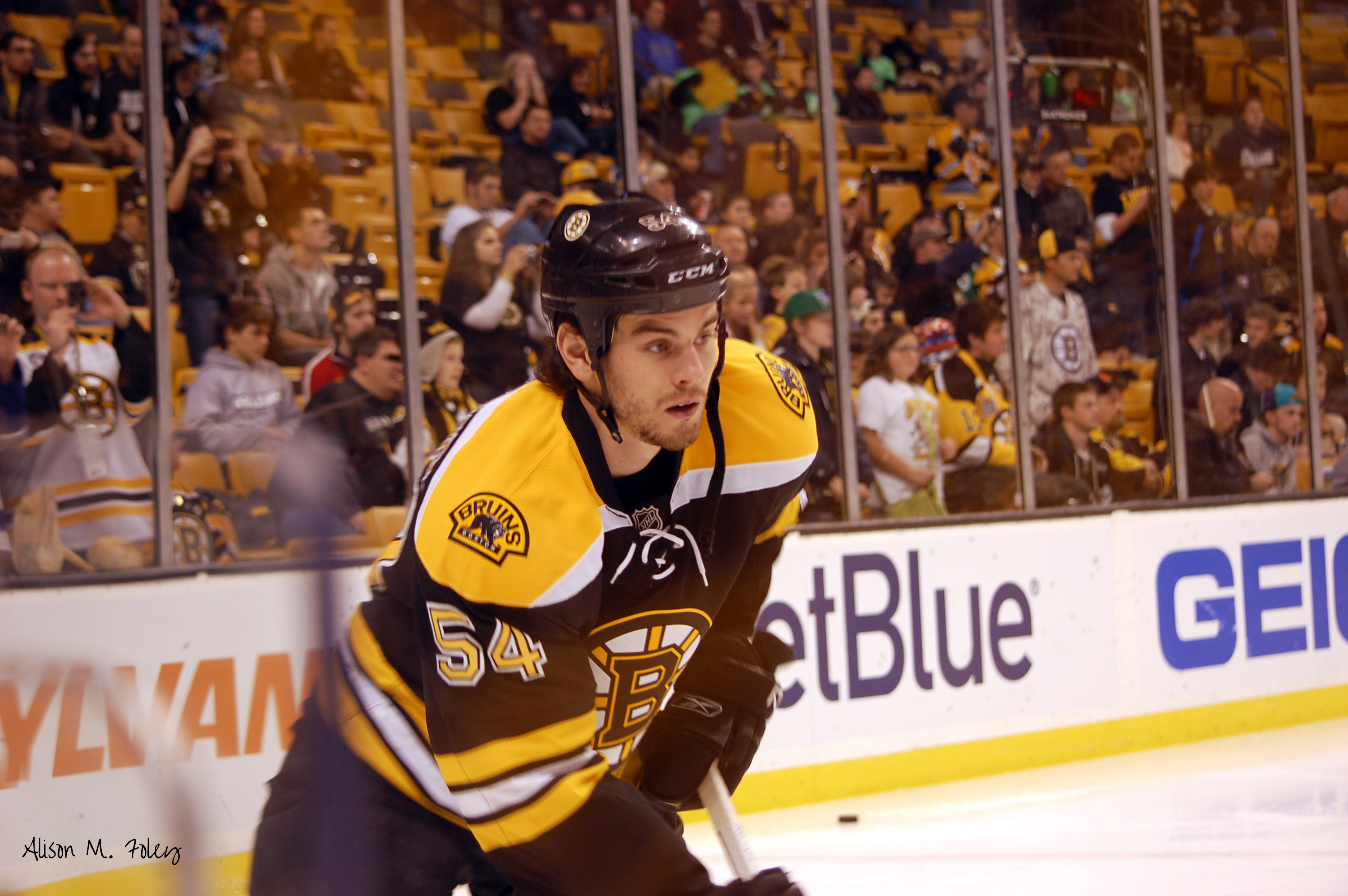
Boston Bruins 2015-16 season preview: Defensemen

Zdeno Chara returns for his tenth season as the captain of the Boston Bruins (photo courtesy of Alison M. Foley)

Zdeno Chara returns for his tenth season as the captain of the Boston Bruins (photo courtesy of Alison M. Foley)

In retrospect: It was a rough ride for the Boston D party in 2014-15, as former GM Peter Chiarelli traded glue guy Johnny Boychuk on the eve of the new season, a move that went on to have significant second- and third-order effects on a roster ravaged by injuries to  Zdeno Chara, Adam McQuaid and Kevan Miller. Adding to the struggles was the lackluster performance of Dennis Seidenberg, who returned from a major knee injury suffered in 2013-14, but was not the effective, shutdown presence for Boston he had been previously.

The Bruins allowed 30 more goals last season than the year before, and the lack of collective team foot speed often found them susceptible to being beaten off the rush and often collapsing into their own end while struggling to generate a transition to offense the other way. Torey Krug was a bright spot for the club, finishing second on the blue line in scoring with 12 goals and 39 points. The team’s offensive leader, Dougie Hamilton, was traded to Calgary on the day of the 2015 NHL draft in a rapidly developing (and shocking) move that sent the 22-year-old out West and left a sizable hole on the Boston depth chart that the team has yet to fill.

Younger guys like Zach Trotman and Joe Morrow showed promise in flashes, but ultimately, the disappointing non-playoff 96-point finish was reflected in a defense that lost a major on- and off-ice contributor in Boychuk and never really got a healthy Chara going for the duration, as he returned to action after missing nearly two months at well less than 100 percent.

The view from here: Chara remains the face of the franchise on the blue line, though he is past his prime at age 38 and is coming off his lowest production (8 goals, 20 points in 63 games) since the 2001-02 campaign, his first as an Ottawa Senator. He faces the prospect of playing the rest of his NHL career on a wonky knee, which essentially makes him day-to-day for life, and means that the B’s must be prepared to lose him to injury at any time.

Chara is the consummate pro and veteran, but his injury complicates the often armchair GM discussion of the team simply trading him. Even at his age and declining offensive numbers, Chara is more valuable to the Bruins than he is to other teams that might be in the position to trade for his $7 million salary (he’s signed for two more seasons- at $5M and $4M respectively before becoming an unrestricted free agent again in 2018), simply because with Hamilton out in Boston, the B’s don’t have any other legitimate player to thrust into the top role today. The onus is now on Claude Julien the Boston coaching staff to better manage Chara’s ice time and game situations to get the most of his experience and 6-9 frame with the lengthy reach. His best days are clearly behind him, but it’s not quite so simple to sit back and talk about trading Chara for cap relief and a younger talent- you’d not only need a willing buyer to give up a roster player worthy of the move, but Boston’s captain would have to waive his no-trade to go. It’s not unthinkable to consider it, but the likelihood of it happening is slim- the Bruins need Chara this year more than ever.

The team can only hope Seidenberg can rebound from as brutal a year as he’s had in his career. His struggles underscored the fact that literally days after signing his four year, $4M per extension with the B’s he suffered his knee injury and the very real possibility exists that at age 34, he’ll never get back to the player who was so instrumental in one Stanley Cup championship and a second trip to the finals in three seasons. The German has given a lot to the Bruins, but his contract, only in its second year, looms like an albatross around the team’s collective neck if he is unable to round back into form. The analytics from last season do not paint a pretty picture, however, and things may get worse before they improve.

Krug is preparing for an expanded role given Hamilton’s departure, and the B’s could greatly benefit from him taking his offensive production to the next level to help offset the loss of their former 2011 top choice’s numbers, especially on the power play. At 24, the diminutive Michigander has the heart of a lion and is embracing the challenges that await him with increased minutes at even strength, but like Chara, the team will have to manage the matchups when he’s defending against the NHL’s bigger, powerful forwards and live with the higher-risk style Krug employs when carrying the puck on his own. Krug has enough talent, hockey sense and an off-the-charts work ethic/character to compensate for his undersized frame, and the belief here is that he’s going to make it work.

The team raised eyebrows when it re-upped Adam McQuaid, the club’s resident baggage-smasher at 6-5, 210 pounds. Another quality person and teammate, McQuaid has overcome a lack of foot speed with a tenacious, pay-for-every-inch-of-real-estate approach that has served him well. When it comes to toughness, no one on the current roster can bring it better than the former Sudbury Wolf can, but he’s a pretty one-dimensional shutdown defender. One of the biggest issues with McQuaid is in his struggles to stay healthy and play a complete 82-game schedule over the course of his career. Since breaking into the NHL full-time in 2010-11, he’s never played more than 72 games, and appeared in just 93 contests over the last two seasons. If how honest, dedicated and hard-working a player was all you needed, McQuaid would be worth every cent of the 4-year, $11 million contract he signed this offseason. As it stands, the Bruins can only hope he can reverse past trends and become a durable presence. Even if he does, the debate will rage on as to how wise an investment it is for a rock-solid third-pairing defenseman.

Veteran Kevan Miller played 41 games last year before being lost to season-ending shoulder surgery. He’s a similar player to McQuaid, but at a substantially less cap hit of around $800k. A gritty, character undrafted free agent who worked his way to the NHL after captaining the University of Vermont Catamounts, Miller’s mobility and experience stand him in good stead heading into the new season, but there isn’t much in the way of offense from him.

The B’s signed free agent Matt Irwin to add to the mix from the San Jose Sharks. The 27-year-old played about 17 minutes (you’ll hear the sheltered minutes argument with both he and Krug) with the bulk of his 8 goals and 19 points coming at even strength last season. He doesn’t bring a lot of pure foot speed with him to Boston, but he’s not a substandard skater either. Irwin has NHL experience and has shown promise as a two-way contributor- he’s third on the blueline behind Krug and Chara in scoring from last season.

This leaves a trio of younger defenders with the two-way potential that Boston desperately needs, two of whom spent some time with the big club a year ago in Zach Trotman and Joe Morrow. Trotman is bigger than Morrow, but does not have the former 2011 first-round pick’s speed or puck skills. Both can hammer the puck from the point and move it effectively, but of the two, Morrow is more of the offensive threat and special teams presence, whereas Trotman is a little safer and more polished defensively. Both will battle it out for a sixth position in the regular rotation if you believe that Miller or Irwin could end up being the seventh defender. Trotman was the last pick of the 2010 draft out of Lake Superior State, and Morrow’s been a disappointment as a pro after leaving the Portland Winterhawks. He was traded to Dallas from Pittsburgh and just a few months later, flipped over to the Bruins in the Tyler Seguin trade. Given what we’ve seen from Loui Eriksson, Morrow (and Jimmy Hayes to be fair) is the last best hope the team has in getting a long-term return on that deal.

As for Colin Miller, the AHL’s reigning champ in the hardest shot and faster skater competition at the 2015 All-Star Game doesn’t have NHL experience, but he has the offensive skill set to see time and even win himself a full-time role with Boston this year. This is a huge camp for him, but at 23, it won’t be the end of the world if he’s not on Boston’s opening night roster, but given that he was part of the Milan Lucic deal, if he earns a spot, the B’s will gladly take it.

A Dennis Seidenberg rebound could be an important factor in a Boston return to the playoffs (Photo courtesy of Alison M. Foley)
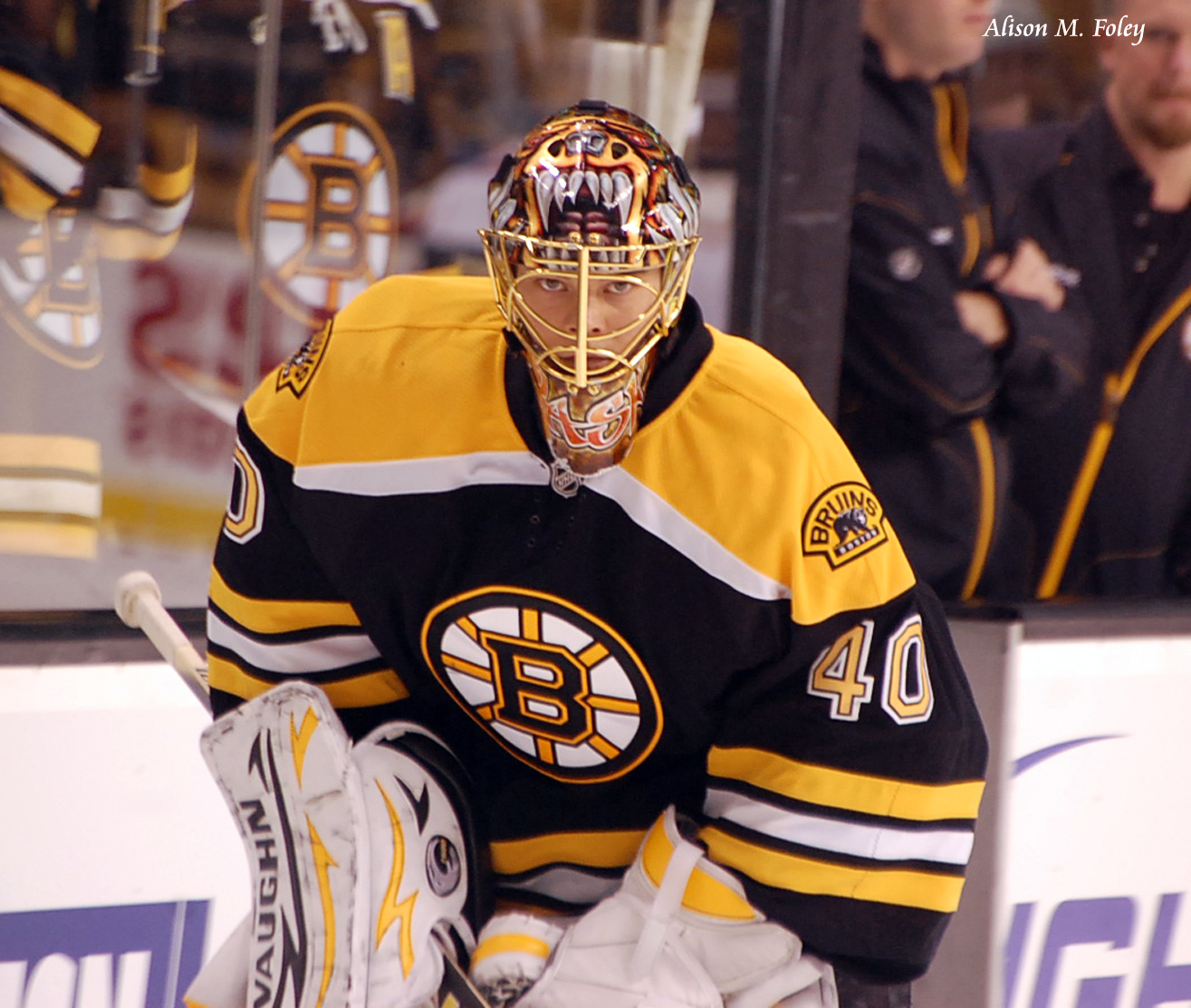
A Dennis Seidenberg rebound could be an important factor in a Boston return to the playoffs (Photo courtesy of Alison M. Foley)

On the farm: Boston’s first pick in 2013, Linus Arnesson, will be playing in his first complete AHL season. The late second-rounder has good size and mobility, but he’s more of a no-frills, solid defensive presence than he is a player who will push the pace, join the rush and contribute consistent offense for his team. If he’s in the Boston lineup next year, then something has likely gone terribly wrong in terms of injuries and/or performance. Arnesson is steady and consistent, but he’s not going to wow you in any one facet of his game. Every good team needs players like him to win with, but he’s not going to be a savior.

Chris Breen is back for a second year in Boston’s system and at 6-7, 224 he certainly provides the size and reach for a defensive-minded defender.  He has some limited NHL experience and doesn’t move his feet all that well, but will be another key contributor in Providence and can help in a pinch.

Gone is David Warsofsky, but fellow New Englander Tommy Cross is back for another tour of duty in Boston’s system with Providence. If only that’s all it took to be an NHL regular… Cross is the very last piece remaining from that disastrous draft year and he’s ticketed for the AHL once again, where he could see an injury recall at some point as a reward for his hard work, but in all reality, the one-time Boston College captain will be fortunate to ever establish himself as a bottom-pairing player at the NHL level.

Chris Casto is underrated, and as a free agent signing out of University of Minnesota-Duluth back in 2013, he looked as if he might have the size and wheels to develop into a solid NHL defender, but it just hasn’t happened for him in the AHL. Nobody ever talks about him, but he’s a fluid skater with a big shot, who has at times struggled with processing the game and pace. He’s got one more year on his ELC to raise his profile in the organization.

A look to the future: The B’s drafted three defensemen in the first two rounds this past June, all of whom bring much needed skating and size to the mix. Jakub Zboril and Jeremy Lauzon are the ones the team hopes will be more complete two-way defenders who can help kickstart the attack, whereas Brandon Carlo is a huge (6-5) and mobile rearguard who is a better shutdown guy than offensive producer. All three look like players, but won’t likely help out in the short term (though with all three being products of major junior- they’ll at least be at training camp and one could pull a surprise- it’s happened before).

One player who has a shorter wait to making an impact in Boston as early as next spring is Yale senior Rob O’Gara. The fifth-rounder in 2011 has patiently and steadily progressed in the system, winning championships at both the prep (2011) and NCAA (2013) while developing his two-way game. At 6-4, he has a rangy stride and fluid footwork and pivots. He started out being a top shutdown defender, even earning that honor this season in the ECAC. He also improved his offensive production in his junior year, leading the Bulldogs’ blue line in scoring. He’s a smart, industrious 22-year-old who is expected to sign at the conclusion of Yale’s season and who knows? He might even get a quick look in Boston depending on how the defense is situated by then. If not, watch for him to help Providence down the stretch if he’s not still in school finishing up his course work.

Matt Grzelcyk is another prospect worth watching this year. The BU senior and captain is on the shelf for a while after May knee surgery, but he’s expected to be a major contributor to the Terriers’ fortunes again after posting career bests in all offensive categories a year ago. He’s undersized but brings excellent speed, vision and skill to the mix. Watch for him and O’Gara to push one another as complementary players to one another going forward. At the very least- they’ll be helping Providence in the AHL until they can push for time in Boston.

On the longer track, collegians Matt Benning and Wiley Sherman still have time in the NCAA to hone their respective games (Sherman is still a major project just entering his sophomore year at Harvard) while Swedish defender Emil Johansson will spend another season at least in HV71 before he might come over.

The wild card: Cody Franson, D. We know that Franson and Don Sweeney have both admitted that the two sides have talked contract, with Franson reportedly holding out for value and longer term than Boston is willing to give. With about $4M in available cap space, Sweeney wants to preserve as much flexibility, and as we get closer to September, Franson may have to come off plan A in favor of incentives and a chance to prove himself this season for a bigger payday next July. On the upside- Franson is an experienced NHL veteran who will help offensively and especially on the power play with his booming point shot and ability to distribute the puck. One thoughtful Twitter follower I engaged in a debate today over Franson pointed out that in Nashville after the winter trade, Franson was on the ice for just 9 even strength goals against and that he accounted for 56% of shots attempted from the blue line- good for the lead among all Predators defensemen. On the downside, he’s not a swift skater for a club in major need of getting faster and his hockey IQ at times lends itself to him running around and making bad turnovers in his own end. There is no doubt he’d make the Bruins defense better than it is today, but how much and at what cost is a question Don Sweeney has to answer. One shoe dropped today with Christian Ehrhoff agreeing with the Los Angeles Kings to a team-friendly 1-year pact at $1.5 million. If Franson’s price tag is expected to go down as he gets closer to the start of NHL camps, then other teams are likely to start sniffing around. Something’s gotta give here.

The wild card pt 2: Maxim Chudinov, D SKA St Petersburg. The KHL champ is getting ready for another year in Russia after the Bruins made him the 195th overall pick in 2010 as an undersized but speedy and feisty offensive player. Truth in lending- I don’t think Chudinov adds much more than what the Bruins already have in Krug, though he’s faster on his skates (but in my view lacks Krug’s leadership and heart). If the Bruins want to add him to the mix, that’s a call they’ll have to make and information is out there (h/t Dominic Tiano) via Chudinov’s agent that the 25-year-old is willing to give the NHL a shot. I guess we’ll see, and you can never have too much depth, but it’s hard to imagine that he’d want to sign and play in Providence, so it would have to be a similar situation to Carl Soderberg a few years back.

Adam McQuaid was extended four years in June (Photo courtesy of Alison M. Foley)

Adam McQuaid was extended four years in June (Photo courtesy of Alison M. Foley)

The verdict: I have to call it like I see it and this defense as a whole doesn’t scare many (except for perhaps some Bruins fans).

Team speed, which was the biggest need in the offseason, was addressed in the draft, but those kids won’t help this year unless the B’s luck out with another David Pastrnak-type situation. They’ll get faster with Morrow or Miller added to the mix, but the team will still have their hands full trying to generate an attack through the neutral zone or standing up opponents who can push the pace of a game.

The time has come to actively manage Chara’s role and put some constraints on what is asked of him. He’s got a lot of tread on the tire, and it’s time for others to step up and take some of the pressure off. I don’t know how much longer that troublesome knee and his huge frame will hold up. Forget trading him for now- Boston needs him and if things change (especially if he decides he’d like a change of scenery) then that can be revisited. In all reality, unless Chara wants out, it’s hard to imagine the Bruins trading their captain and getting anywhere near close to the value that would make such a move worth it.

Krug is the one player who appears primed for an important role this season. It’s a chance for him to answer questions about his ability to play upwards of 21 minutes or more a night, against top opponents and continue to carry the offensive mail for this team. Mistakes are bound to happen, but how much Julien trusts him going forward will be something to watch. Krug loves playing with McQuaid…will the two stay together or will the team break them up and try something else?

Whether the team adds Franson or goes with 1 or more of the youngsters in Trotman, Morrow and Miller- the Boston defense is not going to be much of a threat offensively, so they’ll have to take care of things in their own end. Without the requisite speed and ability to contain speed to the outside, that’s going to be a challenge.

It’s a game and gritty group- but there are a lot of if’s heading into the new season. That means the goaltending and the forwards are going to have to pick up the slack.

Boston Bruins 2015-16 season preview: Goaltenders

1. In retrospect: It was a season of discontent in Boston as the Bruins watched Pittsburgh smoke the hapless Buffalo Sabres on the final night of the 2014-15 regular season to take the eighth and final playoff spot in the Eastern Conference and relegate the B’s to the late spring sidelines for the first time since 2007.

Goaltending played a part in Boston’s early trip to the links. Tuukka Rask and Niklas Svedberg played their part in the unsuccessful season to be sure, but you can make the case that if not for Rask’s Vezina-caliber talent on many nights, Boston’s fall from the top-eight in the East would have been even more precipitous than it was. Draft watchers will tell you that it might not have been such a bad thing for that to happen, but for a team with higher expectations going in, Rask was often the most consistent glue that gave the fans hope that a better team was hiding behind the curtain of up-and-down play.

Unfortunately, Svedberg did not inspire enough confidence from head coach Claude Julien to earn more starts that might have given Rask more of an opportunity to re-charge and re-focus later in the year when every point was at a premium. Boston’s drop from having the third-best offense in 2013-14 to 22nd last year, not to mention the gaping hole Johnny Boychuk’s pre-opening night departure to Long Island certainly put a significant amount of pressure on the men between the pipes, and we can argue all day about Svedberg’s viability as an NHL backup and that his overall numbers (7-5-1, 2.33 GAA, .918 save percentage) should have been worthy of more than 18 total appearances. The plain truth is, however- Julien did not put him into games with much regularity because he didn’t believe in him. It’s the classic saw- don’t tell me how good someone is- show me. And I get it- the statistics paint a better picture of Svedberg than he showed with his playing time and overall performance. But, in the end, Julien had ample opportunity to put Svedberg in and passed, instead going with Rask to the point that the body language seemed to indicate that Boston’s starter was frustrated with not getting more of a break (I would add, too, that Julien could have thrown Jeremy Smith into an NHL game later in the year but opted not to do that, either). The fact that no other NHL team was eager to line up for the Swede’s services after Boston informed him of their decision not to re-sign him tells you that the B’s coach is not the only one who wasn’t willing to invest in Svedberg, now playing in the KHL this year.

So, that brings us to the dawn of a new NHL season in Boston.

Tuukka Rask (Photo courtesy of Alison M. Foley)

Tuukka Rask (Photo courtesy of Alison M. Foley)

2. The view from here: Not much has changed in the state of Massachusetts since the team packed up their stuff and headed home after game 82. Rask is still the top man in net, entering the third of his eight-year, $56 million pact signed after the team’s run to the Stanley Cup final series in 2013. At 28, he is firmly in his prime and has a 2014 Vezina Trophy to go with his reputation as one of the NHL’s top workhorse netminders. Like Henrik Lundqvist, a Stanley Cup ring (as starter) still eludes him- he came oh-so-close against Chicago, but the Bruins have taken steps backwards since that first post-lockout postseason.

Rask played a career-best 70 games in 2015, and in the modern NHL, these athletes are physically capable of playing all 82 games, just as former Bruin Eddie Johnston was the last goalie in team history to play every minute of the Boston season (70 games, 4200 minutes in 1963-64), but physics and reality can be two different things. Rask numbers were down compared to his previous and personal best 2013-14 campaign, but plenty of NHL clubs would embrace a guy who posted 34 wins and a .922 save percentage despite having an offense in the bottom third and a defense that often played not to lose in front of him.

The questions that seed ongoing debates, however, is just because they *can* do it- *should* NHL teams entrust huge swathes of the regular season to just one player, then expect them to thrive in another potential of a maximum 28 games in the playoffs? What is the mental and emotional toll of playing so many games under the pressure-packed conditions that NHL goaltenders exist under? Some guys can handle and even thrive in that (see Brodeur, Martin) environment. Others, not as much. And- how effective the team in front of them is also factors into the equation as well.

Earlier this month, Rask told the Boston Globe this when asked about his 70 games last season and if it was too much:

http://www.bostonglobe.com/sports/2015/08/10/tuukka-rask-not-worried-about-his-workload-bruins-defense/FbOUF1PxG0QzHgvlAzkkTO/story.html

“No, not really. I don’t think you can put a number on it, but a lot of things depend on how tight the games are, how many games you play in a row, stuff like that.’’

“Last year happened to be 70. If it’s going to be like that, it’s going to be like that again. We’ll play it by ear.”

To those who would wave their hands dismissively over the concern about the number of games he’ll play in 2015-16, my response is- OF COURSE HE’S GOING TO SAY THAT! These players are professional athletes and competitors/type-A personalities! Furthermore, they also have a stake in not making public statements that would allow opponents to leverage that to an advantage against their own team. You can’t have it both ways, guys- you can’t question what players say when you don’t like what it is they are being quoted on, but then point to other things they say on the record with absolute certainty when it validates your own point of view. In other words, I would actually be critical of Rask had he come out and said “Yeah- I think 60 games is about my regular season limit and the team had better play great in front of me or the GM’s gonna have some work to do,” because you simply don’t admit weakness- even if that might constitute the proverbial elephant in the room. Rask played it exactly right, but whether he truly feels that way or not is something only he can answer and it won’t be in the Globe or anywhere else.

Rask gets criticized in some circles for not having won the big games for the B’s, but that is far too simplistic an argument to make and smacks of an agenda aimed at his cap hit. His $7 million AAV is a major bone of contention for fans who think the team can spend that money better elsewhere. The problem with that thinking is- just who, exactly, is going to replace Rask? It’s absurd to argue at this point in time (August 2015) that any one of Malcolm Subban, Zane McIntyre or Smith are up to the challenge of matching Rask’s production and trust. Which brings us back to the current situation: Tuukka Rask is Boston’s main man in net and still very much in the upper tier of NHL goalies at this stage of his career. Should any of the prospects emerge with the promise to stop pucks a the NHL level, Boston GM Don Sweeney will at least have some options to go back and evaluate Rask’s long-term viability with the team, but in all reality- trading an All-Star in his prime without anything less than a guaranteed return (not bloody likely) would be a fool’s errand.

The onus is on Julien and his staff to better balance Rask’s workload if they think that is the issue, but 10 shootout losses (the Bruins were actually 9-4 in OT during 4-on-4 play- a bright spot for them) a year ago says that what ails this team goes well beyond simply giving more starts to the backup.

3. Who’s No. 2?: As Yogi Berra said- it’s deja vu all over again. Boston is about to enter the season with a collective 31 minutes worth of NHL experience at the backup position split between Subban, McIntyre and Smith.

Subban survived a scoreless first 20 minutes against St. Louis in his NHL debut last year by facing only a handful of shots only to see things come unraveled in an 11-minute horror show in the second, resulting in Rask coming back in for relief. You can’t put that all on Subban, and a lot of ink has been spilled arguing that he would have been in a better position making his first start against the Edmonton Oilers a few nights earlier. Either way- Subban has the talent if not the pro experience to play in the NHL. The biggest issue with that is we’re talking about a soon-to-be 22-year-old who has yet to enjoy a run as starter at the AHL level. His statistical performances in the last two years with Providence are fine- indicative of being a first-round selection, but the one crack in the armor happens to be the number of games played. Last year, Subban was expected to take the No. 1 role and run with it, but it was the AHL journeyman Smith who ultimately earned Bruce Cassidy’s trust when the games mattered most.

Smith is back on the cheap with another 1-year contract. He played 39 games for Providence last season posting a highly impressive .933 save percentage. I actually saw him live in one of his worst performances (neither he nor Jeff Zatkoff had a good night in net) and although he gave up several softies in the first 40 minutes that had the Dunk Center crowd gasping in frustration, he slammed the door home in the final 10 minutes, making multiple scintillating saves before Alex Khokhlachev won the game in the final 180 seconds. Sometimes, we have to remember that way back in 2007, Smith was a top-60 NHL draft selection, so it’s not like he’s a nobody. At age 25, he looked like someone who was never going to reach the NHL, but one year later, my guess is- he’ll see time in Boston if nothing else changes. What he does with that time, however, is anyone’s guess.

Having said all of that- aren’t the B’s doing exactly what they did a year ago with Svedberg, who had started just one NHL game?

If I have to choose today the best option between the three goalies not named Rask currently under contract, Smith makes the most sense to be the team’s backup on opening night. But, I also believe the team is risking more of the same in terms of a heavy workload for Rask and very little in the way of a safety net should he get injured at all. For those reasons, I cannot imagine them going into the new season without someone like Jonas Gustvasson or Ray Emery or even Viktor Fasth on an NHL deal to build a little risk mitigation into the equation. If you just threw up a little in your mouth at that last sentence- I hear you. But this team has too much invested in the roster to simply throw caution to the wind and trust the youngsters at this point.

Subban is the most talented of the signed backup candidates, but sitting him on the bench for extended periods in lieu of forcing him to hone his technique and build up experience by establishing himself as a No. 1 at the AHL level would be a mistake. Ditto McIntyre, who doesn’t even have a pro body of work to reference. Does anyone really think that it benefits him to sit and watch most nights when Rask is taking the net and then expecting him to thrive when he goes in every fourth or fifth game? Just because he has the mental toughness and character to possibly do it doesn’t mean that he should. Finally- Smith has to be put on waivers to go down. What if…when the Bruins decided hypothetically to go with one of the kids to start the year, another team lost a goalie to injury and claims Smith away from Boston? It’s happened to Boston before and the results weren’t pretty. If you can remember the 2000-01 season when the B’s were forced to run with Andrew Raycroft and Kay Whitmore (all because Buffalo claimed the immortal Peter Skudra on waivers) in tandem, you get a gold star. That team, too, barely missed the playoffs and would have had a different fate had Byron Dafoe and John Grahame been available the whole year.

Malcolm Subban (Photo courtesy of Alison M. Foley)

Malcolm Subban (Photo courtesy of Alison M. Foley)

4. Looking to the future: Between Subban and McIntyre, the B’s have two promising young prospects. But that’s what they are right now…prospects. This team, as currently constructed, is hard-pressed to make the playoffs let alone contend, so there is little upside to forcing either player into the 2015-16 lineup unless injuries or their own play at the lower level gives the team no choice.

McIntyre will play in the NHL one day. He’s got the right mix of talent and heart. But that day is not today, in my view. There’s a lot he can learn in the AHL, and while he undoubtedly would love to make the Bruins out of camp, he’s better served seeing some time at the pro level outside of the NHL pressure cooker. For now. But just because I think he should apprentice in the AHL first does not mean he won’t go all the way. I believe he’s got “it”- all things in good time.

I like the Daniel Vladar pick in the third round this past June, but I don’t love it. He’s the epitome of what NHL clubs are trending to: massive (6-5), athletic/toolsy guys in net that give shooters very little to hit other than their oversized bodies and long limbs. The problem with Vladar right now is that technique-wise he’s a hot mess…he’s inconsistent with his stance and positioning, lets in more than a few goals that go through him- hit a portion of his body/equipment but still squeak by (coaches hate that, btw), gets real scrambly at times with his play and I’m not sure about the mental toughness yet. He’s as raw as they come, but make no mistake- he’s got the things you can’t teach, so why not? He was a solid value where the Bruins took him, so no issues on that front. Like McIntyre in 2010, he’s a long way off from being NHL ready. Vladar is playing in the USHL this year and will either go the NCAA route or probably play in one of the major junior leagues next season.

So in getting back to Subban and especially McIntyre, people love to talk about the shiny new toy, but the Bruins have an obligation to cultivate and protect their assets, too. Rushing goaltenders into primetime before they are ready, no matter how much they’ve accomplished in junior or the NCAA, rarely bears fruit. There’s a time and place for it, and even Rask, who spent two full seasons in the AHL and this despite the fact that he was playing a near AHL-equivalent level in the Finnish pro league for two more years before he crossed the Atlantic, didn’t jump right in, and he had to work with Tim Thomas and spend a good deal of time sitting on the bench before he became the team’s true No. 1. That’s how it should work in most cases, and when fans apply that “fast food” mentality to goalies (Gotta have it hot and right now!), it’s not really the way the world works.

Zane McIntyre and Bruins goalie coach Bob Essensa (Photo courtesy of Alison M. Foley)

Zane McIntyre and Bruins goalie coach Bob Essensa (Photo courtesy of Alison M. Foley)

5. The verdict: Some 2,500 words later we’re back to a basic truism: you cannot win a hockey game if you don’t score any goals.

Rask will give the Bruins a chance to win every night. Unfortunately, for those who fear the team being not good enough to make the playoffs let alone contend for a Stanley Cup but being too good to finish in the basement where the Connor McDavid types (how long before we see another one like him?) fall into their laps, Rask brings little solace. He’s kind of like an in-his-prime Sean Burke, whose at times brilliance on some very mediocre Hartford Whalers teams in the early-to-mid 90’s is one of the forgotten story lines of that era. Those Whalers teams couldn’t make the playoffs, but they were on the close-but-no-cigar side of the spectrum so aside from Chris Pronger in 1993 (Burke’s worst year in the Insurance Capital), they could not build through the draft (trading their 1st rounders from 1995-97 to Boston for Glen Wesley didn’t exactly help either).

Watch for the makeup of Boston’s goalie group to change before camp opens up- the team will sign someone on the cheap with NHL experience to provide competition and see how things shake out. If Smith is lights out, then maybe he earns the job, but as it stands right now, there are far more questions than answers with the No. 2.

The Bruins have a winner in net, but without a quality supporting cast up front, and a capable backup the coach trusts to give the workhorse some meaningful rest throughout the marathon of a hockey season,we’ll see history repeating itself in Boston this year. Unless something changes- even when on top of his game, Rask is not enough to make the B’s more than they are: a middle-of-the-pack, bubble club to make the 2016 playoffs.

(Thanks to Ali Foley for permission to use her photos in this post)

Scouting Dispatches: Twitter mailbag #2

Happy Saturday, folks. Just watched Canada win their eighth consecutive Ivan Hlinka Memorial Tourney championship- congratulations to the Under-18 team for continuing to run the table with a dominating 7-3 gold medal-winning triumph over Sweden (it wasn’t even that close, folks). They’re truly the best draft eligible talent every year and Canada can send their best players because they don’t have to compete with the major junior/CHL playoffs in April when the Under-18 Championships are held. More on that later…I’ll post some thoughts and notes on some key standouts, as six out of Red Line Report’s top-15 for the 2016 NHL Entry Draft (as of June)  were on Team Canada, with Sweden boasting two more to round out the top-20.

I’m back with another “Ask Kirk” Twitter mailbag. Every 2 weeks or so, I hit up the followers on Twitter to see what they have, so thanks to those who submitted questions. I don’t get to them all, but if your question didn’t get answered, keep plugging away. The first edition of this we did got some pretty good traffic and insights/debate, so if you don’t agree, feel free to comment or hit me up on Twitter.

Keep checking back on the blog this weekend as well, as I will be posting a “point/counterpoint” feature on Bruins first-round draft pick Zach Senyshyn with my friend and guest columnist- Dominic Tiano– one of the most knowledgeable OHL evaluators around.My RLR colleague Mark Staudinger will also be in to provide some detailed analysis on a pair of Bruins prospects he just watched at Team Canada’s WJC summer evaluation camp in Calgary- the Two Jakes- Jakub Zboril and Jake DeBrusk.

So- onto the mailbag. We’ll do this again around the beginning of September, so keep the questions coming. You can also submit them here via the comments feature if you’re not on Twitter.

***

Don Sweeney wants B’s D to be more systemically mobile to create faster up-ice transition. Can Claude Julien & current D roster make that happen? BB Bruin @waltorr4

Thanks Walt- Overall team speed on defense is still an issue, as Zdeno Chara, Dennis Seidenberg, Adam McQuaid and even Torey Krug don’t bring much in the way of open-ice speed and mobility. You do have a couple of real good skaters in the mix to earn jobs with Joe Morrow and Colin Miller, but neither are all that proven at this point. Zach Trotman is mobile for such a big man, but that’s all relative- he’s not going to put defenses on their heels in the neutral zone with his speed- it’s not there either. Matt Irwin has NHL experience and provides nice depth, but he doesn’t have rockets on his skates and I see him as more of a depth guy than someone who is going to be a major contributor this season.

That’s why the clamoring for Cody Franson in some circles seems to be counterintuitive at this point, because Franson is more of the same in terms of being a clunky skater who will take away from the back line’s quickness, even if he is a veteran at this level. I don’t see him as a great fit at this point, but the Bruins are still in the mix for him, so we’ll see how that goes.

I think that if the Bruins are going to succeed in making a faster transition, they’ll rely on the favored Julien method of quick D-D passes in the defensive zone followed by a longer breakout pass to try to hit the quicker forwards in the neutral zone with speed.

Having said that Krug is not a pure burner with a top skating gear, but he is the team’s best rearguard in terms of his quickness, agility and ability to handle the puck through traffic. He gets the puck out quickly using his vision and stickhandling to shake forechecking pressure and carry the puck out on his own. He’s exhibit A for how skating isn’t everything to a fine transition game, but there isn’t enough speed right now on the other pairings. That could change with a trade or if both Miller and Morrow find a way to stick this season.

The D is going to struggle to generate a speed rush in my view, though- that will have to come more from the faster forwards like Ryan Spooner, David Pastrnak and so on.

What are chances of midseason Chara trade? Michael Dunn @mikedunnfamily

I’m thinking dealing Chara falls somewhere between slim and none…with the caveat that if he asked out, Sweeney would probably accommodate that request. However, while I could be wrong, even with his declining play, I just don’t see the team trading him, Mike.

In my view- Chara is worth more to the Bruins than he is to other teams at this stage of his career. Sure- a contender would love to add him to the mix, but whatever they would offer to Boston is not going to make the B’s a better club today. And, of course- there’s that thing called a no-trade clause that complicates things. Yes, the Bruins could likely get Chara to waive it for the right destination, but limited landing spots mean that you’re getting less in return.

Unless he wants out, I see him finishing his career in Boston.

What do you see for Joe Morrow this season? Will he get an extended look in Boston, or another year in Providence? Brian briand_82

This is an important season for Morrow.

He was drafted in the first round four years ago because he could really skate and move the puck…the Bruins desperately need to add more of that element to their back end, especially with Dougie Hamilton now in Calgary.

Morrow will be 23 before January, and he’s physically ready to take the next step to playing NHL minutes in my view. With his puck skills, cannon shot and quick feet, he’d be an asset given what the team currently has, but the experience is working against him.

In his limited stint with Boston last season, I got the impression he was playing it overly conservative and safe, either on orders from the coaching staff or on his own initiative because he didn’t want to get stapled to the bench. While he performed okay in that role, that’s not really what the Bruins need from him. My advice would be to open it up, play to his strengths and give the team more of what they currently lack, as they don’t really need another solid shutdown type, but more of a defender who will jump up into the play with his wheels and be a consistent threat with the man advantage.

He has the tools to do it, but I don’t know if he’ll have a long enough leash or will even beat out new acquisition Colin Miller at camp. Miller’s production has been significantly higher in the AHL than Morrow’s has, but the latter put up better numbers in junior and was a top-30 pick. This will be an interesting camp battle for sure.

What do you think of Yale’s chances this year!! Can D win championships ? Bob Rittmeyer @bobrittmeyer

I’m not the best person to ask, but the Bulldogs are contenders every year it seems, and they manage to get into the NCAA championship mix despite not having much scoring, which puts tremendous pressure on the defense and goaltending.

I’ve always been impressed with Rob O’Gara’s size, skating and character, and he took a major step forward offensively last season- they’ll need him to keep that up. I also feel that Frank DiChiara should be some NHL club’s property at this point, and this could be a breakout year for him with a possible big free agency payoff if he decides to turn pro in the spring. He’s always been an opportunistic scorer and he has a pro build and power game already. Ryan Hitchcock is another underrated forward who can do just about everything- I was surprised nobody drafted him in 2014 or 2015, but scouts tell me his size scares them off.

Do they have enough horses to go all the way? I’ve always had time for Chicago prospect John Hayden, and Yale is a balanced group. They’re not favorites, but as they showed in 2013, once they get in, they’ll have a chance to knock off some of the more celebrated teams.

What would be the Best, most realistic, 7 DMen for the Bruins? Willy @willysteam

Well, barring any trades, signings or surprises- Chara, Seidenberg, Krug and McQuaid are all locks given their contracts and veteran status with the team. That leaves three open spots between Trotman, Irwin, Colin and Kevan Miller and Morrow. Tommy Cross and Christopher Breen are still hanging around as well, but I don’t envision any scenario where either player makes the team out of training camp.

Trotman is on a one-way deal this season and he played 27 NHL games last season after having an up-and-down (mostly down) year in Providence. Trotman played better in limited situations in Boston, including getting his first NHL goal, the late winner against the Red Wings in front of friends and family (he’s from Indiana but went to HS in Novi, Michigan). He’s one of the strongest men on the team, and he can move the puck pretty effectively even if he won’t ever put up big offensive numbers. I think he’s got the inside track for the fifth spot and only a horrendous performance or trade will derail him from starting the year in Boston.

For the sixth and last regular position in the three-pairing rotation, I like Colin Miller’s chances of winning that one. He scored 19 goals in the AHL last year, can really skate, and has outproduced Morrow in the pros to date. He’s also a right shot, which helps balance the blue line, while Morrow is another left-side shooter. Now, if it isn’t Miller, I think Morrow wins that job because he’s a toolsy D that Julien and the coaches are familiar with after 15 NHL games last year. Flip a coin- neither is subject to waivers at this point of their careers, so they can be recalled and sent down without fear of being poached by another team.

That leaves Kevan Miller and Irwin (maybe Morrow or Colin Miller) to fight it out for the seventh and resident press box denizen position, waiting for an opportunity to open up. Miller’s toughness and NHL experience means he’s probably the first to go in and if the team faces a more physical contest, he’d likely dress as a 7th D when needed, with Irwin becoming Providence’s top defender and veteran leader, first on the recall list if the blue line gets into trouble.

How do you think UMass-Lowell is going to do this year? A solid veteran team returns Gary Whittick @bigwhitt1956

I alluded to it above, but  projecting NCAA winners is not really what I’m best at. I’m not a college hockey analyst the same way others are, so you’re probably better off asking someone like Mike McMahon, Andy Merritt or one of the many other college hockey scribes out there who have far more collective knowledge than I do about the Riverhawks’ chances in 2016. I tend to focus on individual prospects and in the process get a feel for how their teams perform overall. Because Lowell has not been a landing spot for NHL prospects of late, I haven’t followed them as closely as others.

Having said that- the good news is that they’re a solid club. The bad news is- they play in the Hockey East and I don’t see a Connor Hellebuyck-like presence in net for them to help keep up with the conference powers, even with a seasoned, balanced squad. I mean no disrespect to Kevin Boyle, who is a solid stopper and will get some attention next spring come free agency time, but I look at the roster and it looks like a solid top third team again.

I like what Norm Bazin is doing there and had time for incoming freshman Ryan Dmowski– a former prep standout at the Gunnery who put up some nice numbers in the USHL last year despite not getting drafted. He doesn’t have the greatest speed, but he’s got a nose for the net and finds ways to finish off plays down around the blue paint. Keep an eye on him.

***

Well, that about does it- thanks again for the questions and thanks for supporting the Scouting Post!

Jumping in the Wayback Machine: The case for re-signing Mark Recchi (May 2009)

My good friend and colleague Joe McDonald of ESPN wrote an excellent piece arguing for Mark Recchi’s enshrinement in the Hall of Fame and it is absolutely worth reading because Joe is one of the best in the business and like me- he appreciates what ‘Rex’ did during his two full seasons and parts of a third as a member of the Boston Bruins.

http://espn.go.com/blog/nhl/post/_/id/38961/hall-of-fame-debate-mark-recchi

That column today got me thinking about the time I spent covering the Bruins when Recchi was on the roster, and how enjoyable it was to have him in the dressing room. He was always willing to talk and took accountability when things weren’t going well. If you wanted some unforgettable stories of 22+ years in pro hockey, Recchi had ’em- both the kind I could recount here and a lot more I can’t. Through it all- Recchi had been one of those players I always admired from afar because he worked so hard to get to the NHL, and when he got there, he developed into a top offensive threat- something rare for a player of his smallish stature and lack of pure speed.

I wrote this opinion piece for the New England Hockey Journal a few days after the second-best regular season record in the NHL Bruins were eliminated by the upstart Carolina Hurricanes in the second round of the 2009 NHL playoffs.

At the time, it had just come out that Recchi had gutted out an excruciating rib injury and kidney stone surgery on the night before the decisive seventh game. It wasn’t enough for him to pull of a Cinderella story and will the team to victory with an overtime goal (that one instead went to Scott Walker), but it cemented his status as a respected Bruin and key leader.

As it turned out, Rex would sign two more extensions to win that last Stanley Cup I argued he could earn in Boston, so I was close. But when you realize that a young 24-year-old Patrice Bergeron, still not fully right after a near career-ending hit from behind the season before, witnessed the grizzled vet go through enormous agony just for the privilege to suit up for his team, you start to understand the importance of veterans on any team. It’s therefore not a bit surprising that five years later, Bergeron engaged in a similar jaw-dropping threshold in the 2013 Stanley Cup Final series loss to Chicago- playing with a cracked rib, punctured lung and separated shoulder in Game 6.

So you see- two years after retiring from hockey and the Bruins and going out on top with his third Stanley Cup ring, Mark Recchi’s impact was still being felt in that Boston dressing room. And, though the B’s came up short to the Blackhawks in 2013, Bergeron’s legend was forever engraved in stone, with a few more chapters he has left to write. Some Bruins fans had no idea what they had in Recchi, but to the rest of us, the team has been trying to fill the void he left ever since.

This one was written from the heart. In retrospect it seems silly that there was even a doubt they would bring Recchi back after that. It’s an oldie but a goodie and so was Rex. Enjoy.

***

                               Re-up Recchi- the Old Man’s still got it NEHJ, May 20, 2009

His face shows the scars accrued after more than 20 years of fighting in the trenches of the pro hockey wars, but even at 41, Boston winger Mark Recchi’s body and mind are sound enough to give one more NHL season a try.

                The unrestricted free agent was acquired by GM Peter Chiarelli from the Tampa Bay Lightning at the March 4 trade deadline in a deal that saw the Bruins dispatch two young prospects for an aging veteran and future draft pick. The transaction received little fanfare at first, as many hailed the move as one to provide some solid depth and experience, little more.

However, as Recchi, who has tallied 545 career goals while playing for seven different NHL teams (including three and two different tours of duty with the Pittsburgh Penguins and Philadelphia Flyers respectively) fearlessly went to the front of the opposition net, Boston fans soon came to see the value in the ageless forward whose dedication and consistency will one day be his ticket to the Hockey Hall of Fame.

“You look at a guy like Mark Recchi sitting across the room and then it hits you that as long as you’ve followed NHL hockey, he’s been playing and he’s still around,” Bruins forward Milan Lucic told hockeyjournal.com shortly after his new teammate arrived in Boston.  “It’s great to have someone you always looked up to on your team and a big part of what we’re doing here.”

Recchi, who will turn 42 next February, won over a large number of B’s fans with his production (10 goals, 16 points in 18 games) to close out the regular season, but few doubters remained after news of what he endured broke after the B’s had been eliminated by the Carolina Hurricanes in a hard-fought seven-game series that went to sudden death before Scott Walker ended Boston’s Stanley Cup dreams.

He got off to a slow start in the postseason, failing to tally against the Montreal Canadiens in the four-game sweep, and had just broken through with his first playoff goal in Game 3 against Carolina when he suffered a rib injury in Game 4. As if that weren’t enough, he experienced agonizing pain of a kidney stone, which was removed via surgery on the eve of Game 7. You didn’t know about it, because after removing the needle and IV bag from his arm minutes before the puck drop, Recchi went out and skated as hard as he could to try and help his team pull out a win, logging 22 minutes of ice time in a valiant if unsuccessful effort to forge a Curt Schilling bloody sock-like legacy in Boston.

It’s the stuff of which Beantown blue collar heroes are made. Ask a true Bruin die-hard who bleeds black-and-gold whether he or she would rather have the ultra-skilled, but soft player who has trouble playing through the various hurts that accumulate over the course of an 82-game season plus playoffs, or a less-skilled, but indomitable skater who would run through a wall for his club if he thought it would help them win, and they’ll almost always choose the latter, even if it means sacrificing offense.

Recchi’s NHL longevity defies logic: he’s not big, nor is he particularly fast, even in his prime, which ended a decade ago. Yet, when you look back on a career that began in 1988, when the Penguins drafted him in the  fourth round, he’s scored more than 500 NHL goals and is closing in on 1,500 points.  The kid from Kamloops, BC who was once told he was too small and slow to play in the NHL has made a living out of proving his detractors wrong, mostly by going to the front of the net and then using his sublime hand-eye coordination and soft hands to deflect pucks past baffled goaltenders or selflessly set up teammates with gift-wrapped passes for goals. He began playing in the NHL when Ronald Reagan was still the sitting 40th President of the United States, and he’s been skating in the big league for four more chief executives, including two who served eight years apiece from 1993-2008.

He was brought to Boston because he had a pair of Stanley Cup rings and could provide the team with his steadying presence and experience, but also because he was a left-handed shot to help offset the loss of Marco Sturm.  Recchi quickly made a home with the Bruins, posting trio of two-goal games, and showing the kind of youthful enthusiasm and passion for hockey that two decades as a pro has not suppressed.

In short, Chiarelli could do much worse than extend a one-year contract offer to Recchi, who made $1.25 million last season and is a bargain at that price.

“I love it here,” Recchi told the Boston Globe as he packed up his things and prepared to depart for the summer. “Obviously, (the Bruins) have some decisions to make. But I really enjoyed it here. I stressed that to them. I’m at a position in my life where I can play where I want to play for a few months. I’m not going to play just to play. Boston would be a place I would want to come back to. If it doesn’t work out and they don’t have room, I might not play. We’ll see how it goes.”

It all comes down to the increasingly restrictive NHL salary cap and whether Boston can fit young guns like David Krejci and Phil Kessel under it, with both in line for big raises. And, Recchi isn’t the only veteran the B’s GM must make a decision on: longest-tenured Bruin P.J. Axelsson may not be asked back after years of loyal service amidst declining skills. Stephane Yelle, Shane Hnidy and Steve Montador are all doubtful as well, given the Providence youth movement clamoring for NHL jobs.

“I can tell you what I’ve told Mark, that we’re not sure what we’re going to do yet, and we have to see how a couple things unfold,” Chiarelli told the Boston Globe. “He’s told us that he wants to come back.”

Working against Recchi is his age and the risk of a dropoff in production next season, but when you consider his bargain price, experience and dedication to the team that includes going above and beyond the call of duty to play in the kind of crippling pain that would paralyze normal people, he deserves to be near the top of the list of candidates to come back for one more serious Stanley Cup run in 2010 maybe more.

Recchi treasured that spoked-B on his chest so much that he endured inconceivable physical hardship just for the right to be in the lineup against Carolina. Even if he and his teammates came up short, it’s the kind of work ethic that the Bruins and their fans have always prided themselves on.

Why not reward that spirit by giving Mark Louis Recchi, the pride of Kamloops, one more chance to finish out his brilliant NHL career a winner?

Summer cooler interview series 2: Torey Krug pt. 2

I’m back with the second half of the interview conducted with Bruins defenseman Torey Krug this week. Here, he answers some of those who question whether he can play his way into the top-4 rotation and stay there, expands on his relationship with Adam McQuaid, talks the 2016 Winter Classic and reveals the secret of the Krug family’s overall success: competitive spirit and a survival of the fittest mentality.

Torey Krug and a fan participate in the Bruins game show event (Photo courtesy of Alison M. Foley)

Torey Krug and a fan participate in the Bruins game show event (Photo courtesy of Alison M. Foley)

***

Scouting Post: You talked about earning your way into a bigger role with the Bruins- that’s something you’ve done on past teams, and you earned your way to an NHL contract with Boston, eventually earning a chance to become a regular with the big club. What do you say to those critics out there who say you’re too small or you played sheltered minutes and you haven’t gone up against top offensive players or are “only” really going to be an effective specialist going forward?

Torey Krug: I like to say- keep it coming because that’s the stuff that fuels my motivation and I put that in the back of my mind and use it. At the same time, if people want to talk about sheltering me and the minutes- put yourself in the coach’s situation- I want to play against the best players, but if my forte or what I am best at is in the offensive zone, wouldn’t you want to put me out there when there’s a better opportunity to score a goal and help the team win? The same thing being said- if you want to throw Zdeno Chara out against Alex Ovechkin or Rick Nash, why wouldn’t you do that because that’s simple physics?

So when people say the team is sheltering me, I don’t believe it for one second because I know that the coaching staff trusts me to play defensively and I’ve earned that trust and I will continue to earn that. Now that I’ve done what I’ve done it doesn’t just sit there- it will go away if I don’t continue to earn it. For me, I take care of my defensive zone (responsibilities) first and that’s my pride and joy. I make sure I get back and move the puck out.

People can talk about my defensive game…well, I don’t have to play as much defense as some of the other players because I go back and I break the puck out successfully and I spend the least amount of time in our zone because of that. The best defensemen don’t have to play defense as much as others. Some are put in different situations more often than others and I just try to make the best of whatever situation I’m given.

SP: You’ve had an opportunity to play with Adam McQuaid in the NHL- can you talk to the fans a bit about your thoughts on his extension and your experiences with him both on the ice and as a teammate in general?

TK: Adam is a one of a kind individual. When I first came to Boston he was one of those guys I could ask anything and say anything to him and I know he’s going to give me an honest answer- he’s the definition of a Boston Bruin. He has earned everything he’s been given to this point and that includes the contract and his playing time and that’s improving as well.

He’s my favorite player to play with- we have a great chemistry. He knows where I’m going to be on the ice and I know where he’s going to be and also I can go around and punch anybody in the face and I know Adam’s going to have my back (laughter). I always joke around that I’m going to get him his personal record in penalty minutes each year if we’re playing together which is funny, but he’s one of the most honest hockey players I’ve ever seen. He knows what he does well and he’s always trying to improve. In practice, he’s one of the hardest working guys and is always working on the little things to get better and is one of the last guys off the ice every single day. Like I said- one thing to drive home about him is just how honest he is and how hard he works, and that’s a testament to him and how he carries himself, and that’s what the Boston Bruins are about.

SP: The 2016 Winter Classic- you are no stranger to big outdoor games having played one in Ann Arbor (Michigan Stadium) vs. Michigan in late 2010. How excited are you to get the opportunity to do it again and do it on the big stage- January 1st with millions of people watching in the Patriots’ stadium- current Super Bowl champs- and knowing what you’re in for, which hasn’t been done since the Fenway game in 2010?

TK: It really is an amazing experience. Looking back on when Michigan State played the other guys at the Big House in front of 105,000 people…I remember making sure that I took a second to really take it in and absorb everything. I think that’s a valuable piece of advice to anybody that’s playing in their first outdoor game or whatever. Because it is important to realize how special a moment it is- the Winter Classic has grown into a great tradition.

I don’t watch much hockey during the season as far as other teams go- I watch a lot of film, but not of other teams. The Winter Classic is something I always turn on- it’s an event. I have family that comes in for New Year’s and no matter what we’re doing, we take time out of the day to turn on the hockey game and we enjoy ourselves. So, to finally be on the TV when that’s going on and just to be a part of it is going to be a hell of an experience and that doesn’t even begin to touch on how special it’s going to be playing against Montreal and the history with them, the rivalry and how that game’s going to be a little bit faster than other games.

There’s a lot of things to take in when you’re getting ready for an outdoor game and it actually is a different hockey game. It’s a little bit different with the wind factor and you have to adjust to the cold and some guys wear too much outer gear and they end up getting too hot and there’s things with snow and the buildup of the ice, but when it comes down to it- it’s an old fashioned game- it’s a bunch of grown men that turn into kids again and they’re playing on the pond in front of thousands of people.

There are a lot of things and I could talk for days about that, especially playing in Gillette Stadium where the Patriots play- the Super Bowl champions and one of the best organizations in all of sports- to be welcomed into their home…it almost gives you that feeling like you’re on the NFL stage because all eyes on Sunday are on the NFL and it’s such a big market that they reach out to. It almost gives you that feeling that you’re on top of the world.

SP: Every time we speak, we tend to circle back on it, but I like to talk to you about it because it defines your success, and that is your family. Can you help the fans who maybe aren’t as familiar with the Krug family to learn something they don’t know about the Krug clan and what has helped drive you and make you into the player and person you’ve become?

TK: When I think about my family I go back to the mental strength that everybody has. That’s where I get everything within my mental capacity, my heart and driving force- it comes from my family. It comes from my mom and how she carries herself- she’s the only woman in the household with four sons. She’s had her share of ups and downs and she’s the most tough mentally of us all. Together as a family- that survival of the fittest mode that I know I’ve talked to you about before and a lot of people- it’s a common thing- the only way I can describe my brothers and my dad and mom is- you put the plate of burgers down in the middle of the table and it’s whoever grabs it the fastest. You’re fighting over the best one- that survival of the fittest mentality is instilled in all of us.

The only brother that didn’t play hockey is my youngest brother, Zak- he’s a volleyball player, and he’s the most competitive of us all to be honest. There’s times where guys don’t really know what’s going through his head but he’s just so driven and one of the toughest guys of us all. That comes from him challenging my oldest brothers- 10 years older than he is- and he’ll challenge me, who is two years older- and that’s a testament to how we’ve been raised and that competitive passion that’s been instilled in us.

***

Krug is a bit of a polarizing player just because he receives such scrutiny at times over whether he has the ability to develop into a more all-around defender who can log the heavy minutes against the top competition. If past is prologue, then don’t count him out at doing just that because his pure hockey IQ and oversized heart has propelled him to much success thus far and the NHL has a track record of smaller, yet hungry players at that position, being able to compensate for whatever they lack in natural size and strength.

Every player- no matter how accomplished- will turn the puck over and make mistakes. The key for Krug to continue to build on the trust he’s earned to date will be for him to not repeat the miscues that are bound to happen and use his strengths to erase negative plays by turning them into positives.

This interview gives you a window into that heart and desire that has fueled him and will continue to drive Krug’s relentless desire to be at the top of his profession and life’s passion.

(Thanks to Alison Foley for her permission to use the images on this blog)

Torey Krug 12-13 Playoffs Away Back

Summer cooler interview series 2: Torey Krug pt. 1

The summer cooler interview series rolls on and Boston Bruins defenseman Torey Krug took time out on a Tuesday night to chat about a lot of different topics as the 2015-16 NHL season draws closer.

The former Michigan State Spartans captain signed with the Bruins as a free agent in the spring of 2012 and took the 2013 playoffs by storm when he found his way into the Boston lineup agains the New York Rangers in the second round, then never relinquished his spot in the NHL lineup.

He enters the new season on a mission to capture a top-4 spot in Boston’s rotation where he will have to play upwards of 20 minutes per night in an expanded role, but if anyone has paid attention to the way Krug has proven his critics wrong over the years, he’ll not only pull it off, but surprise a lot of people along the way.

Torey Krug, David Krejci and Tommy Cross at training camp. Photo by Alison Foley

Torey Krug, David Krejci and Tommy Cross at training camp. Photo by Alison M. Foley

Here is the transcript from my complete and unedited interview with Torey. Because it’s so long, I’m going to break it up into several posts, so I won’t lose people in the length. His answers are typical of what folks who have covered the Bruins and Krug know to be the case with him- he provides detailed, thoughtful answers to the questions you pose to him.

So, without further ado- here’s part 1 of the Torey Krug interview, where he talks about his off-season, his mindset after missing the NHL playoffs for the first time in his career, how the trades of his close friend Milan Lucic and fellow defenseman Dougie Hamilton have affected him, and how he expects to compete for…and earn…a spot in the top-4 come October.

***

Scouting Post: We’re in August and before we know it- it’ll be time for Boston Bruins training camp and the veterans to report, so can you bring the fans up to speed on what you’ve been up to since the 2014-15 NHL season ended?

Torey Krug: Yeah- I’ve been gearing up for this season and it’s a slow process with how much time we’ve had this offseason- it’s a little bit more time than we’re used to after missing the playoffs last year. That obviously strikes up a hunger for me to get back on the ice surface and play with my teammates, but when the season ended I was able to continue playing for Team USA in the World Championships (held in Austria).

That was a great experience for me not only being on the ice playing against other teams’ top lines- the likes of Alex Ovechkin and others- but off the ice it was a great experience- my first time ever to Europe. Being a part of USA Hockey was an important experience for me because I had never represented my country and I was able to take a little vacation with my wife after that tournament wound down and it was overall just a great experience.

I took a little bit of time off after that tournament to enjoy myself, relax and recharge those competitive batteries because you’ve been in the competitive world for so long. Then, the training starts and there’s multiple phases throughout the summer where you make sure you start gearing up so that you make sure you don’t peak at training camp. I think that’s a common misconception- a lot of guys want to peak at training camp to make sure they give a good impression but the way I have been taught to train is to make sure I peak when the time is right later in the season. So, it’s just been a solid progression: lifting weights, starting to skate three, four times a week now in August, and I’ll make my way to Michigan State next week for a training camp that they invite all the alumni back for and put together, so it’s been a very long summer and I’m looking forward to getting back on the ice with my Bruins teammates.

SP: Let’s go back- because you made the team in earnest during the 2013 playoff run and it was a memorable debut for you. Then, your first full season in the NHL was a President’s Trophy campaign- disappointing outcome in the second round of the playoffs that year, but this is the first time as a pro where you didn’t make the playoffs. What was your mindset as you did the exit interviews to pack up and head home for the summer and what will be important for the Bruins as a team to get off on a better footing this year?

TK: To be honest, it’s extremely disappointing. The group that we had- we obviously lost a few key pieces from our President’s Trophy-winning campaign, but when you really look at it the core group of guys- we still have them to day even though we subtracted Dougie (Hamilton) or Looch (Milan Lucic)- we still have that core group here, so it’s really disappointing to miss the playoffs last year.

What it does do is it builds your appreciation for how hard it is to not only get into the playoffs but to win the Stanley Cup. I was very blessed and fortunate to play in the Stanley Cup finals my first run and you can take it for granted how hard it is to get there and how hard it is to compete in the playoffs, so I think no one wants to say at the time it happens, but it might be a good thing that this team- the core group of guys- goes through this together because it’s an emotional experience and you realize that you can’t take things for granted and you have to really work for what you earn.

I think heading into the offseason it was to mentally prepare yourself for what’s to come. You watch the playoff games and you realize how hard it is- how you have to earn every single inch of ice that you get out there- how hard it is to score goals…it’s a learning experience. Everything you do you try to learn from, so even if there’s bad situations like missing the playoffs and Peter Chiarelli gets fired and people are getting traded, guys are getting moved- you’re always learning and I think that’s an important thing for this group and I know we’re not taking it for granted anymore.

SP: You’re not a rookie anymore and are no stranger to trades and changes with your team in Boston, but the trades for Hamilton and Lucic happened within the span of a few hours, so can you take the fans through where you were at the time and how that played out? What were your initial reactions and where are you now that it’s sunk in that you have new teammates that you’re getting ready to play with for the first time?

TK: Well, it surprised me. I think anytime you hear teammates’ names in the media, you realize it’s a possibility that guys are going to get moved and nothing really sinks in until they are actually traded.

I was sitting in my living room watching draft day unfold and watching (Don Sweeney) do his thing and Milan Lucic is one of my best friends- I talk to him every single day and there’s literally not a day that goes by that we don’t reach out to each other and chat so it was a tough one. My wife and I spent every holiday at their house and a lot of Sunday football days at his house…it’s tough to see friends go. But that’s the nature of the business and I know that’s something that a lot of people say, and it’s tough for fans to understand how big of a change it is for these people and their families to pick up their kids. Milan and his wife have roots (in Boston) and have been here for eight years. It’s tough. At the same  time, it’s exciting for him to be able to go to a new situation. Being on the other side of that, it’s disappointing to watch your friends go, but it’s an opportunity for new people to come in; you get to meet new people, new teammates…you get to gain a new experience that way.

With Dougie leaving it opens up a hole for me within the team and obviously other players as well- there’s a lot of ice time that needs to be made up with his absence. With guys leaving and guys coming and going and everything else there’s a lot to take in, and it’s hard sometimes for the everyday fan to see that.

SP: That’s a great segue because I was going to ask you about the recent Boston Globe article kind of laying out what might be next for you in terms of your role on the Boston Bruins. As you said it- Dougie Hamilton is gone and there’s a spot in the top-4- you wouldn’t be who you are if you weren’t eyeing that. Can you talk about what it means to have that kind of a role in the NHL and based on your past teams where you played a lot of minutes for other clubs, what you bring to the table for the Boston Bruins?

TK: I can tell you that defensemen that play a lot of minutes are very well respected and highly appreciated on teams. With Johnny Boychuk moving and the valuable minutes he played and the valuable role on our team that he played and then you see that when he’s gone how it works out and you really appreciate the job that these guys do.

So, for me- as a hockey player that’s trying to move up and improve his role, you realize what a big deal it is. Dougie leaving…a friend is leaving the team…but I just see it as an opportunity and I hope that the other defensemen that are with the organization, whether they’re fighting to make the team or they’re trying to improve their role on the team- I hope everybody’s getting excited about that. It creates better competition within the group and it’s only going to make myself better so I hope guys’ eyes light up like mine do when I see that opportunity, and I’m really looking forward to going out and earning it.

I don’t think anything is given to anybody on our team. The guys that are coming in like myself trying to improve their roles in the organization, we earn those. So for me it’s about going out and earning this opportunity and making sure nobody takes it away from me. All of this comes as Sweens and Claude (Julien) are going to make those  decisions and I’m going to do everything I can make sure they are making a decision that best fits.

***

We’ll be back later this evening with the second part of the interview, as Krug will expand on how he’s had to earn it at every stop along the way before Boston, he’ll answer the critics who don’t think he has it in him to be a top-4 NHL defenseman, talks more about teammate and defense partner Adam McQuaid, the  2016 Winter Classic at Gillette Stadium and the influence his family has had on his success.

(H/T and thanks to Alison Foley for providing the above image and  some others from her collection to this blog)

Boulevard of Broken Dreams- Bruins drafts 2007-09

2009The While working out this morning I was listening to my sleaze rock/hair metal playlist and a song by Finnish glam band Hanoi Rocks provided some inspiration. Here’s what sprang up from one of Michael Monroe (Matti Fagerholm) and Co.’s signature songs.

Three years of draft futility didn’t have an immediate impact on the Boston Bruins’ fortunes, but after winning the Stanley Cup in 2011, the lack of production from 17 total picks from 2007-09 has caught up to the team. Blown drafts are nothing new to NHL clubs- every single team has had at least one in their history, with a surprising number of clubs faring poorly over a stretch. It happens. However, in the old days (read: pre salary cap era), richer clubs could at least attempt to buy back draft mistakes through free agency (didn’t work so great for the late 90’s New York Rangers). Now, with the importance of having impact talent on cheaper ELC deals and the necessity of building a quality supporting cast from within, nobody can afford to string together multiple busted drafts as Boston did early in former GM Peter Chiarelli’s tenure.

Here’s a quick look at three bad draft years with hindsight being 20/20 and who the B’s should have taken when they had the chance.

2007

Background: After striking it rich in Vancouver a year earlier with Phil Kessel and Tuukka Rask (Milan Lucic and Brad Marchand had yet to pay off, but that haul made 2006 the best single draft class in about 26 years when the team strung together two brilliant summers in 1979-80) the B’s regressed under coach Dave Lewis, missing the playoffs in Chiarelli’s first Boston season. The eighth pick put them out of range for the guys they reportedly wanted, but a top-10 selection nonetheless came with high expectations.

Who they wanted: London Knights forward Sam Gagner (Edmonton) and the Halifax Mooseheads’ Jakub Voracek (Columbus) both went off the board in the immediate picks prior to Boston’s selection. Gagner made the NHL at 18 but has stagnated, while Voracek was traded to the Flyers and has emerged as one of the league’s better offensive players over the past three seasons.

Who they took: Zach Hamill, C Everett Silvertips. Ouch. At the time, I felt Hamill was a solid pick because he had just led the WHL in scoring at age 18 while playing in a defense-heavy system under former NHL coach Kevin Constantine. What I and most didn’t know is that Hamill had some personality/off-ice challenges that made him a risky pick right off the bat. Suffice to say that his lack of speed and strength were big enough hurdles to overcome and he just didn’t have enough skill to overcome that. He finished his Bruins career in parts of three NHL seasons with just 20 games and four assists; he was traded to Washington for Chris Bourque in 2012, but never saw another NHL shift.

Who they should have taken: Logan Couture, C Ottawa 67’s. Double ouch. The San Jose Sharks knew a deal of the century when they saw one and jumped up to the ninth overall selection behind Boston to grab the OHL star. The All-Star has played in 379 games entering the 2015-16 NHL season with 139 goals and 287 points plus another 18 goals, 36 points in 56 career playoff games. Injuries have interfered with Couture’s production, but for the most part, he’s been everything you want in a top-10 pick and more. Couture here over Jamie Benn is based purely on how the players were projected in 2007, not now. More on Benn below…

The best available player (to Boston) of that draft:  Jamie Benn, C- Dallas Stars 5th round, 129th overall. Benn is exhibit A for how some players don’t hit their stride until after drafted at 17-18. In a re-draft today, Benn goes behind Patrick Kane, and maybe even edges him out for the top pick given his production of late- I’ll leave that debate to others. To know that the Bruins drafted Hamill, Tommy Cross before him is rubbing salt in the wounds. Hey- it’s not all bad, at least German bust Dennis Reul was selected with the pick immediately *after* Benn in the 5th round and not before (the Bruins didn’t have picks in the 3rd or 4th rounds).

The picks: 8- Hamill (20gp, 4 assists), 35- Cross (0 NHL gp), 130- Reul (0 NHL gp), 159- Alain Goulet (0 NHL gp), 169- Radim Ostricil (0 NHL gp), 189- Jordan Knackstedt (0 NHL gp)

The verdict: With 2 picks in the top-35 and just 20 games to show for six selections overall, this is one of Boston’s all-time poorest drafts. Yes, 2007 was not a great year, but imagine what this team would look like if they took Couture or Benn in the 1st and then P.K. Subban in the 2nd.

2008

Background: The B’s surged into the playoffs late and gave a good fight to the Montreal Canadiens in the opening round, going down in seven games but making it fun to be a Bruins fan again. With the 16th overall pick in what was considered a better draft in Ottawa than the year before, the team was looking at a pick with a longer-term payoff.

Who they wanted: Joe Colborne. The Bruins scouted the AJHL standout heavily that season, and so it was no real surprise that they ended up with him, as the team was essentially bidding against themselves. Not many clubs were reported to be as high on the talented but enigmatic center as Boston was.

Who they took: Joe Colborne, C Camrose Kodiaks. No surprise as said above– he was a talented gamble of a player who was controversial for questions over his fire and competitive drive because of his family’s wealth. I always felt that criticism was unfair and while Colborne has reached the NHL after being traded away from Boston and Toronto, he’s not anywhere near the player the Bruins thought they were getting. They moved him in spring of 2011 with picks to the Leafs for veteran defenseman Tomas Kaberle. In a good news/bad news scenario, the B’s won the Cup but in spite of Kaberle not because of him. He helped, but wasn’t the player Boston hoped for. Luckily, neither Colborne, nor the picks the B’s traded have come back to bite them.

Who they should have taken: Jordan Eberle, RW Regina Pats. Eberle’s star has fallen a bit in recent seasons, but he’s still the kind of speedy scoring forward that would have been a fine fit with the B’s.

The best available player (to Boston) of that draft: Derek Stepan, C Shattuck St. Mary’s. The Rangers got a steal with him at 51st overall…the B’s opted for speedy but hockey IQ-challenged Max Sauve instead in the second round. Capitals defenseman John Carlson (27th) is also in the discussion.

Hit: Michael Hutchinson, G Barrie Colts- 77th overall pick in the 3rd round was a good one as he emerged to help lead the Winnipeg Jets to their first playoff berth since the club moved to Canada and overall since 2008 when they were the Atlanta Thrashers. In fairness to Boston, he was inconsistent, alternating in Providence between brilliance and profound mediocrity, and never established himself as a No. 1 at that level in three seasons as a Bruins prospect, but just think how different their season would have been last year with ‘Hutch’ as the backup instead of Niklas Svedberg.

The picks: 16- Colborne (160gp 19-43-62-83- TOR, CGY), 47- Sauve (1gp), 77- Hutchinson (41gp 23-11-5, .918), 97- Jamie Arniel (1gp), 173- Nicolas Tremblay (0 NHL gp), 197- Mark Goggin (0 NHL gp)

The verdict: Colborne at least made it and helped the Bruins acquire a small championship piece, but nothing to show for Hutchinson and lack of success anywhere else (Former OHL forward Rob Flick– acquired for Sauve- was not re-signed) makes this another draft failure for Boston.

2009

Background: As the B’s headed to Montreal for the draft they had plans to make a splash by trading disgruntled star Kessel, reportedly to the Leafs for Tomas Kaberle and a top-10 selection. Apparently Leafs GM Brian Burke didn’t get the memo about the pick and even thought the Bruins were going to give them their first-rounder (25th overall), but this is hearsay. Bottom line- the deal fell through though Burke would pay a higher price for Kessel a few months later, while Boston held their first and hoped to do something with it after a great regular season and second-round playoff flameout vs. the upstart Carolina Hurricanes.

Who they wanted: Rumors abound that the B’s would have used that Leafs first-rounder on OHL power forward Zack Kassian. At the time, he was being compared to Lucic as a player with the physical prowess and skill to make a difference in all facets of the game. It hasn’t happened for him yet, and B’s fans can be glad that Kaberle and Kassian were not the trade returns the team got for Kessel, though Tyler Seguin and Dougie Hamilton and their ultimate fates as Bruins are a discussion for another day.

Who they took: Jordan Caron, RW Rimouski Oceanic. Sometimes, a player looks like absolutely the right fit and things just don’t work out. Anyone who says they questioned Caron at the time is probably writing revisionist history, because though his skating issues were documented, Caron also had some of the better hands and pure finishing skills of anyone in the draft class. He even made an early impact in Boston, coming up during the 2010-11 season and flashing some impressive scoring on a few plays. Unfortunately, he never seemed to put it together during his time in Providence, and when in Boston, his play (and Claude Julien’s confidence in him) regressed to the point that by 2014-15, he was a popular internet message board whipping boy. When Caron was dealt to Colorado for Max Talbot, most looked back at the pick and felt like he was the can’t miss prospect who did exactly that.

Who they should have taken:  Ryan O’Reilly, C Erie Otters. The 33rd overall pick made the NHL right away and developed into the gritty, two-way forward and heavy player that suits the Boston style so well. He has since been traded to Buffalo and landed in hot water with the law recently, but on the ice, he’s tough to play against and can provide timely scoring, something Caron was never able to do.

The picks: 25- Caron (153gp 12-16-28-78), 86- Ryan Button (0 NHL gp), 112- Lane MacDermid (21gp 2-2-4-36), 176- Tyler Randell (0 NHL gp), 206- Ben Sexton (0 NHL gp)

The verdict: Again, not much to show for the draft picks, though Caron, Button (part of the Seguin trade) and MacDermid (part of Jaromir Jagr trade) all fetched return assets for the Bruins, so it’s not a total wash. Still- teams don’t draft players with the idea of making them trade chips. Randell and Sexton are still in the Boston system, but neither flash anything more than potential as NHL journeymen/role players, so another missed year in 2009 looks like fait accompli.

Conclusion: It’s easy to go back and play Monday Morning GM 8, 7 and 6 years later, and the Bruins are far from the only ones who have hosed up drafts in multiple years (hey- Vancouver, Phoenix, Calgary and so on- here’s looking at you!), but this is what we tend to do. After the Bruins won the Stanley Cup in 2011, the team began a natural progression downwards without fresh, young, skilled talent to replace aging veterans. To the B’s credit they got back to the finals in 2013 but could not beat a superior Chicago Blackhawks squad that had effectively re-tooled after winning it all in 2010 and captured another Cup this past June. The Blackhawks have done a great job of hitting on drafts, which was essential to their keeping enough talent in the system to off-set salary cap-driven personnel moves. They’ll be an interesting team to watch with their new look.

As for Boston- those missed years from 2007-09 forced the Bruins to play catch up and while the 2010-14 drafts have been more productive with talent yet to sink or swim, the team’s future may ultimately lie with how well the club did in 2015- with 10 picks, 6 of them in the top-52.

Here is Michael Monroe and Hanoi Rocks to bring it on home…

Summer cooler interview series 1: Ryan Spooner

Ryan Spooner finally got the scoring monkey off his back last spring, and bigger things are expected of him in 2015-16

Ryan Spooner finally got the scoring monkey off his back last spring, and bigger things are expected of him in 2015-16

The Boston Bruins drafted center Ryan Spooner 45th overall in the second round five years ago, but it took the 23-year-old Ottawa-area native  some time to find find his NHL groove. Despite showing flashes of promise in several stints with the big club during the 2012-13 and 2013-14 seasons, around Christmas of last year, it was looking more and more like the Bruins were giving up on him, as he was linked to several trade rumors and it was later reported that former GM Peter Chiarelli had at one point earlier in the 2014-15 campaign offered him to Buffalo as part of a package to land veteran winger Chris Stewart. In a classic sometimes the best trades are the ones you don’t make moment, Spooner recovered from some nagging injuries in mid-winter to become one of Providence’s most consistent forwards and when given another opportunity to skate with the big club when David Krejci was injured in late Feb., Spooner seized upon his chance.

Fast forward to August and he’s under contract for two more seasons and enters the 2015-16 season with expectations to be a regular performer for Boston. He’s currently No. 3 on the center depth chart behind Krejci and Patrice Bergeron, but for Spooner, that’s a good place to be.

I had a chance to catch up to him at his home in Kanata, ON where he is spending the bulk of his offseason (he took some time off with a visit to Mexico), and we talked about his new lease on life with the Bruins and how he feels about the new season among other things.

***

Kirk Luedeke: Talk to me about the the end of last season and the call up to Boston- how your confidence ended at the end of the year as opposed to where you were at the beginning?

Ryan Spooner: The beginning of the year was a bit strange for me- I would say that it was the most absolutely challenging position I’ve been put in starting in terms of being sent and then getting hurt and missing months of hockey which had only happened to me (in my career) once. When you miss that much hockey, especially when you’ve been sent down and are trying to get called back up and you just want to play well, that was a challenge for me; I tried to stick with it and stay positive. When I got called back up, that was an opportunity to play and play with some awesome players, so I’m grateful for that. I feel a whole lot better about myself how I played at the end and I know a lot of that was because of the people I was playing with. In terms of my confidence at the end, scoring that first goal definitely helped by taking the pressure off me, so that was good.

KL: On that first goal- you were drafted to score in this league and you had several other opportunities with the team but the pucks had not gone in for you. Go back to that night against New Jersey and that goal and what it felt like to score and how that changed your outlook going forward?

RS: Each day I went in asking myself ‘I wonder if I’m going to score this game?’ and I was thinking how long would I go without scoring a goal and it was in the back of my mind- I was kind of tense around the net. It was a 4-on-2  and it was a great play where all of the sudden I had the puck on my stick and I just tried to hit the net- I didn’t even know if it went in. It hit the goalie’s arm, went in and hit back of the net and came out . When it turned out that it went in, I was extremely relieved. I think after that I felt a lot better around the net, more willing to shoot the puck- that was good to feel like that again.

KL: Two-year extension signed in the off-season- the message that sends to you is that you’re a part of the process, the solution going forward in Boston…how does that security and the knowledge that the team wanted you back change your approach going into training camp?

RS: I think it takes a little weight off my back. In the past, I came into camp on a two-way (contract) and it was very easy for them to send me down, and I just feel like going into camp this year and playing like I did at the end of the season by showing I can produce (in Boston). I feel better about myself going into camp and knowing I can help out- that’s all I really want to do. I want to help the team win at the end of the day, that’s why I play. It’s about helping the team in any way I can by doing all the little things beyond the scoring, so that’s what I want to do.

KL: Given that your coach has spoken openly in the past about you and areas where he felt you were falling short, how do you feel about your relationship with Claude Julien going into the new season based on your time on the club last spring?

RS: At the beginning of the year, I think he expected a lot more of me. I don’t think I was playing up to how I should have been and at the end of the day, he’s going to tell me what things he thinks I should be doing better. I think he just wants me to be the best player I can be and that’s why he called me out. In the long run it helped me; I think at the time I felt he was being a little hard on me, but now that I look back on it, he was trying to help and make me a better player and I’m grateful that he did that. In terms of the beginning of the year he was good with me and told me ‘We want you to use your speed and your skill, we want you to be a good two-way player. As long as you do that, I have no issues with you creating offense,’ so that’s what my coaches say to me- as long as I am good in my own end you can go out and make the plays you make, just make sure that you’re responsible.

In terms of next year coming up I want stress getting better at the faceoff dot; trying to work on that and maybe even start a faceoff in my own zone, which I didn’t do a lot of. I know that it takes time as a young guy, and we have some of the best faceoff guys in the league, and he’s going to use them, but I’m striving towards being trusted in situations like that and it’s giving me something to work towards.

KL: It’s been a summer of change for the Bruins- I can imagine some of the changes came as a shock to the guys…how are you processing the changes in terms of the departures of Milan (Lucic) and Dougie (Hamilton) and the arrivals of Matt Beleskey, Jimmy Hayes, plus management in what looks to be a different construction of the club in October versus where you finished last April.

RS: Yeah- it’s always sad to see some of the guys get moved. You build friendships with them and that kind of stuff and then in a split second they’re gone and you don’t really get to see them again so that’s the tough part about playing. At the same time, I’m excited to see what the new team can do and the new additions to the team and I think we’ll be an exciting team to watch- I think we should be good.

KL: So- the rest of August- what is in store for Ryan Spooner- what is your focus going to be so you can be ready for the main camp in September?

RS: I’m going to see John Whitesides, actually- I’m leaving tomorrow morning and driving to Boston. So, I will be there for about three days- just to do a checkup and do a couple of workouts and stuff. Then, I’ll come back home and get back in the gym. I’m going to a charity tournament in Quebec City with me, (Patrice) Bergeron, Jordan Caron- we’re all playing on the same team. It’s a tournament run by Cedric Desjardins– he plays in the American League I believe with Syracuse- he gets a tournament together and gets all the guys and we all play, so I’m going to go out there for about three days. And then back home to see the family for a bit before I head back to Boston.

KL: Will you attend some of the annual non-official captain’s practices that Zdeno Chara leads in the area before the start of camp?

RS: I remember last year I went up around the 10th of September, I believe. Camp opened up on the 18th, so I’ll probably head out there around the same time- around six days beforehand and get to skate and get into the gym there- get settled in and all that.

***

Spooner’s biggest challenge will be to build on the positive momentum he generated at the end of the year, when his team was struggling to score, but he was one of the few consistent bright spots. He can’t afford a sluggish showing at camp given the depth that the organization has, and given the peaks and valleys Spooner has experienced to date in his young career, he’ll be ready to go.

Scouting Post Dispatches- Twitter mailbag #1

I want to thank everyone who submitted questions to me for the first edition of the electronic mailbag of questions. If you want to participate in this effort that we’ll do every two weeks or so, shoot your question to my Twitter account @kluedeke29 or use the comment feature on the blog itself to make your query.

1. Who is leading in the race for backup goalie and how short will their leash be?- Tyler @tylerbingham123

As a former beer league goalie, I’ll give this one a shot.

The current backup situation invites a lot of risk in my view. On paper, Jeremy Smith makes a lot of sense because of his low cap hit and the fact that the Bruins can afford to let him sit for long periods while Tuukka Rask makes a lot of starts. Smith was the most dependable option in net last year in the AHL, but that’s also the issue with him- he has no NHL experience, which essentially puts them right back to square 1 where they were a year ago when they gambled on a similarly inexperienced Niklas Svedberg to be the No. 2.

Some might point to the idea that Svedberg was a serviceable player who was poorly used, but the bottom line is that Claude Julien had very little confidence in him. There are compelling statistical arguments that Svedberg wasn’t utilized properly, but be that as it may- a good backup goaltender enjoys the trust of the coach and team to spell the starter in a lot of different situations. That Julien seemed almost perversely unwilling to use Svedberg when it appeared Rask needed a break the most is beside the point if you believe that going to the well with Rask repeatedly cost the Bruins a playoff spot in 2015. Part of what helped the Bruins earn the President’s Trophy the season before had to do with backup Chad Johnson and Julien’s willingness to give him starts and ease the starter’s burden. Johnson can’t be a starter in this league, but he was an effective backup in his one season with the B’s.

The question becomes- will Smith find himself in a similar predicament to Svedberg? Can the Bruins afford to have a repeat of last spring, when Rask went on a hockey-like death march of consecutive starts without rest because the head coach was not willing to put the backup in? This is the same kind of scenario the Bruins are inviting with Smith and Malcolm Subban or Zane McIntyre as well- all three are capable options on paper, but none are established NHL players- with Subban alone of the trio even having seen a minute of big league action.

On Subban- I just feel he’s better off playing his way into a more prominent role in the AHL with Providence while McIntyre apprentices behind him. Heck- McIntyre might even wrest more starts away from him like Smith did a year ago, but as fine a goalie as Zane looks like coming out of college as the NCAA’s top goalie last season, he’s still in his very first pro year. Expecting him to just go right to the NHL and then have to sit behind Rask most nights is not a realistic option in my view.

So- I think Smith makes the most sense as B’s backup as of July 31, but I still think the team will look to add someone with more of an NHL body of work, either as a bargain bin signing or training camp invite with the option to sign before the season if the coaches feel good about him. Who that is at this point is anyone’s guess- I thought Jason LaBarbera would be someone to fit the bill, but the best of the free agents are gone, so the team might just feel like going with Smith or one of the other kids depending on things go at camp and preseason is the best option. We’ll see, but I’m a believer that younger guys like Subban and McIntyre are best served by playing and not spending the bulk of their time opening and closing the door to the bench for their NHL teammates. We’ll see.

2. If Koko pushes Spooner out of 3C job, what happens with the two of them? Leave Spooner there and try Koko on wing? Jbench @jacobbench

The short answer to this question is that I don’t see Alexander Khokhlachev beating Ryan Spooner out of the 3C job anytime soon.

At this point, Spooner has done a lot to earn Claude Julien’s trust as someone who has grown up a lot over the years he’s been in the organization and finally started putting the offense together when the team needed it the most. Koko needs to prove he can do the basic things the team expects of him, so until that happens, it does no real good to fret over what to do. I will say that Koko is probably better suited to transition to wing and be effective there, and if he’s going to break camp and enter the 2015-16 on the NHL roster, that’s probably his best chance to do it unless Spooner gets hurt or plays so poorly against a lights-out showing from Koko.

That’s not impossible, but  it is a tall order. I think Koko fell victim to the hype machine that often occurs in the internet age- he simply wasn’t ready to compete for NHL time at 18, but that didn’t stop overzealous fans and analysts like myself from being dazzled by his offensive talent and overlooking the glaring defensive deficiencies in his game. He’s come a long way since 2011, but the team tried to trade him in the past and you can’t overlook that. If he is as valuable to the Bruins as he is on Twitter to a select group of folks- he would not have been in play. It’s the old adage that says if they traded you once- they’ll do it again. It would be great for Koko to establish himself as a Bruin, but as far as trade-worthy commodities go, he’s one of the few pieces that could fetch something of value right now.

3. Where do you see Mark Jankowski projecting to in an NHL lineup? Thoughts on John Gilmour as well please Nigel @red_monster

Jankowski still has top-six  NHL forward potential in my mind, and he was really starting to come on when Providence College needed him to. With an earlier-than-projected draft position comes high expectations, so I believe realistically, if he makes it in Calgary it will be more of a third-line center role. When you look at who is ahead of him on the depth chart, third line duty with the Flames would be a win for him and the team.  I do like that there is still room for growth and development with him, even if he’s fallen short of some of the lofty goals envisioned of him three years ago with his pure points and production, which has admittedly not been what everyone was hoping for. He’ll have to continue to get stronger and play heavier if he’s going to make it in Calgary, though.

Gilmour has the makings of a serviceable pro who is going to have to put in the work at the lower levels. He has good all around ability, but because he has less-than-ideal size for the position, he’ll have his work cut out for him. I personally think Gilmour is a journeyman big leaguer/solid AHL player at best, but I love it when players prove prognosticators wrong. He’s a winner, and if he uses that as a springboard to bigger things, more power to him.

What Bruins dman is most likely to slot alongside Chara? Greg Babbitt @babbitt_greg

Barring a change, I could see the team trying big Zach Trotman there to see if it can work. He lacks experience, but showed big league ability in flashes last season and if he keeps things simple, his mobility and long reach would make for a solid defensive partner. He’s a right shot and while not a physical, snarly kind of player, with more experience and the benefit of skating next to one of the game’s all-time greats much like young Kyle McLaren did with Ray Bourque two decades ago, Trotman might be a quiet but effective internal solution to that which has vexed the Bruins since Johnny Boychuk was sent to Long Island…kind of like what happened in 2009 when Johnny Rocket came to town and established himself as an NHL defenseman when some had all but written him off.

If the Bruins want to infuse more offense with Chara, then Colin Miller also makes sense there. He doesn’t have a lick of NHL experience, but he skates extremely well, would add another right-shot, howitzer cannon from the point, and seems to be a player who would thrive next to Boston’s captain, especially on the power play. He’s not as big as Trotman, and his hockey sense is a bit of a question mark right now, but Miller could be the one who takes that top pairing job if not on opening night, but perhaps as the season progresses.

Assuming Miller plays for the Bruins this season (I believe he will) the Barry Pederson for Cam Neely trade will continue for Boston into a third decade as the Glen Wesley-Sergei Samsonov-Milan Lucic branch continues to bear fruit.

4. I’d like to see Hamilton/Saad stick with their teams for longer. But do scouts think the current model is bad for development?- brimcq @mcqbri

It’s not something I’ve discussed with scouts or management types to be honest, but it makes for an intriguing topic.

Ever since the league instituted cost certainty- the salary cap- in 2005, we’ve seen the game’s economic landscape evolve over several trend lines. For a while, it was long-term frontloaded deals that allowed for teams to bury or move them at short money later on. Now, it’s the dissipation of second or bridge contracts for key performers coming out of entry-level contracts or ELCs in favor of significant dollars- those used to be reserved for top tier talents, but I think we’re seeing a paradigm shift with players like Dougie Hamilton and Brandon Saad whose cap-crunched teams are either forced to move them or the player is able to leverage the lack of cap flexibility for a change of address. This drives the talk of the NHL’s middle class getting squeezed, which is becoming more and more prevalent as clubs will have bigger ticket contracts and then have to rely on cheaper ELCs or bargain basement deals with little room for the middle ground/solid veteran types who typically clock in at around $3-4M a the current (and rising) market rate.

Hockey is a business- it always has been. But the days where owners and teams held the cards are long gone, so I think that teams and players/their representatives will continue to evolve with each emerging economic trend. I don’t blame Hamilton for seeking a situation he thought would be better for him, and in Saad’s case, they made a decision that they could not afford him at the going rate- that was a tough business decision that more and more teams will have to make if things continue. But, both situations have jolted teams and fans alike into the realization that you can’t simply assume restricted free agents will remain all that restricted for long depending on a team’s salary structure and how much they have invested in the veterans.

At some point- you wonder if the ever-rising salaries and the kabuki dances teams go through to stay cap compliant will kill the golden goose and force a seismic sea change, but it hasn’t happened yet.

5. With the Bruins prospect pool now overflowing who would be consider the 5 untouchables in the organization.- Mike O’Connor @mike77ca

The Bruins have quantity in their system for sure. The quality of the prospects is very much up for debate, however so it will be interesting to see how the 10 picks from 2015 plus the others from previous years perform and develop in the new season.

I don’t know that when it comes to prospects there is ever truly an “untouchable” because if another team is willing to pay a king’s ransom for an unproven player, I believe a savvy GM will often times make that deal. Of course- that position is becoming tougher to defend for the precise reasons I explained above as economics and the importance of landing impact players on 3-year (max) ELCs becomes ever more critical for teams who want to win the Stanley Cup. It’s hard to imagine the Edmonton Oilers or Buffalo Sabres parting with either one of Connor McDavid or Jack Eichel for any offer given that reasoning, but I do believe that GMs have to at least listen and think hard about a team that comes in with high-end NHL players to offer, not the proverbial two dimes and a nickel for a shiny quarter kind of trade. In the end, the money and cap play much bigger roles than ever before.

The Bruins don’t have a McDavid or Eichel so to speak, so their situation is different. I’ll take a stab at it and offer these three players up in an effort to answer your question:

1. Danton Heinen, LW Denver U.- I have it from several sources that the one name teams asked about repeatedly at last winter’s deadline was the 2014 fourth-rounder who finished as the NCAA’s third leading freshman scorer. He may not have ideal size or speed, but his hands and hockey sense are top-shelf. As a late bloomer, Heinen has the look and feel of a classic diamond-in-the-rough who is going to one day play very well for the Bruins, so unless a team wants to give up the moon and stars for him, don’t expect him to go anywhere. His upside will also likely drive the team to court him to come out of school earlier because ELC term and CBA loopholes will force them to act.

2. Zane McIntyre, G Providence- The B’s are all-in on this kid, and he showed loyalty to them by not exploiting free agency to get the biggest money or a better opportunity to start elsewhere. Now, folks will say there is no room for sentiment in pro sports and they’re right, but I just feel like that Bruins are sold on the soon-to-be 23-year-old’s potential, character and all-around ability. They want him to be a part of the organization, so unless a team comes in to blow their doors off with an offer, he’s as close to untouchable as you will get. Besides, unproven non-NHL goalies don’t tend to fetch enough of a return from teams to make dealing him at this point worth the effort.

3. Jakub Zboril, D Saint John- He’s the top pick, he’s signed and the Bruins think he is going to be a future top-2 defender for them. Both Don Sweeney and Scott Bradley used the word “elite” to describe his ability, so you can be sure the B’s had him higher on their list than the 13th spot where they took him. They’re not going to turn around and flip him without seeing if all that potential they’re banking on starts to pay off for them. You can almost throw Zach Senyshyn into this same category as well- they have a lot riding on him and want to prove that he was worth the risk they took by grabbing him in the top-15. It’s hard to imagine a team coming in to offer the Bruins a top-6 NHL forward for a raw prospect like Senyshyn, so they’ll sit back and see if their gut instincts about him are proven correct.

That does it for this first edition- thanks to everyone that submitted questions and I hope we can do this again in a couple of weeks. You can follow me on Twitter at @kluedeke29