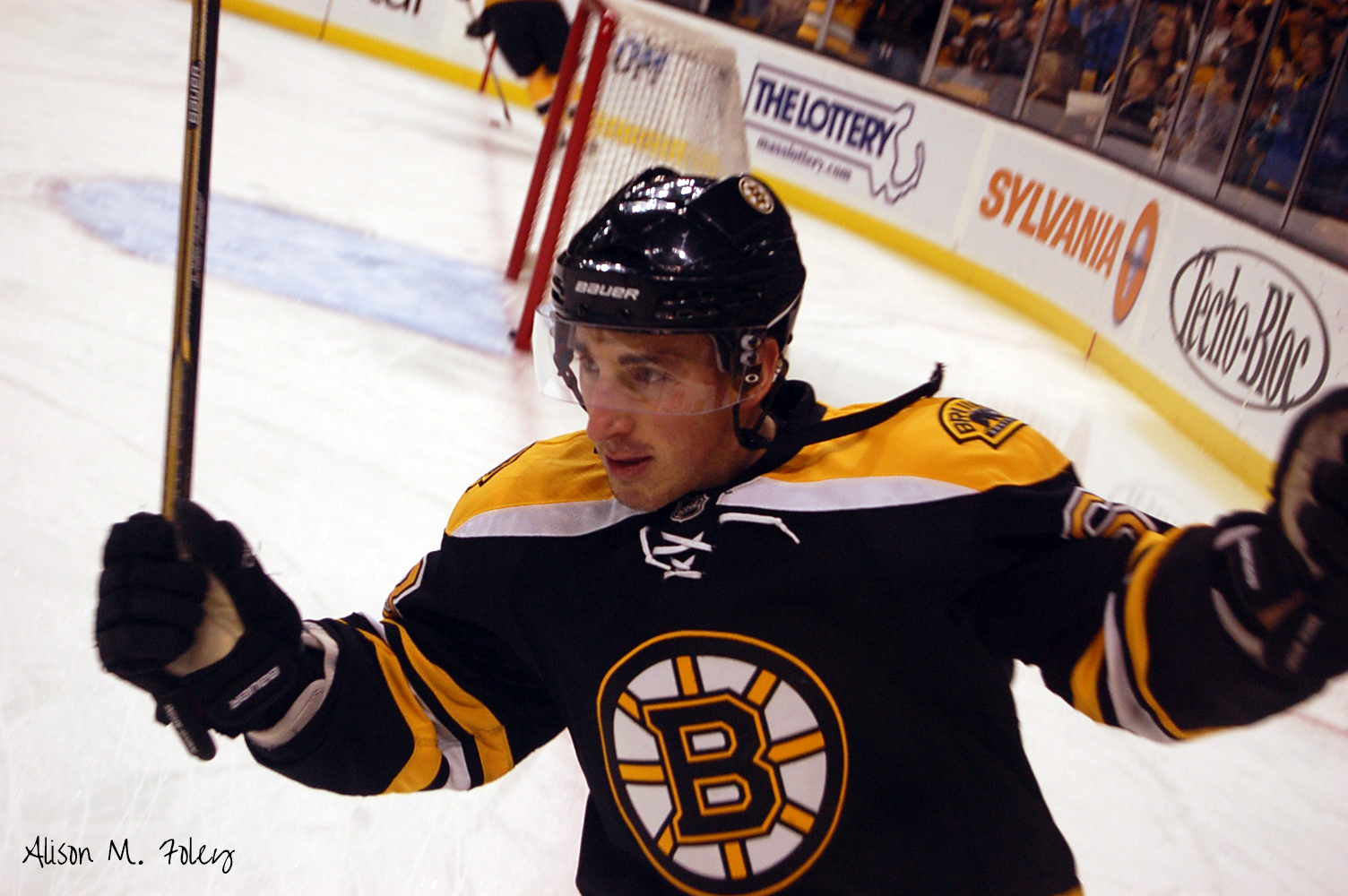
Brett Connolly’s moment of truth

Leading up to last February’s NHL trade deadline, there was a lot of talk about the Boston Bruins acquiring veteran forwards for that late season push to make the postseason after struggling to put together sustained stretches of high-level play and wins.

That’s why it  came as a mild surprise when Peter Chiarelli pulled the trigger on a deal for then-22-year-old Brett Connolly, the sixth overall selection in the 2010 NHL Entry Draft by the Tampa Bay Lightning. The move raised eyebrows because ‘Bolts GM Steve Yzerman was moving on from his first-ever draft choice with that organization, a player who had been selected just four spots after Chiarelli tabbed Tyler Seguin. Unlike Seguin, Connolly was dealt for different reasons, and ironically enough- the player whom Boston hoped would help them earn enough points to get into the dance was felled in his very first practice with the team, missing all but five of the final 18 games, as the B’s came up short on the last night of the regular season.

Connolly arrived to pro hockey with great expectations, and at least thus far, has been a disappointment given where he was drafted. After signing a one year, $1.075 million “show me” extension with the B’s, he is in position to establish himself as a legitimate top-six NHL right wing this season on a team that was starved for goals at the 22nd overall position for offense after finishing third overall in 2013-14.

In this post, we’ll take a look at Connolly then and now- and try to project what he’ll bring to Boston at age 23.

Then (the 2010 NHL draft and beyond): A little over five years ago, questions swirled around Connolly’s long-term viability because of a serious hip injury he sustained early in the 2009-10 season, which limited him to just 16 games (10 goals) for the Prince George Cougars of the WHL. A season after posting 30 goals as a rookie, Connolly was seen as the consensus top WHL player available in the 2010 NHL draft class, and though Portland Winterhawks forward Nino Niederreiter would move up to edge him by just one draft position (NY Islanders) in Los Angeles, most conceded that given a full and healthy season, Connolly had impressive potential.

Take a look at this NHL draft profile, which features the late great Central Scouting director, E.J. McGuire, former Maine Mariners coach, who lost his battle with cancer in 2011. RIP E.J.- a true class act who did so much for the CSS when he was in charge.

https://www.youtube.com/watch?v=H1KHQ2NAow8

Here are excerpts from the profile I did on Connolly for my 2010 Bruins Draft Watch blog, which some of you may or may not remember.

One of the most skilled and dangerous forwards in the draft had an injury-marred campaign and faces questions about his lower body’s long-term health..Excellent skater with a flash initial burst and ability to separate when observed last season before his hip problems flared up during the Ivan Hlinka tourney in August ’09. A dynamic presence when fully healthy and on top of his game: darts into open spaces with the puck and can wire it into the back of the net in the blink of an eye. Has that offensive zone killer instinct you want in your forwards; takes the puck to the net and shows off some real grit when it comes time to pay the price down low and in front of the net.

His health was the biggest obstacle facing Connolly, as he returned to action for the Under 18 championship tournament in April, but did not look all that effective after such a long layoff. Here are the downsides to him as I saw them back in June of 2010:

Faces some major scrutiny in light of serious hip flexor injuries this season that shelved him for all of 16 games. Looked strong in a late-season stint in the WHL, but raised real concerns with his tentative, ineffective performance for Team Canada at the World Under-18 tourney in Belarus in April. Lacked explosiveness and jump in his stride. Word out of the NHL combine is that the hips aren’t chronic problems, but with the failure of New Jersey 2001 first-round pick Adrian Foster still fresh in a lot of minds, many teams can’t afford to gamble. Not an overly physical player despite a long frame that will bulk up in the next few years. Needs to add a lot of mass/fill out his lanky build.

My draft day and after projection for Connolly was this (after mocking him to Dallas with the 11th pick):

He’s got all the tools you look for in a high-end scoring wing, and it’s a shame that he had such problems with injuries this season, because it robbed him of the chance to generate a potentially intriguing draft subplot to challenge Hall and Seguin near the top. Now, he’s caught in that limbo/Twilight Zone between those publications that are steadfast in their belief that he’ll go off the board around No. 5 overall, and those who are a little more conservative and who think NHL teams will take some safer options rather than risk taking a player who could be damaged goods and never again look like the 16-year-old who scored 30 goals in the WHL. Bostonians know all too well how devastating bad hips are to a hockey player; it was a degenerative hip condition that forced Cam Neely to tearfully hobble away from the game he loved at just 31 years of age in what was a memorably heart-wrenching press conference. Teams who don’t take the potential disaster of a player who faces a lifetime of being day-to-day the way Neely was over the last five years of his career seriously may jump on Connolly well inside the top-10, but they do so knowing that if he can’t go, it could cost the jobs of those management and personnel types who made that call.

Okay, so the hip hasn’t proven to be all that big a factor, though he’s had other health issues (more on that later).  Tampa grabbed him early and he appeared to justify that faith in 2010-11, as he put his hip woes behind him to the tune of 46 goals in 59 WHL games. That was good enough for the team to sign him and give him a shot in the NHL for the 2011-12 campaign, but he had a bit part, scoring just 4 goals and 15 points in 68 games. With the lockout occurring the following year, he began the season with Tampa’s AHL affiliate in Syracuse and stayed there, scoring 31 goals and leading the Crunch to the AHL championship series. Unable to lock down an NHL job the following year, Connolly had another solid if unspectacular AHL outing in 2013-14 (21 goals, 57 points in 66 games).

Now: A year ago, Connolly made the big club, but found himself skating on the bottom-six, where he was able to score a respectable 12 goals in 50 games at the time of his trade to Boston.

Much was hoped for when he arrived, but a freak injury suffered when a Dennis Seidenberg shot in practice caused a displaced fracture in his right index finger, forcing him out of action for the next five weeks. He got into Boston’s last five games (2 assists) but could not have been 100 percent- especially for a shooter who needs his hands to be at his most effective.

For a club that gave up a pair of second-round selections in 2015 (Tampa took Peterborough Petes d-man Matt Spencer) and 2016, losing Connolly when they needed him most was one more added insult to injury (pun intended), but he has never played more than 71 games in any of his pro seasons whether spent in the AHL or NHL. There always seems to be some kind of physical issue preventing him from playing a full 82-game schedule.

“Obviously, it’s tough for him coming off his hand (injury) right when he got here, but he’s got a natural ability to skate,” B’s defenseman Zach Trotman said this week when asked about the player he competed against in the AHL and was teammates in Boston with to close out last season. “He’s a really good skater and he’s got a good shot even with his hand being…I don’t know what percentage it was at the end of the season but I’m sure it wasn’t full. He seemed pretty hungry and anxious to get the puck to the net and go in after it. I’m not going to project on what line he’d be or anything, but as far as skill goes, he’s got that hunger and he’s got that ability to skate and get the puck on net and just having those tools alone is going to be very advantageous for our team and I’m excited to see him play more this year fully healed and see what all he can do. I thought at the end of the year he was impressive and his speed and skill will help make the pace of our team faster.”

Trotman may not predict what line Connolly will be on, but I’ll take a stab. He’ll work in early on the bottom-six with special teams time on the power play, but I think the Bruins are hoping he and Jimmy Hayes will give them enough confidence to perhaps have the confidence to trade Loui Eriksson to open up some breathing room on that right side. This is not a slight to the veteran Eriksson, but with his impending unrestricted free agency, the team cannot afford to be sentimental. If neither Connolly nor Hayes are up to the task to take on more of a scoring role for the B’s, then Claude Julien may stick with Eriksson, as he is a more proven player at this stage of his career. However, with just $3.5 million invested in the two younger wingers, that salary flexibility is how a team like Boston can get further out of the cap hell that dogged them the last two years, forcing the parting of ways with key contributors and fan favorites like Johnny Boychuk, Jarome Iginla, Milan Lucic and Dougie Hamilton.

Nobody said building a Stanley Cup-caliber team would be easy, but it goes without saying that if Connolly can develop into a 25-30 or more goal scorer this year for the B’s, Don Sweeney would have more options open to him to make the club better in the present and longer term. Of course- that kind of success comes at a price and if Connolly comes through with a season like that, he’ll be looking at a hefty raise in 2016.

All in due time, I suppose- and first things first. There’s a hockey season to play…in the meantime, Ralph Macchio, Pat Morita & Billy Zabka know what we’re talking about in the style of Survivor.

https://www.youtube.com/watch?v=5HcBugAUXeg

Confirmed: Bruins hire veteran scout Andrew Shaw to cover Ontario

Since letting Mike Chiarelli go after his brother was relieved of the GM duties, the Boston Bruins had been without a dedicated Ontario amateur scout.

Several sources have told me that Don Sweeney, Keith Gretzky and Co. have brought longtime scout and OHL veteran talent evaluator Andrew Shaw on board. He, obviously, is not the Chicago Blackhawks forward who was instrumental in beating the B’s in the 2013 Stanley Cup final.

You can read more on Shaw here- it’s a press release announcing his hiring as head scout of the OHL’s Sudbury Wolves back in 2012.

Shaw is a respected presence and voice of scouting experience throughout Ontario, though the Wolves did not have the greatest of runs while he was a part of that organization. We’re in a wait-and-see pattern with his three OHL drafts as Sudbury’s scouting chief, but he did some good work with Columbus and Sarnia.

To have NHL guys already coming up on the net and telling me that this is a good hire is solid enough evidence for me, so watch for news coming out of the organization in the coming days announcing Shaw formally, along with perhaps another addition in the Quebec and Maritimes (QMJHL) region.

Update: Team source says yep. Shaw now in the fold- good guy, good add sayeth scouts from outside the org. NY Islanders’ Matt Martin one of his guys from Sarnia days, I’m told.

Summer cooler interview series 4: Zach Trotman

Zach Trotman is poised to make the Bruins on opening night for the first time since he turned pro for the 2012-13 season. (Photo courtesy of Alison M. Foley)

Zach Trotman is poised to make the Bruins on opening night for the first time since he turned pro for the 2012-13 season. (Photo courtesy of Alison M. Foley)

Boston Bruins defenseman is an NHL draft rarity: he’s only the third player selected with the final pick in a class since 2000 to ever see a single shift in the NHL. The other two- Jonathan Ericsson (Red Wings- 2002) and Patric Hornqvist (Predators- 2005) have gone on to have solid big league careers, each with 400+ NHL games and counting.

Trotman’s 29 NHL games (1 goal, 5 points) is a far cry from them at present, but since the B’s traded with Chicago to acquire the pick they used to tab the Indiana native out of Lake Superior State University 210th overall, he’s gone on to reward the team’s patient approach with him.

At 6-foot-4 and a shade under 220 pounds headed into training camp, Trotman is one of the bigger and stronger players on the team. He’s a fluid skater for a guy his size and he sometimes does not get enough credit for his vision and ability to move the puck. His rocket shot forces penalty killing units to respect him by trying to disrupt and take away his time and space.

Though he’s not likely to ever develop into a dangerous two-way threat, his size, reach and smarts makes Trotman a good bet to be a solid supporting cast player as a bottom-pairing NHL defender with the chance to evolve his game into the middle pair with special teams contributions down the road.

Trotman spoke to the Scouting Post while on the road today to Indiana for a quick stop before he drives to Boston this week. With the B’s, the team that gave him a chance five years ago as a twice previously passed up player in the NHL draft, he is in the second of a 2-year pact and the first in which he receives 1-way pay. Bigger things are expected of Trotman this season and he has the inside track (in my view) of taking one of the available defense positions when the regular season begins.

It has been a pleasure to bring you this series, which started with center Ryan Spooner, continued with Boston blueliner Torey Krug in 2 parts, detoured a little with Flames goalie prospect and NCAA champion Jon Gillies before concluding with Trotman.

I think that sometimes, fans have trouble managing expectations due to draft pedigree. Some of the bigger critics of Trotman’s chances of sticking in the NHL would likely have less of an issue with him had he been 18 when drafted and picked earlier, but because he was just one selection away from being an undrafted free agent, some hold that against him. Well, that’s a fair point, but given how far he’s progressed from the raw, gangly 20-year-old at his first Boston development camp, I’d submit that the B’s have done pretty well with him. There will be bumps in the road along the way, but he’s got the tools and character to become a solid, if unspectacular presence at a bargain rate for this club, and has performed far better than a good number of defensemen taken well before him in the class of 2010.

Enjoy the interview- more in store with the blog this week, including a two-part rookie camps preview by Conference with players to watch and some guys I just happen to like and why I like ’em.

***

Kirk Luedeke: Zach, the last pick in the NHL Entry Draft may not come with as much fanfare as the “Mr. Irrelevant” selection in the NFL draft does, but take us back to 2010 and tell us what you remember about being the final pick, how you found out about it, and what it has meant to you to work your way into the 29 NHL games you have played since the 2013-14 season.

Zach Trotman: It started during my freshman season (at Lake Superior State University)- I started get to get a little more notoriety and some interest from NHL teams. I interviewed with New York and my agent had kind of told me there were some (NHL development) camps that I was going to be able to get into next summer and all that, so I kind of viewed it as a long shot to be drafted into the NHL and didn’t really think that I was going to have that opportunity.

I knew I was a late bloomer and I was coming around later, so I was hoping for a chance but never really expected to be drafted, so just the interest teams had and the possibility of being drafted was cool for me and then as it got closer to the draft, it seemed like it might happen, so I watched it…not real closely or anything…I watched the first round and a little bit of the second and third round the next day, so I was driving home from Lake State- was working camps up there. I was on the way home and it was kind of later (Kirk note- the 2010 draft was held on the West Coast in Los Angeles) five or six o’clock maybe, and my agent gave me a call. I thought, the draft is over, and I knew he was going to talk to a couple of teams about getting me into some camps, and so I thought that’s what his call was all about. He called me and told me that Chicago had traded the last overall pick to Boston and that they had picked me with it.

Naturally, I was ecstatic and awestruck I guess. It was a surreal feeling. I obviously called my parents right away and I was extremely excited and at the same time, I knew that it set me up for a lot of hard work that I had to do to overcome being the last overall pick- those are long odds. So, I think in a way, it kind of made me more focused and more determined to prove myself.

KL: You’re only the third player in the last 15 years going back to the 2000 NHL draft to play in an NHL game after being the last selection. The other two are Jonathan Ericsson in 2002 and Patric Hornqvist in 2005, so it is a rarity. People who have reached the NHL say that getting there is difficult enough, but staying in the NHL is the real challenge. What are your own thoughts and perspectives on that given your own experiences in Boston over the last two seasons?

ZT: I spent three years in Providence and my (first NHL when the Bruins were playing in Ottawa) call up was based on me being lucky enough to have my passport on me and that’s what gave me the opportunity just to get a game in. I think that was a huge opportunity and the fact that I think I had a pretty good game kind of opened eyes, like, ‘Oh, wow- he can play at this level,’ and from there it almost gave me a little more attention and allowed people to realize I had another level I could go to. So I think that you’re right- it takes a lot to get there, not only in terms of hard work and the right tools, but just the opportunities, too. And so actually being able to get there took a lot of things to line up right and once I did get there, and I wouldn’t consider that I’m there (in Boston) yet, even though I’m on the one-way next year- I have a lot of work ahead of me to stay at this level and play consistently and be successful both as a player and as a team, which is the biggest part.

I’m looking forward to the challenge from just getting there to staying there and becoming a regular and not just being a bubble guy or someone where people think- ‘maybe he can play here or maybe he can’t’ play here- I want to be one of those guys who can play every night and so that’s the next step and it’s something that’s going to be very difficult.

KL: Your first NHL goal came against Detroit. It was not only the winning goal, but happened in front of friends and family given your years spent living in Novi. How special was it for you not only to get that 1st NHL goal but to have it happen under those circumstances and against the Red Wings as well?

ZT: It was an awesome feeling- it was one of those things where I hadn’t really gone through a long stretch of games like that before where I hadn’t  scored a goal. I’m not a huge goal scorer but I manage to get some in every once in a while with my shot, so being up there for quite a few games before it happened and then you get to a point where you say, ‘I’ve had my chances, and I’m wondering if I’m ever going to get another one to go in here,’ and then I just stuck with it and kept shooting and for that one to go through in overtime, in Detroit, with all my friends and family there and such a critical part of the season- it couldn’t have happened in a better way and looking back on it now, it makes the wait worth it- just to have the first goal be such a special one like that. It was incredible.

KL: Were you a Wings fan growing up? Who were some of the NHL players you always admired and rooted for? Who are some of the defensemen you’ve always tried to model your game after?

ZT: I was. I always watched Nick Lidstrom growing up and I’m sure there are a ton of defensemen who say that. But, being right there in Detroit and it gave me a chance to watch him a lot and obviously, everyone wants to model their game after a guy like that. The style of play…he was such a smart player who knew where everyone was, what was happening on the ice- it almost seemed effortless in the way he would shut down plays and move the puck and get his shot through. Those are all things I’ve always wanted to be able to do and bring to my game. Obviously, I’m less of the finesse side and a little bit more of the larger player side so I have to bring the physicality aspect along with that and those main things of moving the puck quickly and efficiently, being a smart IQ player and knowing what’s going on at all times and trying to use that to your advantage are definitely things I picked up on watching him over the years.

KL: Looking back on the several Bruins development camps you attended before becoming a pro, what aspects of your game do you think have seen the biggest improvement since 2010, and how important were those camps to your preparation in terms of getting to Providence and knowing some guys and understanding the systems and what was expected of you when you got there as opposed to seeing and hearing it all for the first time?

ZT: In college, we played a lot more of a man-on-man system, so for me, closing on guys was a lot different in pro than it was in college because I could contain more in college. Once I got to pro, and it’s more of a zone, you need to close on guys and end the play so that the rest of your teammates can read off of you and then the system starts to take effect. So, I think the biggest challenge for me was continuing how to learn to close on guys and using my size more efficiently to be physically punishing in corners and reading when I could  jump a guy and really close him off like that. It wasn’t easy- it was difficult, and I struggled with it my first year and then progressively got better with it from there. I think that’s one thing that has improved a lot and can continue to improve. I would say that my physicality has gone up but some more big hits, learning how to catch guys a little more so I can make those closings and those hits in the corner more punishing on people so that the next time they go into the corner, they’re thinking about what happened the last time.

KL: So when you talk about closing on players and the man-to-man system you played in college versus the zone schemes Providence and Boston employ, for the layman- and I mean sometimes, players or analysts throw out terms that fans might not be familiar with, so this is a chance for Hockey 201 with Zach Trotman– you’re talking about gap control. So, for folks who might not know what that is- can you talk about gap control and why that is such an important skill for an NHL defenseman to have?

ZT: Whether it’s in the neutral zone or the offensive zone, it’s keeping the distance between me and the player with the puck or the puck itself close- a small distance so that when something happens or I have the opportunity to make a hit on a player to separate them from the puck, it’s not very far that I have to go to do that. I don’t give them extra room to make a play, I don’t give them room to get a shot off or have time to do something and feel comfortable with the puck. It comes back to watching Lidstrom when I grew up because I could recognize when can I play a little tighter on this guy or do I need to back off a little bit. So, that really gives me an extra step and jump a guy in the corner before he can make a play and be able to play tighter on guys and realizing when you can do that and taking a good angle on the play so they can’t beat you out of the corner or beat you down the wall on the rush.

KL: Bruins have had a summer of change here- what are your thoughts on how you felt when getting the news that both Milan Lucic and Dougie Hamilton were traded on the same day? The larger thing is that neither player brought back a plethora of talent that are expected to play and contribute right away. What are your thoughts on the opportunity that Dougie’s departure presents for someone like you and the other defensemen in the Boston system?

ZT: Obviously, it’s an NHL defenseman that’s out of the system but it’s not one that is going to be easily replaced. He was a huge presence- he ate up a lot of minutes and put up a lot of points. He was a very talented player and so in some way, shape or form, that’s a job we’re going to have to take care of as a (defense) corps and especially the right-handed ‘D’ this year- finding a way to create offense to make up for that loss, and then trying to eat up those minutes. He’s a good player and he ‘ll be tough to replace, but I think we can do it.

Seeing Looch go obviously is tough because he’s a great guy as well, and he’s a very hard-nosed, physical player that can put up points. He’s a Bruins-type player, but every once in a while I guess things just have to change and the team needs some fresh faces. We’ve got some guys like (Matt) Beleskey and (Jimmy) Hayes that are big and play that hard, strong game. I think the team has filled in what we lost or traded and I think we’re going to be a really good team this year.

KL: Do you think that you and Torey Krug– I know you’re an Indiana native but you can also claim Michigan because you spent a lot of years and finished high school there- a couple of Michigan guys would be a good pairing there in Boston and are you looking forward to maybe seeing more of a chance to settle in and play some extended minutes with him if it works out?

ZT:  I think I played with him a couple of times last year at points and he’s an extremely talented offensive player and he’s extremely smart in the d-zone as well, so playing with a guy who can move the puck like that, who can make plays offensively would be a complementary pairing where I can be more of a shutdown guy and keep it simple in the offensive zone by getting my shots through and covering for him so that he can feel like he can jump in the play. I think it would be a blast to play with Torey- he’s a really talented player. He plays with a lot of heart and that’s something that’s contagious.

KL: Congratulations on your engagement- is it safe to say that the people of Boston might eventually see an even bigger talent with your fiance, Jeanna, who got her Master’s from Boston University’s journalism school and is already the sports director for her television station in Rochester, Minnesota?

ZT: Yeah- she’s definitely got all the talent over there (laughter). Talent and hard work- that’s how she’s earned her success- I just try to keep up.

***

(Kirk Luedeke photo)

(Kirk Luedeke photo)

Seth Griffith faces logjam at RW

Last season, the Boston Bruins got some surprising production from 2012 draft choice Seth Griffith, a former prolific goal scorer in the OHL with the London Knights before turning pro for the 2013-14 hockey season.

Griffith, who was passed over in his initial year of NHL eligibility in 2011, overcomes a lack of size and dynamic skating ability with elite offensive hockey sense and a great set of hands. Fans will no doubt remember this beauty he scored last November against Cory Schneider and the New Jersey Devils.

The finish is vintage Griffith, but the highlight also shows the lack of open ice foot speed and the difficulty he had in gaining separation once he blocked the shot and chased the puck into the neutral zone. Granted, the now-retired Bryce Salvador took a good angle in recovery, but Griffith would have gone in alone on Schneider if he was a faster skater. Instead, and what makes the goal all the more remarkable, is that he fought off Salvador and Marek Zidlicky to put the shot between his legs and under Schneider’s left pad for one of the prettiest goals of last season.

Griffith has made a career of memorable goals, as he uses his keen offensive instincts, quick release and lacrosse background to pinball off of opponents and make scoring plays that other forwards aren’t capable of creating themselves. However, in the NHL, he won’t be faced with many opportunities like that one, where it all seemed to come together for him for a magical scoring chance. Ultimately, Griffith is going to have his hands full winning a job on one of Boston’s top-three scoring lines as we enter the 2015-16 NHL campaign.

Let’s take a closer look:

Your top spot is pretty well filled with David Pastrnak expected to build on a surprising and successful rookie season, one that saw him score 10 goals and 27 points in 46 games to finish out the second half of the year in Boston. Pastrnak will be given every opportunity to skate on that RW1 spot for Boston next season and if he stays healthy and all plays out the way the B’s expect, the 19-year-old will take another step forward in his development as the franchise’s next face up front.

Loui Eriksson and Brett Connolly are solid bets for second- and third-line duty in Boston.

Eriksson is coming off his best offensive season (22 goals) since 2011-12, when he tallied 26 goals and 71 points. He turned 30 in July, but he’s anything but past his prime. Eriksson has been a popular target of criticism in Boston since the trade that sent Tyler Seguin to Big D, and that’s understandable given that the 2010 second overall selection scored as many points (84) in his first full season with the Stars in 2014, as Eriksson has done in two seasons with Boston. Eriksson dealt with two concussions in 2013-14, but he re-emerged last season with some of his patented ability to make consistent plays on offense. It’s not enough for many Boston fans to accept that Seguin has tallied 74 goals and 159 points for Dallas since the trade- nearly a 2-to-1 advantage over Eriksson, but the veteran Swede often gets the short shrift in Boston for what he does well, which is a creative, opportunistic approach to scoring. His 22 goals was second only to Brad Marchand on the team last year (which is also an indictment of Boston’s popgun offense) and his 47 points trailed only Patrice Bergeron (ditto).

GM Don Sweeney is in a tough spot with Eriksson- the unrestricted free agent-to-be will likely fetch a decent trade return as the season progresses, but timing is everything- pull the trigger on a trade too soon and you’re sending the message that the year is over. Wait too long, and you could end up like Tim Murray and the Buffalo Sabres with Chris Stewart last winter. Eriksson reportedly has a 14-team trade list, so any transaction Sweeney makes short of just riding it out and likely parting ways with him next summer is already constrained with only limited destinations.

Connolly is the big wildcard for the Bruins entering the new year. I won’t go into as much detail, because I plan to dedicate a future and comprehensive blog post to him, but let’s just say that the B’s did not expend a pair of second-round draft choices on a player they expect to remain a third-line presence for them. The sixth overall selection in 2010 (just four spots behind Seguin for those keeping score at home) has yet to justify the faith Steve Yzerman and the Tampa Bay Lightning scouting staff had in him just five years ago, but the B’s signed him to a one-year “show me” deal valued at a little over $1 million.  If that pure skating and sniping ability that manifested itself (in albeit a more limited sample size given the time he missed with a hip injury) during his WHL days with the Prince George Cougars starts translating in the NHL, the B’s could have two exciting right wingers in Pastrnak and Connolly. It’s an intriguing possibility, but not something you can take to the bank.

To complicate matters (for Griffith), the B’s acquired the Boston-born-and-bred Jimmy Hayes on July 1, subsequently signing the 19-goal scorer with Florida a year ago to a three-year extension. They did not do that to stick the 6-foot-5 former Toronto second-rounder in 2008 on the fourth line, so it will be interesting to see what the team’s plans are for Hayes and in all likelihood- Eriksson. Something’s gotta give, and best guess is that the club will do some mixing and matching up front to start the season and see how the makeup looks before acting.

Also on the Boston depth chart’s right side power winger Brian Ferlin, who is more of a natural fit for fourth line duty given his size, skating and modest (projected at the NHL level) ability to chip in offense.

Someone, anyone, might earn some more playing time in Boston with a switch over to the left side, which enters the season with Matt Beleskey and Brad Marchand clearly entrenched on the top two lines, but only veterans Chris Kelly, Zac Rinaldo and Max Talbot as the other NHL-established players over there. Griffith has better offensive chops than both of them put together, but he’s nowhere near the defensive player and veteran dressing room presence. Based on Claude Julien’s body of work to date, unless injuries eat into Boston’s depth, does anyone realistically see Griffith beating those players out for a job out of camp?

That leads us back to the gist of the post. With six goals and 10 goals in 30 NHL games last year, the potential is clearly there given his scoring upside. Working against Griffith is the fact that he does not possess the ideal traits that Cam Neely and Sweeney have said they want to employ in Boston- to be a bigger, faster, harder to play against club. That’s what the guys ahead of Griffith on the current roster projections possess in terms of natural tools, so the 22-year-old has his work cut out for him this year.

Sweeney once told me during a break in the action at the annual Flood-Marr prep tourney at Noble & Greenough School a few years ago that he admired Griffith’s “dog on a bone” mentality when it comes to scoring. He was referring to the fact that although Boston’s fifth-round choice does not have the natural size/strength to win a lot of board battles, nor the pure explosion and separation gear to put defenses on their heels, he nonetheless brings a tenacity and inner fire to out-hustle opponents and find ways to get the puck in the net. In two pro seasons split between Providence of the AHL and Boston, Griffith has scored 32 goals in 108 minor league games. That’s something you don’t just give up on.

At the same time, Griffith is going to want a chance to play in the NHL sooner rather than later. That might just make him an attractive trade chip to include in a larger package at some point to help shore up Boston’s team where it is needed most: on defense.

We shall see.

Monster to Boston on a PTO

Various sources including HNIC’s Elliotte Friedman reported today that free agent goaltender Jonas Gustavsson, aka the Monster, will come to Boston Bruins training camp on a professional tryout agreement.

The 30-year-old originally came to the NHL for the 2009-10 season as a free agent signing by the Toronto Maple Leafs out of  Färjestad BK, where he had a season for the ages in 08-09. He posted a sub-2.00 GAA in both regular season and playoffs, leading his club to the Swedish Elite League championship with a 1.03 GAA and otherworldly .961 save percentage in 13 games.

He played 2 seasons of 42 games each for the Leafs sandwiched between a forgettable 23-game stint in 2010-11, when James Reimer came in at mid-season and made an immediate splash. Gustavsson spent the last three seasons with the Detroit Red Wings, where he struggled with injuries in two of the years he spent there.

Gustavsson is the modern NHL goaltender- big, agile and quick. He squares up and plays the butterfly style, but he’s pretty active and comes out of the paint to keep shooters honest.

If the reports are true and he is with the Bruins as an invite, the move makes perfect sense, as it was hard to imagine the club trusting backup duties to one of the current trio of Jeremy Smith, Malcolm Subban and Zane McIntyre. That’s not a knock on any one of them- they’re eager, capable players. They also don’t have a single complete NHL game in the books between them, so assuming Gustavsson plays well enough in camp and signs for the league minimum, the club at least has an NHL-experienced backup who has had an up-and-down NHL career, but has flashed impressive ability at times in his 148 games.

I like it because it takes the pressure off the youngsters by giving Claude Julien a veteran player in net that he’ll be less risk averse to when it comes to spelling Tuukka Rask. I like the move- it gives the youngsters the chance to keep playing (though the B’s might need to loan Smith to another team if they want McIntyre to play in the AHL next year- otherwise, he might end up in the ECHL), which is not a bad thing for developing goaltenders, even if they themselves would be more than happy up with the big club playing sparingly.

Of course, if he stinks out the joint or gets hurt (either one or perhaps both are distinct possibilities), then we’re right back to square one.

The Pasta Principle: Pastrnak primed for year 2

David Pastrnak is the player the Boston Bruins have been waiting for. (Photo courtesy of Alison M. Foley)

David Pastrnak is the player the Boston Bruins have been waiting for. (Photo courtesy of Alison M. Foley)

David Pastrnak is back in Boston, as he showed up this week for the annual pre-training camp captain’s practice sessions, which sees the gradual return to the ice of Bruins players.

Pastrnak’s arrival so soon (we’re still a little more than 2 weeks from the time the veteran players are required to report) is an indicator of the young forward’s seriousness, though it’s not all that surprising to those who know him. Last year, Torey Krug went out of his way to talk about how dedicated the NHL’s youngest player was (he didn’t turn 19 until May- a month after the B’s packed up and headed home), showing a maturity beyond his years.

Some people like to talk about how hard they work, but Pastrnak goes out and does it. When character guys like Krug notice that, then you know you’re doing something right.

I said in my 2016 Bruins season preview series that Pastrnak is the player Boston has been waiting for, and that’s more and more evident by the day. He’s arguably the most purely talented player on the roster, but his humility, enthusiasm and love for what he does provides the best possible example for everyone around him, from rookie to veteran alike.

He’s up to about 180 pounds, which will better help him to endure the rigors of the 82-game regular season schedule plus exhibition and potentially more in the playoffs (if the Bruins get in). That’s a good weight gain that gives him a good starting point going into camp. With his body type, he’ll likely lose more over the course of the season- every little bit will help him in the corners, along the walls and in front of the net.

I profiled Pastrnak a year ago in January, right after his outburst of 4 goals in a two-game stretch that secured his place with the big club for the duration of the 2014-15 hockey campaign. For a guy who was still trying to figure out the English thing, I thought he was extremely well spoken, and he reminded me of a young David Krejci, who despite a thick Czech accent and near-whisper when he spoke, said some of the more profound (by hockey dressing room standards) things of anyone on the roster circa 2008-10.

He talked to me about his love for the game and how sometimes, like a typical kid, he just didn’t feel like playing or practicing. Instead of forcing him go, his parents let him make his own decision. That approach seems to have worked out for him, and though still a teenager, he could moonlight as a hockey advice guru with quotes like this one:

“My mom told me that sometimes I didn’t want to go to practice so she (would) just leave me (at home). My parents were never like, ‘ you have to go practice’ they always asked me: ‘do I want to go practice?’ and I said yes or no, but if I said no, I stayed home. I think that’s an important thing too, because right now some parents are just pushing their children to play hockey all the time and that’s maybe how they stop liking it, you know?”

Growing up in the one-rink coal-mining town of Havirov, Pastrnak rode the city bus to practice and games, sometimes wearing his gear and carrying his skates and stick. As long as he could get to the rink on time, it didn’t matter to him how he got there.

Now, at 19, he’s on the verge of something special in Boston. Those cynics who want to waste their time cracking wise about the Bruins now being primed to trade him can chortle and giggle at their so-called cleverness all they want, but they miss the point entirely about what the management team is trying to do. Just as the club once cultivated and groomed a young teen named Patrice Bergeron to be a key contributor and leader, they are doing the same for Pastrnak. Unlike former Bruins Phil Kessel and Tyler Seguin, Pastrnak has given the team myriad reasons to hold onto him and invest the millions going forward that it will take as he matures into a league star. The other two are stars as well, but for whatever reason, they either could not or would not embrace the ethos that right or wrong, the Bruins expected them to.

Pastrnak doesn’t have that problem.

He is a player everyone can get behind.

And that’s the memo.

***

You can read the complete profile of David Pastrnak in the February 2015 edition of New England Hockey Journal here:

http://digital.hockeyjournal.com/nxtbooks/seamans/nehj_201502/index.php?startid=10

David Pastrnak, Emil Johansson and Zane McIntyre take a break during 2014 Bruins development camp (photo courtesy of Alison M. Foley)

David Pastrnak, Emil Johansson and Zane McIntyre take a break during 2014 Bruins development camp (photo courtesy of Alison M. Foley)

Scouting dispatches: Twitter mailbag # 3

I’m back with a third edition of the Twitter hockey mailbag, where I solicit questions and followers hit me up on a variety of topics. This week’s mailbag has a little bit of everything, with some questions about the Bruins (mostly about prospects), some draft queries related to Auston Matthews and the process itself. Thanks as always to those who took the time to submit and if I didn’t get to a question you asked- apologies but keep trying.


Here’s the mailbag:

Since you focus on prospects, what is the organization doing wrong in prospect development and who is responsible?- Olsonic @BruinsScience

I won’t lie- wrestled with this question because of the way it is worded. Instead of trying to simply approach the question by answering what I think is “wrong” with the process, I’ll also attempt to point out some things I feel the team is doing right.

First of all, the Bruins are a long way from the old days when they would typically draft a player and then spend little to no time interacting with them as the majority of them returned to their junior clubs or played in the NCAA before they were ready to compete for a Boston job. There are some tough stories involving players like 1989 first-round draft pick Shayne Stevenson that would be hard to wrap your head around given the investment the B’s and all the other teams now (smartly) make in player development to help set the conditions for an eventual NHL payoff. Stevenson was a cautionary tale, but he was far from the only promising player to never reach his big league potential, and the Bruins are hardly the only NHL team to move on from a talented young player because something was just not there to justify the expense.

In getting to your question- prospect development is not a black and white issue. It depends on a lot of different factors, only some of which are- overall talent/ability, draft position, character/work ethic, maturity, and a big one I don’t think enough people put weight into- the drafting team’s roster opportunities. In a perfect world, every first-round pick would just show up to camp, plug right into his allotted position and go off to enjoy success, but the world we live in is far from perfect.

Without writing a book here, I get the consternation over departures of young core players like Tyler Seguin and Dougie Hamilton, but simply pointing to the team and trying to allocate responsibility to any one individual is an exercise in futility. Could the teams have done things differently to keep both players in the fold? Perhaps. Could the players have done more to instill confidence in their commitment to the team and/or expressed more of a desire to be in Boston over the long haul? Possibly. When you’re dealing with people and personalities, developing prospects becomes more art than science, so the best thing the Bruins can do is try and capture lessons learned from disappointments and successes alike.

The Bruins spend considerable time and resources working with their prospects and trying to bring them along at a pace that will set them up for success when it eventually is time for them to be pros and make a run at an NHL career. Player coach Jay Pandolfo joined the team in a full-time capacity last season to mentor the youngsters and his own experiences having come up through the ranks at Burlington High and Boston University before winning several Stanley Cups. A respected defensive forward who spent most of his nearly 900-game NHL career with the New Jersey Devils means he has a broad base of experience and wisdom to impart. He was a second-round pick as an offensive player at the lower levels but had to reinvent himself as a defensive forward to keep younger, more skilled players at bay for years as he skated in the big show. I think he’ll continue to relate well to Boston’s prospects and provide a good example for them going forward.

In the end, no matter how good a team’s developmental program is or how much money they pump into it, not everyone is going to play in the NHL with the team that drafted them, and unfortunately, some high picks will fall off along the way. If we only ask what’s wrong with something while not making an effort to find out what’s right in any given situation, it’s a good bet that we’re missing out on a significant part of the equation.


How good is Austin Matthews [sic]? Better than Eichel?- RJ @mrshark444

I’d say an acronym that fits for Auston Matthews is PDG- Pretty (Darned) Good. He’s got the size, skating and offensive skills to be a threat on each and every shift. He’s still developing his 200-foot game, but there’s a reason he’s the early favorite to be the NHL draft’s top selection next June. He looked the part of a top NHL prospect at the USA WJC camp last month, and I can’t wait to see how he acquits himself in Switzerland’s top pro league this year.

As far as him being “better” than Eichel, that’s not something I’m interested in tackling right now. Those two will have a chance to settle that debate in the NHL eventually, and I’ll leave it to them to let their play do the talking when the time comes.


(Joe) Morrow, (Zach) Trotman, and (Colin) Miller- what areas do they need to work on to make the NHL roster, respectively?- Chuck Finley @cnjs5kpj

I would not be surprised to see all three on the Boston roster at some point this season, but the chance of the trio being in the lineup at the same time is less likely to happen in my view.

Morrow has the skating, passing and shot you look for in the more offense-minded defensemen, but the irony with him in his 15-game audition last year is that he looked more like a conservative, stay-at-home D playing more not to lose than opening it up and giving his team the chance to benefit from what he does best- pushing the pace and running the power play. Now, it’s certainly possible that Claude Julien and Doug Houda told Morrow to keep it simple, but I think that if he’s going to be a regular this year, he’ll have to show more flash in terms of using his speed to lead the rush and back defenses up. He needs to be more assertive in the offensive end, because the B’s have plenty better defense-minded players than Morrow- they don’t need another one.

Trotman needs to keep raising his execution level while playing situational hockey for the Bruins. He’s big and pretty fluid for his size, but he’s not all that physical nor projects as a consistent point producer, so he’ll have to be most effective at even strength to earn the coaches’ trust. That means he’s going to have to play a smart positional game, use his long reach and strength to keep attackers to the outside and cut down on the mental mistakes that have at times have been noticeable. I like his chances of grabbing a 5/6 role right out of camp the best of the three.

Miller is interesting- he’s a late bloomer; a latter-round pick who has superb skating chops and a big shot who is coming off a far more productive AHL season than the one Morrow, a former 1st-rounder, just had. He’s mature and talented enough to make the big club right away, but the B’s will have to balance how he performs at camp and preseason with the kind of role they want to give him. He’s not known as a particularly instinctive player, so while he has the wheels and howitzer, there’s much more to it than that, so he’ll have to demonstrate enough of a defensive awareness so that they keep him up rather than try to get him more seasoning in the minors.

How’s Peter Cehlarik coming along?– John C @JohnnyRiingo

Cehlarik had a better 2014-15 campaign than he did the year before, when he bounced around to several teams in different leagues and never settled in. I see him playing one more year in Sweden with Lulea and then signing and coming over to North America either at the end of this year or for the start of 2015-16 to play in Providence or possibly Boston.

On the positive side, I like the Slovak’s size, long arms and shot release and accuracy. He’s one of those players who can make an electrifying play with the puck on one shift and then score a mundane, take-out-the-garbage kind of goal a few minutes later. He’s got some dangle and creativity with the puck.

He’s not a plus skater, but he does have a long stride, so he tends to look like he’s gliding around sometimes. He’s not all that heavy on the puck and I know that different Bruins scouts have told me that they want to see a little more “want to” in his game at times.

The Bruins don’t have a lot of similar players to Cehlarik in their system, but I don’t know that he projects to be a high-end, top-six forward in the NHL, even if the tools are there. He’s an intriguing player, but I want to see how he adjusts to the North American game first.

How mad should I really be that the B’s gave away Dougie Hamilton?– Lundeaner @Deaner1000

The Bruins didn’t “give away” Hamilton, though I understand where you are going here.

If your point is to be mad because they didn’t get NHL players who are known commodities at this level and are ready to step in and perform right away, that’s a legitimate gripe. Whether salary cap dictated what direction the B’s went in when Don Sweeney made the decision to move him or something else, that Boston defense took a step backwards and there’s no sugarcoating that.

However- I’d just offer up that once upon a time (in 2002), people griped about the Bruins letting Bill Guerin “walk for nothing,” only a funny thing happened a year later- they used the compensation pick for him on Patrice Bergeron and the rest is history. They used the 45th pick on him in 2003 and this past June, one of the three picks they got from Calgary for Hamilton was No. 45- Jakob Forsbacka-Karlsson– who reminds folks of a young Bergeron. Zachary Senyshyn and Jeremy Lauzon are two more players who could one day help turn the trade in Boston’s favor.

With the Hamilton trade there is no question the B’s accepted a lot of risk on the return from Calgary and it might end up on the negative ledger in the long run. I’m certainly not going to try and sell it as a win for Boston in September 2015, so if you want to be mad, I won’t try to stop you. But, if the scouts got it right with those three players, we might not be too concerned that Hamilton is out in Western Canada in about 3-5 years…that’s a big “if” though, and with jobs potentially on the line- the B’s must get something out of these three picks.


Any chance Noel Acciari and or The Planet’s kid play on the 4th Line this season? Can’t see Chris Kelly down there all year– Mark Clinton @mark_clinton

Is there a chance? Sure- there’s always a chance, but how much of one is the question, and I’m not sure Acciari will be at the top of the list of players to be called up to Boston in his first pro season, with a bit of a glut of more experienced wingers to choose from.

Does he have the maturity to do it? I think so- he’s someone I have followed since his days as a Kent Lion and Acciari’s game lends itself to fourth line duty. By the same token, unless he’s so much better than everyone else vying for fourth line duty, I’m of the opinion that the chance to play more of a role in the AHL is probably more beneficial to Acciari at this stage of his development.

I guess we’ll find out. I wouldn’t have a problem with Acciari getting that chance, but without seeing how he looks in camp or performs at the AHL level, it’s not a hill I am going to die on either way.


How should the Bruins manage their goalie assets? Do B’s have any chance at getting a reasonable return, or is best bet to develop?- Greg Babbitt @babbitt_greg

The two are not mutually exclusive and it’s about doing what management feels is going to make the team better.

That’s why instead of keeping a more proven Martin Jones in the fold right after acquiring him from the Kings, they moved him for other assets while saving the money re-signing him would have counted against the cap. Part of that no doubt was to accommodate Jones’ desire to have a chance to start somewhere, which wasn’t going to happen this year in Boston barring an injury, but part of it was deciding to get a solid, closer-to-being-ready NHL prospect and a potential lottery pick next June for a guy who would have been sitting more than playing.

Throwing out the fact that they don’t currently have a proven NHL commodity to back up Tuukka Rask, they have three solid assets and I’m not sure trading one makes a whole lot of sense right now given how little depth they truly have if Rask gets injured. Daniel Vladar is not pro-ready, so beyond Jeremy Smith, Malcolm Subban and Zane McIntyre, there isn’t a large safety net for contingencies. I still think they’ll bring a veteran with some level of NHL experience into the mix before camp- either through invitation or with a low-cost, take-the-minimum-while-you-can money so as not to throw their backup hopes behind a trio of guys who have less than one NHL game between them.

As for the reasonable return versus developing them question, I’ve never understood the segment of fans that immediately jumped up and assumed Subban would be traded when the B’s signed Rask to his big extension in 2013. When the Bruins acquired Rask in 2006, the B’s had Tim Thomas and Hannu Toivonen as their goalies entering the 06-07 season, and even when Thomas continued to perform at a high level as the starter (except for his injury-riddled 2009-10 season), Rask had to bide his time. Why wouldn’t the B’s employ a similar patient approach to Subban and/or McIntyre while their veteran continues to be the No. 1 in Boston?

It all comes down to protecting the club against catastrophe, and that’s what the team will be facing if it loses Rask for an extended period anytime soon. If you don’t think you can get the kind of return that justifies the investment you’ve made in a player, there is nothing wrong with holding onto him and seeing if he can deliver on the promise that prompted the team to draft him in the first place. At that point, he either wins a bigger job with the NHL squad or he increases his trade value, but there’s no set answer that applies universally.

I believe the Bruins have done it the right way, but I also thought Niklas Svedberg would succeed as the backup a year ago based on his AHL track record in Providence.


What are the most important attributes you look for in prospects? Personally think hockey sense & work ethic should trump all– Hash Marks @hash_marks

Thanks for the question- I enjoy getting ones like this.

Those are two important attributes for sure, but in the end, I’m of the belief that you can’t apply a cookie cutter-type approach when it comes to evaluating players, so I do my best to evaluate them on their own merits without introducing too much personal and preferential bias into the process up front.

Hockey sense and work ethic will likely result in a smart hockey player who is driven to succeed, but based on his position, would a lack of size and skating be enough for those areas to overcome those deficiencies? I’ve seen some players who possessed elite hockey sense never reach the NHL because they were smaller and couldn’t skate well enough- it happens and some guys have the misfortune to get drafted by NHL teams whose systems aren’t the right fits for their strengths and weaknesses.

I’m a big proponent of the “foxhole test” in terms of asking whether you’d want to go to war with a player to measure that individual’s character and mental toughness. Because of my military background and a few trips to the big sandbox, I often find that I have some pretty high standards in that regard, but there are always a few guys each and every year who answer the foxhole test question with a resounding yes in my mind. At the same time- you have to be able to skate and up and down a 200-foot sheet of ice and put a vulcanized rubber disk into a 4 x 6-foot cage past a highly athletic and (often times) tall guy with octopus-like arms and whose gear would make Sir Lancelot jealous. How hard someone works or ferocious their character may help them do that, but I’m not sure that “trumps” other attributes that might lend themselves to being a better scorer or defenseman. So- while I don’t disagree that hockey sense and work ethic are key components in the evaluation process, I’m not ready to definitively say that those attributes  are enough to take precedence over the other skills/tools in a vacuum.

It’s a balancing act, and every team and the scouts they employ do things differently than everyone else. How much of a difference varies, but it’s a big reason why drafting future NHLers tends to produce such varied results, especially in the later rounds when so many of these players hit their stride later and end up being better pros than a lot of guys taken ahead of them.

Throwback Thursday: Patrice Bergeron interview from 2003 NHL Draft

I will be posting a new summer cooler interview in the next 24 hours, but was rummaging through some old files and thought it might be fun to dig up this Q & A- the first extended interview Patrice Bergeron did with anyone outside the usual post-pick media scrum after becoming a Boston Bruins pick in Nashville 12+ years ago.
A couple of things:

  1. I totally lucked out in that we stayed at the same hotel and I ran into him in the hallway, otherwise it is an opportunity would have missed out on. But, in getting to spend time with Patrice, it began a name-basis relationship right off the bat at a time I will still relatively new to covering the NHL. I guess you could say I got in on the ground floor with Bergeron and it’s been a real treat to watch him grow.
  2. This should dispel the lingering myth with anyone that he couldn’t speak English very well when the Bruins drafted him. I transcribed every word of his answer off the tape recorder (yes- I was still using mini cassette tapes back then), and while he had a thick accent and his grammar wasn’t perfect, he communicated quite fine. It gets back to how serious and hard working he is…he studied hard in school and applied himself when playing major junior hockey in the Maritimes.
  3. Bergeron’s smarts and work ethic define the person and player he is. When you get right down to it, he’s the classic player who wasn’t a household name because of several concerns going in- mainly his average size and skating- but he was one of the few from that storied 2003 draft class who was an NHL player right away at 18 after going from midget AAA to the QMJHL the previous two seasons. That kind of thing doesn’t happen often and it isn’t an accident when it does.

So, enjoy the Q & A and I’ll have a newer post up later on a player that New Englanders, Hockey East fans and Albertans will have an interest in, but is not a Bruins player/prospect.

***

Patrice Bergeron is Boston's

Patrice Bergeron is Boston’s “Mr Everything” and the team will need him to be that and more at age 30. (Photo courtesy of Alison M. Foley)

A household name he wasn’t, but heading into the 2003 National Hockey League Entry Draft in Nashville, Acadie-Bathurst Titan Patrice Bergeron had a feeling that he might have a very good day when all was said and done. Just 45 selections into an event that would see nearly 300 young men from across North America and Europe have their names called by NHL teams, Bergeron’s wait was over, taken by the Boston Bruins mid-way through the second round.

Bergeron, who doesn’t turn 18 until next month, describes himself as a hard-working playmaker who finds more joy in setting up his teammates for goals than scoring them himself. Although a bit slight at 6-feet-0 and 180 pounds, Bergeron has drawn raves from scouts for his soft hands, creativity and ability to affect the tempo of the game when he controls the puck. One knock on the Quebec City native’s game is that he must get faster, particularly in his acceleration, if he is going to realize his immense potential.

The young center already has an excellent grasp on the English language, despite not getting much of an opportunity to use it in his native Quebec. This should help reduce the effects of culture shock when he travels to Boston for his first professional training camp in the fall.

Although not widely known amongst draftniks, Bergeron impressed his coaches and scouts in the Quebec League playoffs, and appears to only be scratching the surface in terms of what he can become in the NHL someday. It will take a little time, but don’t be surprised if Bergeron arrives on the scene sooner than anticipated. He appears to have all the intangibles that you look for in a professional athlete, and his humble nature off the ice conceals a fierce competitor on it.

HockeyJournal.com sat down with Patrice Bergeron in the Millennium Maxwell House hotel in Nashville the day after the draft and talked shop with one of the newest Bruins in the system.

HockeyJournal.com: What was your overall impression of the Entry Draft and the atmosphere there? Was it everything you thought it would be?

Patrice Bergeron: It was a lot of fun to go there to Nashville and then to be pick in the second round by the Boston Bruins. I wasn’t too nervous, but still, you wait and you don’t know when you might get pick, so to hear my name in the second round was a great feeling for me.

HJ: You said in the initial interview after you were selected that you were from Quebec City. Are you from the city proper, or a suburb?

PB: I live in Sillery, Quebec. It is a town not too big, but outside Quebec City.

HJ: When did you start playing hockey?

PB: At the age of five, I was.

HJ: So that was probably around 1990. Did you like the Quebec Nordiques back then?

PB: Yeah, I did. I liked (Joe) Sakic. He was probably the one I liked the most. But, I liked Adam Foote too. He worked really so hard and was a leader.

HJ: What was the difference for you, or the hardest thing to adjust to in your first season of major junior as opposed to what you were used to in midget hockey before?

PB: Probably the execution of the play was the hardest thing. You have to pass quicker, shoot quicker and all that kind of stuff.

HJ: How about the physical play and the fighting? Was that a change for you?

PB: Probably more the fights was the only difference because yes, the guys are bigger, but I was used to it. The physical stuff doesn’t bother me at all. It’s part of the game.

HJ: One of the NHL scouts who saw you play quite a bit this season said that you are very creative, and although you may not be the fastest skater, you slow the game down because you move side-to-side well and are able to hold the puck so you can make that key pass at the right moment for a good scoring chance. Do you think that’s a pretty accurate assessment of you and your play, and how much of that creativity that you possess is something that you were born with and just do when you’re out on the ice?

PB: Yeah, I think that is right. I think that a lot of what I do is natural, but I always work and prove my place. But I think that the things to look and slow down the play is natural, but the other parts of the game have to come when you work hard. It’s like when you learn on the job and as you work more, you get more confident and better at your job. With me, it’s the same thing.

HJ: What kind of a relationship do you have with your head coach in Bathurst, Real Paiement?

PB: It’s a great relationship. He helped me with a lot of things this year on the ice, but outside in general life. He’s a really good coach and I have a really great relationship with him.

HJ: That relationship probably showed through in the playoffs, when as a rookie, you were given a lot of ice time even though it was your first taste of the postseason, and you responded by playing a big role in your team’s success. How important was that faith he showed in you for your overall confidence?

PB: It gives me confidence. At the beginning of the year, he told me I would be on the third line, and improve my play and get experience and get confidence. He gives me so much confidence that I take my place and I graduate on the top line and get some ice time in the end of the regular season and playoffs.

HJ: As far as your offense goes, you’ve said you’re more of a playmaker, a passer- but when you are looking to shoot, what are you most comfortable with doing, and what shot have you had the most success with in game situations?

PB: My wrist shot. You know, a shot without showing the goalie you’re going to take a shot.

HJ: This summer, you said you wanted to work on your skating, but what are some of the other things you want to improve on?

PB: My body and my physical strength. I got a physical trainer in Quebec City- his name is Raymond Veillette. He’s a very good guy- he has been training with Simon Gagne.

HJ: Simon Gagne is a very accomplished hockey player. Do you know him?

PB: It’s the first summer for me, but I’m not like his friend, but I do know him. I have a lot of respect for him because he work very hard and is a great NHL player even though some people say he couldn’t make it because he was small. I look at him and hope that I can be like that too, someday.

HJ: What are your expectations of your first professional training camp in September? Are you pretty excited about being able to put on that Bruins sweater and skate with guys like Joe Thornton, Glen Murray and the rest of the team?

PB: It’s a wonderful feeling for me. When you’re young, everybody dreams about it, but doesn’t think too much because it’s far and you don’t know what is going to happen. But now, I’m here, and I know it’s only the first step that I’m draft, there are a lot of things I have to do to move on. But to go to camp is going to be impressive. I just have to get as strong as I can in the summer, and work on my skating as much as I can. I won’t be able to be as good as I want in one summer- it takes some years to do that, but I think I will be improved and make a good impression in Boston. It is important to me that I just play my game, work hard and show them that I can play.

HJ: What are some of the things you like to do when you’re not playing hockey?

PB: I like to listen to rap music, like Eminem and DMX.

HJ: You seem to have a pretty good relationship with your older brother, Guillaume. Do you beat him up now that you got a little size on him?

PB: (chuckling) No, I don’t beat him up or anything. Yeah, we’re very close. He is focus in his studies right now. He goes to college for business in Quebec City.

HJ: Have you seen any good movies recently?

PB: I saw “Old School” on VHS the other day.

HJ: What did you think? Was it good? Silly? Terrible?

PB: It’s good. You know, it’s crazy humor, but it was pretty funny. I like more comedies than anything else when I see movies.

HJ: Do you have any final thoughts on being a Bruin?

PB: Only that it’s a great feeling to be pick(ed) by the Bruins and I know that I can work very hard to prove to the fans that I’m a good player for the organization.

HJ: Sounds good, Patrice. Thanks for your time.

Bergeron: It’s okay. Thank you.

The Patrice Bergeron File

Height: 6’0 Weight: 180

Shoots: Right

Born: July 25, 1985 in Quebec City, PQ

Got first pair of skates at age: 5

Favorite Movie: Dumb and Dumber

Siblings: Brother, Guillaume (19)

Hobbies: Soccer, listening to music

How will Bruins D affect forward production and Jack Becker postscript

I want to thank you, loyal readers, for the largest volume of traffic to the blog over the last two days since the Scouting Post started up in mid-July. I guess that means that you’re either starting to make this a regular destination in your daily internet travels or you’re just desperate for something, anything to get ready for the new NHL season. I thank all of the other sites like Stanley Cup of Chowder and several hockey writers and colleagues who have linked to my pieces as well- much appreciated!

***

In trying to get the wingers piece up yesterday morning to beat a work deadline, I realized when a friend of mine on another Bruins forum brought up a point about the Boston defense that I missed out on a prime chance to briefly touch on some of the vulnerabilities the B’s wingers and collective forwards face as a group in the 2015-16 season, so let me hit on that now.

Roger T. wrote: But I do think a good part of that will depend on the D … ie how reliable they are defensively, whether they’ll be effective at containing speed, how often they can get to the puck first, how effective they’ll be at transitioning out of their zone (into capable offense) … and how well the B’s play overall team-defense 5 on 5.

This is a fundamental point that sometimes gets lost in the sauce and gets back to the second and third order effects that exist on hockey teams in the middle of the pack or in the bottom half of the league. It’s what separates the upper tier clubs from the mediocre ones. Allow me to explain:

It used to be that the ability of an individual to defend held primacy in the way that NHL teams viewed their players on the back line, and so having big guys with the long reach who could physically impose their will along the walls and out in front of their net was the accepted norm.   Bobby Orr revolutionized the concept of the two-way threat who could control the flow of a game on offense and defense. His supernova achievements paved the way for the speed merchants of the 80’s like Paul Coffey and Phil Housley, who were more offensive catalysts and less counted on to help keep pucks out of the net. Scott Niedermayer may have been the best blending of the speed/offense with the positional savvy and discipline to shut down the best opposition (once his game matured). Team speed on defense, which didn’t used to be an essential ingredient because offenses tended to move in straight lines, dump the puck at the blue line and go get it and establish possession with speed and energy up front, is now overcome with the more restrictive rules on obstruction which has encouraged teams to employ their mobility and skill at all positions to gain the offensive zone and maintain possession throughout.

Having a mobile, puck-carrying *unit* on defense is essential to success these days because what it really comes down to in the modern NHL is this: the less able a team defense is able to begin the transition game and beat the opposing F1 and F2 with either their feet or accurate outlet passes, the harder it is for the forwards to back the opposition D up and create lanes in the offensive end that ultimately lead to quality scoring chances. We saw it last year more than any of us wanted to- Boston opponents standing them up at the blue line and forcing the B’s to surrender possession with the dump and chase or having to cycle back into the NZ and attempt re-entry…when that happens and defenses are able to be set up and largely static and prepared for the zone entry, it leads to lower percentage scoring chances from the outside or worse- turnovers at the offensive blue line that a fast and skilled opponent can exploit the other way.

When the defense lacks foot speed and the puck handling/passing to retrieve and immediately transition the play back the other way so, as Torey Krug told me in his interview here, they’re not having to play defense anymore, then more is required of the forwards who often have to fight back against the grain of the play to support the D or worse, receive the puck in the neutral zone without enough forward momentum to beat the next layer of defense, either surrendering possession or unable to gain a clean offensive zone entry. A defense that can’t beat the forechecking pressure to the puck either loses possession in their own end, or can’t make a clean pass to either the D partner or supporting forward, meaning that the other guy now has to make a play under pressure and before you know it, your team is running around in their own end and the play breaks down.

Just as defensemen who aren’t having to play a lot of defense because their team has the puck in the offensive zone more is a good thing for them, forwards who spend more time in their own end because their D can’t move it out and develop the transition and attack with speed is not a good thing. You need an awfully long stick to score a goal when you’re stuck in your own end for long periods of a given shift.

It’s not just speed when it comes to defensemen, either. It’s the transitions- the footwork- the pivots and directional changes that are so important in today’s NHL skill set for that position. That’s why a player like Rob O’Gara is one the Bruins are so high on. He’s not blasting up and down the ice with his 6-4 frame, but when opposing forwards are coming at him with speed and attempting to shake-n-bake at the blue line, he’s got the agility and quickness to stay with them and then either uses his reach to knock the puck off the stick or can lock on and ride that forward into the wall away from his net until he gets support on the puck. When opponents dump the puck in, watch him use his long, fluid stride to get back quickly and then make the smooth pivot with it to either wheel it out himself or spot the high percentage breakout play ahead of the forecheck. Speed’s great, but your defensemen must be able to change direction rapidly and then put the puck on the sticks of their skill players with on-target feeds that don’t require a player to break stride. Those are the hallmarks of a top-quality hockey team at any level.

It’s kind of like that old definition of pornography- you don’t have to define it to know what it is. You take for granted sometimes that a team defense can quickly move the puck out of its own end and transition to offense…until you watch a team that struggles to do it consistently. It ends up becoming a vicious cycle. And that, as Forrest Gump liked to tell us, is all I have to say about that.

***

I missed out on a chance to mention Minnesota forward Jack Becker in the two previews I did on Boston’s futures up front. I covered the seventh-rounder in a blog post a few weeks back, but the bottom line with him is- long-term project with a nice potential payoff.

Becker has size and plays a physical straight-ahead game, getting a lot of his points by going right to the net and crashing the crease. He fought through a bout of mononucleosis, which is never a good thing, especially in one’s draft year. However, around March and April, he put together his best stretch of hockey all season with Mahtomedi High in Minnesota, finishing the year with 22 goals and 47 points in just 23 games. The numbers themselves must be put in context of public high school competition, but when you factor in the mono and effect it had on him physically, he really heated up at the finish.

The Bruins will have to wait a while on this kid- he’ll skate in the USHL with Sioux Falls and then is off to University of Wisconsin in 2016, but if he continues to develop, they could have a nice hybrid power forward on their hands eventually. As a seventh rounder, it’s a long shot, but if you’re going to draft someone that late, taking a chance on someone with some emerging upside is never a bad deal.

Boston Bruins 2015-16 season preview : Wingers

This is the last installment of the position-by-position look at the Boston Bruins as we enter the new NHL season- training camps are less than a month away. Thanks for reading and passing the links to the other pieces on the goalies, defensemen and centers. There is more to come on the blog as the season goes on, but here’s a breakdown of the team’s situation on the left and right wings.

Brad Marchand raised his arms 24 times last season, a team best (Photo courtesy of Alison M. Foley)

Brad Marchand raised his arms 24 times last season, a team best (Photo courtesy of Alison M. Foley)

In retrospect: Scoring was down across the board, as Milan Lucic and Reilly Smith combined for just 31 goals between them after posting 44 the season before. Both players have new zip codes for the new year, as the Bruins and GM Don Sweeney have attempted to generate some flexibility with the salary cap in sending them to Los Angeles and Florida respectively.

Brad Marchand and Loui Eriksson are the only Boston wingers who surpassed the 20-goal mark last season, as Marchand led the club with 24. Eriksson, who has been much-maligned after being the central return piece in the Tyler Seguin trade on July 4, 2013, bounced back with a solid 22-goal year after dealing with two concussions and just 10 goals in his first full Boston campaign.

Rookie David Pastrnak was a bright spot, electrifying the fan base in his second NHL call-up in January when he posted back-to-back 2-goal games and earned a job with the big club the rest of the way, finishing with 10 goals and 27 points, while leading the team in scoring over the final quarter season stretch. Fellow Providence kiddo Seth Griffith showed some flashes of offense when called up earlier in the year, but a lack of speed and experience saw him returned to the farm for more seasoning.

Former top-10 selection Brett Connolly was brought in at the deadline and suffered a freak finger injury in his very first Bruins practice, causing him to miss all but the final five games. One can only wonder if his presence might have helped the team eke out a win somewhere along the line before he got back into the lineup at admittedly less than 100 percent.

The Simon Gagne veteran redemption experiment did not work, and Daniel Paille 6 goals in 71 games was his worst output since coming to the B’s early in the 2009-10 season. Gagne retired and Paille is still looking for a new team after not being re-signed.

The view from here: Marchand is the team’s most consistent finisher, having tallied at least 20 goals in each of his five full NHL seasons with the exception of the lockout-shortened 2012-13 year, but even then he scored 18 in just 45 games. The small but fleet-of-foot agitator can be his own worst enemy, and he will go long stretches without scoring, only to get hot and carry the team for extended periods. Streaky play aside, Marchand has the bona fides as an important contributor who will continue to get the ice time and could hit 30 goals this year.

Pastrnak is the player the Bruins have been waiting for. The 25th overall pick in 2014 dazzled in development camp immediately after the draft in Philly, the first indication that Boston had a steal. You can never really account for why players like him drop, but the B’s were major beneficiaries, as they had him projected in the mid-teens but after being unable to move up to get him (sensing a trend here? Trading up is much more easier said than done- takes two to tango) they stood pat and got him at their regular spot anyway. He’s not only highly skilled, but extremely hard working and energetic. Cynical Boston fans will grumble about waiting for the inevitable trade that is coming to unload the young star as was the case with Seguin and Dougie Hamilton, but Pastrnak is not going anywhere. In him, Boston has their next Patrice Bergeron in terms of a player who not only has the talent to be a front line guy, but who embodies the team-first, competitive values the organization treasures.

Boston signed free agent Matt Beleskey away from Anaheim in the off-season, getting him at five years and an AAV of $3.8M- not a cheap contract, but less than what prognosticators thought he might receive on the open market heading into July. At 27, he’s in his prime and coming off of a career-best 22 goals for the Ducks in 65 games, but does not have an established body of work as a scorer at the NHL level and has dealt with injuries consistently in his pro career. He’s done and said all the right things since signing with Boston and the Bruins are banking on him getting another 20+ markers while bringing an energy and physicality despite not being an overly big, classic power forward.

Another new addition who does fit the mold of the modern big wing with scoring potential is Dorchester’s Jimmy Hayes, who comes home to play for the team he dreamed of skating for as a kid. Although not your snarly, intimidating presence, the former Boston College star tallied 19 goals the old fashioned way- in front of the net where he parks his 6-5 body and uses his quick hands and offensive instincts to finish off scoring chances. The 25-year-old signed a three-year extension with the B’s after being acquired for Reilly Smith with an AAV of $2.3 million, a bargain if he maintains his production or better yet, ups his numbers into the 20’s. He has talent enough to do it, though he doesn’t have the skill and upside of his younger brother and Rangers forward Kevin.

Eriksson once scored 30 goals in a season, but that’s not who he is. The Bruins got a glimpse more in line with the real forward this past season, and if he brings more of the same, the team will take it. His lack of open-ice speed is the biggest drawback to the veteran Swede, who is a quiet professional and uses his smarts to slip through seams and generate stealthy scoring chances that won’t bring you out of your seat, but count just as much as a highlight reel goal if it goes in. His 18:24 average time on ice led all Boston forwards and speaks to his ability to compete on both special teams and at even strength. Because he’s always going to be compared to Seguin, Eriksson is an easy target for frustrated fans, but he did his job last season and will be counted on again. Given his impending status as a UFA, however, if the team looks out of it as the trade deadline looms, he’s a prime candidate to be moved.

Connolly is an intriguing x-factor as a right wing who just couldn’t find his niche in Tampa Bay after GM Steve Yzerman made him his first ever draft pick, sixth overall, in 2010. At the time, Connolly had been dealing with a major hip injury and was seen as an injury risk that early in the draft despite being a gifted scorer coming out of Prince George of the WHL. Ironically enough, Connolly’s hip has held up since then, but the expected offense has not materialized to the degree indicative of his high pre-draft standing and subsequent projections. He scored 12 goals in 50 games for Tampa Bay in a bottom-six line role, so the potential is there, and the B’s feel that giving up a pair of 2nd round picks- in 2015 and 2016- is worth the risk.

Veterans Chris Kelly and Max Talbot are back to vie for playing time on the lower lines and Claude Julien will value their experience and leadership. Both are in the final years of their contracts and may not be back in Boston for the 2016-17 season, so the team will see what they can get from them this year and take it from there.

If he is unable to win a job at center, the Bruins would be well-served to see if they can get Alexander Khokhlachev out on the wing and try him in a top-9 role. Spots are getting more and more crowded, but the team does not have many more forwards with the pure talent and scoring potential Koko does. A lot of fans fell in love with him without realizing how much work the rest of his game needed, so the appetite to have him in the lineup has been pretty constant since 2011. Now, though, is really time to see what they have in him. The B’s struggled to score last year and that’s what this kid does best. Unlike Spooner, he doesn’t have the speed to be an ideal center, so why not see if he can make the adjustment to wing? It’s worth a shot.

Youngsters Brian Ferlin and Seth Griffith will also hope to get more playing time in Boston during the new campaign. Griffith shined at times, including scoring several memorable goals, and has always been a dangerous offensive player going back to his OHL days with London, even if he does not have ideal size or game-breaking wheels. Ferlin is a big-bodied forward who did not look out of place in a seven-game NHL audition (1 assist), but may have to start the year in Providence if there are no injuries to open up spots up front to begin the year.

In what really amounts to Sweeney’s most curious and criticized move, he dealt a 2017 third-round pick for Zac Rinaldo, one of the most polarizing players for the way he plays on the edge and has received suspensions for illegal hits and putting opponents at risk for injury. Rinaldo is undersized, but plays a kamikaze style that opens him up to injury and also leaves the penalty box door ajar as well given his 102 penalty minutes a year ago. On the positive side, he’ll hit anything and plays with an energy most players can’t hope to match, but a perceived lack of respect for his fellow NHLers, not to mention just 1 goal in 58 games has a lot of Boston fans not seeing the sense in trading a top-90 pick for a player like Rinaldo. We’ll have to see whether he can reign in his emotions and be more than he’s been in his NHL career to date with the Flyers or if this will go down as a step backwards for Sweeney in his early tenure.

David Pastrnak is the player the Boston Bruins have been waiting for. (Photo courtesy of Alison M. Foley)

David Pastrnak is the player the Boston Bruins have been waiting for. (Photo courtesy of Alison M. Foley)

On the farm: The B’s signed 2013 late-rounder Anton Blidh, and he’ll turn some heads in Providence with his gritty, in-your-face style. Although I try to avoid comparisons, he plays a style reminiscent of old Boston farm hand (and part-time Bruin until his trade to St. Louis) Vladimir Sobotka. What Blidh lacks in skill, he makes up for in “want to” so watch for him to become a fan favorite with the skill set to come up and provide help in a pinch.

Big winger Colton Hargrove will provide some toughness with Tyler Randell after turning pro out of Western Michigan. The Texan showed offensive improvement every year with the Broncos, and he was a nasty fighter in the USHL with Fargo before the NCAA. He’ll likely embrace a policeman’s role similar to Randell, but don’t expect much in the way of production as he adjusts to the pace and demands of the pro game and schedule.

Anthony Camara has been a disappointment in two pro seasons after being a third-round pick in 2011. As much a victim of internet hype without context, he’s a gritty player who likes to hit, but who does not have the requisite hockey sense to be a front line player and needs more talented linemates to produce. This is probably his last chance to get it going in the Boston system.

Brandon DeFazio and Frank Vatrano provide the ability to score goals on the wings for Providence as neither figure to be favorites to earn spots in Boston out of camp. Vatrano, who hails from East Longmeadow, Mass., has a wicked shot and made a lot of strides in improving his conditioning. He’s someone to keep an eye out as a player who played just one full season at UMass before deciding to make a run with the hometown team.

Free agent Colby Cave could see time at center in Providence, but a move to the wing might suit the gritty, smart and underrated scorer nicely. He can push the pace with his skating and he brings a tenacious style that coaches love. Watch for him to earn Bruce Cassidy’s trust early and often, even if he doesn’t project as a high-end player in the NHL.

The future: Jake DeBrusk and Zach Senyshyn were the team’s top two draft selections, but left wing Danton Heinen is the player to watch in the nearer term. The 2014 fourth-rounder out of the Surrey Eagles of the BCHL made an immediate impact at Denver University, finishing with the third-best freshman point totals in the nation. He’s a smart, creative playmaking wing, who showed a consistent ability to make plays around the net even without elite skating ability. He’s shifty and quick, but his mature game and a knack for setting up plays and making it look easy could see him turn pro as soon as this spring if he takes another step forward in his development with the Pioneers.

DeBrusk scored 42 goals with Swift Current and will likely need time to physically mature back in the Dub, but he brings a sniper’s mindset and an eagerness to be a Bruin that makes it none too surprising that the club jumped on him early in the draft at 14th. Like DeBrusk, Senyshyn has a natural ability to find the back of the net- he’s under pressure to justify his high draft standing but has the demeanor to see it through. Time will tell if the Bruins have it right with this duo, but there is no rush to figure it out this season.

Jesse Gabrielle, the club’s fourth-round selection in 2015, grew up in Western Canada cheering for the Bruins and Marchand. Now with Prince George of the WHL, he’s got some Marchand in him. He’ll have to prove that he can maintain his production and consistency while remaining dedicated to working towards an eventual job in Boston.

Rising Notre Dame sophomore Anders Bjork looked good in this month’s Team USA WJC national evaluation camp in Lake Placid. Watch for the 2014 fifth-round pick to make that squad as a versatile, effective two-way forward who brings speed and penalty killing chops to any team he’s on.

Slovak winger Peter Cehlarik will give one more year in the Swedish Hockey League a try before he’s expected to come over and compete for an NHL roster spot. The tall, lanky third rounder two years ago has a good release and offensive ability, but is not all that heavy a player nor does he play with much attention to detail for a 200-foot game. He’s skilled, but leaves you wanting more at times when it comes to his energy and hustle.

The verdict: It’s a middle tier collection of wingers, with not a single player coming off a year of 25 or more goals.

There is some promise with this group, and the Bruins will need it as major steps back by key contributors means that there isn’t much depth to pick it up behind them.

The Beleskey and Hayes additions were solid roster moves, but losing Lucic is going to hurt more than Bruins fans realize until they start watching the games. It’s kind of like that old Cinderella song- “Don’t Know What Ya Got Til It’s Gone”- and fans will have to decide on their own if the contract/UFA debate was worth losing him. Given the return, it probably was, but it’s going to take some getting used to when he’s skating around in a Kings sweater this season, likely playing some of his best hockey in years. It’s only human nature, after all.

Pastrnak is the key- the Bruins need to put him in situations where he can thrive while preserving his health. Don’t expect All-Star caliber numbers, but 20+ goals and north of 50 points as a sophomore would be a win and show that he is well on his way.

Still, there are more lingering questions about this group than answers- the only way to settle the debate is by playing the games.

It’s almost time.